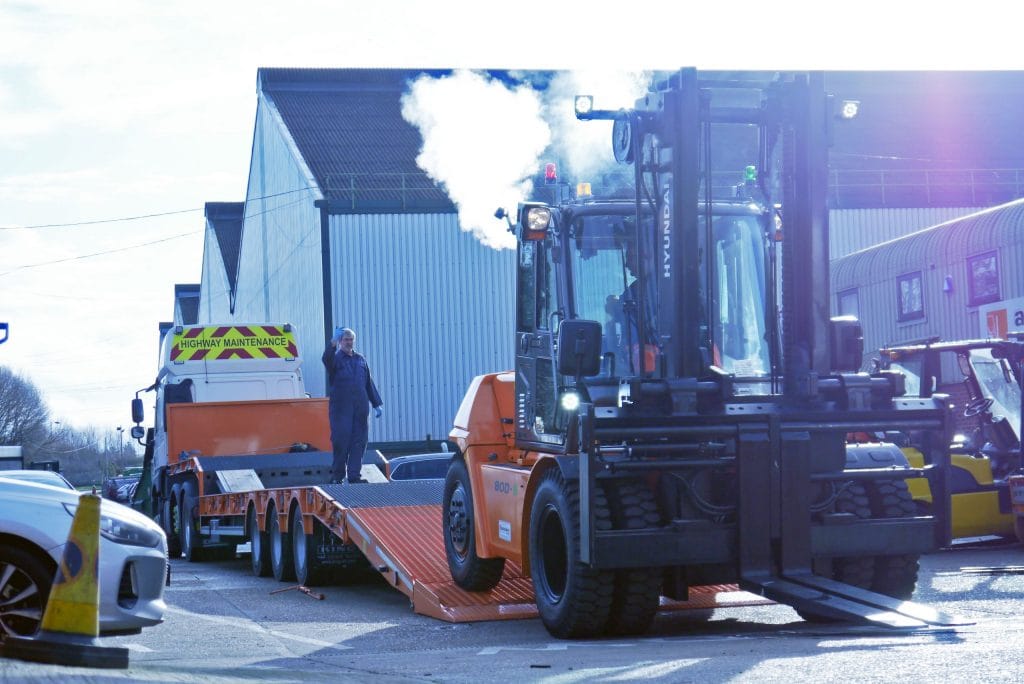
Forklift and machinery transport across the UK mainland
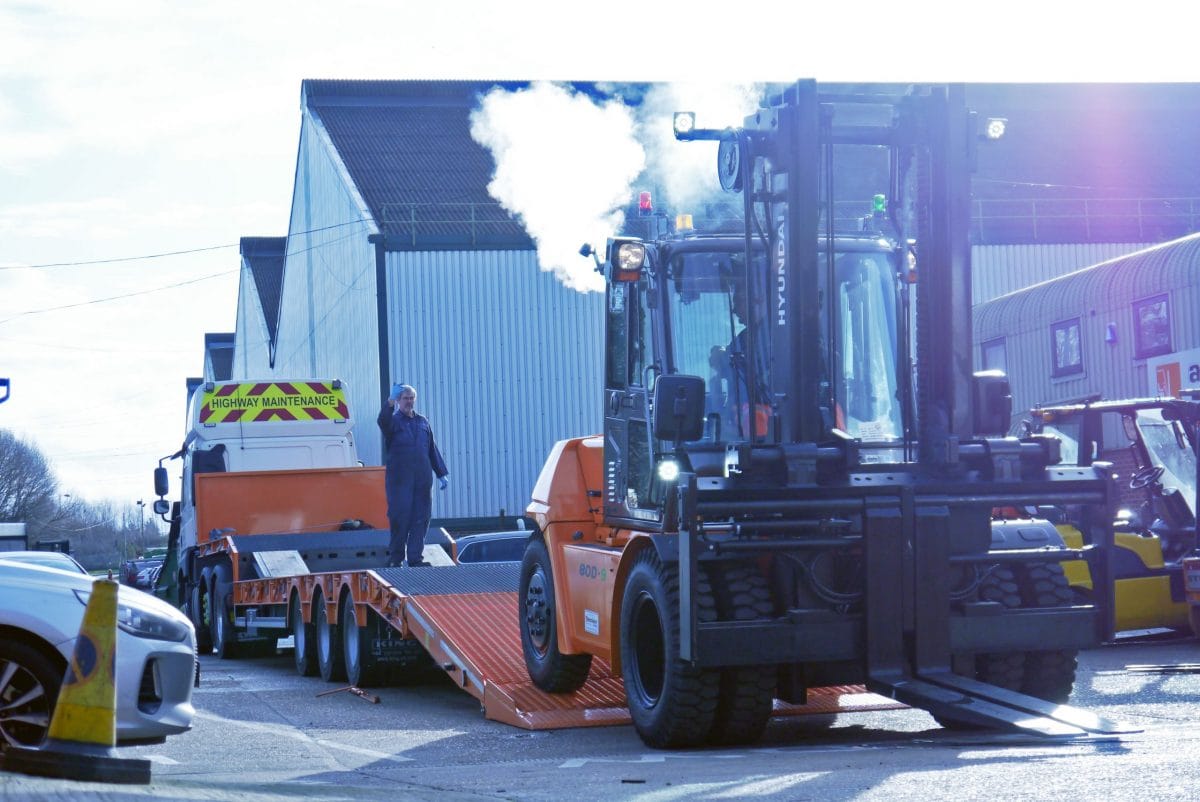
We move forklifts, reach trucks and order pickers, cherry pickers and scissor lifts, cleaning machines, stair climbers and racking for any business, on our own beavertail and low loader lorries. Most moves run around our depots, and we cover the UK mainland.
The machine does not have to have come from us. A large part of this work is moving equipment that other companies own: between your own sites, to or from a customer, or in and out of a depot for major repair.
Typical jobs:
- Moves between sites, as one contract finishes and the machines are needed somewhere else.
- Delivery and collection of hire machines, short or long term.
- Prop-up machines for breakdowns, where a stand-in truck has to be on site quickly.
- Moving a machine for sale, purchase or part exchange.
- Recovery of a machine that will not drive, which is a different job from moving one that will.
What we move
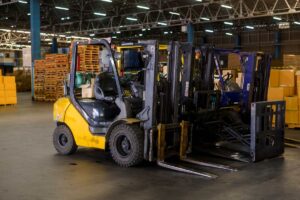
- Forklifts and reach trucks: counterbalance forklifts on electric, diesel or LPG, reach trucks and very narrow aisle machines.
- Order pickers and warehouse trucks: order pickers, stackers, and powered and manual pallet trucks.
- Cherry pickers and scissor lifts: boom lifts, scissor lifts and mast lifts.
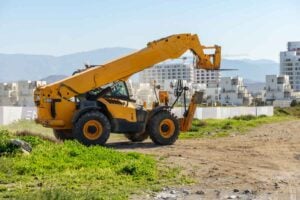
- Telehandlers, on the low loader.
- Cleaning machines: ride-on sweepers and scrubber dryers.
- Attachments and other forklift equipment.
If it is a machine and it needs to be somewhere else, it is worth asking.
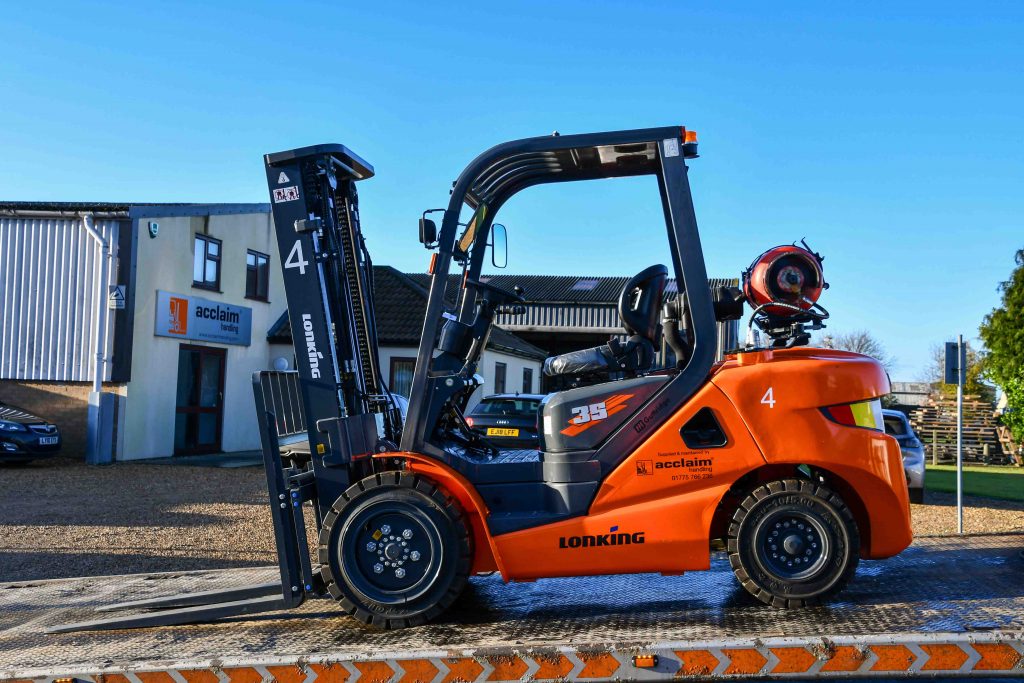
Beavertail and low loader lorries
Our lorries are beavertails and low loaders. A beavertail has a sloping rear deck, so a machine that drives can go up the ramps. A low loader carries the deck lower, which keeps a tall machine under bridge heights and suits heavier loads.
A forklift is heavy, short, top-weighted and has a mast that raises the centre of gravity a long way above the deck. It is also, in most cases, not designed to be driven on a road. That combination is why loading and securing is where transport jobs go wrong.
The things that matter on every move:
- Weight and axle loading. A three tonne truck does not weigh three tonnes; the rated capacity is what it lifts, not what it weighs. A counterbalance machine can easily weigh four to five tonnes because the counterweight is the point of it.
- Mast height against travel height. A mast that is fine in a warehouse can put a loaded trailer over height for a bridge. Masts often have to come down, or the machine has to go on a low loader.
- Securing to the right points. Chains and straps go to designated lashing points, not to hydraulics, the mast channel or the overhead guard.
- Getting it on and off. A machine with a flat tyre, a dead battery or a hydraulic fault cannot be driven up a ramp, and needs winching or lifting instead.
- Fuel, batteries and fluids. LPG cylinders and lead acid batteries have their own handling requirements in transit.
If you are weighing up moving a truck yourself on a plant trailer: the loading and securing is the risky part, not the driving.
Our drivers are fully qualified and the load is secured to the relevant standards. The HSE sets out the wider duty in its workplace transport guidance.
What we need to quote
We price each move rather than publishing a rate, because the variables genuinely change the job. What we will need to know:
- Collection and delivery postcodes, and whether both ends have space for a lorry.
- The machine: make and model, or its weight and dimensions, including closed mast height.
- Does it drive? A machine that starts and drives is loaded very differently from one that does not.
- Access at both ends: hard standing, gradients, overhead obstructions, and whether a forklift is available to help unload.
- Dates. A move with a week of notice costs less than one that has to happen tomorrow morning.
- How many machines. Several machines on one lorry is far cheaper per machine than several single journeys.
Two postcodes, the machine, and whether it drives. That is usually enough for a price on the call.
Driving a forklift on the road: what the law requires
People often ask whether they can simply drive the truck instead of transporting it. Usually the answer is no, and this is why.
A forklift used on a public road must be registered with the DVLA, display a registration plate, be taxed and be insured. It must carry appropriate lighting, including an amber beacon, when travelling at under 25 mph.
A vehicle travelling more than 1,000 yards on the road has to comply with the Road Vehicles (Construction and Use) Regulations, which in practice requires significant modification to a standard truck. Where the distance is under 1,000 yards, such as crossing a road between two yards, the machine may not need that modification.
For anything beyond a short hop between adjacent sites, transporting the machine on a lorry is cheaper, quicker and removes the question entirely. This is general guidance on the regulations rather than legal advice, and the responsibility for road use sits with the operator.
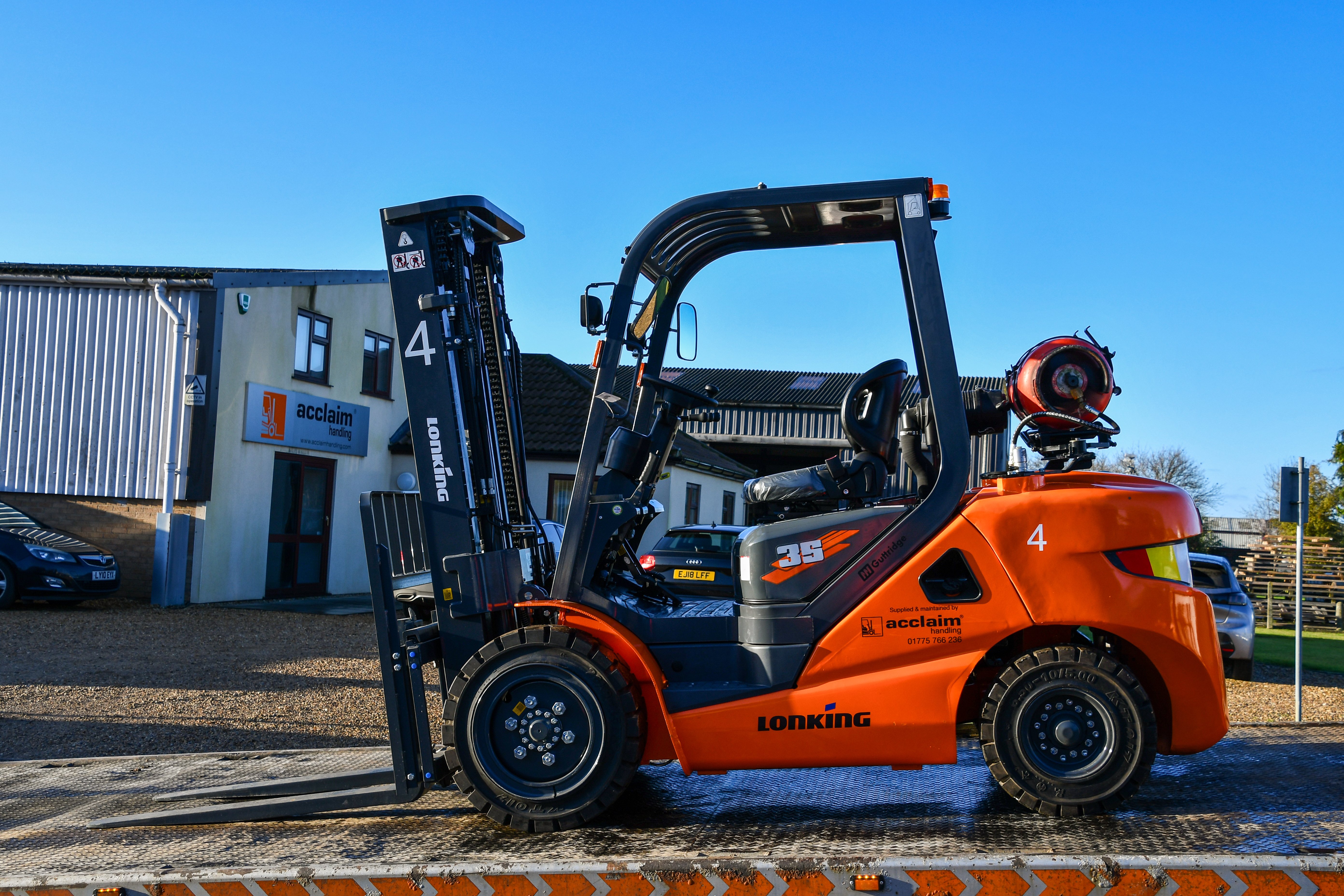
Same-day moves and breakdown recovery
Some moves cannot wait for next week. A truck has broken down in the middle of a shift, or a site emergency means machines have to be out of the way now. Ring us and we check which beavertail or low loader and which driver are free, then give you a realistic time. Same day is often possible.
- Breakdown recovery. A machine that will not start or drive is winched onto our own lorry, taken to a depot for repair and brought back when it is fixed.
- Site emergencies. Forklifts, reach trucks, order pickers, cherry pickers, scissor lifts, cleaning machines, stair climbers and racking moved out of the way of a flood, a roof or floor repair or urgent building work, and brought back when the area is clear.
- Cover while the repair runs. If the repair will take longer than a shift, emergency forklift hire can put a stand-in machine on site.
- Loaded and secured by our own drivers. Chained to the lashing points, with the mast down where travel height needs it, however short the notice.
Urgent moves run on the same lorries as every other job, across the UK mainland. When a machine is down, ring 01708 861 414 rather than emailing, so we can check lorries while you are on the line. If you need an engineer before a lorry, see urgent and critical repairs.
Forklift delivery service
Our forklift delivery service brings a machine to your site and collects it again when the job is done: a forklift you have bought from us, a hire machine, or your own truck moving between sites. Each forklift delivery travels on one of our own beavertail or low loader lorries with one of our drivers, anywhere on the UK mainland.
Transport as part of a bigger job
Transport is rarely the whole requirement, and it is usually cheaper when it is planned alongside the rest.
- Buying or selling a machine: transport can be arranged with the part exchange or the purchase, so the old truck leaves as the new one arrives.
- Hire: delivery and collection of hire machines is part of the same operation.
- Major repair: where a job is too big for a site visit, we can collect the machine, carry out the repair at a depot where the parts are already on the shelf, and return it.
- Compliance: a machine arriving on a new site still needs a current thorough examination before it goes to work, and you must not use hired-in equipment without physical evidence that one has been done.
Booking a move
Ring the office with the two postcodes, the machine and whether it drives, and we can normally give you a price on the call and a date straight after it. If several machines are moving, say so at the first call, because they are planned as a sequence of loads.
Two postcodes, the machine, and whether it drives. That is usually enough for a price on the call.
Forklift and machinery transport: common questions
Eight depots across the UK
Our own engineers, out of our own depots - wherever you are, service comes from us.
Talk to us about forklift transport
Monday to Friday, 8:00am to 5:00pm.
Additional Services
Checkout our range of other machine services below