- Forklift batteries, supplied and supported
- What battery regeneration is, and what it is not
- Regenerate or replace?
- Why batteries fail early
- Charging areas and safety
- Charging stations and charging rooms
- Watering and monitoring equipment
- Lead acid or lithium-ion
- Old batteries: collection and recycling
- Where this fits with the rest of the machine
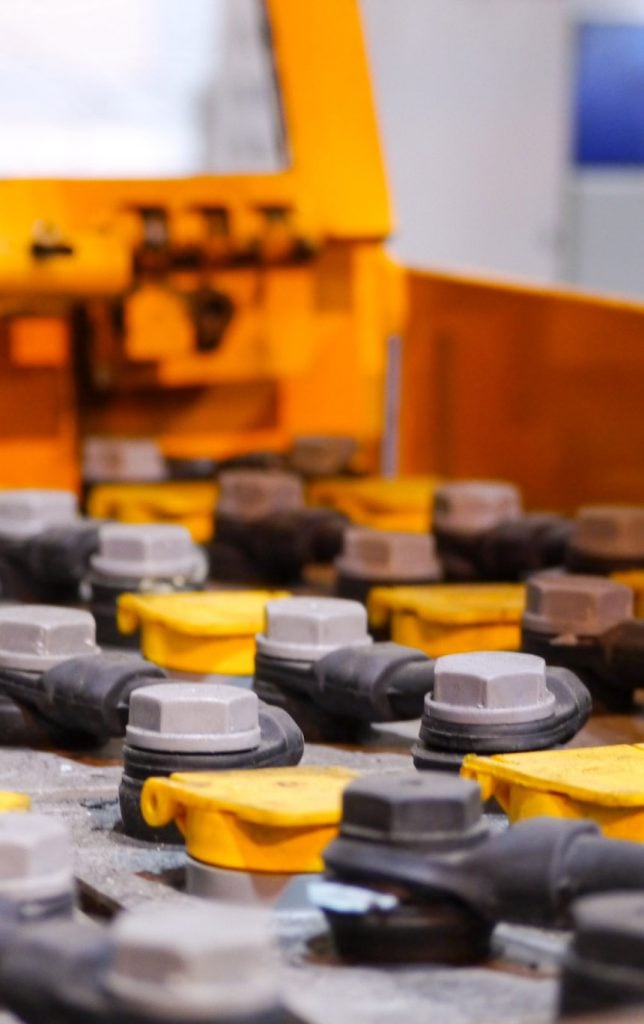
Forklift batteries, supplied and supported
On an electric truck the battery is not an accessory: it is a large share of the cost of the machine, and the thing that decides whether the truck lasts a shift. We supply, hire, maintain and replace forklift batteries and chargers for electric materials handling equipment, and we hold batteries among the parts and components we keep in stock.
What we cover:
- New traction batteries and chargers, matched to the truck and the duty.
- Battery hire, where a spare is needed for a peak or as cover.
- Regeneration, to recover capacity in a battery suffering from sulphation rather than replacing it.
- Testing and diagnostics, including capacity testing, so a decision is made on measurements rather than on how the truck feels.
- Repairs, including individual cell replacement where that is the sensible fix.
- Watering and maintenance equipment (see below).
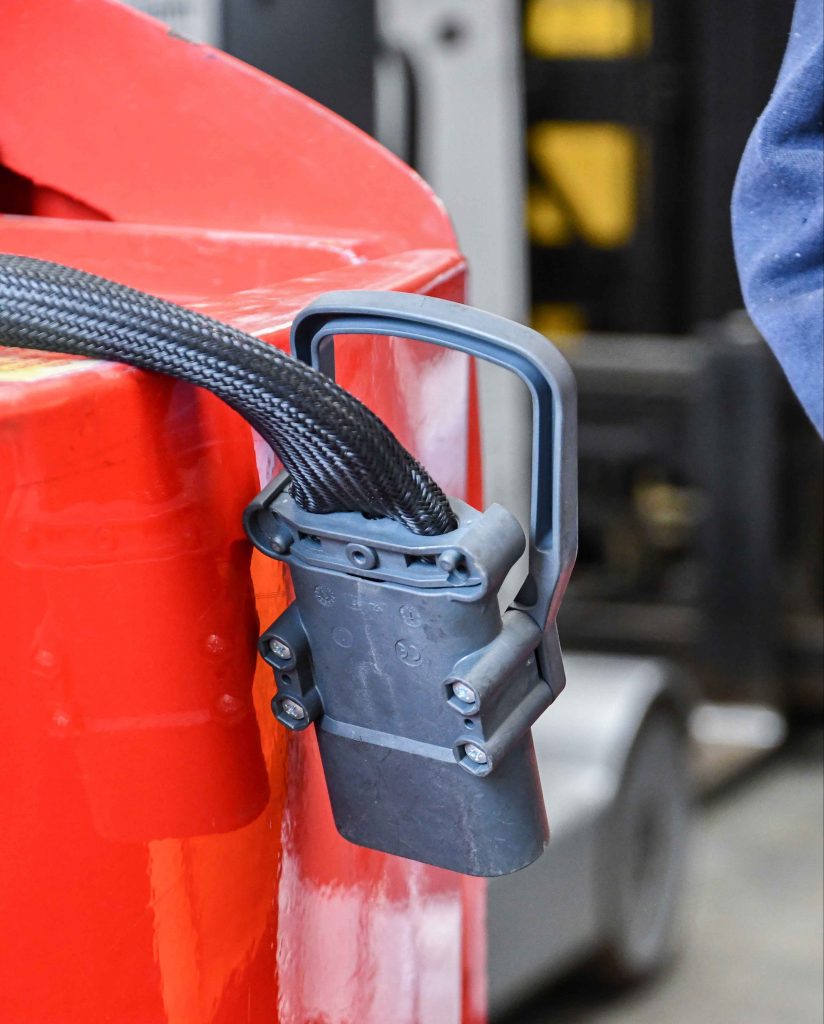
What battery regeneration is, and what it is not
It is worth being precise here, because two different things get called regeneration and only one of them is this service.
Battery regeneration means treating a lead acid traction battery to reverse sulphation: the build-up of lead sulphate crystals on the plates that happens when a battery is repeatedly left partly discharged, undercharged, or stood unused. Sulphation is the most common reason a battery that is not old has stopped holding a shift. The treatment uses controlled charge and discharge cycles to break down those crystals and recover usable capacity.
Battery regeneration is not regenerative braking. One is done to the battery, the other is a feature of the truck.
Regenerative braking is a feature of the truck: it recovers energy as the machine slows down and puts it back into the battery. Both reduce running cost, but they are unrelated technologies, and only regeneration is something you can have done to a battery you already own.
Being straight about the limits: regeneration works on batteries whose capacity has fallen through sulphation. It will not repair a physically damaged cell, a battery with a cracked case or failed connectors, or a battery that has simply reached the end of its cycle life. That is why the first step is a capacity test rather than a quotation.
Regenerate or replace?
The decision comes down to what the test says and how old the battery is.
- Regeneration is worth considering when capacity has dropped but the battery is mechanically sound, when the cause is a charging or usage pattern rather than age, and when the truck itself has years left in it. It costs less than replacement and keeps a large lead acid unit out of the recycling stream for longer.
- Replacement is the answer when cells are physically failed, when capacity is low across the whole battery and the cycle count is high, or when the duty has changed and the battery was never the right size for the work it is now doing.
If a battery has been through the same failure twice, the honest answer is usually that the charging regime or the shift pattern is the problem, and a new battery will go the same way.
Why batteries fail early
Most traction batteries that fail before their time fail for reasons that are fixable.
- Opportunity charging. Charging a battery that was not designed for it, or giving short top-up charges that never complete. Both drive sulphation.
- Deep discharge. Running a lead acid battery below about 20 percent remaining shortens its life sharply.
- Watering done wrong. Topping up before charging rather than after, using tap water rather than de-ionised, or letting plates become exposed.
- Heat. Charging in an unventilated space, or a duty cycle that never allows the battery to cool down.
- No rest. Charging immediately after use, every time, with no equalising charge.
Our article on capacity deration goes into how capacity is measured and why it falls.
If a truck is fading before the end of a shift, a capacity test is the place to start.
Charging areas and safety
Lead acid batteries give off hydrogen while charging, which is why charging areas need ventilation and why some are formally zoned under DSEAR as a result. Charging bays also involve heavy lifting, acid, and high currents.
Practical points: keep the area ventilated and free of ignition sources, provide eyewash and PPE for anyone handling acid, use the correct lifting equipment for battery changes rather than improvising, and keep the floor clean of electrolyte. If your charging area has never been assessed, our health, safety and compliance page covers what a workplace assessment should look at, and explosion protection covers zoning where it applies.
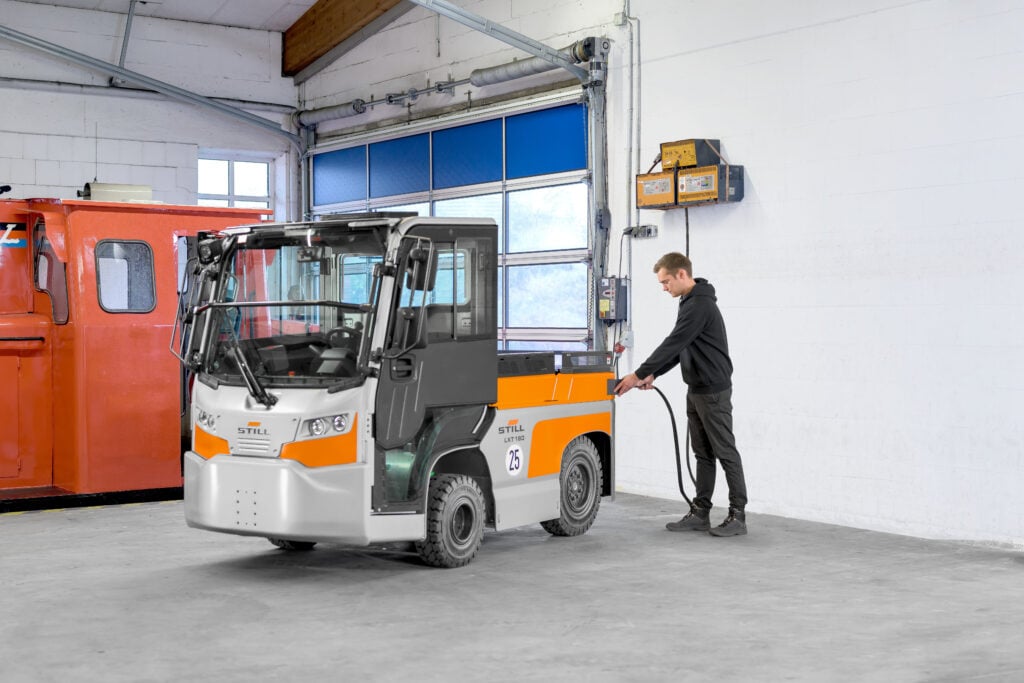
Charging stations and charging rooms
A charging area works when it is planned around the trucks that use it. We plan and equip charging stations and charging rooms with you, from a single bay to a full room.
- Layout. Where the chargers sit, how trucks get in and out without crossing pedestrian routes, space to work round each battery, and room for battery changes if you change batteries.
- Ventilation. Lead acid batteries give off hydrogen while charging, so the area needs airflow for the number of batteries charging at once, and no ignition sources. Where zoning applies, see explosion protection.
- Watering. A water point with a de-ioniser near the chargers, and topping-up equipment, so batteries are watered after charging rather than before.
- Charger matching. Each charger matched to the battery’s voltage, capacity and type, lead acid or lithium-ion, and to the shift pattern. A mismatched charger is one of the quickest ways to shorten a battery’s life.
- Safety kit. Eyewash, PPE and the correct lifting equipment for battery changes.
We supply the chargers and the watering equipment, and our engineers look after them with the trucks. Every electric machine on site belongs in the plan: pallet trucks, stackers, scissor lifts and scrubber dryers all charge somewhere too.
For day-to-day habits, see whether to fully charge an electric forklift and our lithium-ion charging guide.
Watering and monitoring equipment
Most battery life is won or lost on routine, so the equipment that makes the routine easy pays for itself. We can supply:
- De-ionisers, so top-up water is the right water.
- Top-up trolleys and automatic topping systems, including systems designed for vented blocs.
- Air mix systems, which circulate the electrolyte during charge to reduce stratification and heat.
- Battery monitoring systems and data loggers, which record how the battery is actually being used and charged. On a fleet where batteries keep failing early, a logger usually finds the reason within a fortnight.
Lead acid or lithium-ion
| Lead acid | Lithium-ion | |
|---|---|---|
| Purchase cost | Lower | Higher |
| Charging | Needs a full charge and a cool-down | Fast, tolerates opportunity charging |
| Maintenance | Watering, equalising charges, battery changes | No watering, no battery change |
| Suits | Single-shift operations | Multi-shift or intensive duty |
| Regeneration | Yes, where sulphated | Not applicable |
Both are in normal use and the right answer depends on the shift pattern. Lead acid remains the lower purchase cost and suits single-shift operations with time to charge and cool. Lithium-ion charges faster and tolerates opportunity charging, needs no watering and no battery change, and suits multi-shift or intensive duty, at a higher initial cost.
Regeneration is a lead acid service. If you are weighing the two up, our article comparing lithium-ion and lead acid forklift batteries sets out the trade-offs, and it is worth doing the sum over the life of the truck rather than on purchase price. If you are thinking of moving engine-powered trucks to electric, see the fleet review.
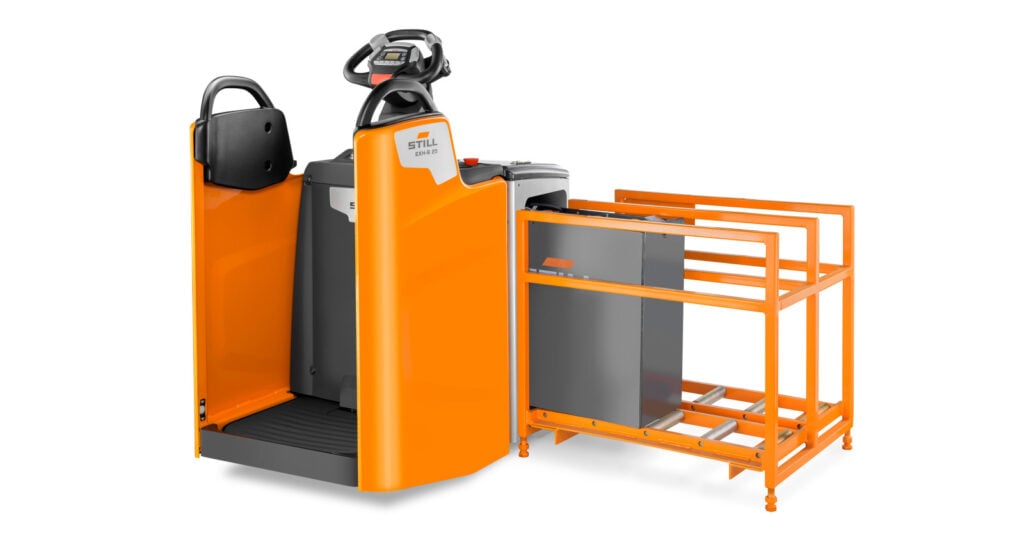
Old batteries: collection and recycling
Before a battery is written off, test it. If capacity has fallen through sulphation, regeneration may give it more working life. When a battery is genuinely finished, it needs to go to the right place.
Lead acid traction batteries are classed as hazardous waste, so they cannot go in a skip. They have to be collected and recycled properly, and the paperwork for the transfer kept. We collect old traction batteries for recycling, including the one we take out when we fit a replacement.
While a battery waits for collection:
- disconnect it from the truck completely;
- keep it upright, on a concrete floor, in a ventilated area away from general work;
- contain any leak with absorbent material and tell us when you book the collection.
Our practical guide to forklift battery recycling and disposal sets out the rules and the recycling process in full.
Where this fits with the rest of the machine
A battery problem often presents as a truck problem. If a machine is losing performance towards the end of a shift, the battery is the first thing to test, but the answer can equally be in the charger, the connections or the truck’s own controller. Our engineers cover all three through servicing and repairs, and batteries and charger parts come from the same parts stock.
If you need an electric machine while yours is out of service, electric forklift hire can cover it, and our electric forklift range shows what we supply. We also run a battery care and maintenance course for the people looking after them.
If a truck is fading before the end of a shift, a capacity test is the place to start.
Forklift batteries: common questions
Eight depots across the UK
Our own engineers, out of our own depots - wherever you are, service comes from us.

Talk to us about forklift batteries
Monday to Friday, 8:00am to 5:00pm.
Additional Services
Checkout our range of other machine services below