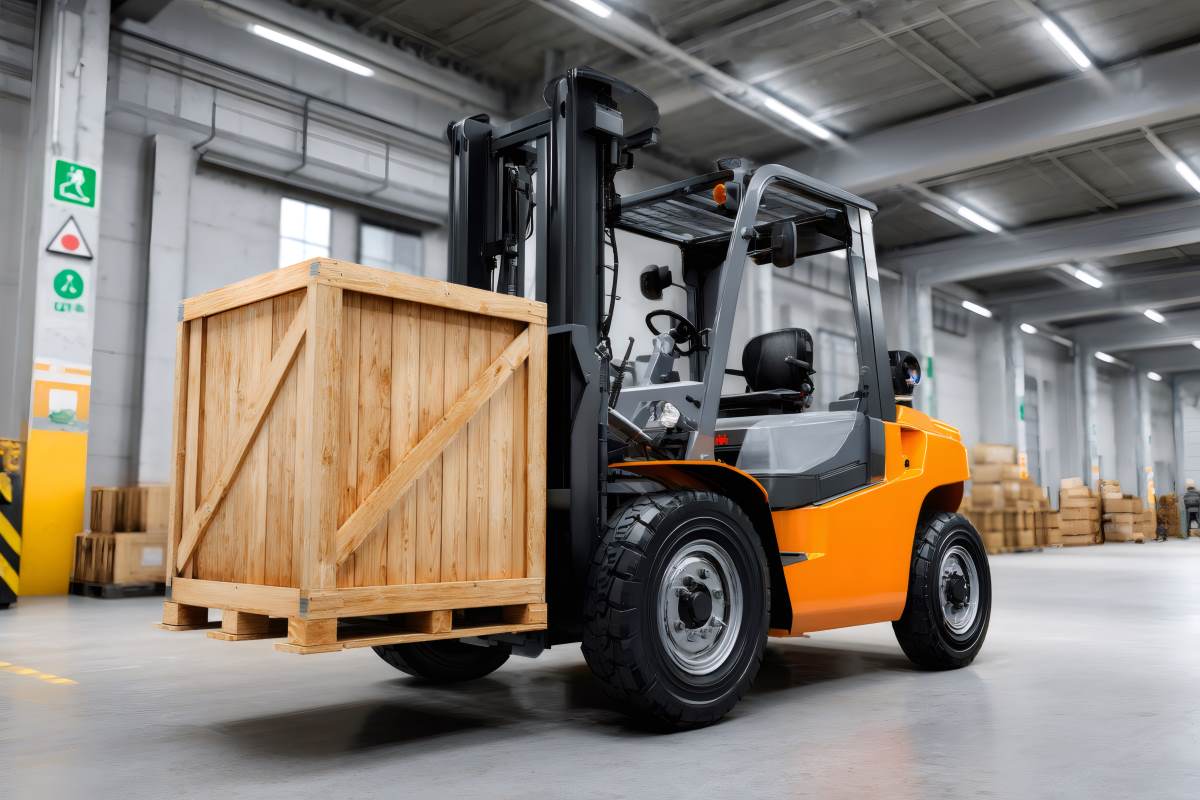
Parking a forklift is often treated as a quick end-of-shift task, but small mistakes in this routine can lead to serious consequences. Poorly parked forklifts block emergency exits, cause tripping hazards, or even roll unexpectedly, creating risks for both people and property. Making parking a deliberate, consistent process is one of the simplest ways to improve overall workplace safety. Here are seven best practices every operator should follow.
1. Always Use Designated Parking Areas
Forklifts should never be left wherever it feels convenient. Designated spaces are chosen for a reason: they are clear of fire exits, walkways, and loading zones. Parking in the wrong place disrupts traffic flow and increases the chance of accidents. Employers should clearly mark approved parking areas with paint or signage so operators have no doubts about where to leave their trucks.
2. Lower the Forks to the Ground
Leaving forks raised is a common mistake that turns them into dangerous obstacles. Pedestrians can easily trip, or another vehicle could strike them and suffer serious damage. The safest practice is to lower the forks flat to the floor before switching off the truck. Tilting them slightly forward reduces the risk of someone stepping onto sharp tips.
3. Apply Neutral and the Parking Brake
Once the forklift is in position, the controls should be placed in neutral and the parking brake applied firmly. This prevents unintended movement caused by minor gradients or vibrations from nearby machinery. Even on apparently level floors, forklifts can drift without proper braking. Making this step automatic ensures the truck remains exactly where it is left.
4. Switch Off and Remove the Key
A forklift left with the engine running or keys in the ignition is an open invitation for misuse. Unauthorised staff may be tempted to move the vehicle, sometimes without training. Switching off and removing the key stops this problem at its source. Employers should provide lockable key cabinets or control systems to ensure access is limited to trained operators only.
5. Park on Level, Stable Ground

Forklifts must always be parked on level surfaces. Slopes increase the chance of rollaways, while uneven ground places unnecessary stress on tyres and suspension. If a designated parking area is not perfectly level, it should be repaired or relocated. Operators should be trained to recognise unsafe ground and avoid parking there, even if it appears convenient in the moment.
6. Avoid Obstructions and Emergency Routes
Parking should never compromise safety routes or emergency access points. Forklifts left in front of fire doors, exits, or electrical panels can delay evacuations or block essential services. Clear policies should make it obvious which areas are always off limits. Supervisors need to reinforce these rules, since even a temporary block can have serious consequences if an emergency occurs.
7. Carry Out a Final Visual Check
Before leaving the truck, operators should make a habit of looking around. Are the forks fully lowered? Is the brake applied? Is the truck positioned safely with no obstructions nearby? This final check takes only a few seconds but prevents a wide range of problems. Embedding it as standard practice helps operators treat parking as a safety step, not just an afterthought.
Building Parking Discipline into Training
Proper forklift parking should be emphasised in both initial and refresher training. Too often it is glossed over as obvious, but evidence shows many accidents happen when trucks are left unattended incorrectly. Employers should highlight safe forklift operation practices and remind operators that correct parking is part of responsible driving. Small, consistent habits prevent major incidents.
The Role of Maintenance and Workplace Culture
A forklift parked incorrectly may also create maintenance problems. Raised forks put stress on hydraulics, while rollaways can cause collision damage. Employers who treat correct parking as non-negotiable encourage respect for the equipment itself. Reinforcing this culture benefits everyone: operators feel accountable, and businesses see fewer breakdowns and lower repair costs. Supporting staff with ongoing supervision and regular toolbox talks makes these standards stick.
The Bottom Line
Parking a forklift is more than a routine. It is a critical step in preventing accidents, protecting staff, and safeguarding equipment. By following seven best practices – using designated spaces, lowering forks, securing brakes, switching off power, parking on level ground, avoiding obstructions, and completing a final check – operators create safer workplaces.
At Acclaim Handling, we support businesses with training and short and long-term machine rentals so staff and equipment perform at their best. Proper parking may seem simple, but its impact on safety is significant.

Related Posts

10 Useful Forklift Attachments for Safer, More Efficient Material Handling

7 Common Forklift Brake Problems and How to Fix Them

10 Common Electric Forklift Problems
6 Hidden Costs of Buying a Forklift — and How to Avoid Them

Complete Warehouse Relocation Checklist