As the calendar turns and businesses look at their Q1 budgets, a common question arises for warehouse managers, logistics directors, and construction site foremen: How should we acquire our next forklift?
The start of the year is the ideal time to evaluate your fleet. With new projects on the horizon and tax incentives often resetting, choosing the right acquisition model-hiring, leasing, or buying-can significantly impact your cash flow and operational efficiency for the next twelve months.
In this guide, we will break down the pros, cons, and financial implications of each method to help you make the most informed decision for your business.
1. Buying a Forklift: The Case for Ownership
Buying a forklift outright is a significant capital expenditure (CAPEX), but for many established businesses, it remains the gold standard for long-term value.
The Pros of Buying
Total Control: You own the machine. You can modify it, use it for as many hours as you want without “overage” penalties, and move it between sites at will.
Long-Term Cost Savings: While the upfront cost is high, the cost per hour over the machine’s lifespan (typically 10–15 years) is lower than any other method.
Asset Value: A well-maintained forklift retains a decent resale value. It sits on your balance sheet as a tangible asset.
Tax Benefits: Depending on your jurisdiction, you may be able to claim significant depreciation or use “instant asset write-off” schemes to reduce your tax bill.
The Cons of Buying
High Upfront Cost: It ties up a large amount of capital that could be used for other business growth areas.
Maintenance Responsibility: You are 100% responsible for servicing, repairs, and compliance. If the machine breaks down, the downtime cost is entirely yours.
Obsolescence Risk: Technology moves fast. In five years, your owned fleet may be less efficient than newer electric or automated models.
Best for: Businesses with stable, high-volume operations (1,500+ hours per year) and a healthy cash reserve.
2. Leasing a Forklift: The “Middle Ground”
Leasing (often via Operating Lease or Contract Hire) has become the most popular choice for mid-to-large-scale enterprises. It offers the reliability of a new machine with the flexibility of a monthly payment.
The Pros of Leasing
Predictable Cash Flow: You pay a fixed monthly fee, making budgeting for the year much simpler.
Access to New Tech: Most leases run for 3 to 7 years. At the end of the term, you simply swap the old machine for a brand-new model with the latest safety features.
Maintenance Inclusion: Many leases are “full-service,” meaning the provider handles all routine maintenance and breakdowns, ensuring maximum uptime.
Off-Balance Sheet Financing: Depending on accounting standards (like IFRS 16), some leases can be treated as an operating expense (OPEX) rather than debt.
The Cons of Leasing
Usage Limits: Most leases have “hour caps.” If you exceed the agreed-upon hours, you could face hefty surcharges.
Contractual Commitment: You are locked in for the duration. Breaking a lease early can be expensive.
No Ownership: At the end of the term, you don’t own the asset (unless you have a Hire Purchase agreement).
Best for: Businesses that need reliable, modern equipment but want to preserve capital and avoid the headache of maintenance.
3. Short-Term Hire: Maximum Flexibility
Hiring (or renting) is the tactical choice. It’s perfect for reacting to market volatility or seasonal spikes.
The Pros of Hiring
No Commitment: You can have a forklift for a day, a week, or a month and return it as soon as the job is done.
Zero Maintenance Costs: The rental company is responsible for everything. If it breaks, they usually swap it out for another one within 24 hours.
Immediate Availability: Rental fleets are usually ready to go, whereas buying or leasing a specific model might have a lead time of weeks or months.
The Cons of Hiring
Highest Hourly Rate: You pay a premium for flexibility. Hiring a forklift for a year is significantly more expensive than leasing or buying.
Variable Availability: During peak seasons (like the lead-up to the holidays), rental stock can run low, leaving you without a machine.
Best for: Seasonal peaks (e.g., Christmas rush), short-term contracts, or testing a specific model before committing to a purchase.
Key Considerations for Your New Year Strategy
Before you sign any paperwork this January, ask your team these four critical questions:
1. What is our projected “Utilisation Rate”?
Track your hours. If a machine runs more than 15 hours a week, leasing or buying is usually cheaper. If it sits idle for three days a week, short-term hire is the smarter financial move.
2. What is the “Total Cost of Ownership” (TCO)?
Don’t just look at the sticker price. Calculate:
Fuel/Charging costs
Insurance
Operator training
Maintenance and spare parts
Potential downtime costs
3. Electric vs. Internal Combustion (IC)?
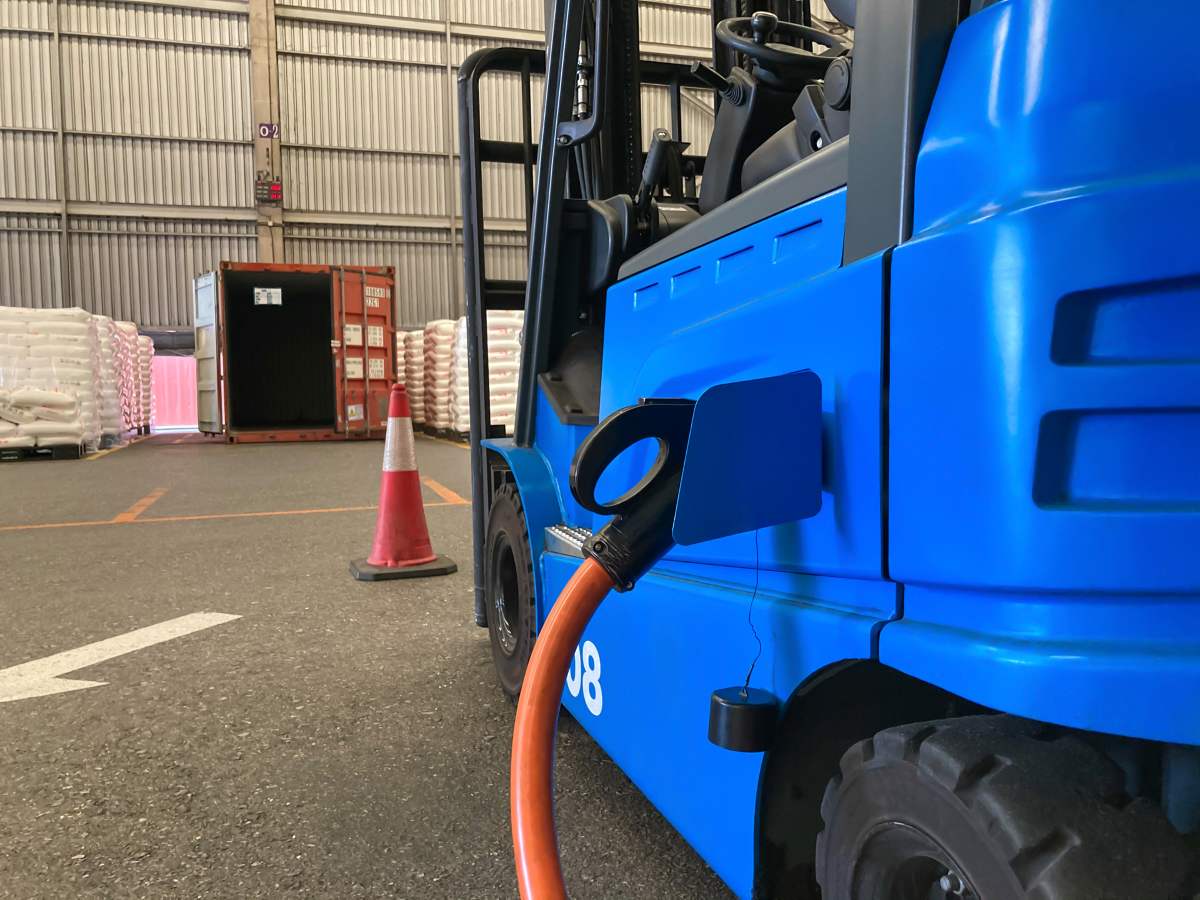
The start of the year is a great time to transition to Electric. While electric forklifts have a higher purchase price, their running costs are roughly 70% lower than diesel or LPG models. Many leasing companies offer “Green Incentives” for switching to electric.
4. What does our growth look like?
If you expect to double your warehouse capacity by July, don’t buy a fleet now. Lease or hire so you can scale up (or down) as your space requirements change.
Conclusion: Which is right for you?
There is no “one size fits all” answer, but there is a “right for right now” answer.
Buy if you have the cash, a long-term plan, and the infrastructure to maintain your fleet.
Lease if you want the best technology and fixed monthly costs without the burden of ownership.
Hire if your needs are temporary, seasonal, or if you need to bridge the gap while waiting for a permanent solution.
As you plan for the year ahead, take the time to audit your current fleet’s performance. Often, a mix of all three-buying your “core” fleet, leasing your “operational” fleet, and hiring for “peak” periods-is the most resilient strategy for a modern business.

 01708 861 414
