As the sun begins to officially rise for 2026, the UK material handling scene is undergoing one if its most important transformations in a decade. For warehouse managers, logistics directors, as well as business owners, January is no longer just about recovering after the Christmas peak period; it is now a critical regulatory and operational ‘reset’ month.
Between new ABA (Accrediting Bodies Association for Workplace Transport) training categories taking effect this month and a surge in AI-driven safety requirements, the “business as usual” approach to forklift management is no longer sufficient.
Is your fleet really ready to tackle the year ahead? This guide and January checklist will ensure that your business is remaining compliant, efficient and ahead of the curve this 2026.
The ABA’s redesign of machine groupings, which goes into effect on January 19, 2026, is the main change for 2026. This is more than simply a paperwork exercise; it modifies the certification requirements for your operators.
The previous categories seem to have become “stretched” to accommodate the modern hybrid machines. The 2026 updates aim to align training with the actual equipment which is used on-site today.
Key Category Shifts You Need to Know:
The January Action: Examine your records of operator training. You must map an operator’s transition to the 2026 requirements if they are utilising a Reach Truck under an old D2 certificate or an LLOP under an old A2 certificate. Any new training or refreshers starting on January 19th must adhere to the new codes, even if current certificates are still valid until they expire.
This year, in 2026, the Health and Safety Executive (HSE) will be concentrating on integrated safety ecosystems rather than just mechanical safety. The “standard” forklift of 2026 differs greatly from its 2020 predecessor, with over 1,300 forklift-related accidents still happening in the UK each year.
These days, safety is more than just having a horn and a flashing beacon. In order to be “2026-ready,” your fleet should ideally include:
In accordance with the 2026 Management of Health and Safety at Work Regulations, HSE will once again focus on “psychosocial risks.” Forklift operators frequently operate in isolated, high-pressure settings. A review of the operator’s workload and stress levels should be part of your January checklist, not just the truck’s physical state.
2026 marks the “tipping point” for electrification in the UK. The traditional 60-40 split in favour of Internal Combustion (IC) engines has flipped.
The UK government recently boosted the Plug-in Truck Grant with an additional £18 million, extending support until March 2026. If you are looking to replace aging diesel or LPG units this month, you can save significant capital:
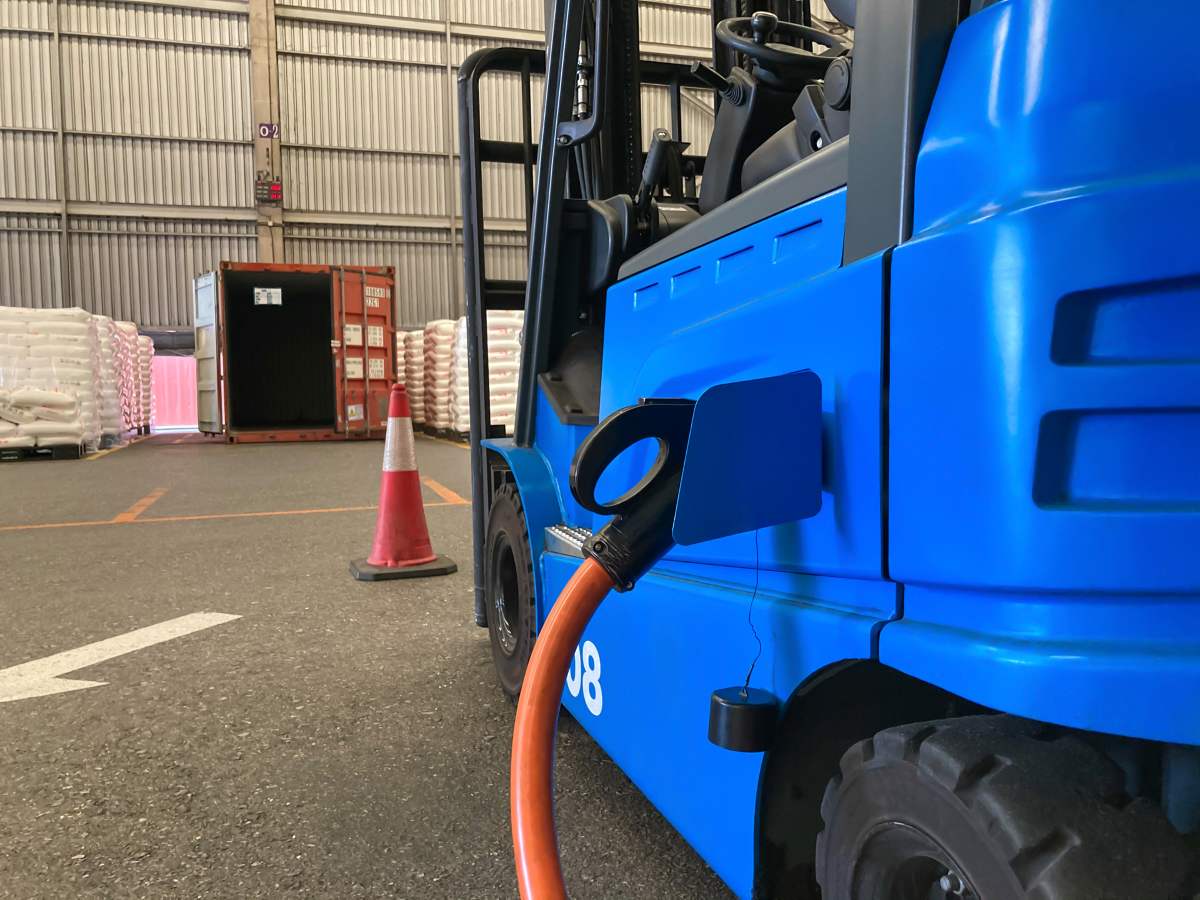
Lead-acid batteries will be the “legacy” choice by 2026. For three reasons, lithium-ion (Li-ion) is currently the January standard.
Opportunity Charging: Without endangering the battery, operators can plug in during a 15-minute coffee break.
Zero Maintenance: No more separate charging rooms or “watering” batteries.
Climate Resilience: Li-ion performs significantly better in the cold UK January temperatures than older battery tech.

If you are still using paper checklists for your daily “Pre-Shift Inspections,” your business is falling behind the 2026 curve. The Connected Fleet is the theme of the year.
Before the engine even starts, modern telematics systems (such as those from Rushlift or Toyota) require the operator to finish a computerised safety check on a screen. This data is promptly transferred to the cloud, providing HSE inspectors with a real-time audit trail.
By 2026, we will have transitioned from reactive (fixing things when they break) to predictive (fixing things before they break).
Telematics now monitor:
To ensure your business is fully prepared, work through these five key pillars this month.
AMRs (Autonomous Mobile Robots) will become more integrated with conventional forklifts as 2026 progresses. Businesses who view their fleet of forklifts as a hub for data generation rather than a collection of “dumb” tools will prosper this year.
By doing your January checklist now, you’re not just checking boxes for the HSE; you’re creating a safer, more robust, and more economical company that is prepared to face the challenges of the upcoming year.
Is your fleet prepared? The 19th of January is drawing near quickly. Don’t wait for an incident to discover that your equipment or training is outdated.

We prioritize accuracy and integrity in our content. Here's how we maintain high standards:
Our content is carefully reviewed by experienced professionals to ensure accuracy and relevance.
Look for the expert-reviewed label to read content you can trust.



 01708 861 414
