Legal Framework for Forklift Operation on Public Roads
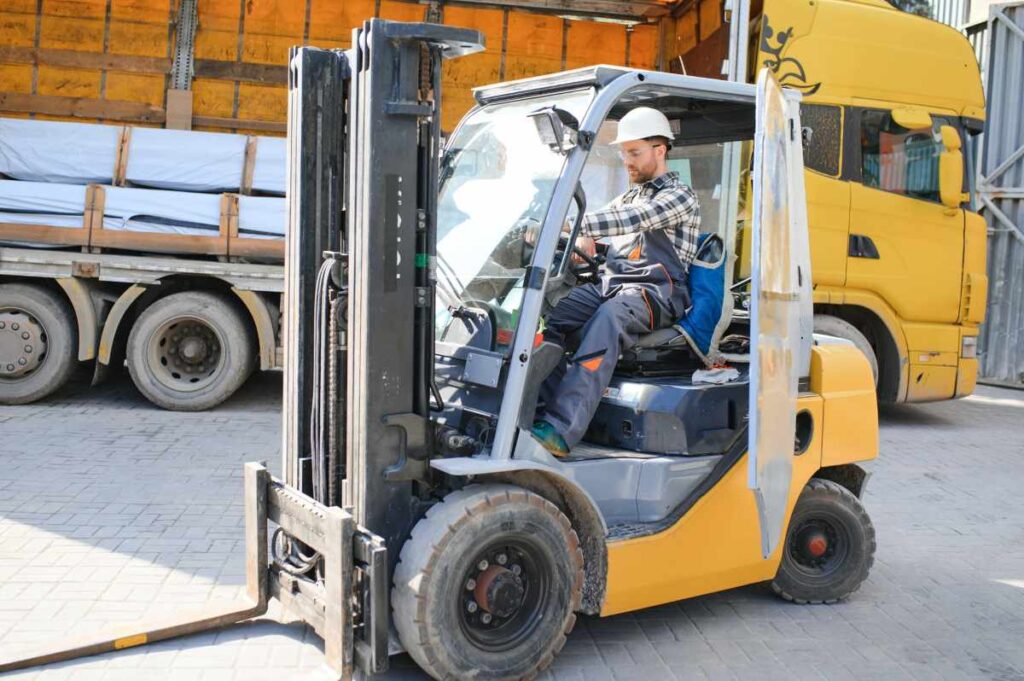
Operating a forklift on a UK public highway is legal, but it is subject to strict regulation under the Vehicle Excise and Registration Act 1994. Even brief journeys, such as crossing a road, require full compliance with the relevant legislation.
Essential Requirements for the Vehicle
Registration with the DVLA: All forklifts used on public roads must be registered. This is done using Form V55/5 for used vehicles or V55/4 for new ones.
Taxed and Insured: Road tax (Vehicle Excise Duty) is mandatory, and specific motor insurance for public road use must be in place.
Number Plates: Valid registration plates must be displayed clearly on the vehicle.
Roadworthiness: The forklift must undergo a Thorough Examination, which is equivalent to an MOT for these vehicles.
Operator Requirements
Full UK Driving Licence: The operator must possess a full UK driving licence to operate a forklift on a public road.
Operator Training: Accredited training—such as RTITB certification—is required as proof of competence.
Minimum Age: Operators must be at least 17 years old for vehicles up to 3.5 tonnes, 18 for vehicles up to 7.5 tonnes, and 21 for heavier models.
Distance-Based Rules: The 1,000-Yard Rule
The technical requirements for forklift operation on public roads depend on the distance travelled:
Short Distances (Less Than 1,000 Yards): Forklifts are classified as “work trucks” and are exempt from some aspects of the Road Vehicles (Construction and Use) Regulations. However, registration, tax, and insurance are still required.
Longer Distances (Over 1,000 Yards): Full compliance with all road vehicle regulations is necessary, which may include fitting speedometers, additional mirrors, and pneumatic tyres.
Mandatory Safety Equipment
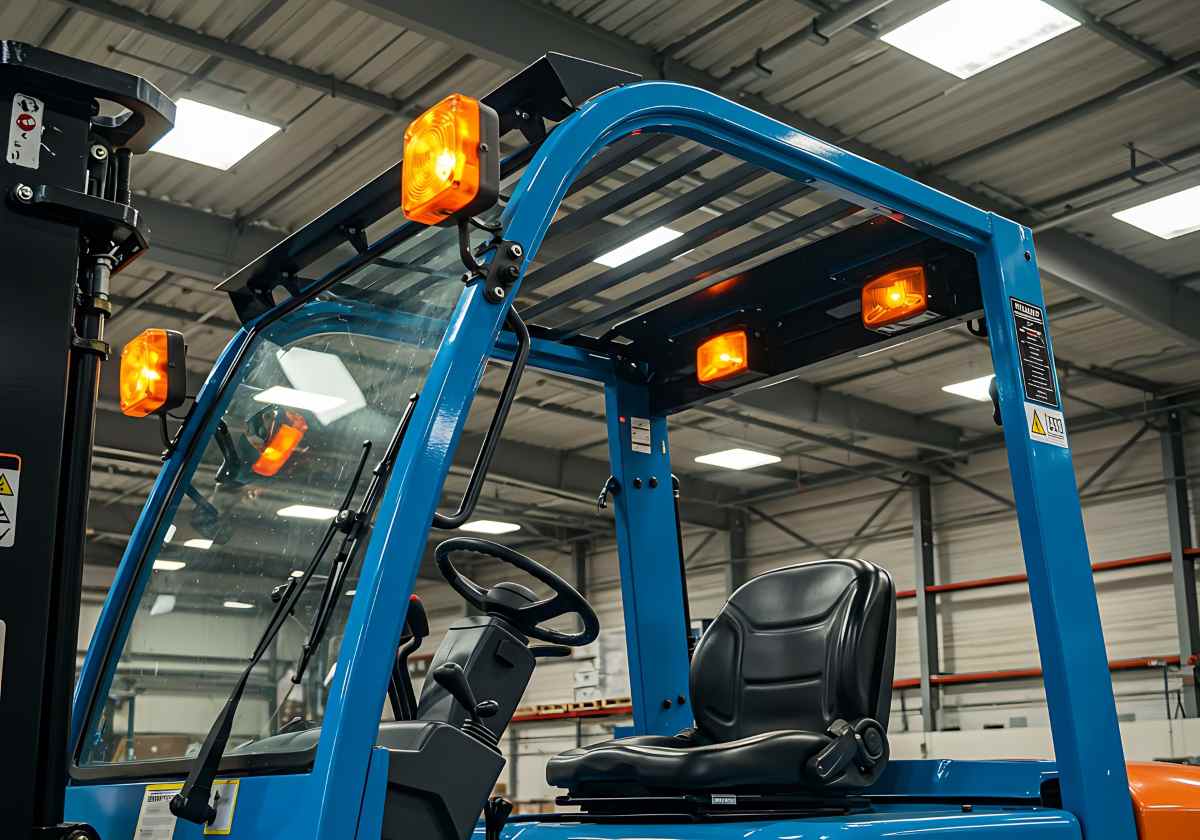
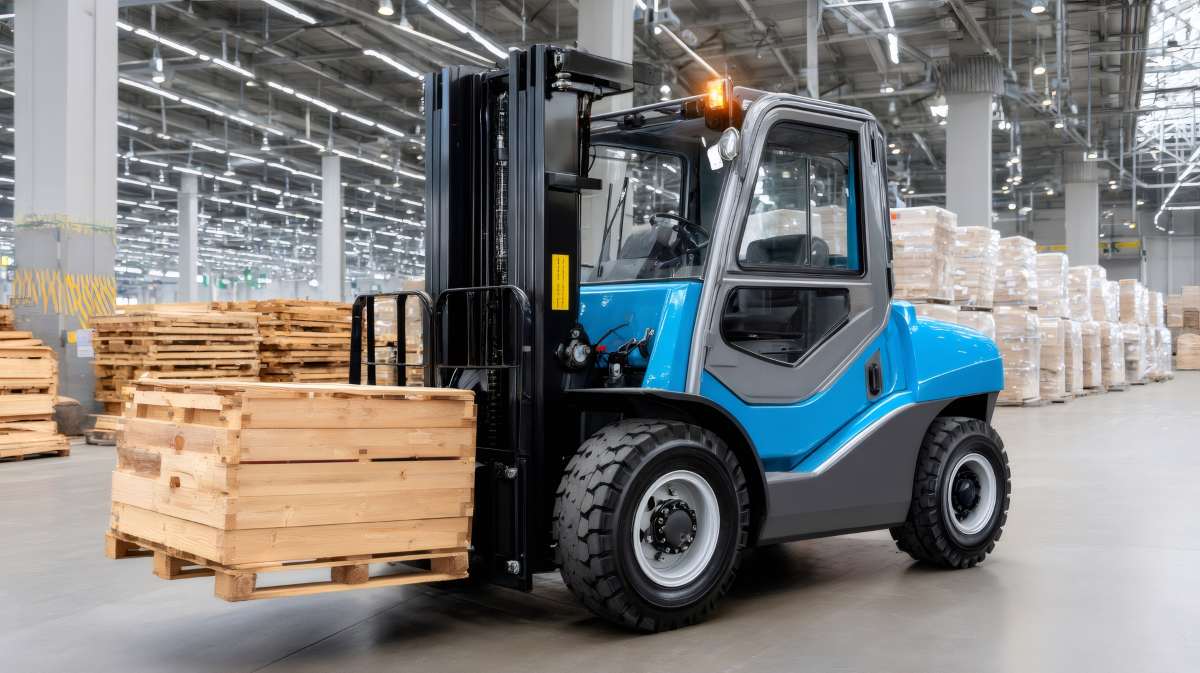
Amber Flashing Beacon: Required for forklifts travelling at less than 25 mph.
Lighting: Forklifts must have front and rear position lamps and rear reflectors as a minimum. If exceeding 15 mph, dipped beam headlamps and indicators are also necessary.
Seat Belts: Must be worn if fitted to the vehicle.
A “public road” includes car parks and private roads where the public has access, so it is always safer to assume that road rules apply in these areas.
Definition of a Work Truck
A forklift is considered a work truck under the Road Vehicles (Construction and Use) Regulations 1986 when it is primarily designed for use on private premises but occasionally operates on public roads. Work trucks may be used on the road for delivering goods within 914 metres to or from private premises, to or from another vehicle on the road, or in connection with road works.
HGV Weight Classes for Larger Forklifts
Light Goods Vehicle (LGV): Forklifts with a GVW (Gross Vehicle Weight) of 3,500 kg or less.
Heavy Goods Vehicle (HGV) / Large Goods Vehicle (LGV): Forklifts with a GVW exceeding 3,500 kg.
Category C1: For forklifts weighing between 3,500 kg and 7,500 kg. Operators who passed their car test before January 1997 typically have this category automatically.
Category C (Class 2): Required for rigid vehicles over 7,500 kg.
For travel over 1,000 yards, vehicle weight must be taken into account when determining the required licence category.
Insurance Requirements
The insurance required for operating a forklift on public roads depends on the level of cover and the vehicle’s intended use:
Third-Party Road Risks Insurance: This is the legal minimum, covering injury or death to third parties and property damage.
Comprehensive Forklift Insurance: Provides broader protection, including repair or replacement costs for your forklift, theft, or fire damage, regardless of fault.
Public Liability Insurance: Not mandatory for road use, but protects against claims from the public for injuries or property damage.
Employers’ Liability Insurance: Required if employees operate forklifts, protecting your business from claims in the event of operator injury.
Specialist “Plant and Machinery” Insurance: Designed for the risks associated with construction, lifting, and agricultural equipment.
Ensure your insurance policy includes explicit road risks or auto-liability coverage, as standard public liability and business policies do not cover accidents on public roads. Even if your forklift is classified as a work truck, road use insurance remains necessary.
Financial Penalties
Employers may face fines of up to £20,000 for non-compliance.
Storage fee: £21 per day while the vehicle is impounded.
Insurance premiums may increase following violations.
Legal Consequences
Magistrate’s Court: Fines up to £20,000 and/or imprisonment for up to one year.
Crown Court: Unlimited fines and maximum sentence of two years.
Business Impact
Operators may face dismissal.
Insurance premiums for businesses may rise sharply.
Forklift operating licences may be revoked.
Operations may be disrupted by impounded equipment.
Common Misconceptions About Forklift Road Use
“It’s Just a Quick Cross-Road Trip”: All legal requirements apply, even for minimal road use such as crossing between private premises. Distance does not exempt you from compliance.
“Private Property Means No Rules”: Land may be considered public for legal purposes if it is accessed and used by the public, regardless of signage. Industrial estates and business parks are usually treated as public roads.
“Work Trucks Don’t Need Registration”: This is incorrect. Regardless of distance, vehicles must be registered, taxed, insured, and operated by a fully licensed and formally trained driver.
This guide reflects UK legislation as of 2025. It is essential to consult current DVLA guidance and seek legal advice for specific circumstances, as road traffic laws may change and individual situations may require additional consideration.

 01708 861 414
