Forklift attachments extend equipment capability beyond basic load handling. Among the most commonly confused are side shifters and fork positioners – both involve lateral movement of forks, both improve operational efficiency, but they serve distinctly different purposes.
The confusion stems from superficial similarity. Both attachments move forks horizontally. Both help operators position loads more precisely. Both reduce the need for repositioning the entire vehicle to align forks with pallets or loads.
However, the mechanisms differ, the applications differ, and the operational benefits each provides are not interchangeable. Understanding these differences enables informed decisions about which attachment suits specific operational requirements.
A side shifter moves the entire fork carriage laterally relative to the forklift mast. The forks and their mounting frame shift as a single unit, typically 100-150mm in each direction from the centred position.
This lateral movement allows operators to adjust fork position without repositioning the vehicle. When approaching a pallet that’s not perfectly aligned with the forklift, the operator can shift the forks sideways to match the pallet entry points rather than reversing and re-approaching at a different angle.
The mechanism uses hydraulic cylinders to push the carriage left or right along a mounting frame attached to the mast. Control is through additional hydraulic levers or switches in the operator compartment, allowing precise positioning while stationary or moving slowly.
Side shifters maintain the fixed spacing between individual forks. Both forks move together as a unit. This means the attachment doesn’t address situations where loads require non-standard fork spacing – it only changes the lateral position of the fork pair relative to the vehicle centreline.
Capacity implications matter. Side shifters add weight and introduce an additional pivot point between the mast and forks. This typically reduces the forklift’s effective lifting capacity by 100-200kg depending on the specific attachment and forklift model. Operators must account for this reduced capacity when handling maximum loads.
Fork positioners adjust the spacing between individual forks, allowing operators to match fork width to varied pallet or load dimensions without manual fork repositioning.
Standard forklifts require operators to physically move forks along the carriage to match different pallet widths. This manual adjustment is time-consuming, requires the operator to dismount from the vehicle, and often involves awkward physical manipulation of heavy fork assemblies.
A fork positioner uses hydraulic power to move forks closer together or further apart while the operator remains in the operating position. The mechanism typically includes hydraulic cylinders that push or pull fork mounting points along the carriage, with the operator controlling movement through cab-mounted controls.
This capability is particularly valuable in operations handling diverse pallet sizes. An operator can adjust fork spacing from 200mm for narrow loads to 1200mm or more for wide pallets, all without leaving the seat. The time saved across multiple adjustments during a shift translates to significant productivity improvement.
Fork positioners maintain symmetrical fork positioning. Most designs move both forks simultaneously, keeping them equidistant from the carriage centreline. This ensures balanced load distribution and prevents the stability issues that could arise from asymmetric fork placement.
Like side shifters, fork positioners affect load capacity. The additional mechanical components and hydraulic systems add weight to the carriage assembly, reducing available lifting capacity. The magnitude of capacity reduction varies with positioner design and forklift specifications.
Side shifters excel in operations where precise lateral positioning matters but fork spacing remains relatively constant.
Loading and unloading vehicles where pallets aren’t perfectly aligned benefits significantly from side shift capability. Rather than repositioning the forklift multiple times to centre forks on each pallet, operators make small lateral adjustments to compensate for pallet placement variations. This reduces loading and unloading time substantially.
Narrow aisle operations gain efficiency from side shifters. In confined spaces where repositioning the entire forklift is difficult or time-consuming, the ability to shift forks laterally enables operators to access loads that would otherwise require awkward manoeuvring.
Racking operations where pallet positioning varies slightly between locations see productivity improvements from side shifters. Operators can adjust fork position to match the actual pallet location rather than the theoretical centre of the racking position, accommodating the small variations that inevitably occur in real-world storage systems.
Fork positioners suit operations handling multiple pallet sizes or non-palletised loads with varying widths.
Facilities receiving goods on Euro pallets, UK standard pallets, and North American pallets need to adjust fork spacing frequently to handle these different dimensions safely. Manual adjustment between each pallet type becomes impractical when processing mixed deliveries. Fork positioners enable rapid switching between fork spacings appropriate to each pallet type.
Handling non-palletised loads – crates, containers, or bundled materials with varying widths – requires flexibility that fixed fork spacing cannot provide. Fork positioners allow operators to optimise fork placement for each load configuration, improving stability and reducing damage risk.
Operations in sectors like manufacturing, where products move on custom fixtures or containers rather than standard pallets, benefit from the adaptability fork positioners provide. The ability to precisely match fork spacing to each load type supports safe, efficient handling across diverse product ranges.
Some applications benefit from both capabilities simultaneously. Combined side shifter and fork positioner attachments integrate both functions in a single unit.
These combination attachments allow lateral shifting of the entire fork carriage plus independent adjustment of fork spacing. This provides maximum positioning flexibility – operators can compensate for misaligned loads while also adjusting fork width to suit different pallet or load dimensions.
The operational efficiency gains from combined attachments are substantial in facilities handling varied pallet types in environments where precise positioning is frequently required. A single forklift equipped with combined attachment can handle the full range of positioning requirements without requiring multiple specialised vehicles.
However, combined attachments impose the greatest capacity penalty. The additional weight and mechanical complexity of integrating both systems reduces lifting capacity more than either attachment individually. This capacity reduction may eliminate combined attachments as options for operations regularly handling loads near maximum forklift capacity.
Cost considerations also differ. Combined attachments represent significant investment compared to standard fork carriages or single-function attachments. The financial justification requires substantial operational benefit from the added versatility.
Both attachments introduce additional hydraulic systems and mechanical components that require maintenance beyond standard forklift servicing.
Side shifters include hydraulic cylinders, mounting frames, and guide assemblies that experience substantial forces during operation. Regular inspection of hydraulic seals, structural mounting points, and wear surfaces prevents failures that could cause load drops or equipment damage.
Fork positioners involve more complex mechanical systems given the requirement to move heavy fork assemblies along the carriage while maintaining proper alignment and load support. The sliding mechanisms and positioning locks require particular attention to prevent play or misalignment that could affect load stability.
Preventative maintenance for safer operations becomes more critical with attachments. The additional systems create additional potential failure points. Neglected maintenance leads to reduced reliability and increased risk of incidents during operation.
Hydraulic leak detection matters particularly for these attachments. Leaks not only affect attachment function but can create slip hazards on warehouse floors. Regular inspection and prompt repair of hydraulic system issues maintain both attachment performance and general workplace safety.
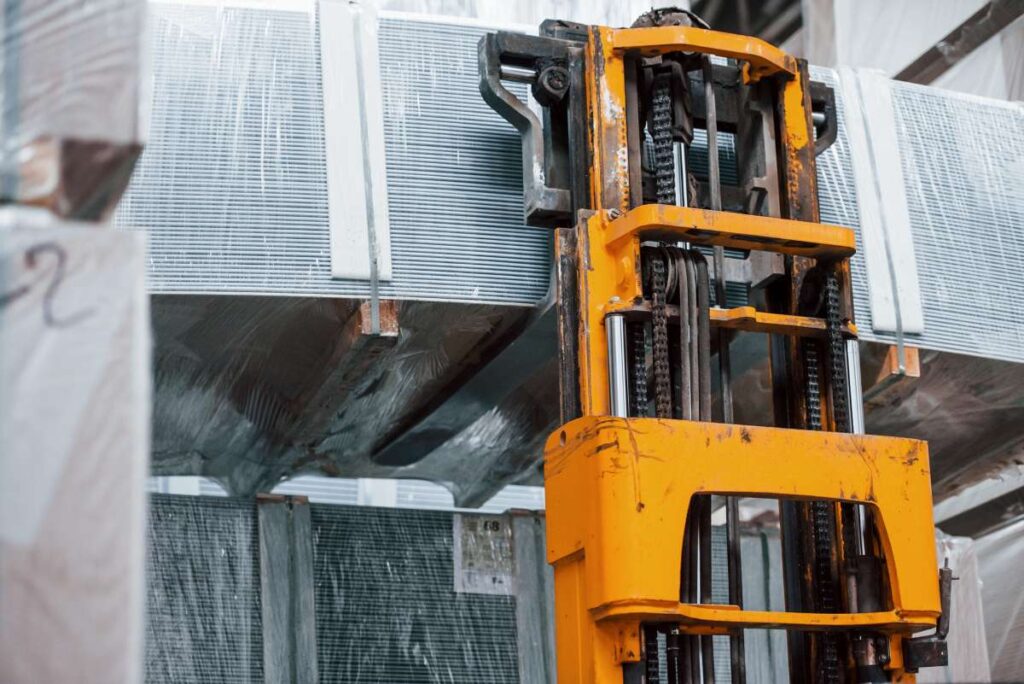
Both attachments affect forklift load capacity and must be factored into safe working load calculations.
The additional weight of attachments reduces available lifting capacity. Load charts provided with forklifts specify maximum capacities based on standard fork carriages. Installing side shifters or fork positioners requires reference to modified load charts that account for attachment weight.
Side shifters also affect stability when loads are shifted laterally. Moving a load sideways shifts the combined centre of gravity of the forklift and load, potentially reducing stability margins. Operators must understand that maximum rated capacity may not be safe when the side shifter is positioned at full lateral extension, particularly with loads at elevated heights.
Fork positioners affect load distribution across forks. When forks are positioned close together handling narrow loads, weight concentration increases compared to wider fork spacing with the same load. This influences how the forklift handles and may require adjusted operating practices for optimal stability.
Proper operator training on attachment-specific considerations is essential. Operators competent with standard forklifts need additional instruction on how attachments affect vehicle behaviour and what adjustments to operating technique are necessary for safe use.
Choosing between side shifters and fork positioners requires analysing specific operational requirements rather than assuming one solution suits all applications.
Operations handling predominantly standard pallets in environments where alignment variations are common benefit most from side shifters. The lateral positioning capability addresses the primary efficiency limitation without the complexity of variable fork spacing.
Facilities processing diverse pallet types or non-standard loads require fork positioner capability. The time savings from hydraulic fork adjustment compared to manual repositioning justifies the investment when operators make spacing changes frequently throughout shifts.
Mixed operations handling both varied pallet sizes and experiencing alignment challenges might justify combined attachments despite higher cost and capacity reduction. The operational analysis should quantify time savings and productivity improvements to determine whether benefits offset additional investment.
Consultation with equipment suppliers who understand your specific operations helps identify optimal solutions. Generic recommendations rarely account for the operational nuances that determine which attachment provides best value in particular applications.
Introducing attachments requires specific operator training beyond basic forklift certification.
Operators need to understand how each attachment functions, what its capabilities and limitations are, and how it affects vehicle handling characteristics. This includes practical instruction on control operation and hands-on experience using attachments under various load conditions.
Training should cover the capacity implications of attachments and how to verify safe working loads when using side shifters in lateral positions or fork positioners at various spacing configurations. Operators must understand that rated capacities change depending on attachment position and configuration.
Misuse prevention requires clear instruction on inappropriate applications. Operators might attempt to use side shifters to reach loads beyond normal fork reach, creating serious stability risks. Fork positioners shouldn’t be adjusted while loads are elevated, as uneven fork movement could destabilise loads. Training must explicitly address these prohibited practices.
Regular refresher training ensures operators maintain proper technique and don’t develop unsafe shortcuts that compromise the safety benefits attachments are meant to provide alongside their efficiency improvements.
Side shifters and fork positioners solve different operational challenges. Neither is universally superior – appropriateness depends entirely on specific application requirements.
The investment in either attachment makes sense when operational analysis demonstrates clear productivity or safety benefits that justify costs. Choosing attachments based on what other facilities use or general assumptions about benefits often results in underutilised capabilities or missed opportunities to address actual operational limitations.
Proper implementation requires not just the attachment itself but also appropriate training, maintenance protocols, and operational procedures that enable the benefits each attachment type provides.




 01708 861 414
