On this page
Forklift maintenance doesn’t pause for budget meetings or staffing shortages. Equipment requires regular service whether you have internal technicians or not. The question isn’t whether to maintain forklifts – it’s who should do it and how to structure that work most effectively.
The answer varies considerably depending on fleet size, technical capabilities, and operational priorities. What works for a large distribution centre with 30 forklifts won’t necessarily suit a small manufacturing operation running three machines.
The Case for In-House Service
Larger operations with substantial fleets often find in-house maintenance makes economic sense. A full-time technician becomes cost-effective when you’re servicing 15-20 forklifts regularly. Below that threshold, you’re paying someone to wait for equipment to need attention.
Response time is the primary advantage. When a forklift fails mid-shift, an on-site technician diagnoses and often fixes the problem within hours. External service providers need scheduling, travel time, and potentially parts sourcing before work begins. That delay costs productivity.
In-house technicians develop intimate knowledge of specific equipment. They know which forklift has the temperamental hydraulic system, which one consumes oil faster than specification, and which operator tends to be harder on equipment than others. This familiarity enables preventive interventions that outside technicians simply can’t match.
Parts inventory management also improves with in-house service. Stock commonly needed filters, belts, and minor components on-site. Replace them during scheduled maintenance rather than ordering emergency parts at premium prices when equipment fails.
Challenges of Internal Maintenance
Hiring qualified forklift technicians is difficult. The skills required – hydraulics, electrical systems, engine mechanics – command decent wages. Smaller operations struggle to offer competitive packages that attract experienced technicians, particularly in regions where industrial maintenance jobs are plentiful.
Training and certification costs add up. Technicians need ongoing education as forklift technology evolves. Electric forklifts, for example, require different expertise than diesel models. Keeping staff current with manufacturer updates and safety regulations requires both time and money.
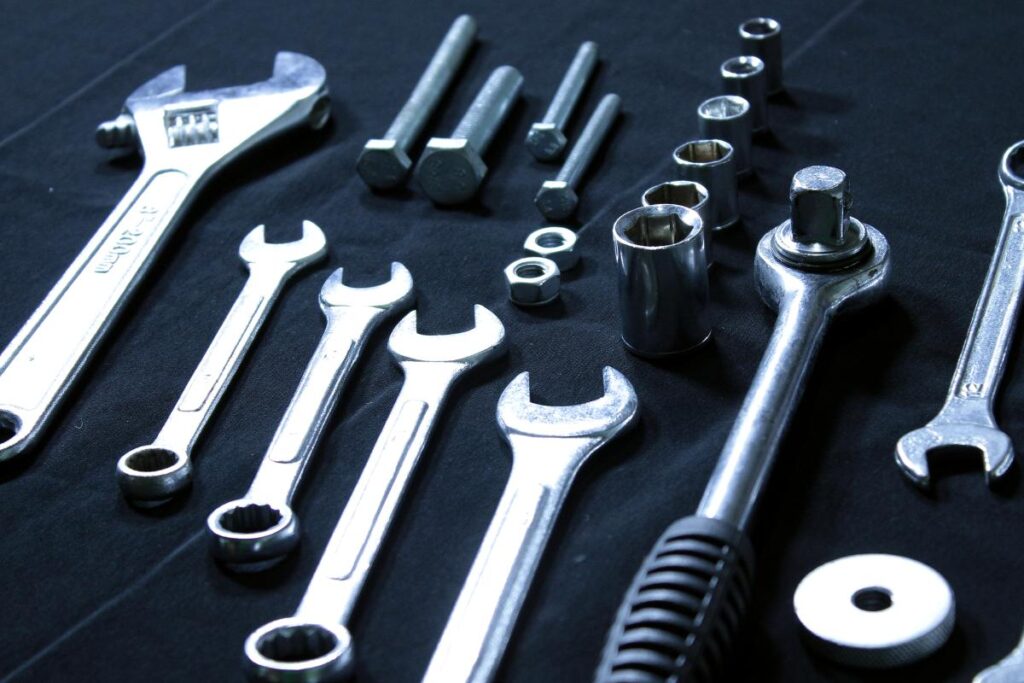
Tool and equipment investment represents another hidden cost. Proper forklift maintenance requires diagnostic equipment, hydraulic test apparatus, and specialised tools that can easily exceed £10,000 for a basic setup. Advanced diagnostic computers for modern electronic systems cost significantly more.
Workload fluctuates unpredictably. Some weeks your technician barely stops. Other periods see minimal maintenance requirements. You’re paying a full-time wage regardless of the work volume, which creates inefficiency during quiet periods.
The Outsourced Approach
External service providers spread their fixed costs across multiple customers. This makes professional expertise accessible to operations that can’t justify a full-time technician. You pay for the hours needed rather than maintaining constant coverage.
Access to manufacturer-trained specialists matters more as forklifts become increasingly complex. Modern machines incorporate sophisticated electronics and computer systems that require specialised diagnostic tools and training. Service providers maintain these capabilities because they service enough equipment to justify the investment.
Warranty protection often requires using authorised service centres. Manufacturer warranties typically specify that only certified technicians perform certain repairs. Using in-house staff without proper authorisation can void warranty coverage, leaving you exposed to major repair costs.
Liability considerations favour outsourcing in some situations. Service companies carry insurance covering their work. If a technician makes an error that causes equipment failure or safety incidents, their insurance responds. In-house maintenance places that liability risk squarely on your business.
Financial Analysis
Calculate the full cost of in-house maintenance honestly. Salary is obvious, but include employer national insurance, pension contributions, holiday pay, sick leave coverage, training, tools, workspace, and parts inventory. The total often surprises managers who initially focus only on the base wage.
Compare this to contracted service costs. Request quotes covering scheduled preventive maintenance plus an estimate for reactive repairs based on your historical failure rates. Some providers offer fixed monthly fees covering all maintenance, which simplifies budgeting and eliminates surprise repair bills.
The crossover point varies, but operations with fewer than 10-12 forklifts typically find outsourced service more economical. Larger fleets benefit from in-house capability, though many still use external contractors for major overhauls or specialist work.
Hybrid Models
Combining internal and external resources often delivers the best results. Employ an in-house technician for routine maintenance, minor repairs, and immediate troubleshooting. Contract external specialists for complex repairs, annual inspections, and work requiring manufacturer certification.
This approach provides fast response for common issues whilst maintaining access to specialist expertise when needed. It also gives your internal technician someone to consult on difficult problems rather than attempting repairs beyond their capability.
Some operations train existing maintenance staff to handle basic forklift service rather than hiring dedicated technicians. This works for smaller fleets where forklift maintenance represents only part of the maintenance workload. The general maintenance team handles oil changes, visual inspections, and minor adjustments whilst outsourcing anything complex.
When to Call Professionals
Knowing when professional service is needed is key. Certain repairs shouldn’t be attempted without proper expertise. Mast repairs, major hydraulic system work, and anything involving load-bearing components requires qualified technicians regardless of your service model. The safety implications of improper repairs are too significant to risk amateur attempts.
Electrical system diagnostics on modern forklifts increasingly require manufacturer-specific diagnostic software that isn’t available to general technicians. Even well-equipped in-house maintenance teams sometimes need external assistance for electronic troubleshooting.
Transmission and drivetrain overhauls represent another area where specialist knowledge matters. These components are expensive and critical. Mistakes during rebuild lead to premature failure and safety risks.
Service Quality Considerations
In-house technicians answer to your management. Their priority is your operation’s needs. External contractors serve multiple customers and may not always prioritise your equipment emergencies, particularly if you’re a smaller account.
However, external providers stake their reputation on quality work. A service company that consistently delivers poor results won’t stay in business. In-house technicians without adequate supervision can develop complacency that affects work quality.
Regular auditing matters regardless of service model. Review maintenance records, inspect completed work, and verify that preventive maintenance actually happens on schedule rather than being deferred or documented without completion.
Making the Decision
Start with your current situation. How many forklifts do you operate? What’s their age and condition? How often do they require repair currently? Then, assess your technical resources honestly. Do you have staff with relevant mechanical skills? Can you recruit qualified technicians in your area? What would they cost?
Consider your operational model. Operations running 24/7 may need immediate repair capability that only in-house service provides. Single-shift operations have more flexibility to wait for scheduled service appointments.
The decision isn’t permanent. Operations that outsource service can bring maintenance in-house as fleets grow. Businesses with internal technicians can shift to outsourced models when retirement or resignation creates staffing gaps. Flexibility matters more than commitment to a single approach.
For many businesses, our expert maintenance for all forklift brands delivers better results than attempting to build internal capability. The economics, quality, and risk management all favour outsourcing for smaller operations. Larger facilities have different calculations, but even they benefit from external partnerships for specialist work.
Neither approach is inherently superior – the right choice depends on your specific circumstances, evaluated honestly and reviewed regularly as those circumstances change.