On this page
- Reach Trucks: The Narrow Aisle Default
- Very Narrow Aisle (VNA) Trucks: When Reach Isn’t Enough
- Articulated Forklifts: A Smart Middle Ground
- Order Pickers for Item-Level Work
- What Aisle Width Are You Actually Working With?
- Lift Height and Load Weight Considerations
- Floor Conditions Matter More Than You Think
- Operator Training Matters Just as Much
- Getting the Specification Right
Narrow aisle warehousing is the most expensive square footage you’ll ever pay for, and the trucks you choose to work it determine whether that investment pays off. A standard counterbalance forklift in a 2.5-metre aisle is a productivity disaster waiting to happen; reverses, three-point turns, and constant hesitation eat your throughput while operators fight equipment that wasn’t designed for the space.
The right narrow aisle truck transforms the same warehouse from frustrating to fast. Here’s what to look at, drawn from the manufacturers we work with at Acclaim Handling.
Reach Trucks: The Narrow Aisle Default
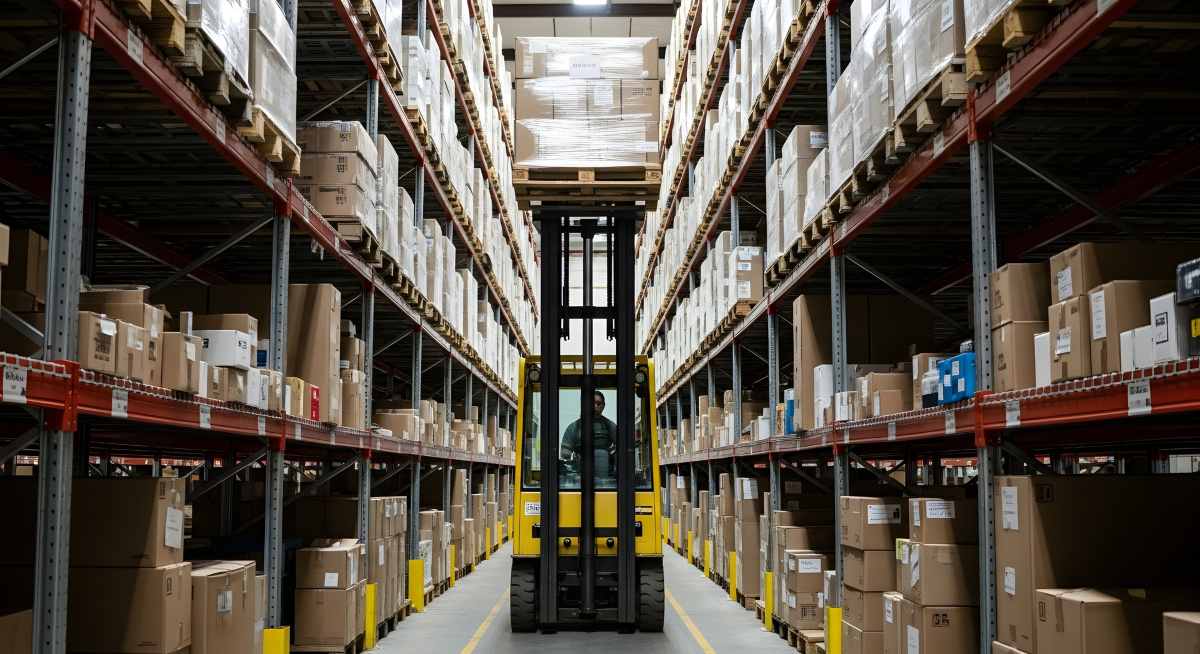
Reach trucks are what most operators picture when they hear “narrow aisle,” and for good reason. The pantograph or moving mast design lets the truck remain narrow while still placing pallets deep into racking, and the operator stands at the side rather than sitting behind the load, which gives genuinely useful sightlines.
A typical reach truck operates comfortably in aisles from 2.4 to 2.8 metres, lifts up to around 12 metres, and handles 1.4 to 2.5 tonne loads. Within our range, the STILL FM-X is the reach truck we’d point most operators toward; it’s purpose-built for narrow aisle work, with sophisticated mast control, OPTISPEED for adaptive travel, and an operator station designed for full-shift comfort.
What separates a great reach truck from a mediocre one is usually the cabin design and lift speed. Operators in narrow aisles spend their entire shift in tight quarters, and small differences in visibility, control ergonomics, and travel speed compound across thousands of pallet movements. The truck that’s 5% faster per cycle isn’t 5% better; it’s 5% more pallets through the door every shift.
Very Narrow Aisle (VNA) Trucks: When Reach Isn’t Enough
If your aisles drop below 2.4 metres, you’ve moved into very narrow aisle territory, and reach trucks stop being the right answer. VNA trucks are a different category entirely. These are turret trucks, articulated forklifts, or man-up combination trucks designed to work in aisles as tight as 1.6 metres.
The classic VNA configuration uses fixed wire guidance or rail guidance in the aisle, with the truck travelling straight down the aisle while the load handler rotates 90 degrees to place pallets without the truck itself turning. The operator usually rises with the load on man-up trucks, which gives precise picking control at height but requires more training and careful safety protocols.
The STILL MX-X turret truck is built specifically for this kind of work. They’re significantly more expensive than reach trucks, both at purchase and in the supporting infrastructure (guidance systems, specialised flooring, dedicated training), but they unlock storage densities that simply aren’t achievable any other way. We supply them across our order pickers and VNA equipment range, with the specification advice and post-sale support to make them work in your operation.
Articulated Forklifts: A Smart Middle Ground
Articulated forklifts deserve a specific mention because they bridge a useful gap. These trucks operate in aisles around 1.8 to 2.2 metres without requiring guidance systems, which makes them a practical choice for operators who want VNA storage densities without the infrastructure investment.
The articulating front section pivots, allowing the truck to face into the rack while the rear remains in the aisle. You get most of the storage density benefits of a turret truck with the operational flexibility of a counterbalance, and the same machine can typically handle yard work or container loading when needed.
For operations that don’t have the volume to justify a fully dedicated VNA setup but want better than reach truck densities, articulated forklifts are often the right answer.
Order Pickers for Item-Level Work
Narrow aisle conversations often focus on pallet movement, but a significant portion of warehouse work is case picking and split-case picking from racking. Order pickers are the truck of choice here, with operators rising on a platform alongside the load to pick individual items at height.
These are not high-throughput pallet movers; they’re precision tools for fulfilment operations. If your warehouse runs ecommerce or distribution work where pickers are pulling specific items rather than moving full pallets, an order picker fleet is essential, and we can specify the right configuration based on your pick height and density requirements.
What Aisle Width Are You Actually Working With?
Before specifying any narrow aisle truck, you need to be honest about your aisle widths. The number stamped on your warehouse drawing is rarely the working dimension; you have to subtract the rack overhang, account for truck swing during the loading cycle, and leave realistic clearance for safe operation. An aisle drawn at 2.7 metres often has 2.5 metres of working width once you’ve accounted for everything.
Get this measurement wrong and you’ll buy the wrong truck. We’ve seen operators specify reach trucks for aisles that genuinely needed VNA equipment, and the result is months of slow operation before the spec gets corrected. Equally, some operators over-engineer their truck choice and spend on capability they’ll never use. We offer free site visits precisely because measuring properly in person prevents the kind of mismatched purchase that costs everyone time and money.
Lift Height and Load Weight Considerations
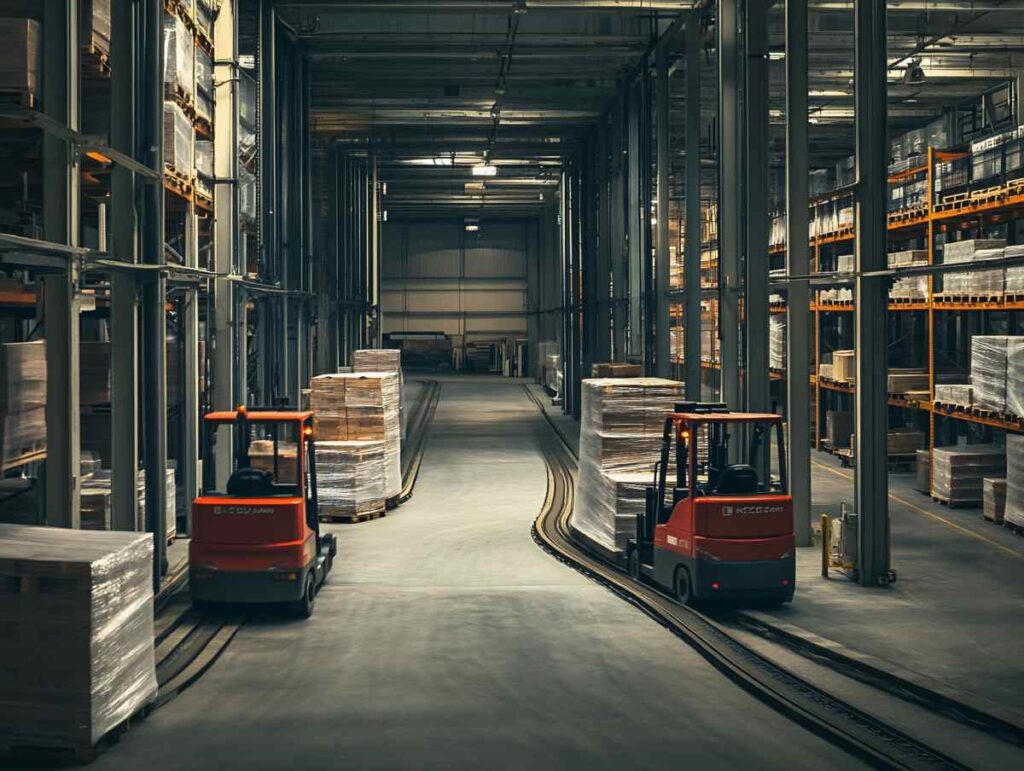
Narrow aisle storage tends to go vertical, which means lift height becomes as important as aisle width. A reach truck rated for 12-metre lift will perform very differently at 6 metres than at full extension; residual capacities drop significantly with height, so a truck rated at 1.6 tonnes at ground level might only handle 800kg at top extension.
Match the truck’s residual capacity at your maximum working height to your actual load weights, with realistic margins. Underspeccing here is dangerous and costly, because operators will end up making half-loads or refusing loads entirely once they realise the truck can’t safely manage what’s being asked of it.
Floor Conditions Matter More Than You Think
Narrow aisle trucks, particularly VNA equipment, demand exceptional floor flatness. The tolerances published by manufacturers (typically referenced against FM2 or FM1 standards) aren’t suggestions; a floor that’s slightly out of spec causes mast deflection at height that can become genuinely dangerous on man-up equipment.
If your warehouse floor wasn’t specified for narrow aisle work, you may need remedial work before installation. This is a real cost that gets missed in many narrow aisle conversions.
Operator Training Matters Just as Much
A narrow aisle truck in untrained hands is a liability rather than a productivity asset. Reach truck and VNA training are specialised qualifications, distinct from standard counterbalance certification. We’re an RTITB-accredited training provider, and our courses cover reach truck, very narrow aisle, multi-directional sideloader, and pivot steer / Bendi / Flexi training, run by five accredited instructors across the UK.
Specifying the right truck and getting your operators properly trained on it are two halves of the same decision; doing one without the other doesn’t deliver the result you’re paying for.
Getting the Specification Right
Warehouse layout planning for narrow aisle operations is genuinely complex, and the truck choice can’t be separated from the racking design, the floor specification, the throughput targets, and the operator capability you have available.
If you’re planning a new operation or rethinking an existing warehouse, hire a forklift from Acclaim Handling to trial different configurations before committing. Hire packages start from a single day, with breakdown cover included, so you can spend a few weeks with the right truck in your actual aisles.