There’s a persistent assumption in materials handling that owning equipment is always preferable to hiring it. Ownership feels permanent, reliable, and somehow more serious. Hiring, by contrast, gets treated as a temporary fix, something a business does when it can’t afford to buy. That framing misses the point entirely. Forklift hire is a financial and operational strategy in its own right, one that outperforms ownership in a surprisingly wide range of scenarios. Here’s where and why it works.
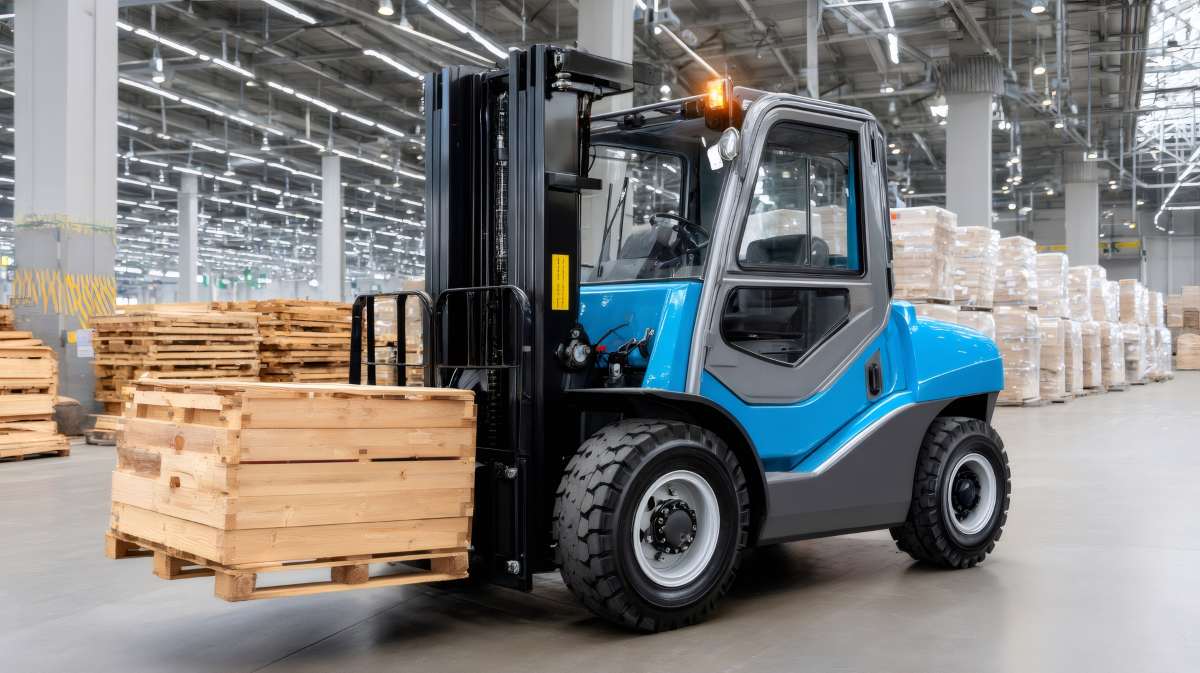
A new counterbalance forklift from a reputable manufacturer typically costs somewhere between £20,000 and £50,000, depending on specification. Specialist equipment sits considerably higher. For a business purchasing multiple units, that’s a significant capital outlay tied up in depreciating assets. Hire converts that capital expenditure into an operational expense: a predictable monthly cost that doesn’t drain reserves or require financing.
This isn’t just accounting housekeeping. Capital that isn’t locked into equipment is capital available for growth, for hiring staff, for expanding warehouse capacity, or simply for maintaining a financial buffer against uncertain trading conditions. Particularly for SMEs and businesses in growth phases, preserving liquidity has real strategic value. Hire arrangements achieve this without sacrificing access to the equipment the operation requires.
Yes, and more substantially than most businesses expect. Hire agreements, particularly from established suppliers, typically include maintenance and servicing within the contract. That means routine servicing, tyre replacement, battery management, and breakdown response are the supplier’s responsibility, not the customer’s.
This removes an entire category of unpredictable cost. Owning a forklift means absorbing every maintenance bill: scheduled servicing, emergency repairs, parts, and labour. It also means either employing or contracting engineering capability, which is an overhead that scales with fleet size. Under a hire arrangement, the supplier manages the maintenance programme, and because they’re servicing their own asset, they have a strong commercial incentive to do it properly.
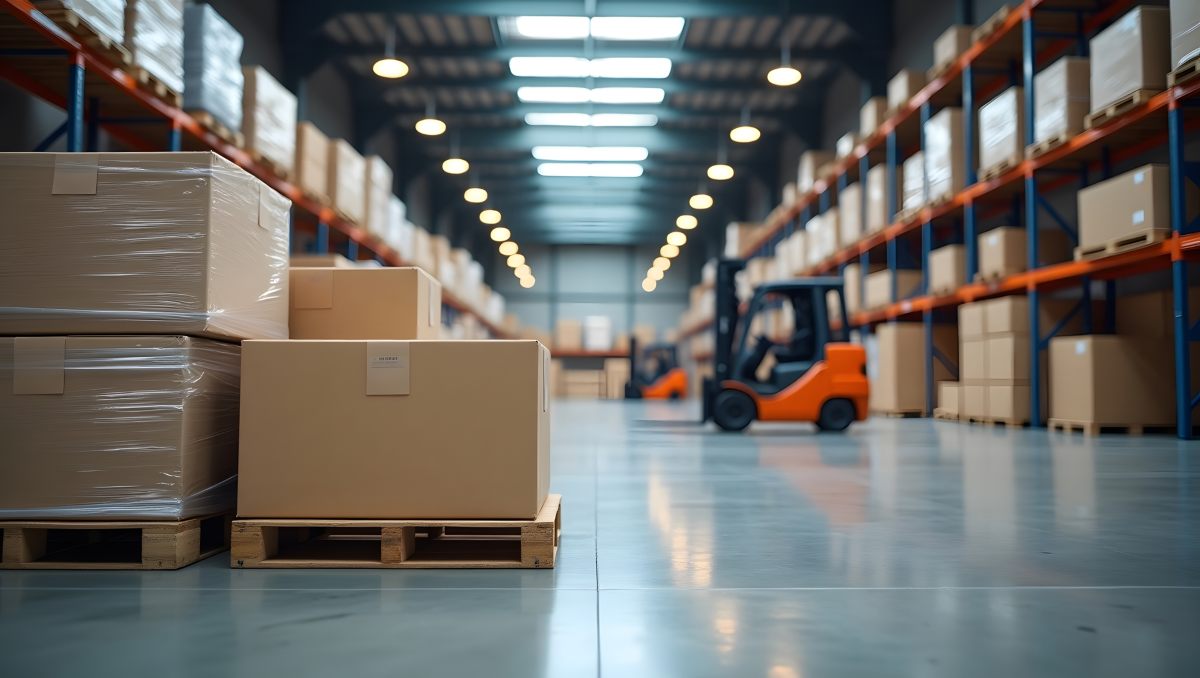
Seasonal businesses, operations tied to retail cycles, harvest periods, or construction project timelines, face a fundamental problem with ownership. Buying enough equipment to cover peak demand means carrying idle capacity through every quieter period. The trucks still depreciate, still require storage, still need periodic servicing even when they’re not running. That idle cost is a drag on profitability that’s easy to overlook because it doesn’t arrive as a single invoice.
Hiring allows capacity to track actual demand. Extra trucks can be brought in for peak periods and returned when volumes drop. This is precisely how hiring forklifts reduces warehouse downtime during busy periods without leaving a business paying for machines that sit unused for months of the year. The flexibility to scale up and down without penalty, something most ownership models don’t permit, is one of the strongest arguments for hire in volatile or seasonal markets.
Forklift technology moves faster than it used to. Lithium-ion battery systems, integrated telematics, improved ergonomic designs, and advanced safety features are all developments of the last decade that make older machines look increasingly dated. An owned fleet ages. Its technology reflects the year of purchase, not the current state of the market.
Hire agreements typically supply newer machines, and at the end of a contract period, the equipment can be upgraded. This means operations benefit from current technology without the cost of repeatedly purchasing new machines. For businesses where energy efficiency, emissions compliance, or operator safety are priorities, this ongoing access to modern equipment is a meaningful advantage over static ownership.
Some operations need a specific type of machine for a limited period: a rough-terrain forklift for an outdoor construction phase, a narrow-aisle reach truck for a warehouse reconfiguration, or a heavy-capacity unit for a one-off project. Purchasing specialist equipment for short-term use is rarely justifiable.
Hire solves this cleanly. The business gets access to the right specification for the duration of the requirement and returns it when the job is done. No residual asset to manage, no depreciation to absorb, and no need to find a buyer for a machine the operation no longer needs. Providers offering industrial forklift rental services with broad stock across multiple capacity classes and power types make this kind of targeted, application-specific hiring practical.
Forklifts in the UK are subject to LOLER 1998 and PUWER 1998, which require thorough examinations at prescribed intervals, typically every six or twelve months depending on the equipment and its use. These are legal obligations, and non-compliance carries serious consequences.
Under a hire arrangement, the supplier is usually responsible for ensuring equipment remains compliant. Thorough examinations are scheduled and managed as part of the contract. This removes the administrative burden from the customer and reduces the risk of an examination being missed or overdue. It also ensures the examination is carried out by a competent person, since established hire companies use CFTS-accredited inspectors as standard.
Owned equipment still needs the same examinations, but the responsibility for scheduling and managing them sits entirely with the owner. In busy operations, particularly those without dedicated fleet management, this administrative task can slip, which creates legal exposure.
A breakdown on an owned forklift means calling an engineer, waiting for availability, potentially waiting for parts, and absorbing the downtime cost. A breakdown on a hired forklift is the supplier’s problem. Established hire companies maintain mobile engineering teams and regional service centres specifically to minimise downtime for their hire fleet, because every hour a machine is out of service is an hour that erodes the customer relationship.
The best hire agreements guarantee response times, often measured in hours. Some suppliers will deliver a replacement truck while the original is being repaired, which is something that ownership simply can’t replicate unless the business maintains its own spare fleet, an expensive form of insurance.
For businesses subject to IFRS 16 or similar accounting standards, the treatment of leases and hire agreements has become more complex. Short-term hires (typically under twelve months) can often be treated as a simple operating expense, keeping them off the balance sheet entirely. This can be advantageous for businesses managing debt-to-asset ratios or seeking to present cleaner financial statements.
Longer-term hire arrangements may need to be capitalised depending on their structure, but even then, the predictability of fixed monthly costs simplifies budgeting and forecasting compared to the lumpy, unpredictable cost profile of owned equipment.
Hiring a forklift isn’t a concession. It’s a decision that, in the right circumstances, delivers better financial flexibility, lower operational risk, and access to newer, better-maintained equipment than ownership can match. The question isn’t whether a business can afford to hire. It’s whether it can afford to own.

We prioritize accuracy and integrity in our content. Here's how we maintain high standards:
Our content is carefully reviewed by experienced professionals to ensure accuracy and relevance.
Look for the expert-reviewed label to read content you can trust.
 01708 861 414
