An operator who finishes an eight-hour shift with a sore back, stiff neck, or numb hands isn’t just uncomfortable. They’re less alert, less precise, and more likely to make the kind of error that damages stock, equipment, or people. Ergonomics in forklift design isn’t a luxury specification; it’s a productivity and safety consideration that directly affects how well the machine performs its function across a full working day. The truck doesn’t operate itself. It operates through a human being, and that human being’s physical condition over the course of a shift shapes everything from cycle times to incident rates.
Because the operator spends their entire shift inside it. A compartment that’s cramped, poorly laid out, or difficult to enter and exit creates cumulative fatigue that worsens as the hours pass. Modern forklift design has moved significantly beyond the purely functional cabs of older machines, but the quality of the operator environment still varies enormously between manufacturers and models.
Entry and exit is one of the most overlooked ergonomic factors. Operators getting on and off a forklift dozens of times per shift, particularly in order picking or multi-zone operations, are at risk of knee, hip, and lower back injuries if the step height is awkward or there are no adequate grab handles. A well-designed cab places the step at a height that doesn’t require an exaggerated step up, with handles positioned where the operator naturally reaches. The three-point contact rule (two hands and one foot, or two feet and one hand) should be possible without contortion.
Floor space inside the compartment should allow the operator to adjust their seating position and foot placement without restriction. Pedal placement that forces an unnatural ankle angle, or a steering column that crowds the operator’s knees, creates discomfort that translates into distraction over time. Small design details, rubber floor mats that reduce vibration transmitted through the feet, padded armrests on the seat, a tilt-adjustable steering column, compound into a measurably better working experience.
The seat is arguably the single most important ergonomic component. It absorbs the vibration and shock that the truck transmits through its chassis, and a poor seat transmits those forces directly into the operator’s spine. Whole-body vibration exposure is a recognised occupational health risk under the Control of Vibration at Work Regulations 2005, and the seat is the primary mitigation.
Full suspension seats with adjustable damping are the standard on modern trucks, but the range and quality of adjustment varies. At minimum, the seat should offer height adjustment, fore-and-aft adjustment, backrest angle adjustment, and weight-based suspension calibration. Some seats add lumbar support adjustment and lateral bolstering. The more adjustable the seat, the more effectively it can be set up for different operators across shifts.
Seat material matters for comfort over long periods. Fabric breathes better than vinyl in warm environments; vinyl is easier to clean in dusty or dirty ones. Some manufacturers offer heated seats for cold-store operations, which is a practical feature rather than a luxury when the operator is working at sub-zero temperatures for hours at a time.
A forklift operator is constantly managing multiple inputs: steering, forward-reverse travel, mast lift and tilt, side shift, and often an attachment function as well. The physical effort required for each of these, and the position in which the operator’s hands and arms must be held to operate them, determines how quickly fatigue accumulates.
Hydraulic lever controls, the traditional arrangement on many counterbalance trucks, require physical force to operate and hold the operator’s arm in a fixed position at the lever. Mini-lever or fingertip controls, increasingly standard on newer machines, reduce the required force to almost nothing and allow the operator to rest their forearm while operating hydraulic functions. The difference in fatigue over an eight-hour shift is substantial.
Electric power steering eliminates the upper-body effort associated with manual steering, which is particularly beneficial in applications that require frequent direction changes or tight manoeuvring. An operator turning a manually steered counterbalance truck through dozens of tight corners per hour is working considerably harder than one doing the same task with electric assist.
Multifunction joysticks consolidate several hydraulic controls into a single input device, reducing the need to move between separate levers. This is standard on many reach trucks and some counterbalance models. The reduction in repetitive arm movement over a shift is meaningful for operators performing intensive stacking or retrieval work.
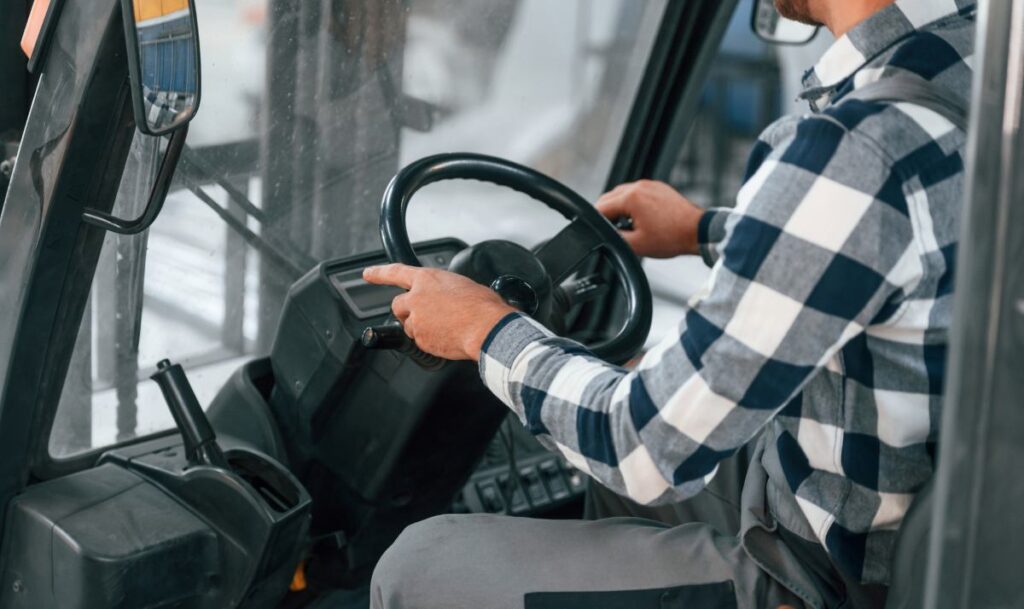
Good sightlines reduce both physical strain and cognitive load. An operator who has to lean, twist, or crane their neck to see around the mast, the load, or the overhead guard is accumulating musculoskeletal strain with every movement. Slim mast profiles, clear-view overhead guards, and well-positioned mirrors or camera systems all contribute to an operating environment where the operator can see what they need to see from a natural seated position.
The overhead guard is a structural safety feature, but its design has ergonomic implications. A guard with thick crossbars directly in the operator’s upward sightline forces them to adjust their head position repeatedly when stacking at height. Guards designed with thinner profiles or repositioned crossbars improve upward visibility without compromising structural protection.
Restraint systems tie into ergonomics and safety simultaneously. Essential ergonomic safety features like seatbelts and restraint systems keep the operator within the protective envelope of the cab in the event of a tip-over, but a poorly designed restraint that restricts normal movement or requires awkward fastening will be circumvented by operators, which defeats the purpose entirely. Modern lap belts and operator presence systems are designed to secure the operator without impeding the range of motion needed for safe, comfortable operation.
The connection is direct. Operators who are comfortable and not fatigued work faster, more accurately, and with fewer errors. They report fewer musculoskeletal injuries, which reduces absence, workers’ compensation costs, and the operational disruption that accompanies lost-time injuries. They’re also more likely to stay. Operator retention is a persistent challenge in materials handling, and the quality of the equipment is a meaningful factor in whether skilled operators choose to remain with an employer.
Businesses that invest in equipment with strong ergonomic credentials and support it with professional forklift maintenance services to keep those features functioning properly, seats holding adjustment, dampers performing correctly, steering assist operating at full capacity, protect both their workforce and their throughput. The specification sheet matters at the point of purchase, but maintenance is what keeps the ergonomic performance of a truck consistent across its operating life. A suspension seat that lost its damping two years ago isn’t providing the protection it was designed to deliver, and nobody benefits from that situation except the person selling the replacement.

We prioritize accuracy and integrity in our content. Here's how we maintain high standards:
Our content is carefully reviewed by experienced professionals to ensure accuracy and relevance.
Look for the expert-reviewed label to read content you can trust.

 01708 861 414
