Every forklift eventually reaches a point where repair costs and reliability issues force a decision – keep repairing or replace the equipment entirely. The right choice isn’t always obvious. Sometimes what seems like an expensive repair is still cheaper than replacement. Other times, continuing to repair equipment that’s fundamentally worn out throws money at a problem that only gets worse.
Making this decision based on emotion – attachment to equipment that’s served you well, or frustration after a breakdown – rarely leads to optimal outcomes. The better approach analyses actual costs, remaining equipment life, operational impact, and whether repairs genuinely extend useful service or just delay inevitable replacement.
A widely used guideline suggests replacement when a single repair costs more than 50% of the equipment’s current market value, or when annual repair costs exceed 50% of replacement cost.
If your forklift is worth £8,000 and you’re facing a £5,000 repair, that’s a clear signal that replacement makes more sense. You’re spending more than half the equipment’s value on a repair that doesn’t reset its condition to new – you’ve still got an old forklift with one repaired component and many other worn parts that could fail next.
Look beyond single repairs to cumulative costs. If you’ve spent £6,000 in repairs over the past year and replacement would cost £15,000, you’re already 40% of the way to new equipment cost whilst still owning increasingly unreliable equipment.
Track repair costs annually. When they’re consistently rising year over year, that trend indicates accelerating deterioration that repair spending won’t reverse.
Forklifts typically deliver 10,000-20,000 operating hours of reliable service, depending on application intensity and maintenance quality. Beyond those hours, major component failures become increasingly likely regardless of repair history.
If your forklift has logged 18,000 hours, even with good maintenance, you’re approaching the end of expected service life. Repairs might keep it running temporarily, but you’re likely facing multiple expensive component failures over the next few years.
Calendar age matters less than operating hours for equipment that’s been maintained properly and used regularly. A 15-year-old forklift with 8,000 hours might have plenty of life remaining. A 7-year-old forklift with 16,000 hours of intensive use is nearing the end regardless of calendar age.
However, very old equipment faces parts availability issues even at lower hours. If the forklift is 20+ years old, finding replacement components becomes difficult and expensive regardless of mechanical condition.
Occasional breakdowns are normal – equipment wears, components eventually fail, and repairs are part of ownership. Monthly breakdowns indicate systematic problems that repairs aren’t solving.
If you’re repairing different components constantly – hydraulics one month, electrical issues the next, engine problems after that – the forklift has entered the failure cascade where multiple systems are deteriorating simultaneously. Fixing individual failures doesn’t address the underlying reality that the entire machine is worn out.
Some failures are more serious than others. If you’re dealing with repeated safety system failures, brake problems, or structural issues, replacement becomes urgent regardless of cost calculations. Equipment that’s becoming unsafe can’t be justified on economic grounds alone.
Repair costs are visible on invoices. Downtime costs are often invisible but potentially larger. When your forklift breaks down, what actually happens to your operation?
If the forklift is critical and you have no backup, downtime halts operations. Calculate what that costs per hour – delayed shipments, idle labour, customer dissatisfaction – and factor those costs into the repair vs replace decision.
Even with backup equipment, breakdowns disrupt operations. Operators switch between equipment with different controls and characteristics, temporary hire costs money, and productivity suffers from the disruption.
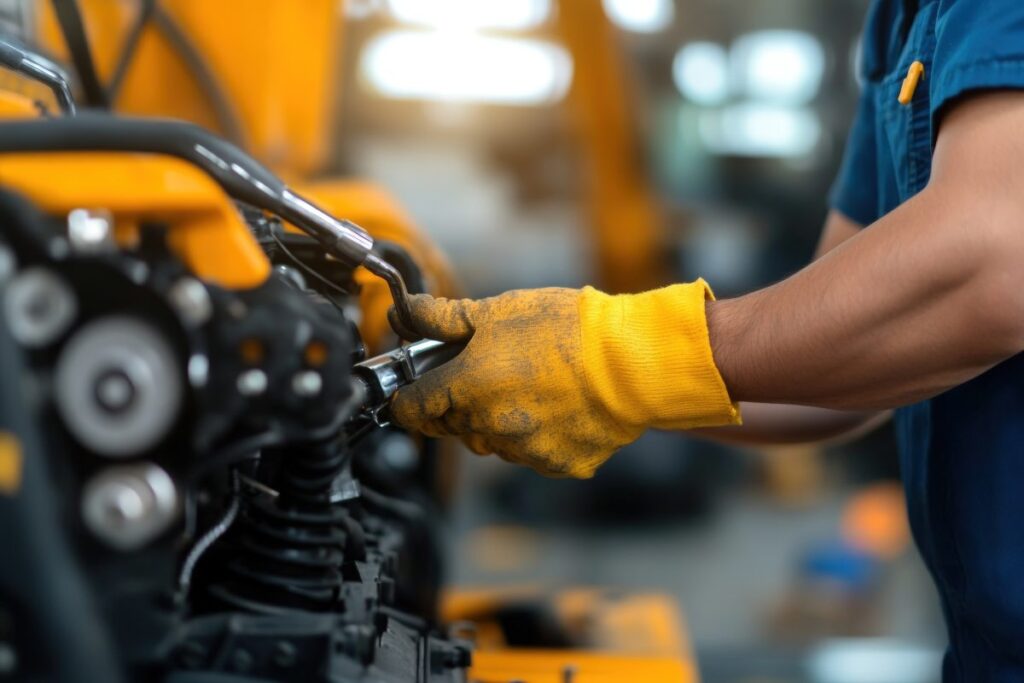
Equipment that once ran reliably for months between issues now breaks down weekly. This declining reliability trend indicates approaching end of service life more clearly than any single metric.
If you’ve gone from one or two repair incidents per year to one per month, that acceleration signals fundamental deterioration that continuing repairs won’t reverse.
Older equipment tends to face parts scarcity. Manufacturers discontinue parts for older models, aftermarket suppliers stop producing components for equipment with declining market presence, and finding replacements becomes difficult.
If repairs require weeks of searching for parts rather than next-day delivery, or if components are only available at premium prices from specialised suppliers, obsolescence is making repair increasingly impractical regardless of the mechanical condition.
Some forklift components are manufacturer-specific and proprietary – control systems, hydraulic pumps, certain engine parts. Others are generic and widely available. Equipment using primarily proprietary components becomes harder to maintain as it ages and parts support declines.
Modern forklifts include safety features, efficiency improvements, and technological capabilities that older equipment lacks. Operator assist systems, telematics for fleet management, improved fuel efficiency, better ergonomics – these aren’t luxuries, they’re operational advantages your competitors might be using.
If your equipment is 15+ years old, the technological gap between it and current models is substantial. Even if repairs keep it running mechanically, you’re operating at a disadvantage compared to modern equipment.
Older equipment burns more fuel, requires more frequent maintenance, and operates less efficiently than modern alternatives. The difference might be 20-30% in fuel costs alone, before considering maintenance and productivity differences.
Calculate these ongoing cost differences. Over the remaining years you’d operate repaired equipment, how much extra do those inefficiencies cost compared to modern alternatives? Sometimes the operational savings from new equipment justify replacement even when repairs would cost less initially.
Understanding extending forklift service life helps maximise your equipment investment through proper maintenance and operation. But there’s a point where even excellent maintenance can’t justify continued repair.
Repair makes sense when the equipment is relatively young (under 10,000 hours), the repair addresses an isolated failure rather than systemic deterioration, repair cost is well under 50% of replacement cost, and parts are readily available at reasonable prices.
Single component failures in otherwise sound equipment justify repair. A transmission failure in a forklift with 7,000 hours and good maintenance history is worth fixing. The same failure in equipment with 18,000 hours and escalating repair costs probably isn’t.
Replace when annual repairs exceed 50% of replacement cost, breakdowns are frequent and affecting multiple systems, the equipment has exceeded expected service life (15,000+ hours for most applications), parts availability is becoming problematic, or safety issues are recurring despite repairs.
Replace also when operational costs – fuel, maintenance, downtime – significantly exceed what modern equipment would cost to operate. Sometimes replacement is justified by efficiency gains rather than repair costs alone.
If you’re uncertain whether repair or replacement makes sense, getting professional assessment helps. Qualified technicians can evaluate overall equipment condition, identify whether problems are isolated or systemic, estimate remaining service life, and provide realistic cost projections for continued operation.
At Acclaim Handling, we provide routine care for material handling vehicles, as well as honest assessment when equipment reaches the repair vs replace crossroads. We won’t recommend unnecessary repairs when replacement makes more sense, and we won’t push replacement when proper repair extends useful service economically.
Whether you’re dealing with a single expensive repair decision or managing a fleet where some units are approaching end of life, we help you evaluate actual costs and realistic options rather than just guessing whether continued repair makes sense.
The right decision balances immediate repair costs against long-term operational costs, reliability needs, and whether you’re genuinely extending useful service or just postponing inevitable replacement whilst throwing money at deteriorating equipment. Getting that analysis right protects both your budget and your operational efficiency.

We prioritize accuracy and integrity in our content. Here's how we maintain high standards:
Our content is carefully reviewed by experienced professionals to ensure accuracy and relevance.
Look for the expert-reviewed label to read content you can trust.
 01708 861 414
