Warehouses and industrial sites operate with a constant flow of forklifts, pedestrians, delivery vehicles, and other equipment moving through shared spaces. Without deliberate planning, this creates collision risks that result in injuries, property damage, and operational disruptions.
A traffic management plan establishes how different types of traffic move through your facility. It’s not bureaucratic box-ticking. It’s a practical framework that reduces accidents and improves efficiency simultaneously.
Ideally, the plan documents how vehicles and pedestrians navigate your site safely. This covers designated routes for forklifts, pedestrian walkways, loading bay procedures, and protocols for managing interactions between different traffic types.
Physical layout matters significantly. The plan identifies high-risk areas where forklifts and pedestrians frequently cross paths. It specifies where barriers, mirrors, or signage need installation. Speed limits for different zones get established. Areas requiring enhanced lighting or visibility improvements are documented.
Operational procedures form the second component. These include rules for right-of-way, reversing protocols, procedures for blind corners, and requirements for communication between operators and pedestrians. The plan also addresses seasonal variations, such as increased traffic during peak periods or changes in workflow that affect movement patterns.
UK health and safety law requires employers to manage workplace transport risks. The Health and Safety Executive provides specific guidance on workplace transport safety, which explicitly includes forklift operations.
Whilst the law doesn’t mandate a written traffic management plan by name, it does require risk assessment and implementation of control measures for workplace transport. A documented traffic management plan is the most practical way to demonstrate compliance with these requirements. During HSE inspections, inspectors specifically look for evidence of systematic traffic management.
Accidents involving workplace transport lead to some of the most severe penalties under health and safety law. Courts view traffic management failures as preventable through reasonable precautions, which means companies face significant fines when accidents occur in the absence of adequate planning.
Effective traffic management starts with understanding your specific site conditions. Walk through your facility during different shifts and observe actual movement patterns. Where do forklifts travel most frequently? Which areas see the highest pedestrian traffic? Where do these paths intersect?
Identify blind spots created by racking, equipment, or building features. These locations require particular attention because reducing accidents caused by blind spots depends heavily on physical controls and clear procedures. Document narrow passages where forklifts and pedestrians must share limited space.
Consider the flow of materials through your operation. Inefficient routing doesn’t just waste time—it creates additional opportunities for collisions as forklifts crisscross each other’s paths or navigate congested areas repeatedly.
The most effective control is separating pedestrians from forklifts entirely. This isn’t always possible, but where it can be achieved, it eliminates risk at the source.
Physical barriers such as guardrails create permanent segregation. Designated walkways marked with high-visibility paint or tape provide visual guidance. Some facilities use different coloured flooring for pedestrian and vehicle zones, making the distinction immediately obvious.
One-way systems reduce conflict points by controlling direction of travel. They prevent forklifts meeting head-on in narrow aisles and create predictable traffic flow that operators and pedestrians can anticipate.
Timing-based segregation works in some environments. Restricting forklift operations to specific hours when pedestrian traffic is minimal, or vice versa, removes the interaction risk completely. This approach requires operational flexibility but delivers absolute separation.
Many forklift accidents occur because the operator couldn’t see the hazard in time to respond. Improving visibility prevents incidents before they develop.
Convex mirrors at blind corners allow operators to see approaching traffic. They’re inexpensive and highly effective. Strategic placement of mirrors requires thought—they need positioning where operators naturally look whilst approaching the intersection.
Adequate lighting throughout the facility is fundamental. Dark areas create hazards that even careful operators struggle to manage. Pay particular attention to loading bays, storage areas, and anywhere forklifts reverse regularly.
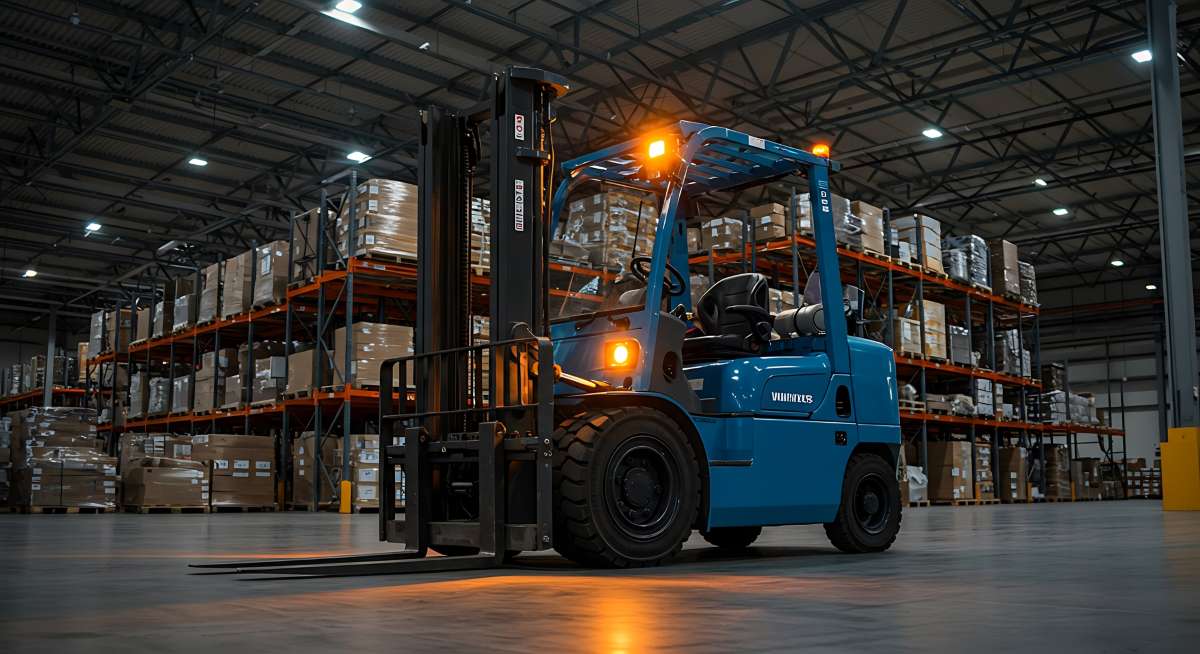
Blue or red warning lights mounted on forklifts alert pedestrians to approaching vehicles. Some operations require these lights on all forklifts, others only on those operating in mixed-traffic areas. The lights work best when combined with clear procedures that teach pedestrians what the lights mean and how to respond.

Forklifts travelling at walking pace have time to stop when hazards appear. Those moving at higher speeds don’t.
Speed limits should vary by area. Main thoroughfares with good visibility might permit higher speeds. Congested areas, pedestrian zones, and locations with restricted sightlines need lower limits. Make these limits explicit and visible through signage.
Enforcement matters. Speed limits that exist on paper but aren’t reinforced through supervision and accountability provide minimal benefit. Some operations use speed monitoring technology, others rely on direct observation and management intervention.
Operators and pedestrians need ways to communicate in noisy environments where verbal communication fails. Standard signals for common situations reduce misunderstandings.
Some facilities implement mandatory eye contact rules requiring operators to make visual acknowledgement with pedestrians before proceeding through shared spaces. Others use specific hand signals for particular situations. The key is consistency and training so everyone uses the same system.
Two-way radios help coordinate movement in complex environments. Loading bay supervisors can communicate with multiple operators, managing flow to prevent congestion and conflicts. This works particularly well during busy periods when informal coordination breaks down.
Plans fail when people don’t understand or follow them. Training ensures everyone knows the routes, rules, and procedures.
Forklift operators need specific instruction on traffic management requirements as part of their initial training and refresher courses. Pedestrians working in areas with forklift traffic require their own training covering safe movement, hazard awareness, and correct responses to approaching forklifts.
New employees present particular risks. They don’t know the layout, haven’t developed awareness of traffic patterns, and may not recognise hazards that seem obvious to experienced staff. Induction training should include site-specific traffic management information delivered before they begin working in areas with forklift operations.
Traffic management plans aren’t static documents. They need regular review and updates as operations change.
Near-miss reporting also identifies problems before they cause injuries; a pattern of close calls in a particular location indicates the current controls aren’t sufficient. Investigation and modification of the plan prevents the eventual accident.
Periodic audits assess compliance with established procedures. Are operators following designated routes? Do speed limits reflect actual practice or are they routinely ignored? Is signage still visible and positioned effectively?
Annual formal reviews ensure the plan remains current. Changes in products handled, storage layouts, or operational processes all affect traffic patterns and may require plan modifications.
Traffic management planning requires initial effort, but it’s effort that prevents accidents. The approach is straightforward: understand your risks, implement appropriate controls, train your people, and maintain the system. And if you’re looking for cost-effective options for temporary equipment needs, you can reach out to us at Acclaim Handling today.

We prioritize accuracy and integrity in our content. Here's how we maintain high standards:
Our content is carefully reviewed by experienced professionals to ensure accuracy and relevance.
Look for the expert-reviewed label to read content you can trust.

 01708 861 414
