Choosing the wrong forklift truck is like wearing steel-toe cap boots that don’t fit – you’ll manage for a while, but eventually, something’s going to hurt. We’ve watched businesses struggle with equipment that’s too small for the loads being lifted, too tall for their warehouse, or simply the wrong type for the job. Getting it right the first time saves money, prevents accidents, and keeps your operation running smoothly.
Before looking at any shiny new pieces of equipment, take a hard look at your operation. What are you actually moving? How high does it need to go? Where will this forklift work? These questions matter to ensure the correct forklift truck is operating on your site.
Supporting your business starts with an assessment of your MHE (Mechanical Handling Equipment) needs, like a pallet truck transporting light boxes through a retail stockroom needs different capabilities than a forklift moving heavy pallets in a busy distribution centre. One size definitely doesn’t fit all in material handling.
Load capacity isn’t just a number on a truck’s technical data sheet – it’s about safety and efficiency. Every forklift truck has a rated lifting capacity, this is then calculated by considering the load centre, the lift height and the weight of the forklift truck. The load centre is a specific point where the weight of a load is concentrated on the forks. Lift height is the maximum elevation a forklift truck can reach in the air. The weight of the forklift truck is the gross weight as detailed on the truck’s specification plate. These are essential for selecting the correct machine for your operation.
Start with your heaviest regular load, then add a suitable safety margin. If you’re moving a 2,000kg load , don’t buy a 2,000kg capacity forklift truck. Go for a slightly larger capacity piece of MHE, thus factoring in a safety margin.. Remember that attachments reduce capacity, too, commonly a hook on side-shift attachment could reduce your lifting capacity up to 10%.
Think beyond today’s needs. Businesses grow, product lines expand, and suddenly those loads get heavier. Investing in a higher lifting capacity for your MHE now will cost less than replacing equipment in the future.
How high do you need to lift? Sounds simple until you factor in roof height, lighting, sprinkler systems, and load backrest. Many forklift trucks can’t use their full height because someone forgot about overhead obstacles when choosing equipment.
Maximum lift height isn’t your working height. Add the load backrest height, plus your tallest typical load. For example, a 6-metre lift height could quickly become 7.5 metres. Check doorway heights too – nothing’s worse than buying a forklift truck that won’t fit through your loading bay door.
Different types of forklifts offer various mast configurations. A variety of masts will work for most applications, but some site applications might require special short masts. Triple-stage masts reach higher but will reduce capacity and stability. Know your space constraints before deciding. Speak to one of our friendly sales representatives by giving us a call on 01708 861 414 for more advice!
Where will this forklift operate? Smooth warehouse floors demand different equipment than rough outdoor yards. Indoor/outdoor operations need machines that handle both environments effectively.
Electric forklifts are mostly selected for indoor spaces for good reasons. Zero emissions protect air quality, especially in food storage or pharmaceutical environments. They’re quieter too – important when working near offices or residential areas. Battery life matters here. Single-shift operations might manage with one battery, but busy multi-shift warehouses need battery-changing facilities or fast-charging options.
Outdoor site conditions may demand a more robust machine. Diesel or LPG forklift trucks generally handle adverse weather conditions better and aren’t affected by battery life in cold conditions. Pneumatic tyres grip uneven surfaces where cushion tyres would struggle. Consider ground conditions carefully – soft ground might need rough terrain forklift trucks.
Some operations need forklift trucks both working inside and out. These situations require compromise. LPG models offer a middle ground – they work indoors with adequate ventilation and handle outdoor conditions well. Some electric models can be modified with suitable weatherproofing for outdoor use.
Choosing between electric, diesel, and LPG affects running costs, maintenance needs, and operational flexibility. Each has distinct advantages depending on your situation.
Lower running costs make electric forklifts attractive for regular use. No fuel storage, reduced maintenance, and environmental credentials appeal to many businesses. Modern lithium-based batteries charge faster and last longer than traditional lead-acid options. The downside? Higher purchase prices and charging infrastructure requirements.
Instant refuelling keeps diesel and LPG forklifts running continuously.With no battery charging downtime, diesel and LPG forklifts maintain consistent productivity during busy operations.. They can generally handle heavy loads better and are more suitable to work in all weather conditions. Fuel storage and emissions remain the main drawbacks.
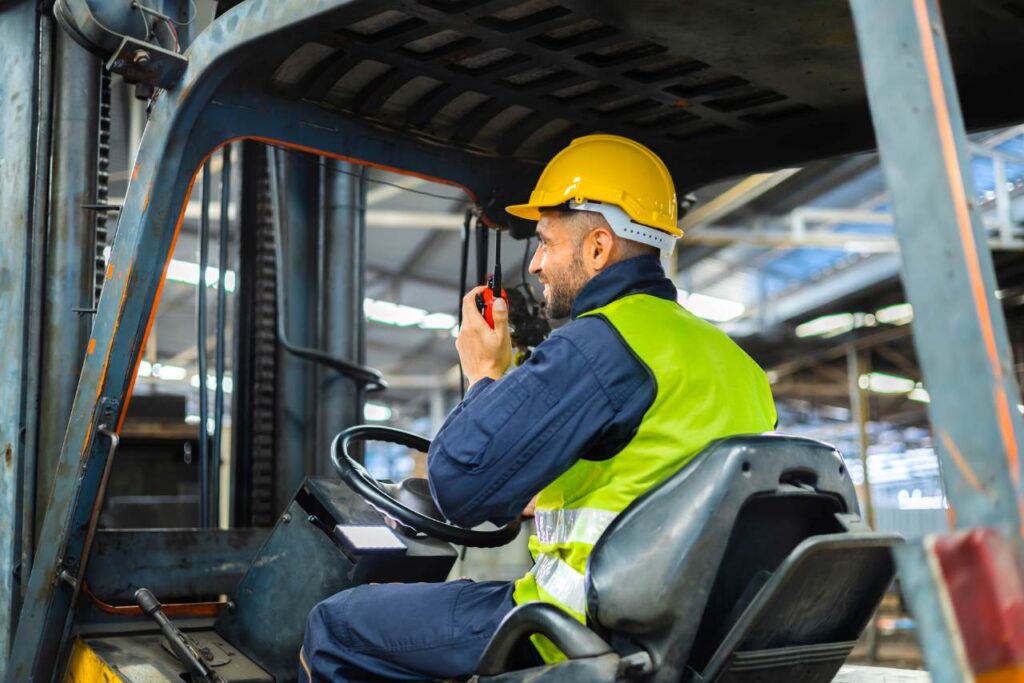
Standard forks handle most jobs, but specialised tasks need special tools. Side-shifters save time positioning loads. Rotators help in manufacturing environments. Extended forks manage awkward loads safely.
Cold storage requires forklift trucks built for freezing conditions. Special lubricants, sealed components, and cab heaters aren’t luxuries – they’re necessities. Explosive environments demand intrinsically safe equipment. Food handling might need stainless steel surfaces. Matching your Mechanical Handling Equipment to its working environment is a must..
We have seen businesses choose poorly for predictable reasons. Buying based on price alone is not always the answer , lower cost equipment does not always handle the needs of the job. Ignoring operator comfort can lead to fatigue, potentially leading to incidents/ accidents. Lack of maintenance and service support leaves you stranded when or if breakdowns occur.
Overlooking future needs can prove to be expensive. That bargain forklift, handling current loads might struggle as your business grows. Missing safety features to save money risks accidents and compliance issues.
As we say, “Success Built On Service” means asking for help when required . Reputable dealers, such as Acclaim Handling, will assess your needs properly, considering factors you might miss. They’ll arrange demonstrations, letting operators test equipment in real conditions.
Professional advice covers more than just equipment selection. Training needs, maintenance schedules, safety requirements – experienced suppliers guide you through everything. They understand different industries and match solutions to specific challenges. You can get in touch with our team by emailing [email protected] or calling our team on 01708 861 414.
Choosing the right forklift truck doesn’t happen overnight. Start by documenting your requirements clearly. Weight, height, environment, frequency of use – write it all down. Compare options systematically, considering total cost of ownership, not just purchase price.
Test equipment whenever possible. What looks good on paper might feel wrong in practice. Operator feedback matters enormously – they’ll use this equipment on a daily basis.
Your quality warehouse lifting equipment should enhance operations, not complicate them. Whether replacing old equipment or buying your first forklift truck, taking time to choose correctly pays dividends for years.
Supporting your business through expert advice means helping you avoid expensive mistakes. When you match equipment to requirements properly, productivity improves, safety increases, and your investment delivers real value. The right forklift truck makes work easier, safer, and more profitable – exactly what every business needs.
At Acclaim Handling, we pride ourselves on providing the correct forklift trucks and other MHE to meet our customers’ requirements. Contact us today by clicking here.

We prioritize accuracy and integrity in our content. Here's how we maintain high standards:
Our content is carefully reviewed by experienced professionals to ensure accuracy and relevance.
Look for the expert-reviewed label to read content you can trust.
 01708 861 414
