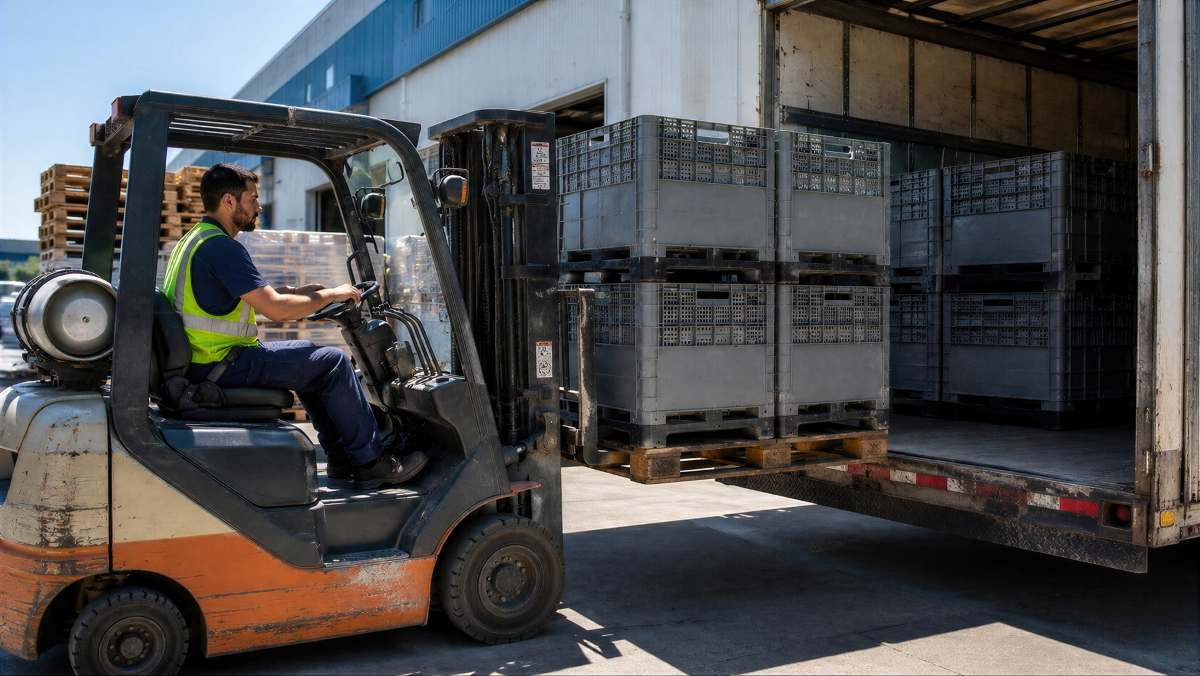
In the fast-paced world of logistics, the warehouse floor is a high-stakes environment where efficiency and safety are in constant tension. While we often focus on the power and throughput of our fleets, the most critical “moving part” in any facility is the human being.
According to recent data, approximately 43% of forklift-related accidents involve a pedestrian, and a staggering 65% of those affected are bystanders who weren’t even involved in the truck’s immediate operation. As we move through 2026, the strategy for preventing these life-changing collisions has shifted from simple “awareness” to a sophisticated, multi-layered approach that blends cutting-edge technology with rigorous training.
Here is the ultimate guide to bridging the gap between man and machine.
1. The Technological Frontier: AI and Proximity Sensing
We are no longer relying solely on the operator’s eyes. In 2026, the industry has moved toward “active” safety systems that intervene before a human even realises there is a risk.
AI-Powered Pedestrian Detection
Modern AI vision systems, such as those integrated into newer Hyundai or Mitsubishi fleets, use deep-learning algorithms to identify human shapes in real-time.
Tagless Protection: Unlike older systems, modern AI can “see” a person standing, crouching, or even partially obscured behind a pallet without requiring the worker to wear a special vest or tag.
Intelligent Alerting: These systems are designed to filter out “false positives” (like walls or stationary racking), reducing “alarm fatigue” for the operator.
Automatic Intervention: Some high-end systems are now linked directly to the forklift’s drivetrain, automatically slowing the truck to a “creep” speed the moment a pedestrian enters a high-risk zone.
UWB (Ultra-Wideband) Proximity Alerts
In environments with high rack density and frequent blind corners, UWB technology is a game-changer. By using wearable tags, UWB provides pinpoint accuracy (within centimeters). It can “see” through walls, alerting an operator that a pedestrian is approaching an intersection before they ever step into view.
Visual “No-Go” Zones
Standard blue spotlights are now being supplemented by Red-Zone Laser Lines. These project a vivid, physical boundary on the floor around the sides and rear of the truck. It creates a psychological and visual “keep-out” area that pedestrians instinctively respect, far more effectively than floor tape alone.
2. Advanced Training: Beyond the Basics
Technology is a powerful tool, but it is not a replacement for a competent operator. In January 2026, the UK’s Accrediting Bodies Association (ABA) updated training categories to ensure operators are certified specifically for the specialised equipment they use.
The “Three-Stage” Training Model
For a truly safe environment, training must go beyond a one-off certification.
Basic Training: Learning the core mechanics and safety principles of the machine.
Specific Job Training: Understanding the unique challenges of your warehouse, such as narrow aisles or specific load types.
Familiarisation Training: Supervised “on-the-job” practice to ensure the operator can apply their skills in the actual working environment.
Training the Pedestrian
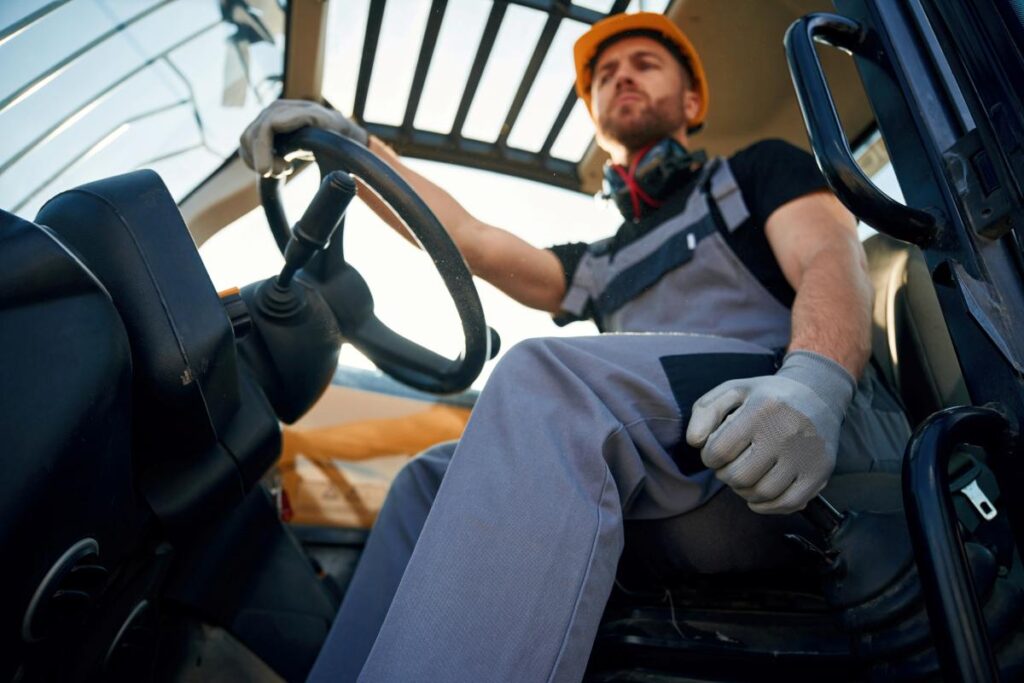
One of the biggest mistakes warehouses make is only training the drivers. Every person who sets foot on the warehouse floor-from the office manager to the visiting contractor-must undergo Pedestrian Safety Induction.
The “Point and Wave”: Pedestrians should never assume a driver sees them. A mandatory “eye contact and hand signal” rule ensures both parties acknowledge each other before the pedestrian crosses a vehicle path.
The 3-Metre Rule: Implementing a strict 3-metre exclusion zone around any moving forklift, regardless of whether it’s loaded or empty.
3. Site Design: Engineering Out the Risk
If a pedestrian and a forklift never meet, a collision is impossible. This is the “Hierarchy of Controls” in action: Elimination and Substitution.
Physical Segregation
Where possible, use physical barriers rather than just floor paint. Heavy-duty guardrails create a “safe harbour” for walkers, ensuring that even if an operator loses control or a load shifts, the pedestrian is protected.
Strategic Traffic Management
One-Way Systems: Reduce the complexity of intersections by implementing one-way traffic for forklifts in narrow aisles.
Convex Mirrors: Every blind corner should be fitted with a high-visibility mirror, but these must be maintained and kept clean to remain effective.
Smart Gates: Sensor-driven gates that lock pedestrian access when a forklift is detected nearby can virtually eliminate “accidental” crossings at high-traffic junctions.
4. The Role of Data: Near-Miss Reporting
In 2026, telematics isn’t just for tracking battery life. Modern fleet management software can now log “near-miss” events.
If a proximity sensor is triggered ten times a day at a specific corner, the data tells you that your warehouse layout is flawed before an injury occurs.
Use this data in your weekly “Toolbox Talks” to show operators and pedestrians where the “hot zones” are located.
A Culture of “Mutual Responsibility”
Preventing forklift collisions isn’t the sole responsibility of the driver, nor is it purely the job of the pedestrian. It is a shared culture of “Mutual Responsibility.” When you combine AI detection technology, ABA-compliant training, and smart site engineering, you create an environment where safety isn’t just a rule – it’s an automatic part of the workflow.

Related Posts
Predictive vs Preventive Maintenance: What’s the Difference?
The True Cost of Delaying a Forklift Repair
How Forklift Rentals Help Warehouses Stay Flexible
Top Industries that Benefit from Forklift Hire
How Warehousing Demands Are Changing Forklift Requirements