Most businesses buy or hire a forklift a handful of times in their operational life. Suppliers, on the other hand, do this every day. That asymmetry of experience means the buyer is almost always at an informational disadvantage, which is why the selection process deserves more rigour than it typically receives. The wrong supplier doesn’t just deliver the wrong truck. They deliver slow breakdown response, parts that take weeks to arrive, and service contracts written to protect the provider rather than the customer.
Why Does Supplier Reputation Matter More Than Price?
Because a forklift is not a one-off purchase. It’s an ongoing operational relationship. The truck needs servicing, parts, breakdown support, thorough examinations under LOLER and PUWER, and eventually either refurbishment or replacement. The supplier who delivers the machine is, in most cases, the same entity responsible for all of that. If they’re unreliable or slow, the consequences compound across the machine’s entire working life.
Price comparisons between suppliers are straightforward in theory but misleading in practice. A lower headline cost might reflect older stock, thinner service coverage, longer lead times on parts, or less favourable warranty terms. None of these shows up on the initial quote. They show up six months later when the truck breaks down and the response time is measured in days rather than hours. Longevity in the industry is a useful, if imperfect, proxy for reliability. A supplier that has been operating for decades has sustained enough customer confidence across changing economic conditions to keep the business going. That doesn’t guarantee every interaction will be perfect, but it does indicate a baseline of competence that newer or less established operations haven’t yet proven.
Accreditations tell a similar story. Membership of the Fork Lift Truck Association, ISO certifications, and CFTS accreditation for thorough examinations all indicate a commitment to standards that exceeds the legal minimum. They’re not decorative. They represent auditable processes and third-party oversight.
What Should I Look for in After-sales Support?
After-sales support is where the real quality of a supplier becomes apparent. The key questions are specific and practical: how many engineers do they employ, and where are they based? What is their average response time for a breakdown call? Do they carry a comprehensive stock of spares, or will common parts need to be ordered? Is support available outside standard working hours?
A supplier with regional service centres and a mobile engineering fleet can respond to a breakdown within hours. One that operates from a single depot will struggle to offer the same coverage if the customer’s site is two hundred miles away. The geography of the support network matters as much as its theoretical capability.
Planned maintenance programmes are where good suppliers distinguish themselves most clearly. A structured servicing schedule, managed proactively by the supplier, prevents the reactive cycle of breakdowns and emergency callouts that costs far more in lost productivity than scheduled maintenance ever does. Ask potential suppliers whether they manage maintenance schedules or simply respond when called. The distinction is significant.
The quality of advice also matters, and it’s hard to assess from a brochure. A supplier whose sales team understands the operational context, the application, the duty cycle, the environment, and the throughput requirements, will recommend equipment that fits. One whose sales process is purely transactional will recommend whatever is in stock or carries the best margin. Understanding the process of selecting a reliable forklift supplier or hire partner before entering negotiations gives the buyer a clearer framework for evaluating what they’re being offered.
How Important Is the Range of Equipment a Supplier Carries?
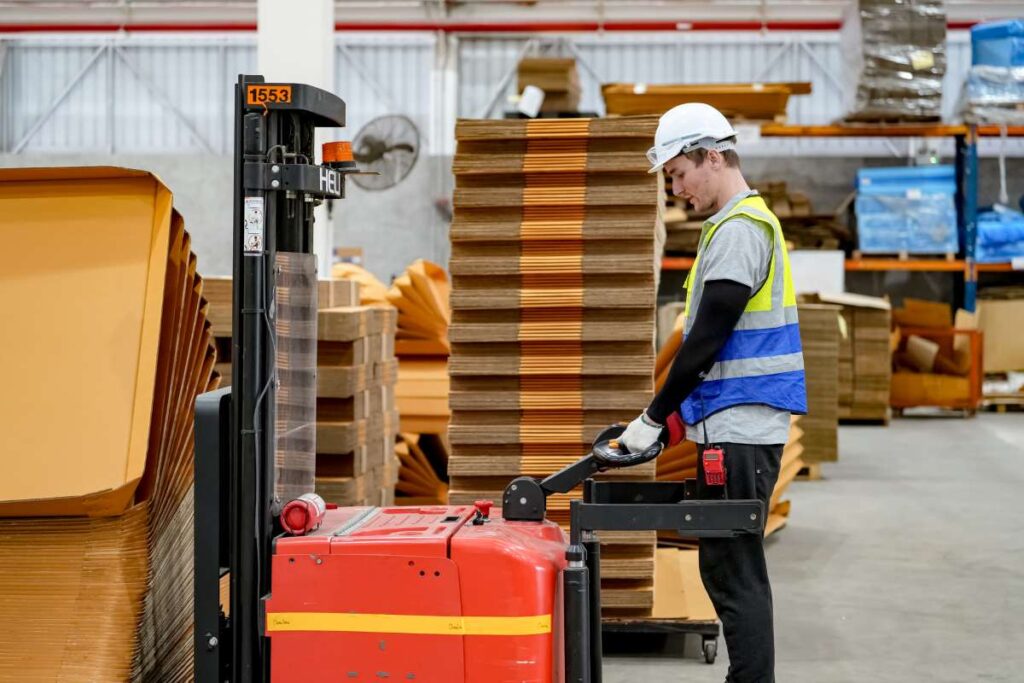
A supplier with a broad range of manufacturers and machine types can match equipment to application. One that distributes a single brand or a narrow product line will, inevitably, recommend from within that range regardless of whether it’s the optimal fit. That’s not necessarily dishonest; it’s a structural limitation of a restricted portfolio.
The ideal supplier carries counterbalance trucks, reach trucks, pallet stackers, order pickers, powered pallet trucks, and potentially access platforms and industrial cleaning equipment. They should stock electric, diesel, and LPG options across a range of capacity classes. And they should be able to supply new, nearly new, and used equipment, because not every application justifies a new machine and not every budget accommodates one.
Specialist equipment, narrow aisle trucks, multi-directional forklifts, rough-terrain machines, is where depth of range becomes a differentiator. Operations with unusual requirements need a supplier who either stocks or can source specialist machinery rather than attempting to make a standard truck work in conditions it wasn’t designed for. The ability to supply heavy-duty material handling vehicles alongside lighter warehouse equipment, all from a single source, simplifies procurement, servicing, and accountability considerably.
Does the Supplier Offer Flexible Acquisition Options?
Outright purchase is one route, but it’s rarely the only one worth considering. Lease, contract hire, hire purchase, and short-term rental all serve different financial and operational purposes. A supplier who offers only one model is limiting the buyer’s options.
Short-term hire suits seasonal peaks and project-based requirements. Contract hire spreads cost over a fixed period and typically includes maintenance. Outright purchase makes sense for high-utilisation machines that the business expects to operate for years. Each has distinct implications for cash flow, tax treatment, and operational risk, and a good supplier will explain those implications honestly rather than steering the customer toward whichever option generates the most revenue for the dealership.
The terms within each option matter too. Contract hire agreements should clearly state what’s included: servicing, tyres, batteries, breakdown response, and thorough examinations all need to be explicitly covered or excluded. Ambiguity in contract terms almost always benefits the supplier when a dispute arises.
What Questions Should I Ask Before Signing Anything?
Start with the practical ones. What is the lead time on a new machine? What stock do you hold currently? If a hired truck breaks down, what is your guaranteed response time? Where are your nearest engineers based relative to my site?
Then move to the structural questions. What manufacturer warranties apply, and what does the supplier’s own warranty cover on top of that? If I need to scale up, can you supply additional equipment on the same terms at short notice? What happens if the equipment doesn’t suit my application, is there a process for exchange or return?
Finally, ask for references. Speak to existing customers in a similar industry or of similar size. Ask them what happens when something goes wrong, not when everything runs smoothly. That’s where the quality of the supplier relationship shows itself.
A forklift supplier isn’t a vendor in the transactional sense. They’re an operational partner whose competence directly affects productivity, safety, and cost. The investment in finding the right one pays for itself many times over across the life of the equipment.

Related Posts
Predictive vs Preventive Maintenance: What’s the Difference?
The True Cost of Delaying a Forklift Repair
How Forklift Rentals Help Warehouses Stay Flexible
Top Industries that Benefit from Forklift Hire
How Warehousing Demands Are Changing Forklift Requirements