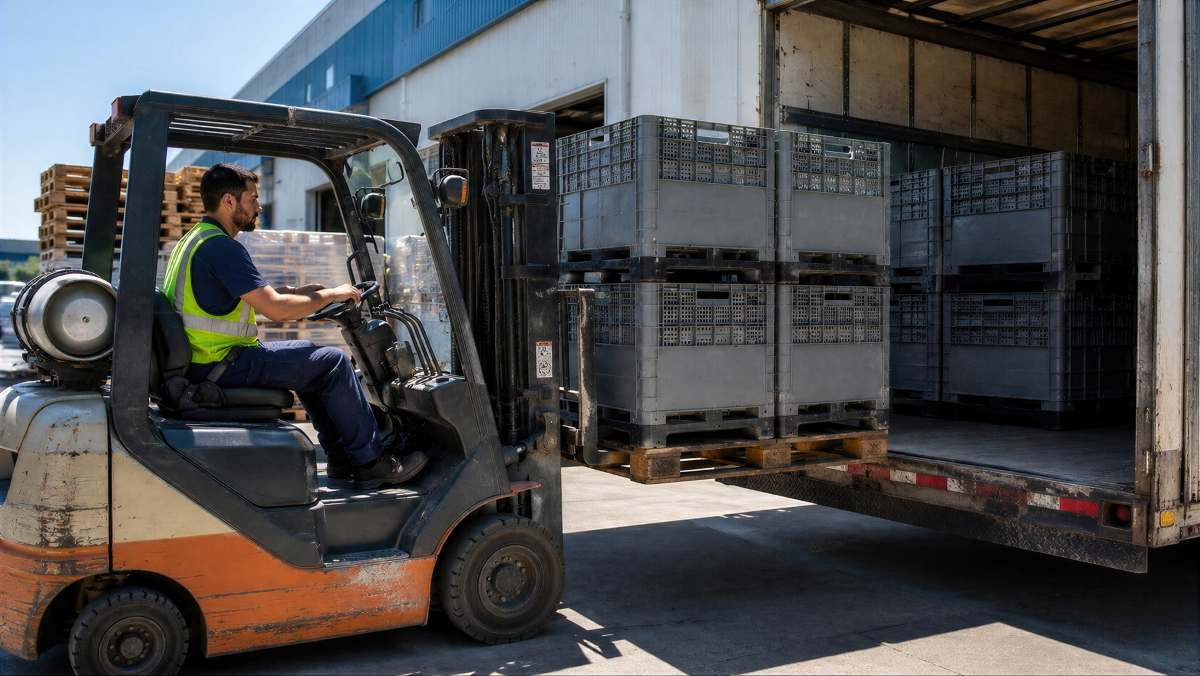
A forklift built in 2005 and a forklift built in 2025 perform fundamentally the same task: lifting and moving loads. But the way they do it, how they’re powered, how they communicate with the warehouse around them, how they protect the operator, and how efficiently they convert energy into movement, has changed substantially. The materials handling industry is sometimes characterised as slow to adopt new technology, and relative to consumer electronics or the automotive sector, that’s fair. But the last decade has produced a pace of change that warehouse operators can no longer afford to ignore.
How Is Electrification Reshaping the Forklift Market?
The shift from internal combustion (diesel and LPG) to electric power has been underway for years, but the acceleration in lithium-ion battery technology is what’s making it transformative rather than incremental. Lead-acid batteries, the longtime standard for electric forklifts, work reliably but impose significant operational constraints: long charging times, mandatory cooling periods, regular watering and maintenance, and degrading performance as the charge depletes.
Lithium-ion changes the equation. These batteries can be opportunity-charged during breaks without damaging the cells, they maintain consistent voltage throughout the discharge cycle, and they require virtually no maintenance. A forklift running on lithium-ion can operate across multiple shifts without a battery swap, which eliminates the need for battery changing infrastructure and the dedicated charging rooms that lead-acid installations demand. The practical result is more operational hours per truck, a smaller physical footprint for the charging setup, and lower total energy consumption.
The upfront cost remains higher than lead-acid, but for multi-shift operations, the return on investment is typically realised within a few years through reduced maintenance, lower energy costs, and increased uptime. Understanding the practical differences between emerging forklift battery technologies is now an essential part of fleet planning rather than a niche concern.
What Role Does Telematics Play in Modern Fleet Management?
Telematics systems collect and transmit operational data from each truck in real time: hours run, distances travelled, impacts detected, speed profiles, lift heights, battery status, and error codes. This data feeds into fleet management platforms that give warehouse and logistics managers a level of visibility over their equipment that was simply unavailable a decade ago.
The immediate benefit is reactive: an impact sensor triggers an alert, and the manager can investigate before a damaged truck is allowed to continue operating. The deeper value is predictive. Analysing patterns in operating data reveals which trucks are being overworked, which are underutilised, which operators are consistently harder on equipment, and where maintenance is likely to be needed before a failure occurs.
Predictive maintenance, using data trends to schedule interventions ahead of breakdowns, reduces unplanned downtime and extends component life. A hydraulic system showing gradually increasing pressure, or a motor drawing slightly more current than normal, can be flagged for attention before the component fails entirely. This approach depends on consistent data collection and competent analysis, which is why warehouse equipment maintenance programs that integrate telematics data are becoming the norm rather than the exception among well-managed fleets.
Are Autonomous Forklifts a Realistic Prospect?
Automated guided vehicles and autonomous mobile robots have been operating in warehouses for several years, but the machines categorised as autonomous forklifts, those capable of performing traditional forklift tasks without a human operator, are still in relatively early deployment. Several major manufacturers now offer models that can navigate warehouse environments using a combination of LIDAR, cameras, and sensor fusion, picking up and putting away pallets without human input.
The technology is real and functional, but widespread adoption faces practical barriers. Autonomous forklifts work best in highly structured environments with predictable workflows, consistent pallet placements, and minimal pedestrian traffic. A busy, dynamic warehouse with mixed traffic, variable product types, and frequent layout changes presents a much harder problem. The cost of the equipment is also substantially higher than conventional trucks, which limits the business case to high-volume, repetitive operations where the savings from removing operator labour costs offset the capital investment.
What’s more realistic for most operations in the near term is semi-autonomous functionality: operator-assisted systems that handle specific tasks like horizontal transport or guided put-away while the human operator manages more complex manoeuvres. This hybrid approach captures some of the efficiency gains without requiring the full infrastructure investment that full autonomy demands.
How Is Safety Technology Evolving?
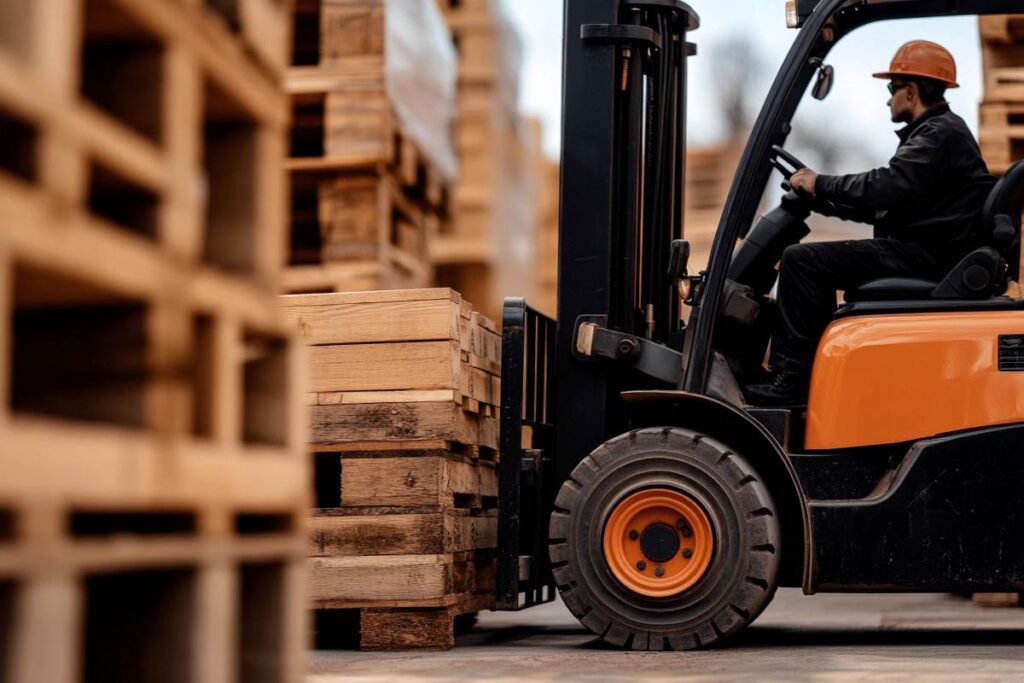
Proximity detection systems, using a combination of ultrasonic sensors, cameras, and UWB (ultra-wideband) radio, can now alert operators to pedestrians, other trucks, or fixed obstacles in their path. Some systems go further, actively reducing the truck’s speed or preventing movement in specific directions when a hazard is detected.
Blue and red safety lights that project onto the floor ahead of or behind the truck have become common, giving pedestrians early warning of an approaching forklift around blind corners. These are simple, inexpensive, and genuinely effective in reducing the frequency of near-misses in warehouses with mixed forklift and pedestrian traffic.
Camera systems, including rear-view, side-view, and 360-degree configurations, are replacing mirrors in many new trucks. High-mounted cameras with wide fields of view provide better spatial awareness than a conventional mirror, particularly when stacking at height or manoeuvring in congested areas. Some systems integrate with heads-up displays so the operator doesn’t need to look away from the direction of travel.
Speed-limiting technology, either geo-fenced (restricting speed in specific zones) or load-sensitive (reducing speed automatically when the mast is elevated), adds another layer of control. These systems don’t replace good training or attentive operation, but they do provide a safety net for the moments when human attention lapses.
What About Hydrogen Fuel Cells?
Hydrogen fuel cell technology is attracting investment from several major manufacturers as an alternative to both internal combustion and battery electric. Fuel cells generate electricity on board through a chemical reaction between hydrogen and oxygen, producing water as the only emission. Refuelling takes minutes rather than the hours required for battery charging, which makes the technology attractive for high-intensity, multi-shift operations where even lithium-ion charging breaks are operationally inconvenient.
The barrier is infrastructure. Hydrogen refuelling stations are expensive to install and require a reliable supply chain for compressed hydrogen, which remains limited in most parts of the UK. For operations with the scale to justify the investment, hydrogen represents a genuine long-term option. For the majority of warehouses, battery electric technology, particularly lithium-ion, remains the more practical path for the immediate future.
The direction of travel is clear: cleaner power, smarter data, better safety systems, and increasing degrees of automation. Not every trend applies equally to every operation, and the pace of adoption will vary with business size, budget, and operational complexity. But the warehouse of 2030 will look measurably different from the one of 2020, and the equipment running inside it will be a large part of why.

Related Posts
Predictive vs Preventive Maintenance: What’s the Difference?
The True Cost of Delaying a Forklift Repair
How Forklift Rentals Help Warehouses Stay Flexible
Top Industries that Benefit from Forklift Hire
How Warehousing Demands Are Changing Forklift Requirements