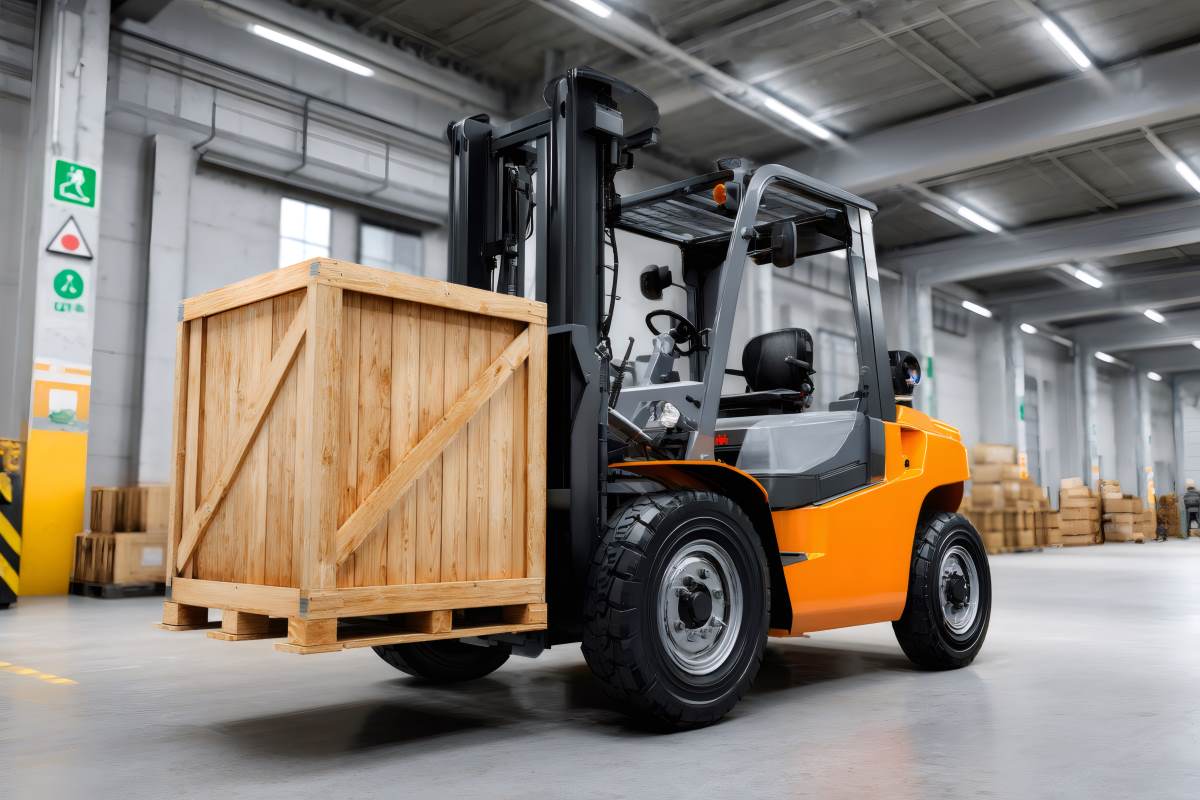
The wheel count question gets asked more often than almost any other when operators are speccing a new truck, and the answer matters more than you’d think. A three-wheel forklift and a four-wheel forklift can look superficially similar at a distance, but they handle differently, perform differently under load, and suit fundamentally different operations. Picking the wrong one doesn’t just mean buying the wrong truck; it means slower throughput, higher running costs, and an operator who’s fighting the geometry of the machine every shift.
Let’s get into the actual differences.
How Three-Wheel Forklifts Work
A three-wheel forklift uses two drive wheels at the front and a single steering wheel at the rear. That single rear wheel can pivot through nearly 180 degrees, which gives the truck an exceptionally tight turning radius. You can spin a three-wheeler almost on its own footprint, which is why they dominate narrow-aisle warehouse work where every inch of clearance matters.
These trucks are almost universally electric. The compact configuration suits battery placement, and the sort of indoor work three-wheelers do best is exactly the environment where electric power makes the most sense.
Capacities typically run from around 1.2 to 2 tonnes, occasionally a bit higher. They’re designed for finesse, not brute force.
How Four-Wheel Forklifts Work
A four-wheel forklift has the configuration most people picture when they hear the word forklift: two drive wheels at the front, two steering wheels at the rear. The wider footprint provides a more stable base, particularly when you’re lifting heavy loads to height or operating on uneven surfaces.
Four-wheelers come in electric, diesel, and LPG variants, and they’re available in a much wider capacity range than three-wheelers. You can specify a four-wheel counterbalance from around 1.5 tonnes up to 16 tonnes or more, depending on the application. They’re the workhorses of mixed-use operations, outdoor yards, and any environment where the surface isn’t perfectly smooth.
Where Three-Wheel Forklifts Win
If your operation runs in a tight indoor warehouse with smooth, level floors, a three-wheel forklift will outperform a four-wheel equivalent on practically every metric that matters to you. Manoeuvrability is the headline advantage, but it’s not the only one.
The turning radius on a typical three-wheeler is around 1,650 to 1,800mm, compared to 2,000 to 2,400mm on a comparable four-wheel truck. In a warehouse with 3-metre aisles, that difference determines whether you can pick a pallet from the rack without three-point turns.
Energy efficiency is another underappreciated factor. With one fewer wheel and a lighter overall configuration, three-wheel electric forklifts typically consume less battery power per shift than four-wheelers doing similar work. Over a year of operation, that adds up to meaningful savings on charging costs and battery life.
Operator fatigue is reduced too. Drivers who spend a full shift in tight aisles find three-wheelers genuinely easier to work with because the truck does what they want with less input.
Where Four-Wheel Forklifts Win
The moment your operation involves heavier loads, outdoor surfaces, or any kind of incline, the calculation flips entirely. Four-wheel forklifts win on stability, capacity, and versatility.
Stability is the big one. The wider rear track on a four-wheeler keeps the load more securely positioned during turns and on uneven ground. If you’re lifting to height, the additional base width genuinely matters; a three-wheeler at full lift on a slightly compromised surface is a stability risk that no operator should be asked to manage.
Capacity ranges open up dramatically with four wheels. If you need to move 5-tonne loads, a three-wheel truck simply isn’t an option; the geometry doesn’t support it. Four-wheel diesel and LPG counterbalance trucks dominate the heavy-duty end of the market for this reason. Our Hyundai 50B-9 electric, for example, is a four-wheel truck with a 4,990kg capacity that wouldn’t be achievable in a three-wheel configuration.
Outdoor and mixed-surface work is another four-wheel territory. Three-wheelers are designed for smooth indoor floors, and tarmac yards, gravel, or any kind of incline expose their limitations quickly.
Which Should You Choose for a Mixed Operation?
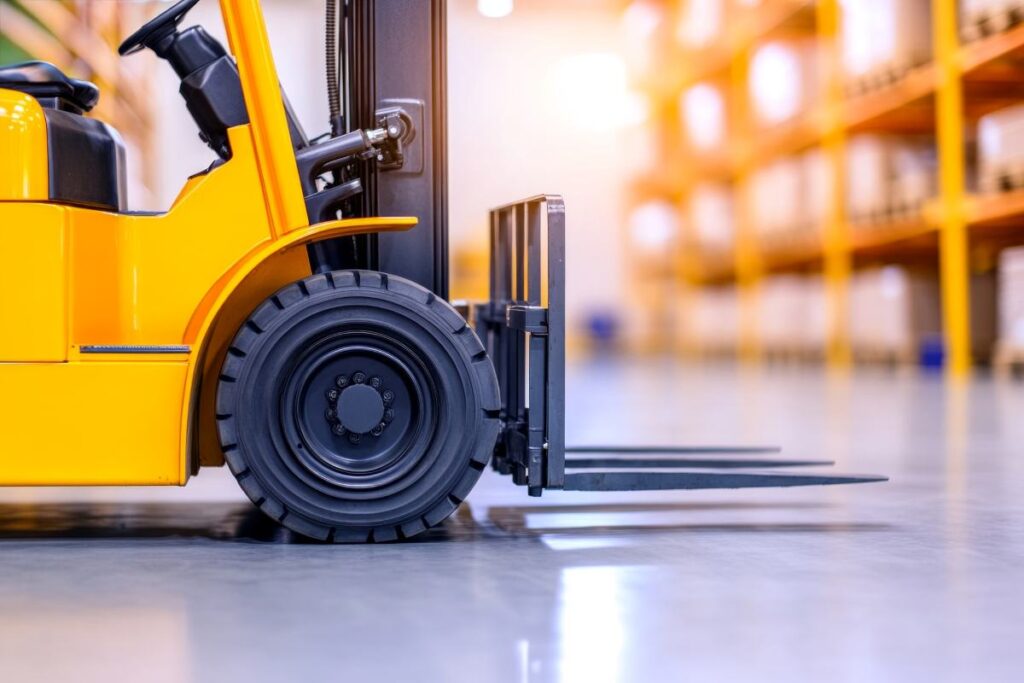
This is where most buyers get stuck. Plenty of warehouses run a combination of indoor narrow-aisle work and outdoor loading bay activity, and neither truck type is ideal for both.
The honest answer in most mixed scenarios is that you need both. A three-wheel electric for the picking and putaway work, paired with a four-wheel counterbalance for yard activity and heavier outdoor loads. Trying to compromise with a single truck type usually means accepting subpar performance somewhere in the operation.
If budget forces a single-truck decision, four-wheel almost always wins because it can handle a wider range of work, even if it does some of it less efficiently than a three-wheeler would.
What About Stability?
Stability concerns come up frequently in this comparison, and there’s truth on both sides. A modern three-wheel forklift uses sophisticated counterweighting and low centre-of-gravity design to deliver genuine stability under normal operating conditions, and they’re not inherently dangerous. But their margin is narrower.
Four-wheel trucks have more forgiveness. If an operator makes a marginal error, takes a corner slightly too fast, or encounters an unexpected surface change, the four-wheel configuration is more likely to absorb it without consequence. For operations where new or less experienced drivers are part of the workforce, that margin matters.
Cost Considerations
Three-wheel electric forklifts typically come in slightly cheaper than equivalent four-wheel electrics, both at purchase and over their operational lifetime. Lower energy consumption, simpler steering systems, and fewer wheels to maintain all contribute to lower running costs.
Four-wheel trucks have a wider price spread because the capacity range is wider. A small four-wheel electric and a heavy diesel four-wheeler are barely the same product category in cost terms.
Getting the Decision Right
Knowing how to choose the right forklift for your operation involves more than just wheel count. Lift height, average load weight, surface conditions, aisle widths, daily operating hours, and indoor versus outdoor use all factor into the right specification.
We supply both three-wheel and four-wheel configurations across the STILL, Hyundai, and Lonking ranges, and our team has been matching trucks to operations for over 40 years. That conversation usually starts with a free site visit rather than a brochure comparison; understanding your aisle widths, surface conditions, and load profiles in person tells us much more than spec sheets do.
If you’re weighing up wheel configurations and the spec sheets are starting to blur, our reliable warehouse equipment rental gives you the option to trial a configuration in your actual environment before committing to a purchase. Hire packages run from a single day upwards with breakdown cover included, so you can test a three-wheeler against a four-wheeler in your real operation. Sometimes the best decision is the one you make after a week of real-world use.

Related Posts
10 Useful Forklift Attachments for Safer, More Efficient Material Handling
7 Common Forklift Brake Problems and How to Fix Them
10 Common Electric Forklift Problems
6 Hidden Costs of Buying a Forklift — and How to Avoid Them

Complete Warehouse Relocation Checklist