Changing LPG Cylinders
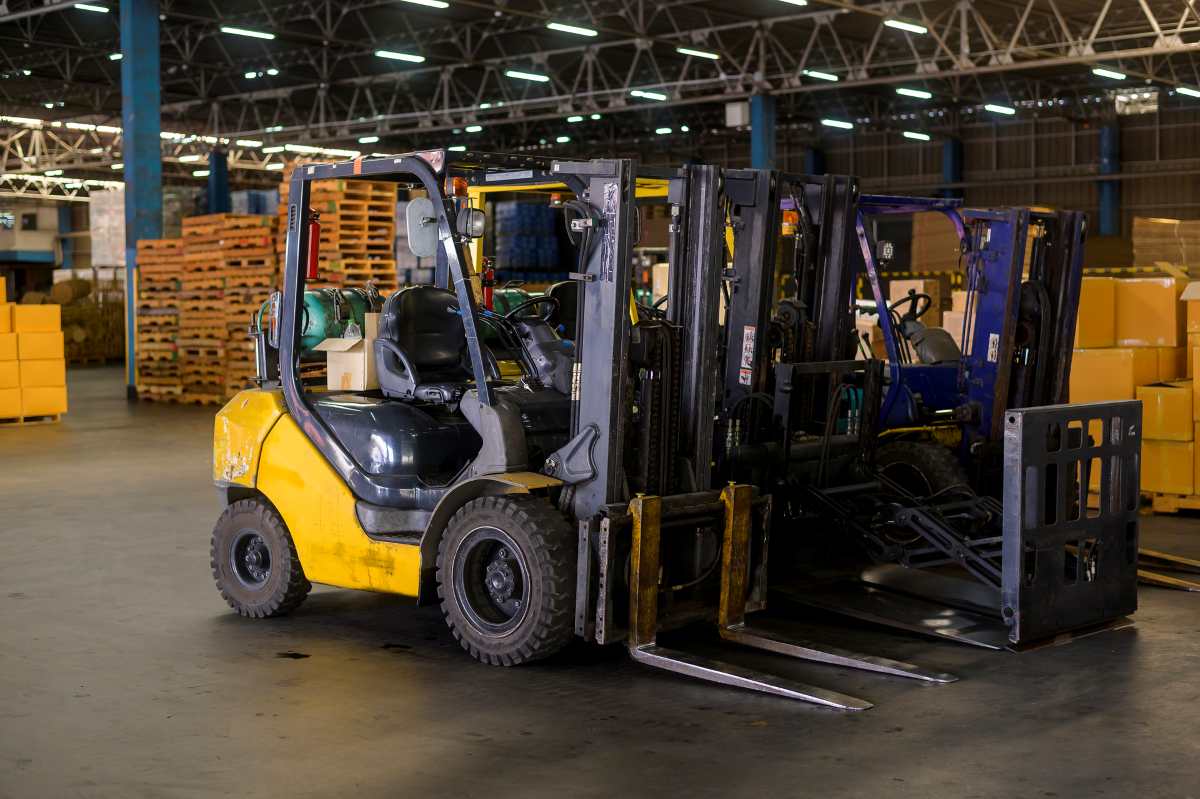
Changing LPG cylinders on fork lift trucks and other equipment where changing LPG cylinders is necessary should always be conducted:
- In a well-ventilated area;
- Away from sources of ignition, naked flames, etc. and
- Away from Calvert’s, inspection pits, etc. where fugitive gases may accumulate.
Important: Before starting changing LPG Cylinders (removal / replacement) and during the handling of LPG cylinders safety footwear and suitable gloves (preferably gauntlets) must be worn to minimise the risk of crush injury to feet, minor cuts, bruises, etc. and protect against burns from accidental release of gases.
Changing LPG cylinders on fork lift trucks and other equipment where changing LPG cylinders is necessary should always be conducted:
- In a well-ventilated area;
- Away from sources of ignition, naked flames, etc. and
- Away from Calvert’s, inspection pits, etc. where fugitive gases may accumulate.
Important: Before starting changing LPG Cylinders (removal / replacement) and during the handling of LPG cylinders safety footwear and suitable gloves (preferably gauntlets) must be worn to minimise the risk of crush injury to feet, minor cuts, bruises, etc. and protect against burns from accidental release of gases.
Changing LPG Cylinders
- Shut off LPG cylinder valve.
- Run truck until fuel in gas line depletes.
- Disconnect hose from gas cylinder.
- Unclip gas bottle from cradle and remove from truck, locating it within its designated storage area. Note: Follow correct manual handling technique when handling gas cylinders.
- Before fitting a full LPG cylinder, check that it is in good condition (has not sustained any damage, walls swelling or dented, etc.), and cylinder is in date, this is shown on the aluminium collar stating “Next Test” followed by a letter and two digits. The two digits represent the next year the cylinder is due a test. Note: If debris is found within the valve inlet, If a defective cylinder is found the cylinder must be taken out of service labelled as ‘Defective – Do not use’, placed in external storage cage and the supplier informed.
- Check that the valve seals are in place (not doubled or missing) and that no dirt, oil or water is present within the valve. Note: If dirt / debris, oil or water are present in the valve please follow the ‘Valve Cleaning Procedure’ detailed below.
- Check gas bottle cradle is secure and locate cylinder in cradle
- Ensure that the cylinder is located in the correct way around for connection and that the arrow on the base of the cylinder is pointing down
- Ensure location peg is located in hole within the collar of the cylinder (If present).
- Secure cylinder in location with retaining strap / catches.
- Before connecting, visually inspect the trucks high pressure input pipe to ensure that it is in a good condition, sustained no damage, kinks, etc. and that no valve seal is left in from previous cylinder.
- Screw the coupling onto the cylinder ensuring that it is screwed fully home, no kinks are formed in the pipework and that the pipework does not protrude outside the forklift truck dimensions.
- Fully open cylinder valve.
- Check no leaks are present.
- The forklift truck is now ready for use.
Valve Cleaning Procedure
If grit, enters the cylinder valve then safety and/or quality may be compromised and a gas leakage may occur. If debris is found within the gas cylinder valve and a supply of clean compressed air or nitrogen is available this should be used to blow out any loose particles of dirt from the valve sockets. Please Note: Eye protection (Safety Goggles) and gloves must be worn during this operation. Where clean compressed air or nitrogen is not available, particles of dirt and residual moisture can be removed by ‘cracking’ open and immediately closing the valve (otherwise known as ‘snifting’). Please note: When ‘snifting’ you must take the following safety precautions:
- Always wear eye protection (Safety Goggles) and gloves
- Ensure there is no possible source of ignition within the vicinity
- On no account deflect the gas stream with the hand or the face
- Be aware of the potential noise hazard and take precautions if necessary (i.e. wear ear defenders)
- If the valve outlet contains oil then do not attempt to use the cylinder; it must be returned to the supplier.