If you’re looking into forklift brands right now and doing lots of research, you’re probably asking one big question: Are Hyundai forklifts actually reliable – or are they just competitively priced?
It’s a really fair question. A forklift isn’t a small purchase, even for the multi-million pound compaies. Whether you’re investing in a single truck or refreshing a whole new fleet, you need equipment that you can rely on, that works hard, keeps downtime low, and doesn’t become a constant maintenance headache.
In this guide, we’ll take a balanced and practical look at the reliability of Hyundai Material Handling forklifts – what makes them dependable, where they perform best, and what you should consider before buying.
Hyundai forklifts are manufactured by Hyundai Heavy Industries (HHI), one of the world’s largest industrial equipment manufacturers. Hyundai isn’t just a forklift brand – it’s a global engineering company involved in shipbuilding, construction equipment, heavy industry, and more (I’m sure you will have heard of Hyundai cars, too).
That matters.
Why? Because companies that operate at this scale are typically going to have extensive engineering and R&D capabilities, which will give operators complete peace of mind that their equipment is safe. They will also have strong quality control systems, so this will account for it before any of the parts go into the trucks, and then the trucks themselves. It will also stick to global manufacturing standards along with long-term parts support infrastructures.
Hyundai has been manufacturing forklifts for decades and distributes them worldwide, including throughout the UK and Europe. This global presence helps ensure parts availability and ongoing product development.
Before we dive into the details, let’s define reliability in real-world terms.
When most businesses say they want a reliable forklift, they mean:
Reliability isn’t just about build quality – it’s about the full experience of ownership.
Hyundai forklifts are known for their solid, industrial-grade construction. Many models use heavy-duty steel frames designed to handle demanding environments such as:
Diesel models in particular are often praised for durability in outdoor, heavy-duty applications.
Hyundai’s engineering approach tends to prioritise:
Compared to ultra-budget brands, Hyundai generally offers stronger structural integrity and more refined engineering. While it may not always sit at the very top of the premium price bracket, it competes strongly in the mid-to-upper tier for durability.
One of the key reliability factors in any forklift is the powertrain.
Hyundai diesel forklifts often utilise proven engine manufacturers, including:
These engines are well-regarded for:
For LPG and electric models, Hyundai integrates reliable systems designed for steady performance in indoor warehouse environments.
The electric range has grown massively in recent years, with lithium-ion options becoming more and more common as businesses move toward lower emissions and sustainability goals for the environment.
Electric models benefit from:
This typically translates to improved long-term reliability when properly maintained.
Even the most well-built forklift will require regular maintenance. A reliable truck should be easy to service and designed with engineers in mind.
Hyundai forklifts are generally considered straightforward to maintain because they offer:
Ease of servicing reduces labour time and keeps maintenance costs manageable which results in big savings as a business.
That said, reliability also depends heavily on your service partner. Regular preventative maintenance is critical to keeping any forklift operating efficiently, regardless of brand. At Acclaim Handling, success is built on service. Servicing is one of the most important parts of our brand, and we are available 24/7.
A forklift can only be considered reliable if parts are readily available when needed.
Hyundai has an established dealer network across the UK. This ensures:
Downtime becomes significantly more expensive than any repair itself. A strong parts supply chain is therefore a major reliability factor – and Hyundai performs well in this area when supported by an experienced dealer.
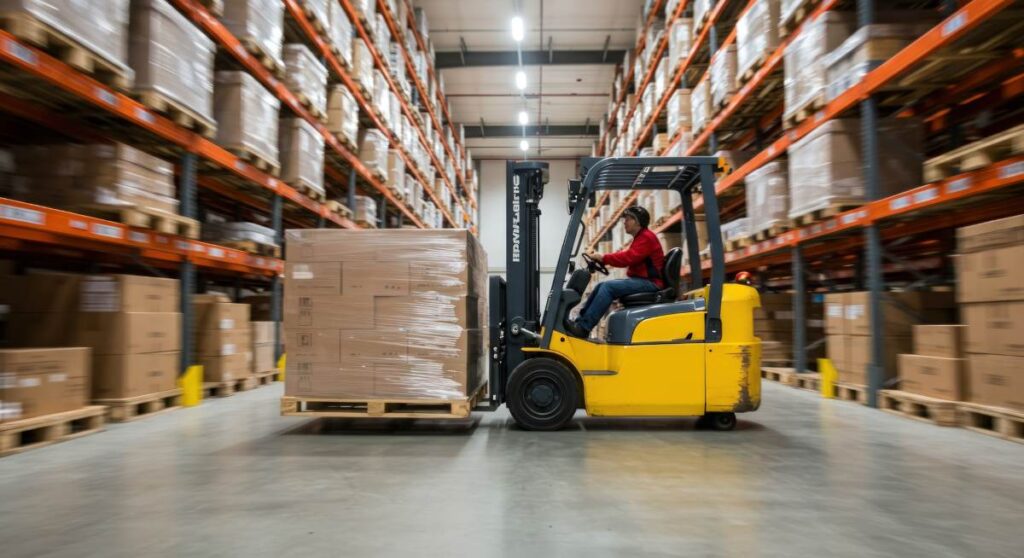
When you look at the broader materials handling market, Hyundai occupies a strategic “middle ground” that makes it an incredibly practical choice for many operations. When compared to the more premium European brands like STILL, Hyundai typically offers a more competitive price point; while you might notice a slightly less refined cabin interior, the trade-off is a machine that delivers exceptional durability and industrial-grade power for the cost. It’s a workhorse designed for those who prioritise raw performance and ROI over high-end aesthetic flourishes.
On the other end of the spectrum, Hyundai stands head and shoulders above many lower-cost import brands. By choosing Hyundai, you’re investing in significantly higher engineering standards, the security of stronger global backing, and a much more robust dealer support network. This balanced positioning ensures you aren’t just saving money upfront, but also protecting your long-term investment through better resale value and more reliable uptime. In short, it’s the ideal solution for businesses seeking the perfect equilibrium between affordability and heavy-duty reliability.
Across industries, Hyundai forklifts are often praised for:
Users often describe them as “built like tanks” – particularly diesel models used outdoors.
They offer strong performance relative to purchase price.
Operators tend to find Hyundai trucks intuitive and comfortable.
Especially in well-maintained fleets, engine issues are relatively uncommon.
Smooth lifting performance and dependable hydraulic systems.
No brand is perfect, and it’s important to consider a few practical factors when weighing your options. While Hyundai is a powerhouse of durability, the cabin refinement might not always reach the ultra-premium “luxury” feel of some high-end European competitors, and you may find that some older models lack the cutting-edge telematics suites found in the most expensive new trucks on the market.
Ultimately, however, the machine is only as good as the care it receives; reliability is a two-way street that heavily depends on rigorous maintenance schedules. Even the most over-engineered forklift will eventually develop issues if it’s neglected, proving that consistent up-keep is the real secret to long-term performance, regardless of the name on the chassis.
Electric forklifts are increasingly popular in the UK, particularly for indoor operations.
Hyundai’s electric range offers:
Electric trucks typically experience:
When paired with proper battery care and charging practices, Hyundai electric forklifts can deliver excellent long-term reliability.
Battery management, however, is critical. Poor charging habits significantly reduce lifespan.
When you look at the big picture, reliability is about much more than just how often a machine breaks down; it is the primary driver of your Total Cost of Ownership (TCO). Hyundai forklifts excel here by balancing competitive upfront pricing with manageable parts costs and efficient fuel consumption. Because they remain in high demand on the secondary market, they also tend to retain a healthy resale value. Over a 5–10 year lifecycle, these factors combine to transform a simple equipment purchase into a highly efficient long-term investment.
Choosing a reliable machine also acts as a safeguard against the “hidden” drains on your bottom line. Every hour a forklift is out of commission represents more than just a repair bill-it’s a cascade of emergency maintenance fees, halted production lines, and lost labour hours. By prioritising a dependable fleet, you aren’t just buying hardware; you are actively reducing operational downtime and mitigating the safety risks that often arise when equipment isn’t performing at its peak.
To further bolster this reliability, Hyundai provides the safety net of comprehensive manufacturer warranties. This global backing offers a level of reassurance that smaller, “budget” brands simply can’t match. Of course, the specifics of your coverage-such as warranty length and depth-will vary based on your specific model, projected usage hours, and the nature of your application. By aligning your dealer agreement with your actual site requirements, you ensure that your fleet is protected by one of the world’s most recognised industrial manufacturers, giving you total confidence in your uptime.
Hyundai forklifts are particularly well-suited to:
Their diesel range is often chosen for demanding environments requiring high lifting capacities and rugged durability.
Whether a forklift is clocking a casual eight hours a week of work or grinding through a 24/7 MARATHON in a high-volume distribution centre, its lifespan and reliability aren’t just down to luck. It really comes down to how well the machine is matched to its environment, on top of how well it’s maintained. To keep a fleet running smoothly, you have to nail the initial truck specification and ensure the load capacity actually aligns with your daily demands. That’s why a site consultation is pretty crucial when it comes to buying or hiring a truck, or any kind of material handling equipment for that matter.
Beyond the hardware, it’s the human element – proper operator training and a proactive, preventative maintenance schedule – that prevents minor wear from turning into a major breakdown. Ultimately, reliability is the byproduct of application suitability; when the right tool meets the right task, the machine performs better and lasts longer.
Choosing the wrong capacity or truck type can create reliability problems unrelated to manufacturing quality.
Even the most dependable forklift can fail prematurely if it’s being misused.
Professional forklift operator training reduces:
For many UK businesses, the answer is yes.
When you’re looking at the long game for your fleet, Hyundai forklifts really hit that sweet spot between rugged durability and smart economics. They’re built to handle heavy-duty shifts without breaking a sweat, thanks to their reliable engine performance and a build quality that keeps them on the floor rather than in the shop. What’s even better is that they don’t just come with a competitive price tag upfront; because of their solid resale value and excellent parts support, they’re a practical investment that holds its worth well into the future.
They are particularly attractive for businesses that want the industrial reliability without paying premium-tier pricing.
In practical, real-world terms – yes, Hyundai forklifts are considered reliable.
They offer:
However, reliability is never brand-only. It depends equally on:
When paired with preventative maintenance and expert support, Hyundai forklifts can deliver years of dependable service across demanding applications.
If you’re considering investing in a Hyundai forklift, it’s important to:
Choosing the right specification ensures you maximise reliability from day one.
Hyundai forklifts have earned a strong reputation for durability, value, and dependable performance. They may not always sit at the ultra-premium end of the market, but they consistently deliver solid reliability across a wide range of industries.
For businesses looking for a dependable, well-engineered forklift backed by a global manufacturer, Hyundai is a brand well worth considering.

We prioritize accuracy and integrity in our content. Here's how we maintain high standards:
Our content is carefully reviewed by experienced professionals to ensure accuracy and relevance.
Look for the expert-reviewed label to read content you can trust.
 01708 861 414
