On this page
Ask ten forklift dealers how long a truck should last and you’ll get ten different answers, most of them shaped by what they’re trying to sell you. The honest answer is more useful: a well-maintained forklift typically delivers between 10,000 and 20,000 operational hours before major component replacement starts to make economic sense, with significant variation depending on power source, application, and how seriously the owner takes maintenance.
Hours, Not Years, Are the Real Measure
Forklifts age by use, not by date. A truck that runs eight hours a day, five days a week racks up around 2,000 hours annually. The same truck running a single shift two days a week might log 800 hours a year. After five years, the first machine is approaching the end of its prime life while the second has barely started getting comfortable.
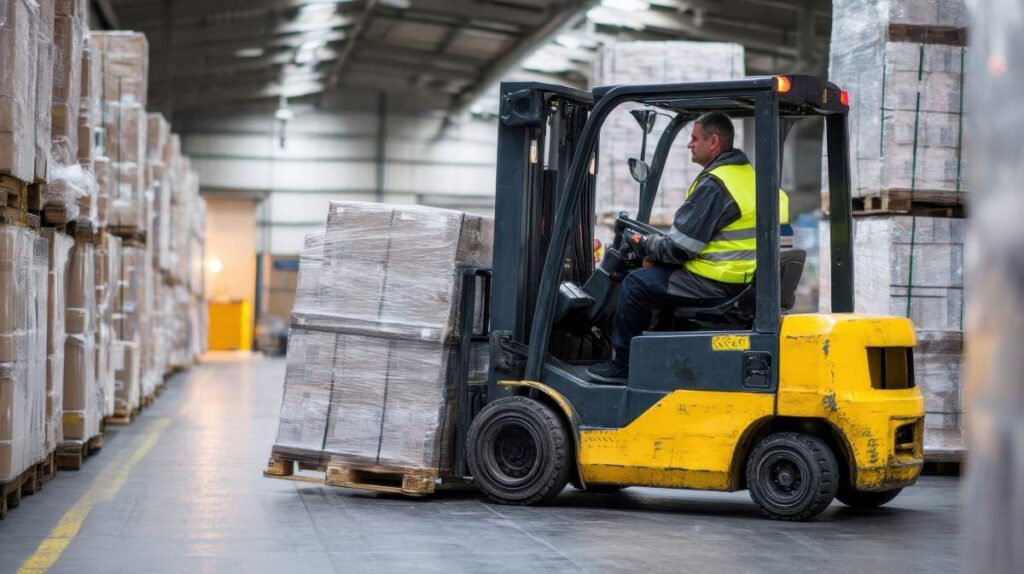
When you’re looking at a used forklift, the hour meter tells you far more than the registration year. A 2018 truck with 4,000 hours has plenty of life left; a 2022 truck with 14,000 hours is approaching the territory where major components will start needing attention.
This is also why “lifespan” without context is a misleading concept. The right way to think about it is operational hours per pound spent, with maintenance discipline as the multiplier that determines how favourably that ratio plays out.
Typical Lifespan by Power Type
Different power sources produce meaningfully different lifespan curves, and choosing the right one for your duty cycle has real consequences for total cost of ownership.
Electric forklifts typically deliver 15,000 to 20,000 hours before major refurbishment becomes economic. The drivetrain is mechanically simple compared to internal combustion equivalents, with fewer moving parts to wear out and lower thermal stress on components. The battery is usually the limiting factor, with lead-acid units lasting around 1,500 charge cycles (typically five to seven years of normal use) before replacement, and lithium-ion units lasting considerably longer.
Diesel forklifts generally manage 10,000 to 12,000 hours of useful life before engine rebuilds become necessary. They’re built to handle hard work in tough environments, and a well-maintained diesel can run for decades, but the components wear faster than electric equivalents because internal combustion is inherently harder on machinery.
LPG forklifts sit between the two, typically delivering around 12,000 to 15,000 hours. The cleaner combustion of LPG compared to diesel reduces engine wear and contamination, but they still have all the mechanical complexity of an internal combustion truck.
What Affects How Long Your Forklift Actually Lasts
The numbers above are averages, and your specific truck will land somewhere on a fairly wide spectrum based on factors mostly within your control.
- Maintenance discipline is the single biggest variable. A forklift that’s serviced on schedule by a qualified engineer, with worn parts replaced before they fail and operating issues caught early, will outlast an identical truck that’s only repaired when it breaks. The difference isn’t 10% or 20%; it can easily be double.
- Operating environment matters enormously. Trucks running in clean, dry, indoor environments age slowly. Trucks working outdoor yards with rain, dust, and uneven surfaces age faster. Cold storage operations are particularly hard on components if the truck wasn’t specified for it. Corrosive environments (food processing wash-down areas, chemical handling, coastal yards with salt exposure) accelerate wear on everything from electrics to hydraulics.
- Operator behaviour sounds vague but has measurable consequences. Operators who hammer the throttle, slam reverse without coming to a full stop, run into racking, and ignore warning indicators destroy trucks faster than careful drivers. The cost of investing in proper operator training shows up as reduced maintenance bills and longer truck life.
- Duty cycle determines how much stress accumulates per hour. A truck running double shifts at 90% utilisation in a busy distribution centre is doing fundamentally harder work than one running occasional pallet movements in a low-volume yard. Two trucks at 8,000 hours each may be in entirely different mechanical conditions if their duty cycles were different.
- Application matching is the underrated factor. Using a truck outside its design parameters (lifting overweight loads, exceeding rated duty cycles, deploying a standard machine in cold storage) accelerates wear even when individual events don’t cause obvious damage.
When Does It Make Economic Sense to Replace?
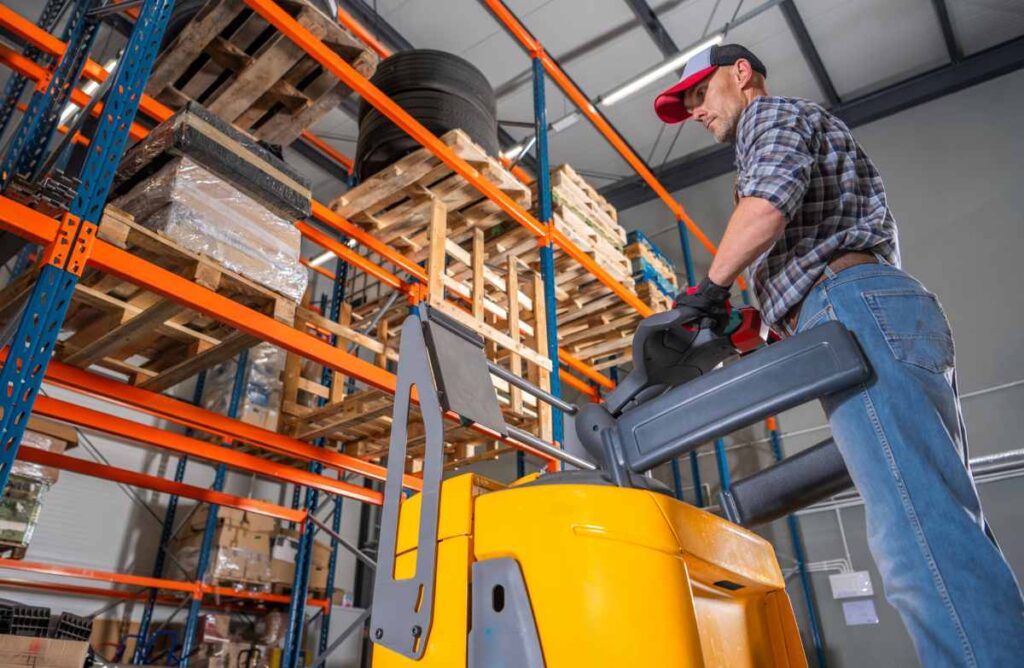
The replacement decision is rarely about the truck failing entirely. It’s usually about the rising cost curve of maintaining an aging machine crossing the cost of replacement. A truck approaching 12,000 hours starts demanding more frequent component replacements: hydraulic pumps, drive motors, controllers, mast components. Each of these can run into thousands of pounds individually.
A useful rule of thumb: when annual maintenance costs on a single truck approach 20% of the cost of a new equivalent, replacement starts to make sense. When they exceed 30%, you’re almost certainly throwing good money after bad.
Don’t ignore the productivity costs either. An aging truck that breaks down twice a month isn’t just costing you in repair bills; it’s costing you in lost throughput, missed shipments, and frustrated operators who lose faith in the equipment. These soft costs rarely appear in the maintenance budget but they’re real.
If you’re approaching the replace-or-repair decision, our part exchange service lets you trade in aging equipment against newer trucks, which often makes the transition less painful financially than expected.
Stretching Lifespan Without Pretending
How to extend the lifespan of your forklift is mostly about consistency, not heroics. Service intervals followed precisely. Daily pre-shift inspections actually carried out. Operator training renewed properly. Worn parts replaced before they fail. Battery management taken seriously on electric trucks. Tyres replaced when they should be rather than when they finally give up.
Operators who do these things consistently get 30 to 50% more useful life out of the same equipment as operators who don’t. That’s not marketing; that’s the documented gap between well-managed and poorly-managed fleets.
The flipside is also true. If you’re cutting corners on servicing, ignoring small issues until they become big ones, and tolerating poor operating habits, you’re shortening the working life of every truck in your fleet. The savings you think you’re making on maintenance show up later as premature replacement costs.
Why Engineer Quality Matters
The engineer who works on your truck has a direct impact on its lifespan. A poorly-trained engineer who misses an early sign of bearing wear or hydraulic seal degradation costs you a major component six months later. We invest seriously in our engineering team at Acclaim Handling: average tenure across our engineers is ten years, all are trained to manufacturer standards on STILL, Hyundai, and Lonking equipment, and we maintain a 92% first-time fix rate on call-outs across our eight UK service centres.
That kind of consistency over the working life of a truck is what separates fleets that hit 18,000 hours from fleets that struggle past 10,000.
Getting Honest About Your Fleet
We currently look after around 3,500 machines across the UK, ranging from a few hundred hours old to fleets approaching the end of their useful life, and the conversations we have at those two ends are very different. If you’re running aging equipment and trying to decide between continued repair and replacement, that’s a calculation worth doing properly rather than putting off until a major failure forces the decision.
Forklift service options offered here at Acclaim Handling include both routine maintenance and the kind of detailed condition assessments that help you understand where your fleet actually stands. If you’d benefit from a proper view of your trucks’ remaining useful life, get in touch.