Not all forklifts are created equal, and using the wrong type for your environment leads to problems – accelerated wear, poor performance, safety issues, and unnecessary costs. The distinction between indoor and outdoor forklifts isn’t just about where you happen to operate them. It’s about fundamental design differences that affect everything from tyres and power sources to construction and capabilities.
Choosing the right forklift for your environment ensures the equipment performs reliably, lasts longer, and operates safely. Using indoor equipment outdoors or vice versa creates issues that compromise all three.
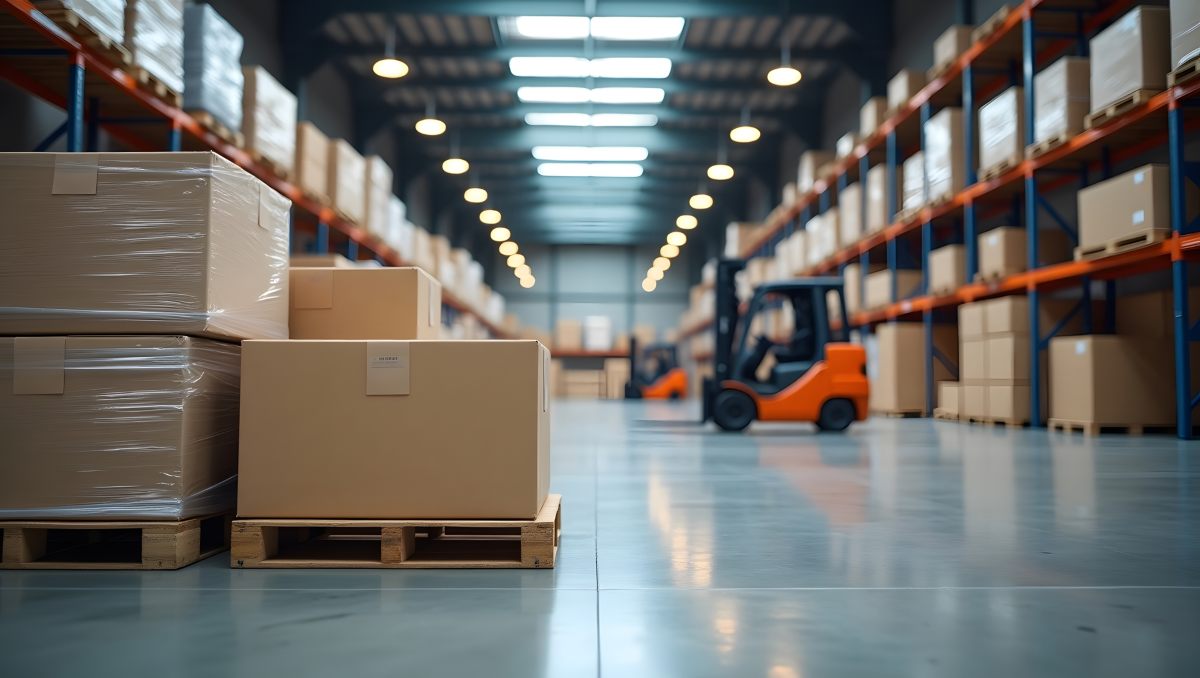
Indoor forklifts are predominantly electric, powered by batteries rather than internal combustion engines. This matters significantly in enclosed spaces where air quality and ventilation are concerns.
Electric forklifts produce zero emissions during operation. No exhaust fumes, no carbon monoxide, no particulate matter – just clean operation that doesn’t compromise air quality for workers in the warehouse. In temperature-controlled environments or spaces with limited ventilation, this isn’t just a preference, it’s often a requirement.
Battery-powered forklifts also run quieter than their combustion counterparts. Warehouse noise levels affect worker comfort and safety – quieter equipment means better communication, reduced fatigue, and a more pleasant working environment overall.
Outdoor forklifts typically use diesel, LPG, or petrol engines. These power sources provide advantages in outdoor environments – longer runtime without recharging, better performance in cold weather, and greater power for heavy-duty applications.
Emissions aren’t a concern in outdoor settings with natural ventilation. The engine power and fuel capacity allow for extended operation without the downtime required for battery charging or swapping, which matters when equipment runs continuously throughout shifts.
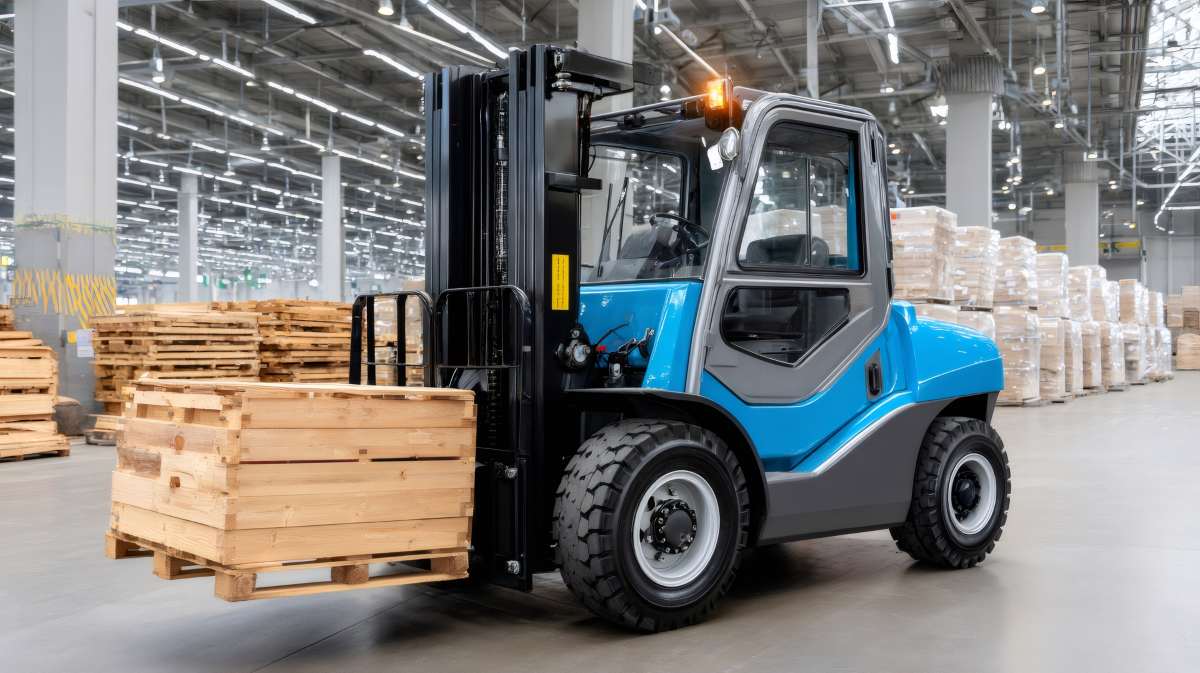
Indoor forklifts typically use cushion tyres – solid rubber tyres that sit close to the ground with minimal tread. They’re designed for smooth, even surfaces like polished concrete warehouse floors.
Cushion tyres provide excellent manoeuvrability in tight spaces. The smaller turning radius they enable makes navigating narrow warehouse aisles significantly easier. They’re also more economical to replace than pneumatic tyres and require virtually no maintenance.
The trade-off is limited shock absorption and poor performance on uneven terrain. Take a cushion-tyred forklift onto rough ground or outdoor surfaces, and you’ll feel every bump. The lack of suspension damages both the equipment and whatever load you’re carrying.
Outdoor forklifts use pneumatic tyres – air-filled rubber tyres similar to what you’d find on cars or trucks. These provide substantial shock absorption and handle uneven terrain, gravel, dirt, and rougher surfaces that would quickly damage cushion tyres.
The larger tyre size and tread patterns provide better traction on loose or wet surfaces. Ground clearance is higher, allowing outdoor forklifts to navigate obstacles and uneven ground that would stop indoor models completely.
Pneumatic tyres require more maintenance – monitoring air pressure, checking for punctures, eventual replacement as tread wears. But for outdoor applications, they’re essential rather than optional.
Indoor forklifts are built for controlled environments. The construction doesn’t need to withstand weather exposure, temperature extremes, or moisture beyond what occurs inside warehouses.
This allows manufacturers to optimise for other factors – compact design for tight spaces, lower initial cost, features suited to warehouse operations like precise controls for delicate loads.
Take indoor equipment outside regularly, and weather exposure becomes a problem. Moisture affects electrical components, temperature fluctuations stress materials not designed for them, and UV exposure degrades components over time.
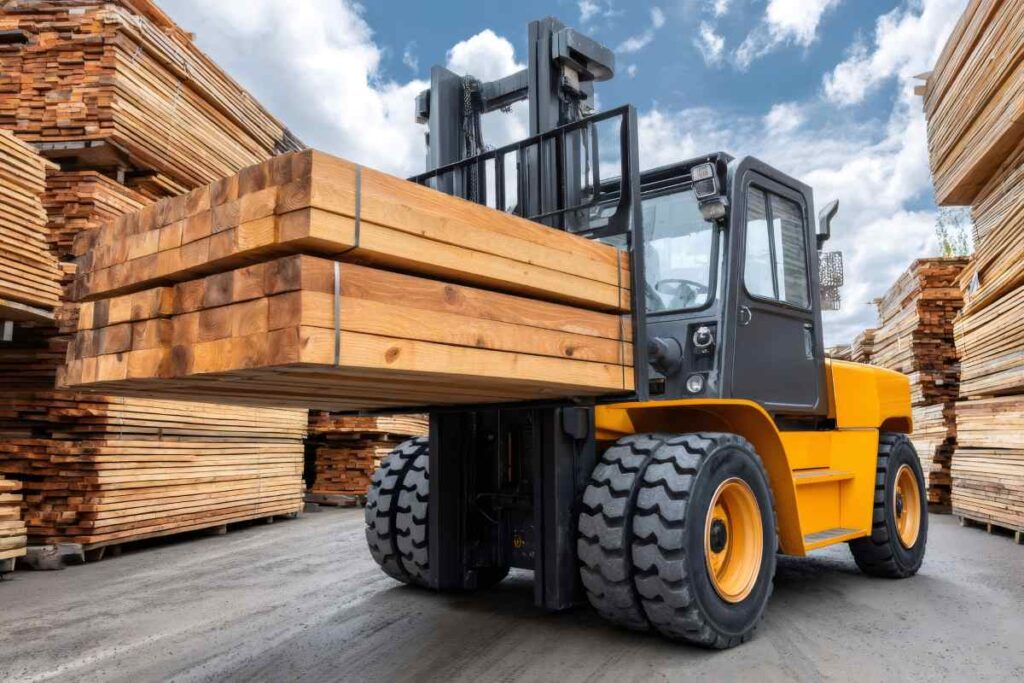
Outdoor forklifts feature weatherproofed components, sealed electrical systems, and construction designed to handle temperature extremes, moisture, dust, and UV exposure. This robust construction costs more upfront but prevents the accelerated deterioration that occurs when equipment isn’t suited to its environment.
Frames are typically more substantial, components are sealed against dust and water ingress, and materials are selected for weather resistance. These forklifts are built to operate reliably whether it’s freezing, raining, or baking in summer heat.
Indoor forklifts prioritise compact dimensions and tight turning radii. Warehouse aisles are often narrow, and the ability to manoeuvre in confined spaces matters more than raw power or ground clearance.
Lift capacities tend towards lighter to medium loads – the typical range of palletised goods moving through warehouses. Mast heights vary widely since indoor operations often involve high-bay racking, but the focus remains on precision and control rather than outdoor forklifts’ power.
Outdoor forklifts are generally larger and heavier, providing stability on uneven ground and when handling heavy loads. The wider wheelbase and greater weight prevent tipping when operating on slopes or rough terrain.
Lift capacities often run higher than indoor models, as outdoor applications frequently involve construction materials, shipping containers, or other heavy loads. The equipment is built to handle demanding conditions that would overwhelm indoor forklifts.
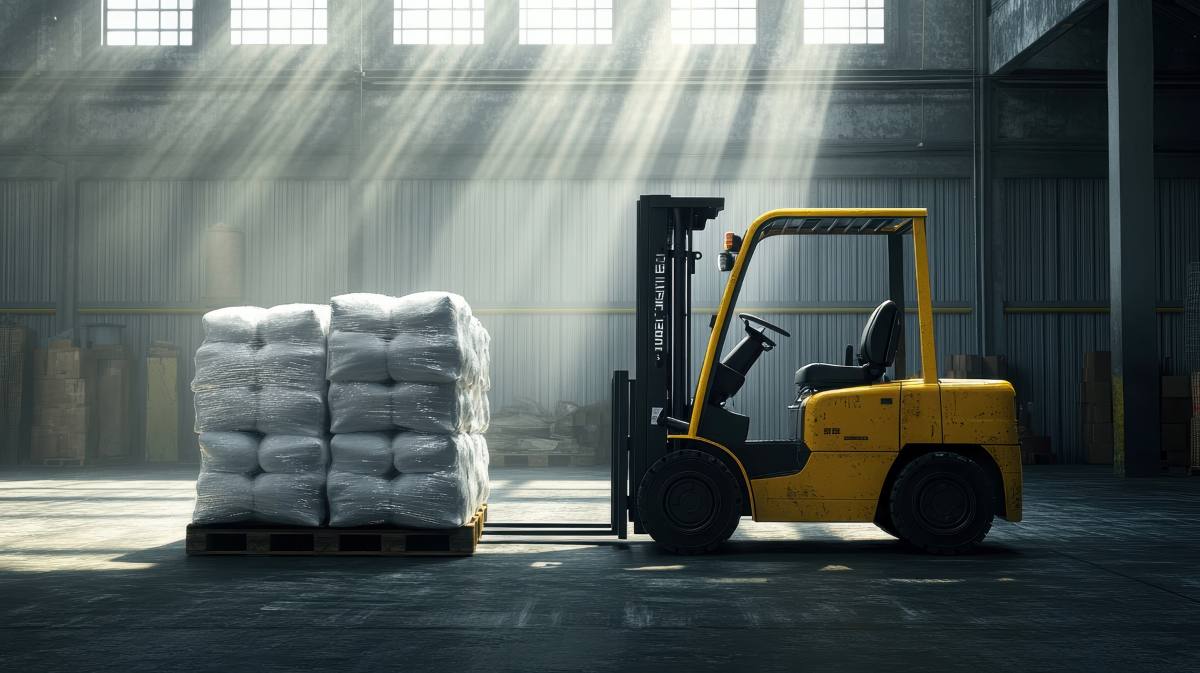
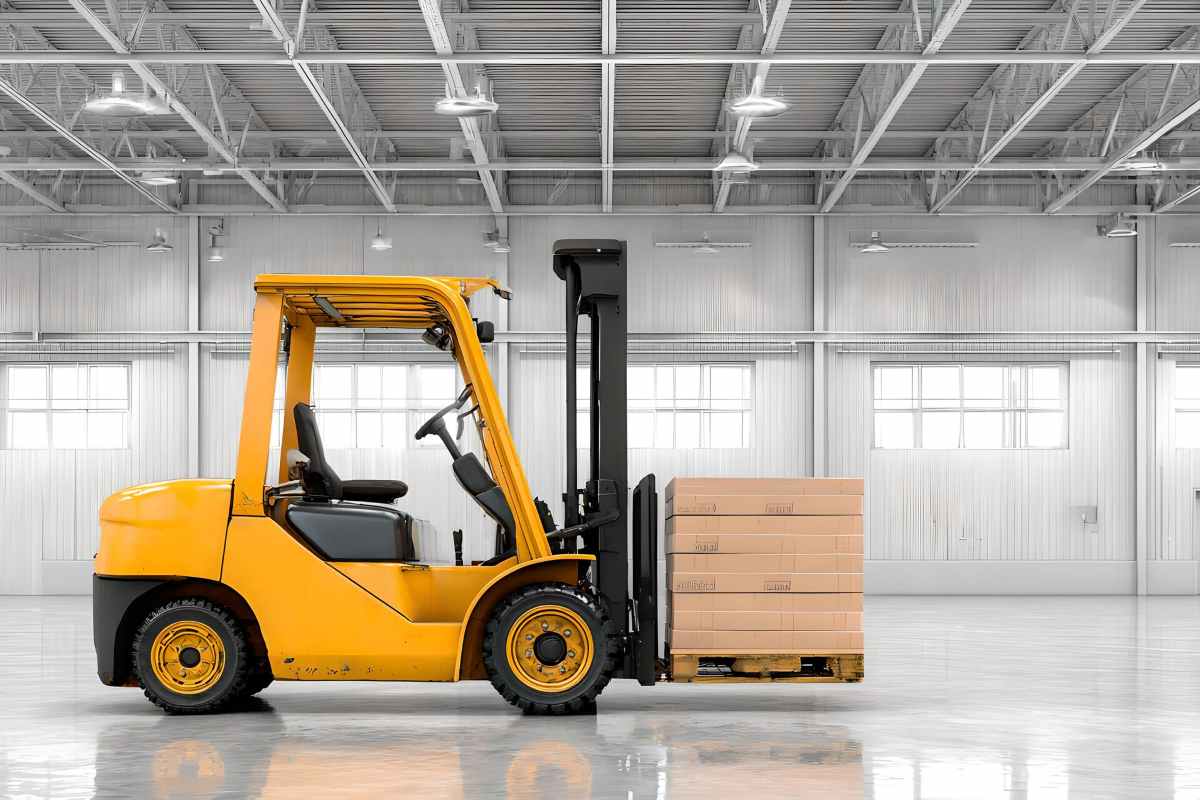
Indoor forklifts typically don’t include enclosed cabs – the controlled warehouse environment doesn’t require weather protection. Operator positions focus on visibility and ergonomics for repetitive tasks in confined spaces.
Visibility is optimised for working around racking and navigating aisles. Controls are designed for precision movements and frequent load handling throughout shifts.
Outdoor forklifts often feature enclosed or partially enclosed cabs protecting operators from weather – rain, wind, sun exposure, and temperature extremes. Working outdoors for entire shifts requires this protection for both comfort and safety.
Additional features might include heating for cold weather operation, better suspension for rough terrain, and enhanced visibility systems for outdoor lighting conditions.
Understanding how to choose the right forklift for your environment means honestly assessing where and how you’ll operate the equipment – not where it might occasionally go, but where it spends the majority of its working time.
Some operations need equipment that works both indoors and outdoors. In these cases, you’re typically better off choosing based on primary use and accepting some compromise in the secondary environment, or maintaining separate equipment optimised for each.
Trying to make indoor equipment work outdoors regularly leads to accelerated wear and premature failure. Using outdoor equipment indoors often means dealing with emissions issues, excess noise, and reduced manoeuvrability in tight spaces.
If you’re uncertain which type suits your operation best, our short-term hire for reliable forklifts allows you to evaluate different equipment types in your actual working conditions before committing to purchase.
Testing equipment in your specific environment reveals practical considerations that specifications alone don’t capture – whether indoor equipment can handle your yard surface occasionally, or whether outdoor equipment’s size creates problems in your warehouse aisles.
At Acclaim Handling, we help businesses match equipment to their actual operational environment, ensuring you get forklifts designed for where and how you’ll use them. Whether you need nimble electric models for warehouse operations or robust outdoor equipment for yard work and rough terrain, we provide equipment that performs reliably in your specific conditions.
The right forklift isn’t just about capacity and lift height – it’s about matching the equipment’s design to the environment where it operates. Get that match right, and you’ll see better performance, longer equipment life, and fewer operational headaches.

We prioritize accuracy and integrity in our content. Here's how we maintain high standards:
Our content is carefully reviewed by experienced professionals to ensure accuracy and relevance.
Look for the expert-reviewed label to read content you can trust.
 01708 861 414
