If you’ve ever walked through a warehouse and felt like it had its own kind of logic-one that only the long-time supervisor seems to understand-you’ve already brushed up against the concept of slotting. In simple terms, slotting is the strategic placement of inventory to optimise picking, storage, and movement. But here’s where things get interesting: many warehouses think they’ve got slotting down, yet their aisles tell a different story.
Bottlenecks-those frustrating choke points where productivity goes to die-are often the result of poor slotting decisions. Too many fast-moving items stored too far apart, or high-demand SKUs tucked behind low-volume stock. It’s chaos disguised as order. So, how do we fix it? Let’s walk through a few (well, several) strategies that can genuinely make a difference.
We know, “use data” sounds like the kind of advice that gets thrown around too easily. But in slotting, it’s not just a buzzword-it’s the backbone. Analysing your order history, SKU velocity, and product dimensions helps you assign items to optimal locations.
Fast-moving goods (your A-class inventory) should be positioned closer to dispatch zones or along main travel paths. Slower movers can be stored further out. Think of it as seating your most frequent dinner guests near the kitchen table while the occasional visitors sit comfortably in the living room.
And yes, it might feel tedious running those reports at first, but the efficiency gains speak for themselves: fewer steps, shorter picking times, and happier staff.
Here’s something we often see: products organised beautifully by category but completely disconnected from how they’re actually picked. The result? Workers darting from one end of the warehouse to another, like contestants on a badly planned game show.
Instead, analyse picking routes and group SKUs that are commonly ordered together. It’s a simple concept with big results. If 70% of your orders include both packaging tape and boxes, they shouldn’t be stored ten aisles apart. Slotting based on order affinity can cut travel time drastically-and your team will thank you for it.
People matter. It’s easy to get caught up in layout maps and throughput charts, but at the heart of every warehouse is a team of humans who physically move items every day. Slotting strategies that ignore this reality tend to fall apart (and often lead to injuries).
Keep heavy or frequently handled items between waist and shoulder height. Avoid storing bulky products high up or small, fiddly components down low where constant bending is required. Sometimes efficiency is less about fancy algorithms and more about common sense.
A comfortable worker is a faster, safer one. And when morale goes up, so does accuracy.
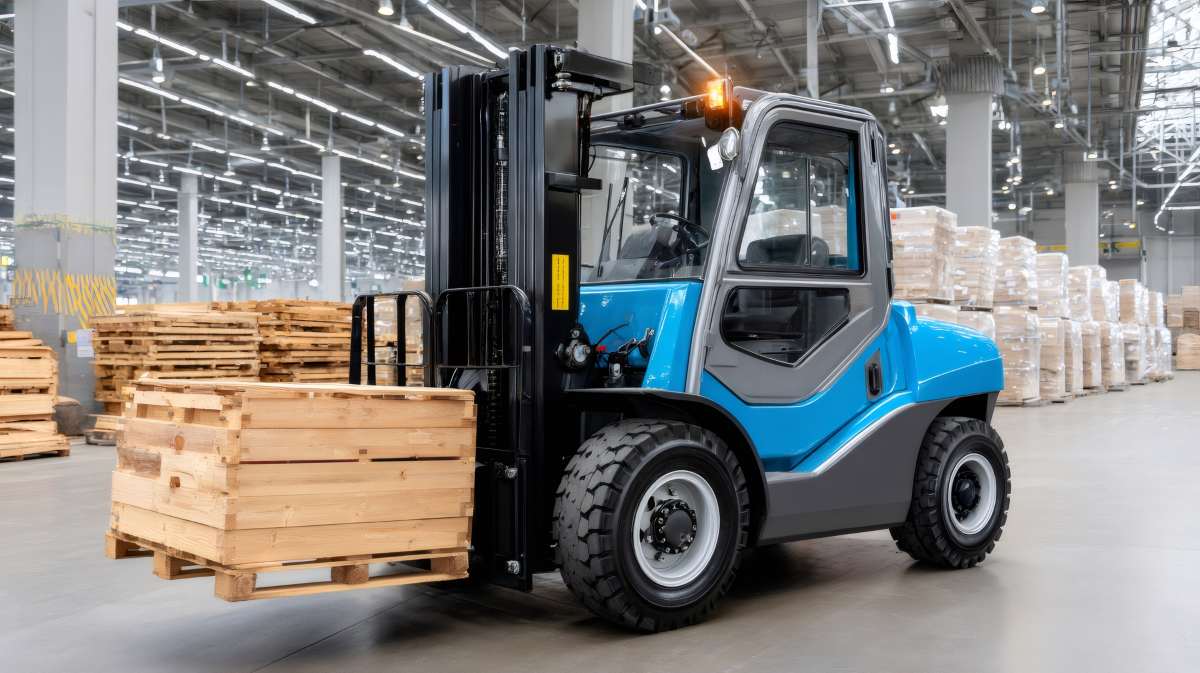
Even the best slotting plan collapses without reliable equipment. The wrong truck in the wrong space slows everything down. Narrow aisles with bulky forklifts? Guaranteed congestion. Large pallet loads but only small reach trucks? That’s a recipe for delay.
It’s worth revisiting your fleet setup regularly to ensure it still suits your layout. For example, choosing between a reach truck or a forklift can dramatically affect your efficiency, especially when slotting involves high racking or tight spaces. You can explore the differences more deeply in our related guide, choosing the right vehicle to optimise slotting.
And – this should go without saying but often doesn’t – book your next forklift maintenance. Because the fastest way to create a bottleneck? A forklift that refuses to start when your busiest shift begins.

You’ve heard of the Pareto Principle, right? In warehousing, it holds surprisingly true: about 20% of your SKUs account for 80% of your activity. This should shape your slotting strategy.
Those top-performing products deserve prime real estate-close to picking zones, in easily accessible racking, and ideally in ergonomic ranges. On the other hand, don’t waste prime floor space on rarely ordered items. Move those to less accessible areas.
It’s a balancing act, of course, but when executed correctly, it can dramatically reduce traffic jams during peak hours.
Slotting isn’t a “set it and forget it” task. The moment you think your layout is perfect, order patterns shift, product lines evolve, and your beautiful system begins to fray.
That’s why periodic re-slotting-say, every quarter or at least biannually-is crucial. It’s not about tearing everything down; it’s about refinement. Use seasonal data, customer trends, and performance metrics to guide your adjustments.
And don’t underestimate the insights your staff can provide. They see the daily inefficiencies firsthand. A short conversation with your pickers can reveal more about bottlenecks than a week’s worth of reports.
This might sound simple, but it’s one of the most overlooked fixes. Mixing fast-moving SKUs with slow ones leads to constant interference. Workers grabbing quick-turn items get stuck behind those picking obscure products from dusty corners.
Creating distinct velocity zones-A, B, and C areas-lets you streamline traffic flow. The busiest zones can have wider aisles, more accessible storage, and designated equipment. Meanwhile, slow zones can occupy less central areas.
The result? Reduced congestion, cleaner traffic patterns, and smoother throughput overall.
Not every warehouse needs a robot army. But modern slotting software, pick-to-light systems, and real-time inventory tracking can seriously elevate your operation.
That said, don’t just adopt tech for the sake of it. Start by identifying your specific pain points. If your issue is congestion at the packing stations, a warehouse management system (WMS) that optimises slotting sequences might help. If it’s frequent restocking delays, RFID tracking could be the answer.
Technology should enhance your process-not force you to rebuild it from scratch.
A well-slotted warehouse can still bottleneck if your travel paths are confusing or cluttered. Aisle design and flow direction are as critical as item placement. One-way systems often help, especially in tight environments, as they prevent picker collisions and wasted backtracking.
Mark lanes clearly, remove obstacles promptly, and avoid overstocking in active aisles. It might seem minor, but these adjustments can shave minutes off each pick route-which adds up across hundreds of daily orders.
Slotting is often treated as a back-office project, handled by analysts and managers. But real optimisation happens when everyone’s involved-from forklift operators to dispatch coordinators.
Encourage feedback loops. Let teams suggest layout tweaks and report recurring pinch points. Often, those who work “on the ground” have solutions far more practical than any theoretical model.
When people feel ownership over the layout, compliance improves naturally. They want to follow the system because they helped build it.
Preventing bottlenecks in warehousing isn’t about perfection-it’s about constant evolution. Slotting, at its best, is a living system that adapts to your products, your people, and your priorities.
And while fancy software and analytics play their part, sometimes it’s the simple things-like a well-placed pallet or a properly maintained forklift-that make the biggest difference.
Efficiency doesn’t happen by accident. It’s built one thoughtful slot, one smooth path, and one tuned-up forklift at a time.

We prioritize accuracy and integrity in our content. Here's how we maintain high standards:
Our content is carefully reviewed by experienced professionals to ensure accuracy and relevance.
Look for the expert-reviewed label to read content you can trust.
 01708 861 414
