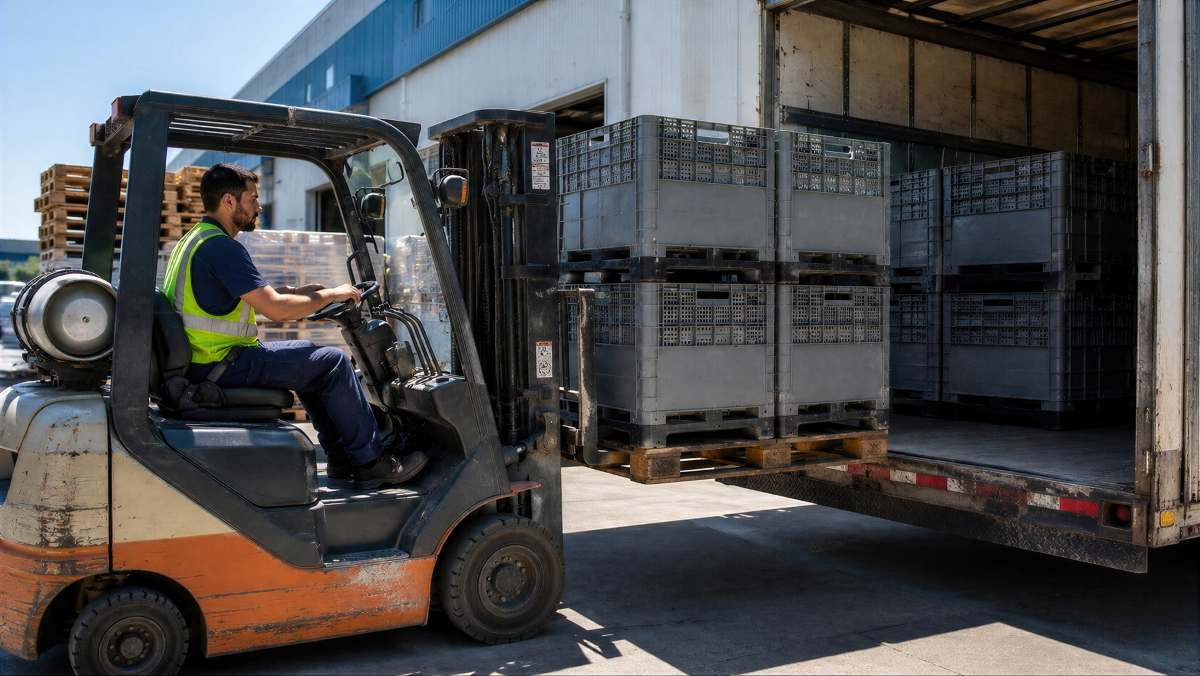
When it comes to materials handling and looking into an updated fleet, there is often a common misconception that “bigger is better”. On paper, this does make a lot of sense, if a 5,000kg capacity is good, then surely an 8000kg model must be better because it can handle everything the smaller one can, plus even more!
However, in the world of warehousing and logistics, over-specifying your equipment can be just as detrimental to your workflow as under-specifying it. Choosing a forklift with more muscle then you actually need now and long-term, can lead to skyrocketing costs, lower efficiency, and even structural damage to your facility.
Here is why a larger capacity forklift isn’t always the answer for your operation.
1. The Manoeuvrability Trade-Off
The most immediate drawback of a high-capacity forklift is its physical footprint. As lifting capacity increases, so does the size of the chassis, the counterweight, and the turning radius.
Aisle Width Constraints
Most warehouses are designed around specific “clear aisle” widths. If you introduce a larger forklift into an environment designed for standard units, you’ll find that your operators can no longer make 90-degree turns safely. This leads to:
- “Racking Rash”: Constant bumps and scrapes against uprights, which compromise rack integrity.
- Slower Cycle Times: Operators have to perform multi-point turns, turning a simple pick into a thirty-second ordeal.
Reach and Precision
Larger machines are built for heavy-duty stability, not surgical precision. If your warehouse requires high-density stacking or manoeuvring in tight corners, a “beast” of a forklift will feel like trying to drive a semi-truck through a drive-thru.
2. Hidden Infrastructure Costs
A forklift doesn’t operate in a vacuum; it operates on your floor. High-capacity forklifts are significantly heavier because they require massive counterweights to offset heavy loads.
Floor Loading Capacity
Standard warehouse slabs are engineered to withstand a specific amount of pressure (PSI). A larger forklift – even when empty – exerts massive pressure on the floor. Over time, this can lead to:
- Slab Cracking: Deep structural cracks that are expensive to grind and fill.
- Joint Failure: Increased wear on expansion joints.
- Mezzanine Limitations: If you operate on a second level, a larger forklift might literally exceed the structural weight limit of the floor.
Loading Dock Compatibility
Larger forklifts often have larger tyres and higher profiles. They may not fit under standard overhead doors, or they might be too heavy for your existing dock levellers. Before upgrading capacity, you must ensure your facility’s “skeleton” can support the weight.
3. The “Cost of Ownership” Spike
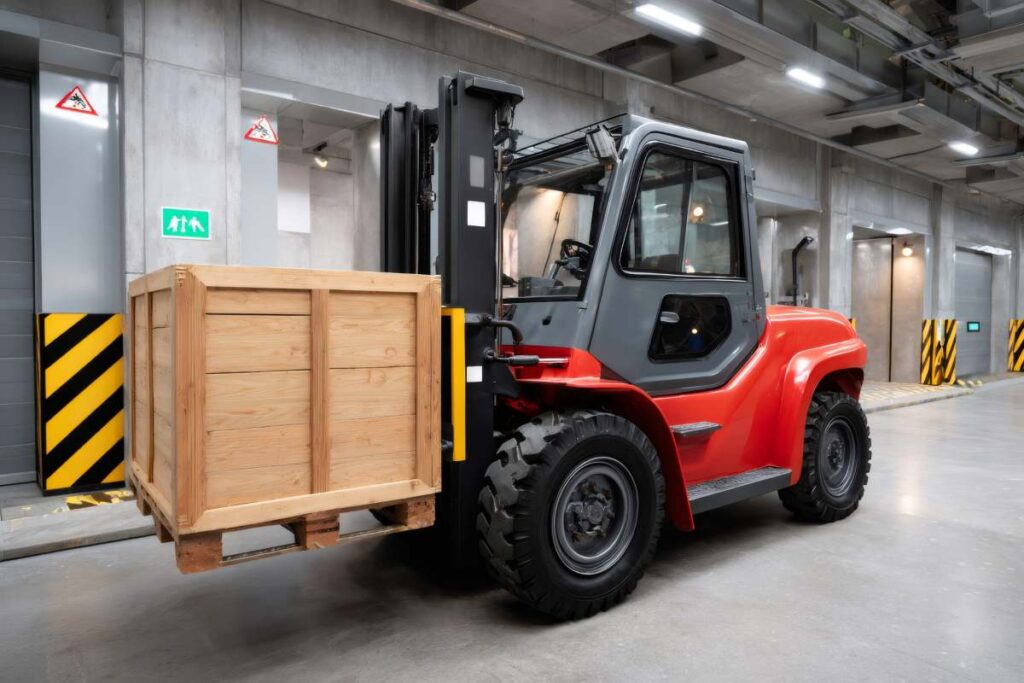
The purchase price is just the tip of the iceberg. The Total Cost of Ownership (TCO) for a high-capacity forklift is exponentially higher than for a standard model.
Fuel and Energy Consumption
A larger engine (IC) or a higher-voltage battery system (Electric) requires more “juice” to move the machine’s own weight. If you are using an 8,000-lb forklift to move 2,000-lb pallets 90% of the time, you are wasting a massive amount of energy on every single trip.
Maintenance and Parts
Everything on a larger forklift is more expensive:
- Tyres: Industrial tyres for heavy-duty models can sometimes cost double or even triple in comparison to standard models.
- Hydraulics: Larger cylinders and pumps need more fluid and more expensive seals.
- Specialised Technicians: Some high-capacity models require specialised diagnostic tools or longer labour hours for standard service.
4. Operator Ergonomics and Safety
A larger forklift changes the “feel” of the work, and not always for the better.
Blind Spots
Larger masts and bulkier counterweights create larger blind spots. In a busy warehouse with lots of people and pedestrian traffic, a larger forklift increases the risk of visibility-related accidents.
Fatigue and Entry/Exit
High-capacity lifts often have higher steps and different seat configurations. If an operator is performing “on-and-off” tasks (common in cross-docking), the extra physical effort of climbing into a larger cab dozens of times a day can lead to increased fatigue and repetitive motion injuries.
5. Depreciation and Resale Value
The market for standard 3,000kg to 5,000kg forklifts is massive. These units are the “sedans” of the material handling world-everyone wants one.
High-capacity units, however, are niche. When it comes time to trade in or sell your equipment, you may find that the pool of buyers for a specialised 15,000-lb lift is much smaller. You might take a larger “hit” on depreciation because the machine is too specific for most standard operations.
When SHOULD You Go Larger?
We aren’t saying large forklifts are bad, because they are essential tools. You should consider a larger capacity only if:
- Your Load Centre is Unusual: If you carry long or bulky items that shift the centre of gravity forward, you need the extra counterweight of a larger unit to stay within the Moment = Weight \times Distance safety parameters.
- You Use Heavy Attachments: Clamps, rotators, and side-shifters add weight and move the load centre. A 5,000-lb forklift with a 1,000-lb attachment can no longer safely lift a 5,000-lb pallet.
- Future-Proofing for Specific Growth: If your product line is definitely shifting toward heavier raw materials.
The goal of efficient material handling isn’t to have the strongest machine; it’s to have the right machine. Buying a forklift that is too big for your needs is like buying a literal sledgehammer to drive a finishing nail – it’s expensive, it’s clumsy, and you’re probably going to break something.
Before you sign the lease on that high-capacity unit, perform a thorough Site Audit. Measure your aisles, check your floor PSI, and analyse your average load weight. You might find that a more agile, standard-capacity unit – perhaps paired with a few specialised attachments – is actually the more “powerful” choice for your bottom line. If you’re still unsure, this guide on choosing the right forklift for your operation can help you align capacity, application, and long-term efficiency.

Related Posts
Predictive vs Preventive Maintenance: What’s the Difference?
The True Cost of Delaying a Forklift Repair
How Forklift Rentals Help Warehouses Stay Flexible
Top Industries that Benefit from Forklift Hire
How Warehousing Demands Are Changing Forklift Requirements