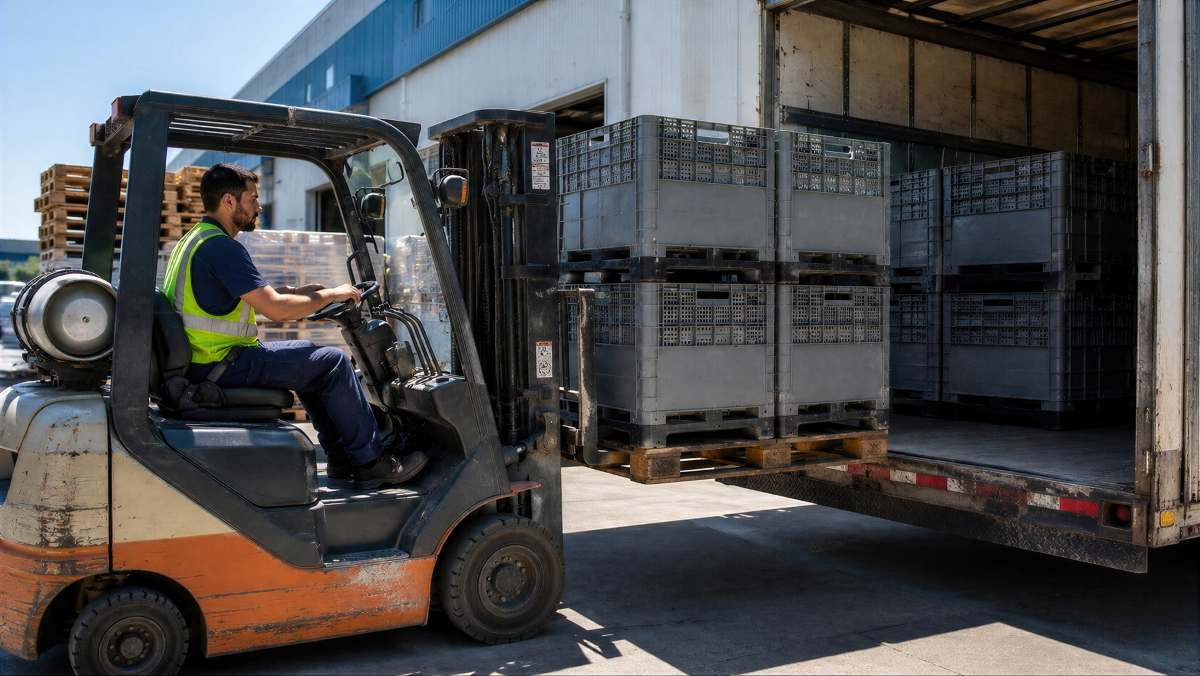
The tyres on a forklift are doing more structural work than most operators give them credit for. They’re the only contact point between a multi-tonne machine and the ground it’s working on, and the wrong choice affects everything from braking distance to load stability. A tyre that’s technically functional but poorly matched to the operating environment creates problems that accumulate quietly: faster wear, higher energy consumption, operator fatigue, reduced grip. Getting the selection right from the start is one of the most cost-effective decisions a fleet manager can make.
What Types of Forklift Tyres Are Available?
Three categories account for almost all forklift tyre applications: pneumatic, solid (also called cushion or resilient), and polyurethane press-on tyres. Each has a specific operating envelope, and selecting outside that envelope produces predictable failures.
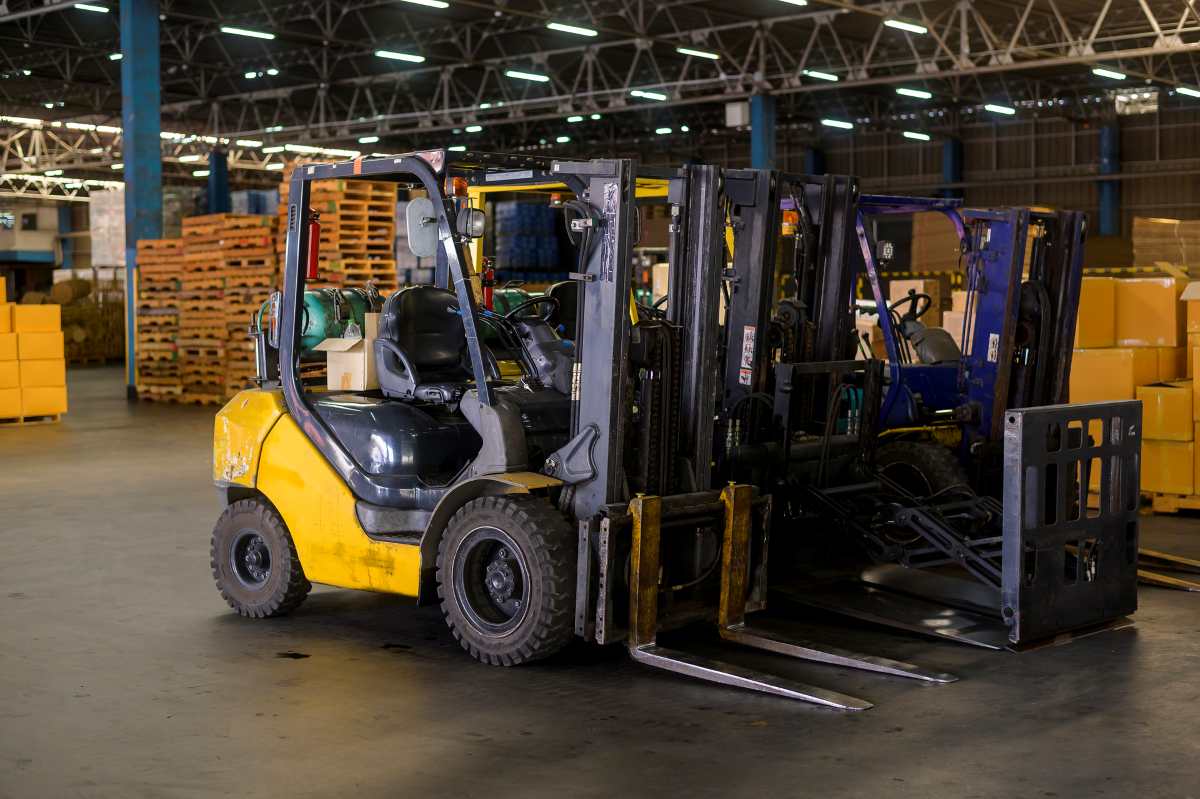
Pneumatic tyres are air-filled and constructed similarly to vehicle tyres, with deep tread patterns designed to handle uneven, loose, or rough surfaces. They absorb shock well, which makes them the standard choice for outdoor work on gravel yards, construction sites, agricultural settings, and anywhere the ground isn’t flat or sealed. The trade-off is puncture vulnerability. In environments with metal debris, broken pallets, or industrial waste, a pneumatic tyre can be a liability.
Solid rubber tyres eliminate the puncture problem entirely. They’re manufactured as a single block of rubber compound, pressed onto a steel band. Because there’s no air cavity, they can’t deflate, which makes them better suited to environments with sharp debris or chemical exposure. They run well on smooth concrete and asphalt, and their flat contact patch provides stable handling under load. The ride is harder, though. On rough terrain, the lack of cushioning transmits shock directly through the chassis, which accelerates wear on suspension components and increases operator discomfort over long shifts.
Polyurethane press-on tyres are the lightest and most compact option. They’re typically found on electric warehouse trucks, pallet stackers, and order pickers that work exclusively on smooth, clean floors. They offer excellent rolling resistance, which extends battery life on electric machines, but they’re not designed for outdoor use or uneven surfaces.
Does the Operating Surface Really Matter That Much?
It matters more than any other variable. A solid tyre on a gravel yard will wear unevenly and provide poor traction. A pneumatic tyre on a clean warehouse floor is overkill and introduces unnecessary puncture risk from any stray debris. The surface dictates the tyre type, not the other way around.
Mixed-use operations, where the same truck moves between a sealed warehouse and an outdoor loading area, require careful thought. Pneumatic tyres will handle both environments but will wear faster on the smooth indoor surface. Solid tyres with aggressive tread compounds can manage light outdoor work but struggle on anything genuinely uneven. Some operations solve this by running different trucks for different zones rather than compromising on a single tyre type across the fleet.
Temperature matters too. Cold environments stiffen rubber compounds, reducing grip and accelerating cracking. Trucks operating in chilled or frozen storage need tyres formulated specifically for low temperatures, and standard compounds will degrade rapidly. A thorough approach to forklift tyre inspection, maintenance, and replacement will catch these seasonal issues before they become safety hazards.
How Does Load Capacity Affect Tyre Selection?
Every tyre has a rated load capacity at a given speed, and exceeding it, even occasionally, causes accelerated wear, heat build-up, and potential catastrophic failure. The tyre must be rated to handle the maximum load the truck will carry, not the average. Operators who routinely handle loads close to the truck’s rated capacity need tyres that can sustain that stress without deforming.
Tyre width and contact patch size influence stability under load. A wider tyre distributes weight over a larger area, which reduces ground pressure and improves traction when carrying heavy loads. Narrower tyres are more manoeuvrable in tight spaces but offer less lateral stability. The right balance depends on whether the operation prioritises lifting capacity or manoeuvrability.
Compound hardness plays a role here too. Softer compounds grip better and absorb more shock, but they wear faster under heavy loads. Harder compounds last longer but sacrifice some traction. For operations that move heavy loads across smooth surfaces, a harder compound is usually the better long-term choice. For lighter loads on rougher terrain, the extra grip from a softer compound pays for itself in operational safety.
When Should Forklift Tyres Be Replaced?
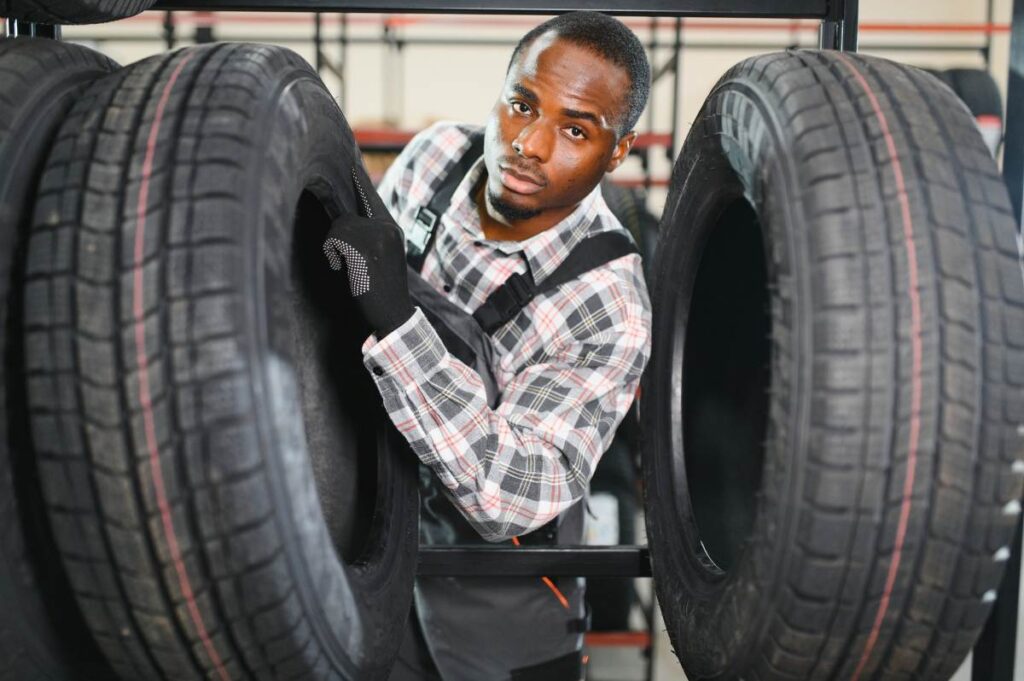
Most forklift tyres have a wear line, sometimes called a 60J line, moulded into the sidewall. Once the tyre surface has worn down to that line, it’s past its safe service life. If the tyre doesn’t have a visible wear indicator, the general rule is replacement at roughly two-thirds of the original rubber height.
Beyond tread depth, look for chunking (pieces of rubber missing from the tread or sidewall), cracking in the sidewall, flat spots from prolonged stationary periods or heavy braking, and uneven wear patterns that suggest alignment or axle problems. Any of these conditions compromises the tyre’s structural integrity and should prompt replacement regardless of remaining tread depth.
Replacing tyres in pairs, by axle, prevents imbalances that affect steering and stability. Running one new and one worn tyre on the same axle creates uneven ride height and can pull the truck to one side, a handling characteristic that’s both inefficient and dangerous when carrying elevated loads.
What Role Does the Tyre Play in Total Cost of Ownership?
Tyres are a consumable, but the wrong choice inflates costs far beyond the price of the rubber itself. Poor tyre selection increases energy consumption because the truck works harder to maintain traction or overcome rolling resistance. It accelerates wear on drivetrain and suspension components. It reduces operator productivity because drivers compensate for poor handling by moving more slowly and cautiously.
Fleet managers looking at high-quality forklifts for industrial use sometimes overlook the tyre specification entirely, treating it as an afterthought rather than an integral part of the machine’s performance. The truck and its tyres function as a system. Specifying the right tyre at the point of purchase, rather than retrofitting later, avoids the compromise of adapting a machine to conditions it wasn’t originally set up for.
Tracking tyre performance across the fleet, recording wear rates by position, application, and compound type, builds the data needed to make better purchasing decisions over time. The cheapest tyre per unit isn’t always the cheapest tyre per hour of operation, and the difference can be substantial across a fleet of machines running daily.

Related Posts
Predictive vs Preventive Maintenance: What’s the Difference?

The True Cost of Delaying a Forklift Repair
How Forklift Rentals Help Warehouses Stay Flexible
Top Industries that Benefit from Forklift Hire
How Warehousing Demands Are Changing Forklift Requirements