The mast is the part of a forklift most people take for granted. It goes up, it comes down, the load moves. Beyond that, the thinking tends to stop. But mast specification is one of the decisions with the most direct impact on what a forklift can actually do in a given environment, and getting it wrong creates operational constraints that are expensive and awkward to resolve after the fact.
There are four main mast configurations in common use. Each has distinct characteristics that make it better suited to some applications than others, and the differences between them are not just technical abstractions; they affect what the truck can lift, where it can operate, and how safely the operator can see around the load.
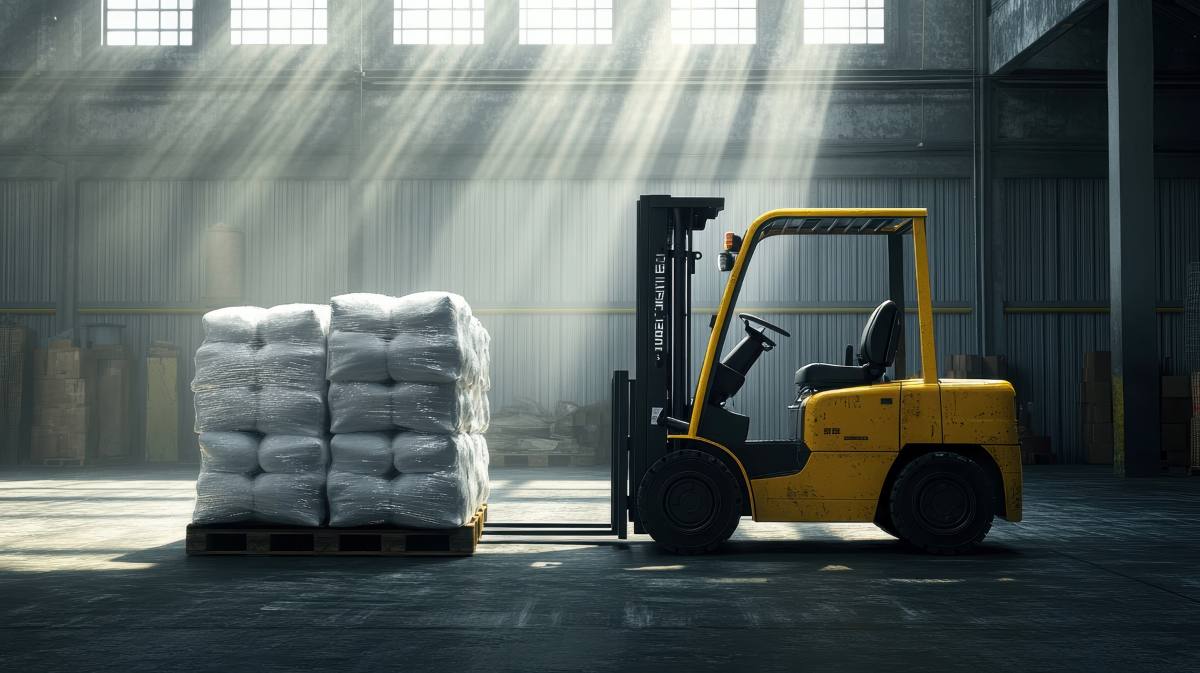
The single-stage, or simplex, mast is the most straightforward configuration. It consists of a single set of channels; when hydraulic pressure is applied, the carriage and forks rise within that channel until full extension is reached. There is no telescoping action.
The practical implication is that the mast must be taller than the maximum required lift height while still in its resting position. What you see when the truck is stationary is approximately what the overhead clearance requirement will be throughout operation. This makes simplex masts unsuitable for most indoor environments where overhead clearance is constrained, but they’re a robust and mechanically simple choice for outdoor work, yard operations, loading dock applications, or any setting where headroom isn’t a limiting factor. Fewer moving parts means less to go wrong, and for straightforward outdoor applications that reliability is the more relevant consideration.
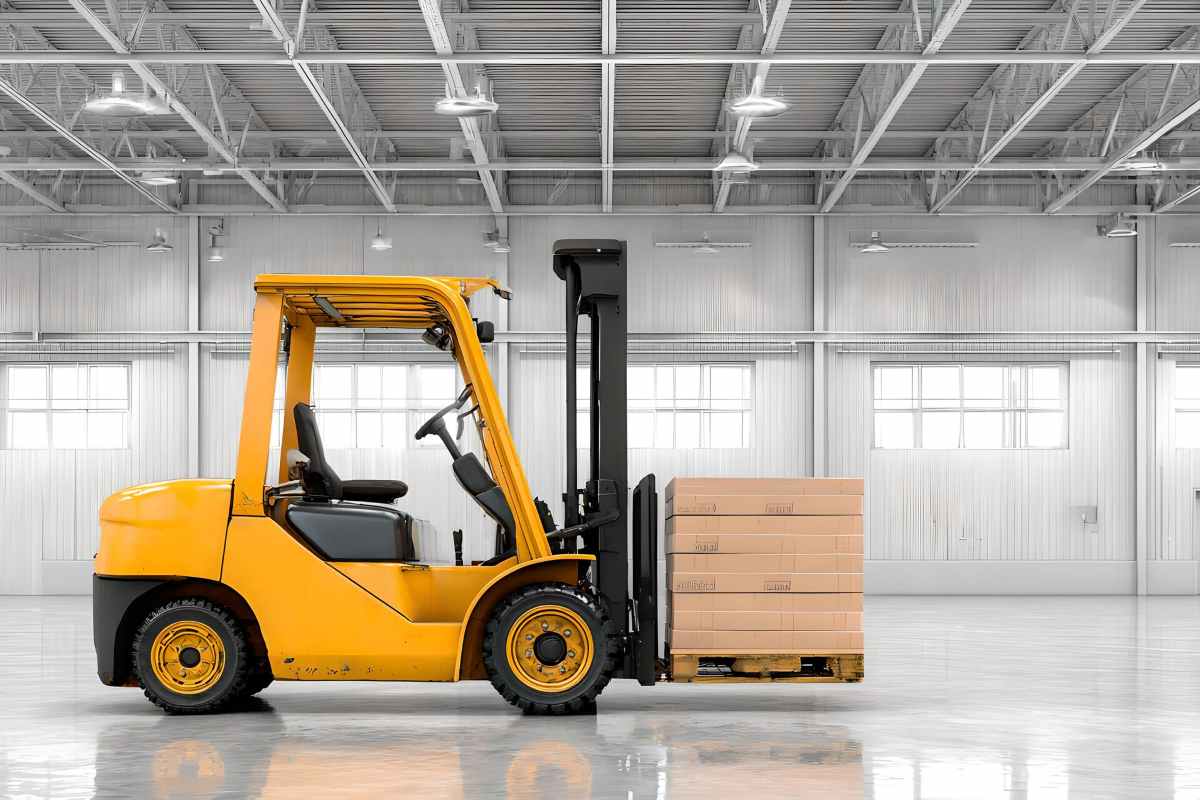
The duplex mast introduces a second set of channels and, critically, free lift: the ability to raise the forks a defined distance before the outer mast sections begin to extend upward. This single feature is what makes duplex masts the standard choice for indoor warehouse operations.
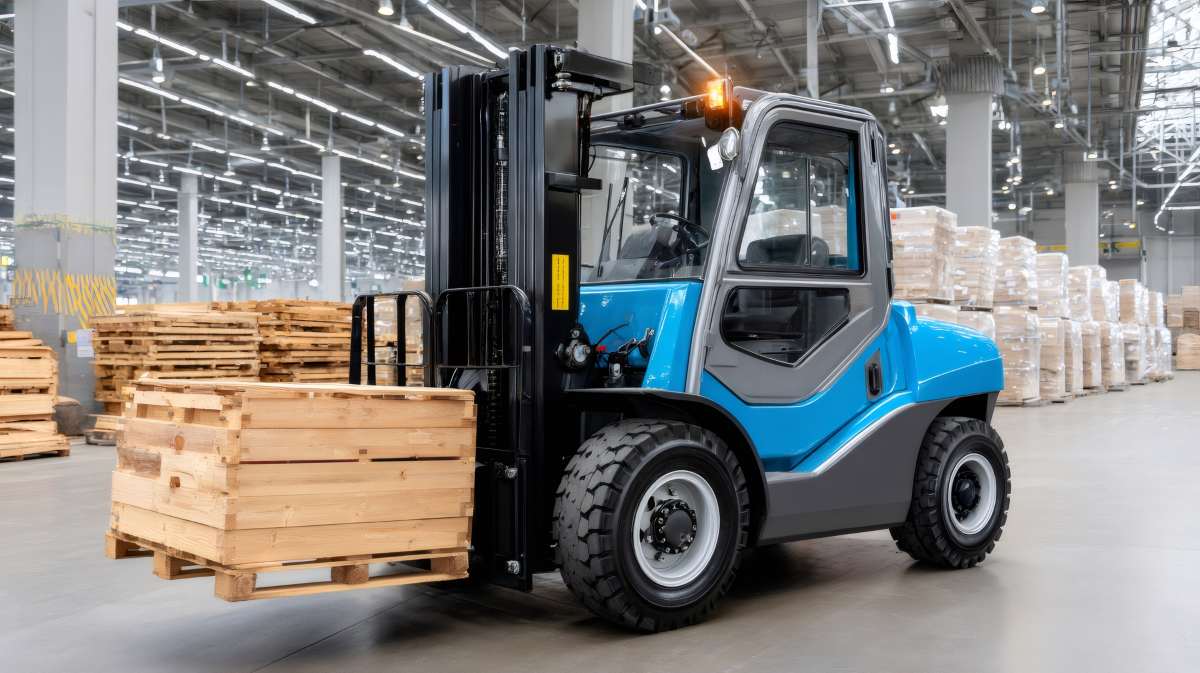
Free lift means the forks can be elevated to pick and place height without the overall profile of the mast increasing. In a building with a restricted ceiling height, or inside a container trailer where the roof clearance is fixed, this allows lifting to proceed without the mast fouling overhead structures. The amount of free lift varies between models, but it’s typically sufficient for ground-level pallet operations and standard racking heights without triggering mast extension.
Duplex masts offer a practical balance between indoor clearance capability, lift height, and mechanical simplicity, which is why they dominate general warehousing and distribution applications. For most standard warehouse environments, duplex is the starting assumption unless there’s a specific reason to deviate from it.
The triplex mast adds a third set of channels and substantially increases the available free lift relative to the collapsed height of the mast. This is the configuration designed for operations that need both high lift heights and tight overhead clearance simultaneously, the two demands most in tension with each other in warehouse design.
In a high-bay facility where racking extends to seven or eight metres but structural elements create clearance constraints at lower levels, the triplex mast allows a truck to operate effectively across the full racking height without compromise. It’s also the standard specification for container work, where loads need to be placed or retrieved at height within a fixed vertical envelope.
The trade-off relative to duplex is mechanical complexity. Three sets of channels, additional hydraulic circuits, and greater overall weight all follow from the additional stage. Triplex masts are heavier than their duplex equivalents, which has a modest effect on rated capacity and handling characteristics. Maintenance requirements are somewhat higher over the truck’s working life. These are manageable considerations with correct specification and regular servicing; they become problems only when the specification was wrong for the application or the maintenance schedule has been allowed to slip.
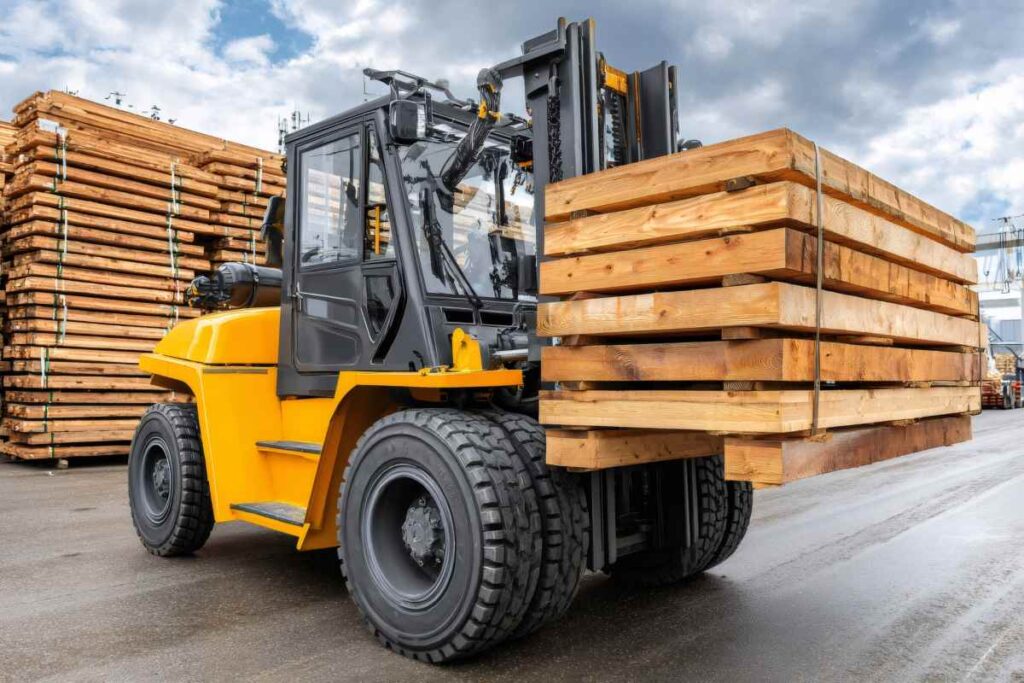
Quad masts take the triplex principle further, providing maximum lift height within a minimal collapsed height. The application is straightforwardly specialist: very high-bay warehousing, typically above nine or ten metres, where single, double, or triple-stage configurations cannot provide sufficient reach without exceeding overhead clearance limits.
They’re less common in general distribution and more frequently found in purpose-built high-bay facilities, temperature-controlled storage where vertical density is critical to the economics of the operation, or environments where floor space is constrained enough that building upward is the primary storage strategy. All the mechanical complexity considerations that apply to triplex apply here in greater degree; the engineering support and maintenance discipline required to keep a quad-mast truck reliable over time is correspondingly more demanding.
Mast type cannot be specified in isolation. It sits within a set of interdependent variables that together determine the right truck for a given operation. The relevant questions are: what maximum lift height is required? What is the overhead clearance at the pick and place points, and what is it along the travel paths between them? Is the operation indoor, outdoor, or mixed? Are there container or dock operations that impose specific free-lift requirements? How does the mast choice interact with the rated capacity needed for the loads being handled?
Changing the mast type affects all of these. A triplex mast on a truck that doesn’t need the additional free lift adds weight, complexity, and cost without benefit. A duplex mast on an operation that actually needs triplex capability creates a constraint that will show up every working day.
Ultimately, choosing the right forklift is a process of matching all of these variables together, and mast selection is one of the decisions where getting advice from someone with genuine application knowledge makes a measurable difference to the outcome.
Acclaim Handling’s engineers have been advising on forklift specification across exactly these kinds of decisions since 1982, with the product depth and application experience to match the right configuration to the right environment. If you’re looking at reliable forklifts available for purchase for warehouses, Acclaim’s team will work through the specification properly, covering mast type, lift height, capacity, and operating environment together rather than in isolation. Eight UK regional centres, 43 years of materials handling experience, and the kind of technical knowledge that only comes from actually living with the equipment. Speak to the team before you decide.

We prioritize accuracy and integrity in our content. Here's how we maintain high standards:
Our content is carefully reviewed by experienced professionals to ensure accuracy and relevance.
Look for the expert-reviewed label to read content you can trust.
 01708 861 414
