On this page
- Prioritise Safety Immediately
- Assess the Situation
- Do Not Attempt Major Repairs Internally
- Notify Relevant Personnel
- Identify Whether Alternative Equipment Is Available
- Review Recent Maintenance History
- Understand the Common Causes of Forklift Breakdowns
- Recognise Early Warning Signs
- Keep Downtime to a Minimum
- Learn From the Breakdown
- The Importance of Professional Servicing
- Conclusion
Few things disrupt warehouse operations faster than an unexpected forklift breakdown.
Whether you’re operating a single truck or managing an entire fleet, equipment failures can quickly affect productivity, delay deliveries, increase costs, and create safety concerns. In busy warehouses, distribution centres, and industrial facilities, forklifts are often critical to daily operations, which means even a short period of downtime can have significant consequences.
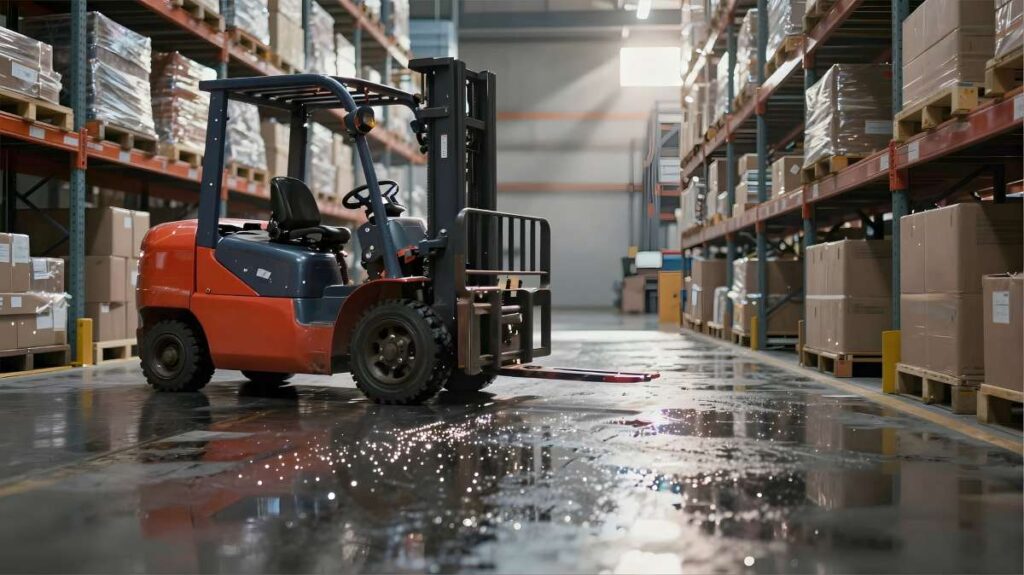
While no piece of equipment is immune to mechanical issues, knowing how to respond when a breakdown occurs can help minimise disruption and ensure the problem is resolved as efficiently as possible.
A structured approach not only improves safety but can also reduce repair costs and help prevent similar incidents in the future.
Prioritise Safety Immediately
The first priority during any forklift breakdown should always be safety.
If a forklift develops a fault while in operation, the operator should stop using the vehicle as soon as it is safe to do so.
Depending on the situation, this may involve:
- Lowering the load safely to the ground
- Parking the truck in a designated area
- Switching off the engine or power supply
- Applying the parking brake
- Removing the ignition key where applicable
If the forklift has broken down in a high-traffic area, steps should be taken to isolate the equipment and prevent unauthorised use until the issue has been assessed.
Attempting to continue operating a faulty forklift can increase the risk of accidents and may lead to more extensive mechanical damage.
Assess the Situation
Once the vehicle has been secured, it is important to gather as much information as possible about the problem.
Common questions include:
- What symptoms occurred before the breakdown?
- Were any warning lights displayed?
- Did unusual noises develop?
- Was there a loss of power?
- Were hydraulic functions affected?
- Did the fault occur suddenly or gradually?
Documenting these details can help maintenance engineers diagnose the issue more quickly and accurately.
Even seemingly minor observations can provide valuable clues regarding the underlying cause of the failure.
Do Not Attempt Major Repairs Internally
While some businesses have in-house maintenance teams, most operators should avoid attempting significant repairs without appropriate training and authorisation.
Modern forklifts contain complex systems, including:
- Hydraulics
- Electrical components
- Battery management systems
- Engines
- Safety controls
- Electronic diagnostics
Unqualified repair attempts can create additional risks and may worsen the original fault.
Instead, the focus should be on making the equipment safe and arranging professional inspection.
Notify Relevant Personnel
A forklift breakdown often affects more than just the operator.
Managers, supervisors, maintenance teams, and logistics personnel may all need to be informed depending on how the equipment is used within the operation.
Prompt communication allows businesses to:
- Adjust workflows
- Reallocate resources
- Manage delays
- Implement contingency plans
- Arrange replacement equipment if necessary
The sooner key stakeholders are aware of the situation, the easier it becomes to minimise operational disruption.
Identify Whether Alternative Equipment Is Available
Many facilities operate multiple forklifts or maintain access to backup equipment.
If another suitable vehicle is available, operations may be able to continue while repairs are arranged.
Before reallocating equipment, consider:
- Load capacity requirements
- Lift height requirements
- Attachment compatibility
- Operator authorisation
- Site-specific operational needs
Using unsuitable equipment to compensate for a breakdown can create additional safety and productivity issues.
Review Recent Maintenance History
A breakdown often provides an opportunity to review the forklift’s maintenance records.
Looking at recent servicing history may help identify:
- Recurring faults
- Previously reported issues
- Outstanding repairs
- Components nearing replacement intervals
- Missed maintenance schedules
Well-maintained service records can significantly speed up diagnosis and support more effective repair planning.
In many cases, a breakdown is preceded by smaller warning signs that were either overlooked or not considered serious at the time.
Understand the Common Causes of Forklift Breakdowns
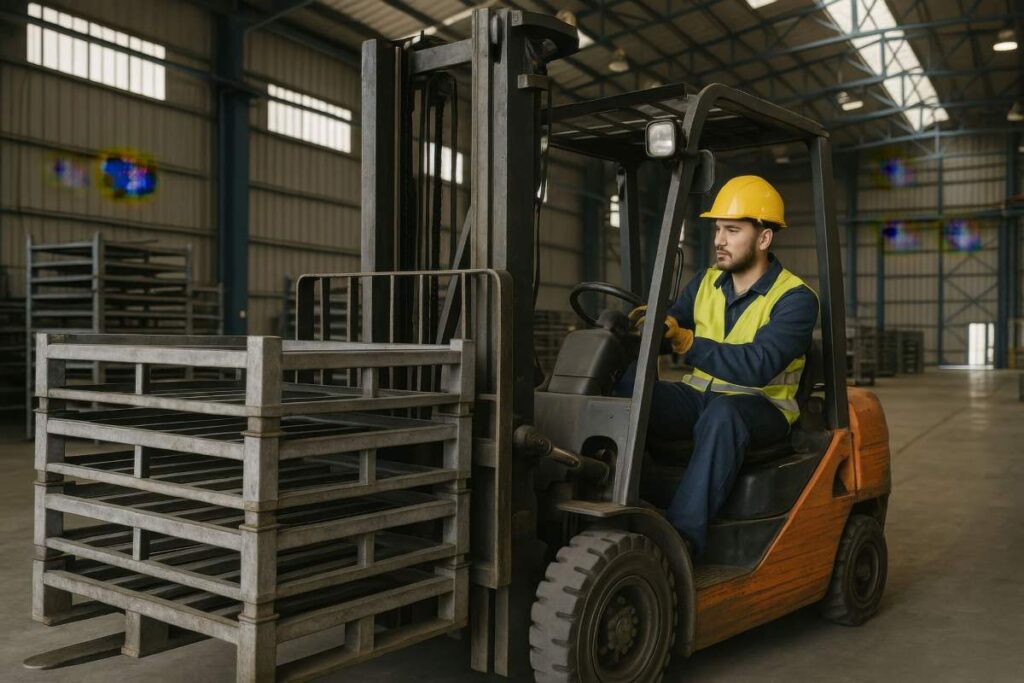
Unexpected failures can result from a variety of mechanical, electrical, and operational issues.
Common causes include:
- Battery problems
- Hydraulic leaks
- Worn tyres
- Damaged hoses
- Engine faults
- Electrical failures
- Cooling system issues
- Lack of routine maintenance
Age and usage levels can also play an important role.
Forklifts operating in demanding environments or under heavy workloads may experience increased wear and tear if preventative maintenance is not carried out consistently.
Recognise Early Warning Signs
Many breakdowns do not occur without warning.
In fact, equipment often displays symptoms long before complete failure takes place.
Examples include:
- Unusual noises
- Slow hydraulic performance
- Difficulty starting
- Reduced lifting capacity
- Warning lights
- Fluid leaks
- Excessive vibration
Understanding the warning signs your forklift may be about to break down can help businesses identify potential problems early and arrange maintenance before operations are disrupted.
Preventative action is almost always more cost-effective than emergency repairs.
Keep Downtime to a Minimum
Every hour a forklift remains out of service has the potential to affect productivity.
Businesses can reduce downtime by:
- Maintaining accurate service records
- Scheduling preventative maintenance
- Training operators to report issues promptly
- Conducting daily pre-use inspections
- Establishing clear breakdown procedures
The goal is not only to resolve faults quickly but to minimise the likelihood of unexpected failures occurring in the first place.
A proactive maintenance strategy remains one of the most effective ways to protect operational continuity.
Learn From the Breakdown
Once repairs have been completed, it is worth reviewing the incident to determine whether any lessons can be learned.
Questions worth considering include:
- Could the issue have been identified earlier?
- Were warning signs missed?
- Was maintenance overdue?
- Did operational practices contribute to the fault?
- Are procedural improvements required?
Analysing breakdowns can help strengthen future maintenance planning and improve overall fleet reliability.
Even isolated incidents often provide valuable insights into equipment management practices.
The Importance of Professional Servicing
Regular servicing remains the most effective defence against unexpected breakdowns.
Professional inspections help identify worn components, developing faults, and maintenance requirements before they result in operational failures.
Routine servicing supports:
- Improved reliability
- Increased equipment lifespan
- Better safety performance
- Reduced repair costs
- Higher fleet availability
Businesses that invest in preventative maintenance often experience significantly lower levels of unplanned downtime over the long term.
For organisations seeking certified forklift repair and inspection services, professional maintenance support can play a vital role in keeping material handling equipment operating safely and efficiently.
Conclusion
Unexpected forklift breakdowns can disrupt operations, increase costs, and create safety concerns if not managed properly. However, a structured response can help minimise disruption and ensure faults are resolved quickly and safely.
By prioritising safety, documenting symptoms, communicating effectively, and arranging professional repairs, businesses can reduce downtime and protect productivity. Combined with a strong preventative maintenance programme, these practices help ensure forklifts remain reliable assets rather than unexpected sources of operational disruption.
In material handling operations where equipment reliability is critical, preparation and proactive maintenance remain the most effective tools for managing breakdown risks.