On this page
- The Visibility Challenges of Forklift Operation
- Improving Safety in Busy Working Environments
- Reducing Blind Spots
- Supporting Safer Reversing
- Improving High-Level Load Handling
- Reducing Product and Infrastructure Damage
- Enhancing Operator Confidence
- Supporting Training and Best Practice
- Cameras Complement Other Safety Measures
- The Growing Role of Technology in Material Handling
- Considering Cameras When Purchasing Equipment
- Conclusion
Forklift technology has evolved significantly over the last decade. While improvements in battery systems, telematics, and operator ergonomics have attracted considerable attention, one of the most important developments has been the increasing adoption of camera systems.
Once considered an optional extra reserved for specialist applications, forklift cameras are now becoming standard equipment across many warehouses, distribution centres, manufacturing facilities, and logistics operations.
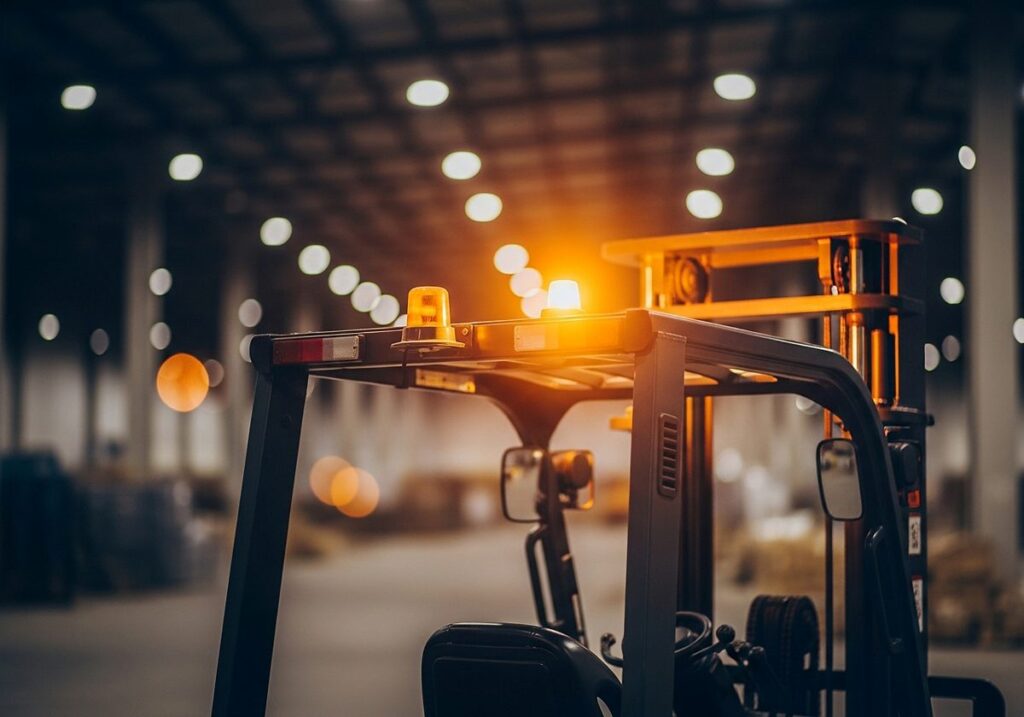
The reason is straightforward. Forklifts operate in environments where visibility challenges, pedestrian traffic, and space constraints create ongoing safety risks. Camera technology helps address these issues by giving operators a clearer view of their surroundings and enabling businesses to improve both safety and efficiency.
As workplaces continue to prioritise accident prevention and operational performance, camera systems are becoming an increasingly valuable addition to modern forklift fleets.
The Visibility Challenges of Forklift Operation
Unlike many other workplace vehicles, forklifts frequently carry loads that can obstruct the operator’s view.
Even when no load is present, factors such as:
- Mast structures
- Racking systems
- Narrow aisles
- Blind corners
- Pedestrian activity
- Stacked inventory
can restrict visibility and make manoeuvring more difficult.
These limitations are often unavoidable because they are inherent to the way forklifts are designed and used.
Camera systems help reduce these visibility challenges by providing additional viewpoints that would otherwise be unavailable to the operator.
Improving Safety in Busy Working Environments
Safety remains the primary reason many businesses invest in forklift camera systems.
Warehouses and industrial sites are dynamic environments where vehicles, pedestrians, and equipment frequently operate in close proximity.
Even experienced operators can struggle to maintain complete awareness of their surroundings when carrying large loads or working in congested areas.
Camera systems can help improve visibility by allowing operators to monitor:
- Rearward movement
- Side clearances
- Blind corners
- Elevated loads
- Pedestrian zones
- Trailer loading areas
By providing additional visual information, cameras can help operators make more informed decisions and reduce the likelihood of collisions.
Reducing Blind Spots
Blind spots are one of the most persistent hazards associated with forklift operation.
Even with mirrors and proper driving techniques, certain areas around the vehicle may remain difficult to see clearly.
These blind spots become even more problematic when transporting bulky loads that restrict forward visibility.
Modern camera technology offers a practical solution by providing real-time views of areas that would otherwise remain hidden.
Businesses focused on managing forklift blind spots with camera systems often find that improved visibility contributes directly to safer operations and fewer near-miss incidents.
Supporting Safer Reversing
Reversing is a routine part of forklift operation, particularly when carrying loads that obstruct forward vision.
However, reversing also introduces additional risks because operators must divide their attention between steering, monitoring surroundings, and managing the load.
Rear-view camera systems can provide a clear image of the area behind the truck, helping operators identify:
- Pedestrians
- Obstacles
- Equipment
- Storage materials
- Other vehicles
This additional visibility can be particularly valuable in busy facilities where traffic patterns are constantly changing.
Improving High-Level Load Handling
Visibility challenges do not only occur at ground level.
When placing loads onto high racking systems, operators often need to position forks accurately several metres above the ground.
At these heights, visibility can become limited by:
- Mast components
- Fork positioning
- Load dimensions
- Warehouse layouts
Fork-mounted cameras allow operators to see exactly where the forks are positioned, making it easier to align loads safely and accurately.
This can help reduce:
- Product damage
- Rack impacts
- Misplaced pallets
- Loading errors.
In high-volume warehouse environments, even small improvements in accuracy can have a meaningful impact on productivity.
Reducing Product and Infrastructure Damage
Forklift accidents do not always result in injuries.
Many incidents involve damage to:
- Racking systems
- Doors
- Stock
- Loading bays
- Vehicles
- Building structures
These costs can quickly accumulate through repairs, downtime, and disrupted operations.
Camera systems help reduce the likelihood of accidental impacts by giving operators a more complete understanding of their surroundings.
For businesses managing expensive inventory or operating within narrow warehouse layouts, the reduction in damage-related costs can help justify the investment.
Enhancing Operator Confidence
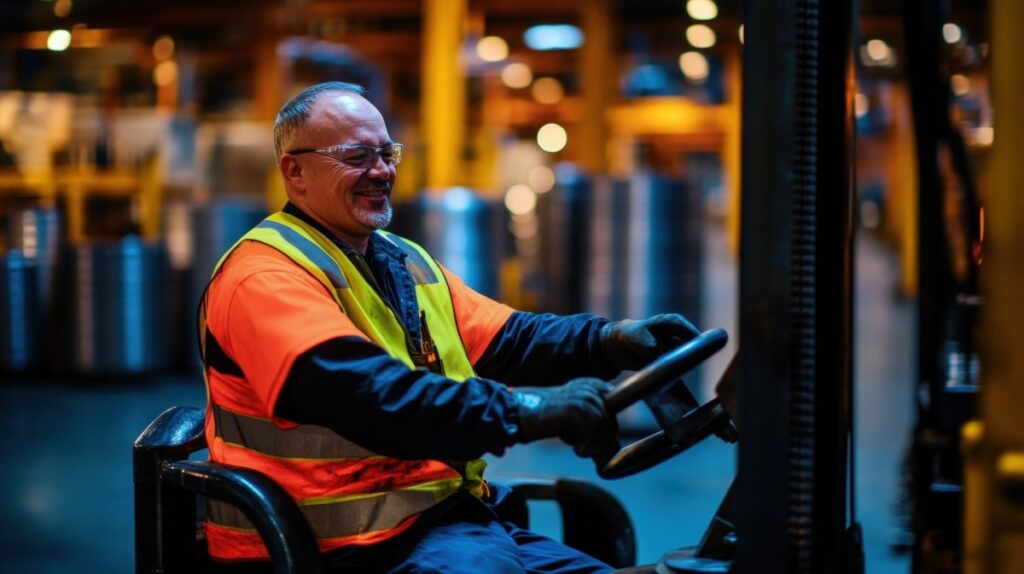
Operating a forklift requires constant concentration and awareness.
Even experienced operators can encounter situations where visibility is limited or manoeuvring space is restricted.
Camera systems provide additional information that can increase operator confidence when performing tasks such as:
- Reversing
- Loading trailers
- Working in narrow aisles
- Handling oversized loads
- Stacking at height
Greater confidence often translates into smoother operations and reduced hesitation during routine tasks.
Importantly, cameras are designed to support operator judgement rather than replace it.
Supporting Training and Best Practice
Camera technology can also play a valuable role in operator development.
New operators often require time to build confidence and spatial awareness within busy warehouse environments.
Additional visual assistance can help reinforce safe operating habits and improve understanding of vehicle positioning.
Some camera systems can also be integrated with recording functionality, allowing managers to review incidents, identify hazards, and support ongoing training initiatives.
This contributes to a stronger overall safety culture within the organisation.
Cameras Complement Other Safety Measures
While camera systems provide significant benefits, they should not be viewed as a replacement for established safety procedures.
Safe forklift operation still depends on:
- Operator training
- Risk assessments
- Traffic management plans
- Regular maintenance
- Proper supervision
- Workplace safety protocols
Camera systems work best when integrated into a broader safety strategy rather than relied upon as a standalone solution.
The goal is to provide operators with additional tools that enhance situational awareness and decision-making.
The Growing Role of Technology in Material Handling
The increasing popularity of camera systems reflects a wider trend towards smarter material handling equipment.
Businesses are investing in technologies that help improve:
- Safety
- Productivity
- Accuracy
- Fleet management
- Operational visibility
As camera technology becomes more affordable and sophisticated, adoption is likely to continue growing across a wide range of industries.
Many new forklift models are now designed with camera integration in mind, making implementation simpler than ever before.
Considering Cameras When Purchasing Equipment
For organisations planning to expand or upgrade their fleets, camera systems are becoming an important consideration during the purchasing process.
When evaluating equipment, businesses should assess:
- Visibility requirements
- Site layout
- Pedestrian traffic levels
- Racking heights
- Operational complexity
- Safety objectives
These factors can help determine whether integrated camera systems would provide meaningful benefits.
Companies looking for reliable heavy-duty equipment for loading and stacking should consider how modern safety technologies such as camera systems can support long-term operational performance and risk reduction.
Conclusion
Forklift cameras are no longer viewed as specialist accessories. For many operations, they are becoming an essential component of safe and efficient material handling.
By improving visibility, reducing blind spots, supporting safer reversing, and helping operators handle loads more accurately, camera systems can contribute to fewer accidents, lower damage costs, and improved productivity.
As workplaces continue to prioritise safety and operational efficiency, camera technology is likely to play an increasingly important role in the future of forklift fleet management.
We fit forklift cameras and pedestrian detection to every type of machine we supply, of any make.