On this page
Businesses across the UK are looking for ways to cut emissions, improve warehouse efficiency and reduce the total cost of materials handling, because of this, forklift choice has become a strategic decision to make. It is no longer just about lift capacity or manoeuvrability. It is about selecting equipment that can simplify fleet operations, support long-term operational goals and make better use of available space. For companies that handle steel, timber, building products, pipes, panels or other long and bulky loads, the Combilift C-series offers a practical resolution to support both performance and sustainability.
The Combilift C-series was built to combine the roles of the side loader, the counterbalance forklift and the narrow aisle truck. It gives businesses much more flexibility in just one machine. Available in diesel, LPG and electric models to suit your needs. It has capacities from 2,500kg up to 25,000kg. The Combilift C-series is designed to deliver reliable performance across industrial handling applications, warehouses and yards. For operations looking to improve productivity, streamline fleet planning and invest in a truck with long-term value, the C-series is your best option for capability.
1. One Truck, Multiple Roles
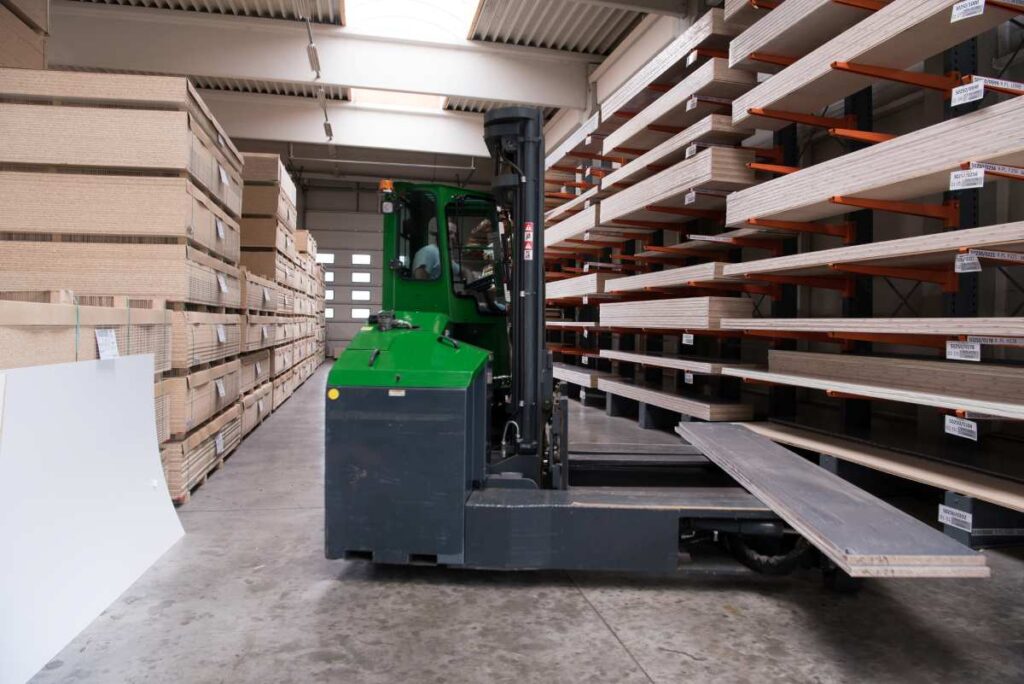
One of the Combilift C-series’ biggest advantages is its ability to take on the work of three machines in one. The combination of the functions of a side loader, a counterbalance and a narrow aisle forklift, the C-series gives fleet managers a more efficient way to reduce reliance on multiple specialist trucks. Instead of investing in all three trucks for pallet work, narrow aisle access and long-load handling, businesses can often simplify those tasks into one multidirectional forklift platform and get more value from every truck on site.
That kind of fleet consolidation can have a direct impact on productivity, operating costs and daily efficiency. Owning fewer machines may mean less servicing, fewer parts to manage, reduced downtime and a simpler fleet to oversee. It also means that businesses can avoid tying up capital in unnecessary duplicate equipment. In practical terms, the Combilift C-series helps create a more streamlined and more productive operation without compromising on the ability to handle demanding long-load applications.
2. Less Double Handling, More Efficiency
Another major strength of the Combilift C-series is its ability to reduce double handling and keep materials moving more efficiently. Its 4-way movement and multidirectional steering allow long and awkward loads to be transported through narrow aisles, doorways and confined layouts with greater control. This is because the truck can often pick up, move and place a load without handing it over to another machine, businesses can cut out unnecessary handling steps that add time, labour and operating cost.
The result is a smoother workflow, less wasted effort and stronger productivity across your business. Every additional transfer point increase travel time, wear on components and the risk of product damage. By removing unnecessary hand-offs, the Combilift C-series can help operations improve throughput while reducing the burden on the wider fleet. For business focused on efficiency, reliability and overall handling performance, that is a valuable operational advantage.
3. Better Use of Warehouse Space
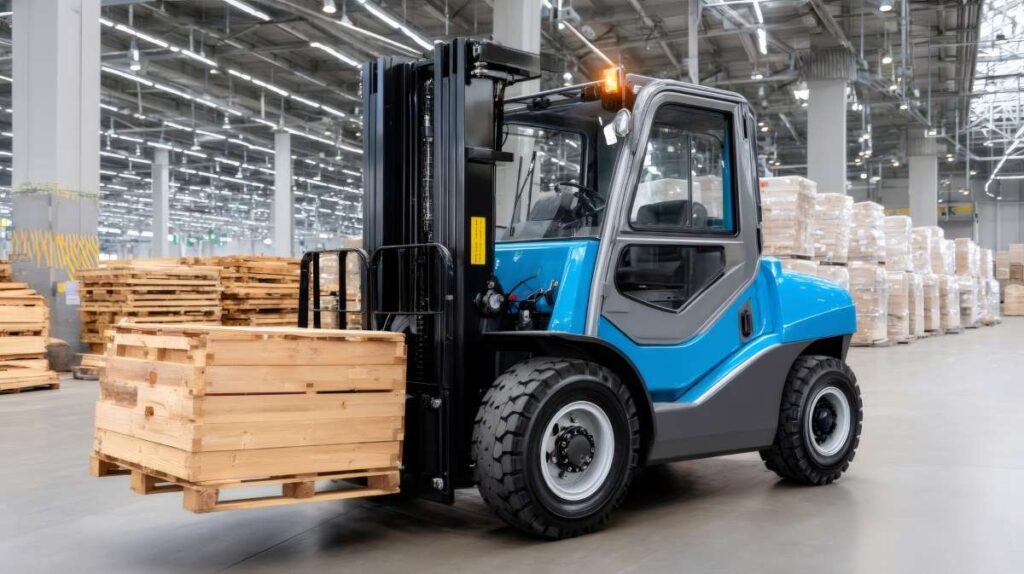
Optimisation of warehouse space is another area where the Combilift C-series holds plenty of value. Traditional Counterbalance forklifts often need wider aisles to handle long or wide products. This limits the storage density and leaves expensive floor space underutilised. The multidirectional design of the C-series allows operators to move long loads sideways and work more effectively in tighter areas. This helps businesses to unlock more capacity from the floor space they already had.
For many operations, that can translate into real commercial benefits. With better use of your existing warehouse for example, you can increase storage capacity, improve flow and potentially delay the cost and disruptions of expansion. This is a much better choice than to accept space constraints as a fixed limitation, businesses can redesign handling around a more flexible truck. In that sense, the Combilift C-series is not just a forklift investment but also a part of a smarter and more profitable warehouse strategy.
4. Flexible Power Options
The Combilift C-series also gives businesses the flexibility to align fleet decisions with wider environmental and operational. With diesel, electric and LPG models available, this range can support any immediate sit requirements as well as any longer-term decarbonisation plans. For indoor applications and distribution environments, electric multidirectional forklifts offer a cleaner and quitter option, all while still delivering the handling capability needed for demanding workloads.
The availability of different power options is very important; this means that businesses do not have to compromise. They can choose electric models where emissions and indoor air quality are a priority, while still using diesel or LPG units where heavier outdoor work or longer shifts demand it. This gives fleet planners a practical path to modernisation without disrupting operations, and it allows the Combilift C-series to naturally fit into both the current requirements of a business and any future plans to come.
5. Built for Long-Term Value
Long-term value in materials handling is about more than fuel type. It will also depend on how reliably a truck can perform, how widely it can be used and how much return it delivers over it’s working life. The Combilift C-series was built to handle long, awkward, palletised loads across indoor and outdoor environments, giving businesses a truck that can stay productive and utilised among a wide range of tasks. The broader usability the Combilift C-series possesses helps to improve asset utilisation and strengthens the value of the investment made into the truck.
Durability is also very important because maintenance cost, replacement cycles and unplanned downtime all affect the real cost of ownership. Equipment that remains dependable for years to come will help to reduce disruption and protect long-term productivity. Combined with a simpler fleet structure and fewer duplicate trucks, that can make a noticeable difference to costs over the lifecycle. For businesses weighing up performance against ongoing operating expenses, the Combilift C-series presents a strong case as a dependable, commercially sound choice.
6. Ideal for Long and Bulky Loads
The Combilift C-series is especially suited to businesses handling long, awkward fitting and irregular materials such as packs of timber, sections of steel, pipes, extrusion, sheet materials and building products. In these sectors, standard forklifts can really struggle with aisle width, control and repeated repositioning. This majorly slows the process of the operation and increases handling risk. A multidirectional forklift gives operators a more precise and capable solution. That makes the C-series a more attractive option for manufacturing, warehousing, logistics, merchanting and construction supply businesses where both load stability and space efficiency are essential.
The elements that make the Combilift C-series particularly compelling is that it smooths out more than one operational challenge or hiccup at once. It is not simply a forklift for long roads or narrower aisles. It is a solution that can help businesses improve handling flow, simplify the structure of the fleet and make better use of warehouse space with a singular investment. For any buyers looking for equipment that can support both immediate performance gains and long-term operational improvement, that broader value is difficult to ignore.
These advantages make the Combilift C-series a strong choice for businesses looking to improve warehouse efficiency, reduce unnecessary handling and build a much more sustainable fleet. Its combination of multidirectional movement, long-load capability, narrow aisle performance and flexible power options gives operations a practical way to achieve more with fewer machines. For businesses balancing sustainability goals with performance, safety and cost control, it offers a clear and credible solution.
Whether the priority is fleet consolidation, electrification, storage optimisation or more effective handling of long and awkward loads, the Combilift C-series offers a solution that is both practical and commercially convincing. It supports the kind of lower-impact, high-efficiency materials handling strategy modern businesses are working towards. For fleet managers, warehouse operators and procurement teams looking for a versatile investment with clear operational benefits, the C-series is a range well worth your money.
| Key Point | Summary | Business Benefit |
| One truck, multiple roles | Combines side loader, counterbalance forklift and narrow aisle truck functions in one multidirectional machine. | Reduces fleet complexity, servicing needs and capital tied up in duplicate equipment. |
| Less double handling | 4-way movement allows loads to be picked, moved and placed with fewer hand-offs between machines. | Improves workflow, cuts labour time and lowers risk of product damage. |
| Better use of warehouse space | Handles long loads in tighter aisles and confined layouts more effectively than traditional counterbalance forklifts. | Increases storage density and may delay costly warehouse expansion. |
| Flexible power options | Available in diesel, LPG and electric models to suit different operating environments and sustainability plans. | Supports decarbonisation goals without compromising operational needs. |
| Built for long-term value | Designed for reliable use across indoor and outdoor tasks with broad usability over its working life. | Improves asset utilisation and lowers total cost of ownership over time. |
| Ideal for long and bulky loads | Well suited to timber, steel, pipes, panels and other awkward materials in manufacturing and warehousing settings. | Boosts handling precision, space efficiency and productivity in specialist applications. |