On this page
- Why Visibility Is Such an Important Safety Consideration
- What Are Forklift Safety Lights?
- Blue Spot Lights
- Red Danger Zone Lights
- Rear Warning Lights
- Strobe Beacons
- Arrow Projection Systems
- Improving Safety in Low-Light Areas
- Supporting Existing Safety Procedures
- Choosing the Right Safety Lighting System
- Safety Lighting and Regulatory Compliance
- Considering Safety Features When Hiring Equipment
- Conclusion
Forklift safety is built around visibility. Operators need to see clearly, pedestrians need to be aware of moving vehicles, and everyone within the working environment needs sufficient warning to avoid potential hazards.
While standard headlights and warning alarms have long been part of forklift safety systems, modern warehouses are increasingly adopting specialised safety lighting to improve awareness and reduce accident risks.
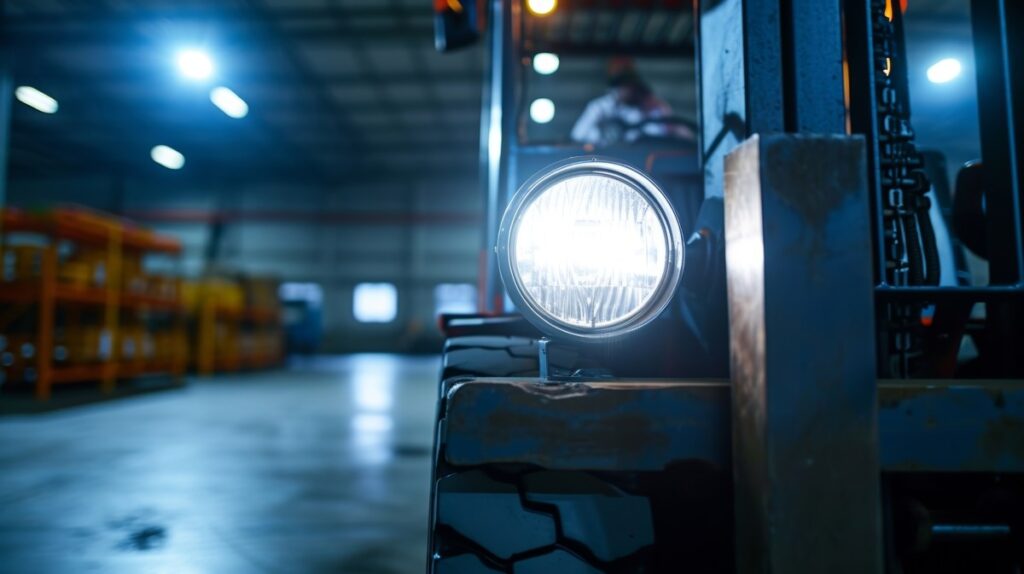
From blue spotlights and red danger zones to strobe beacons and projection systems, forklift safety lights have become a valuable addition to many material handling operations. These systems are designed to make forklift movements more predictable and help create safer working environments in busy warehouses, distribution centres, and industrial facilities.
Understanding the different types of forklift safety lights and their applications can help businesses determine which solutions are most appropriate for their operations. We supply and fit blue spot lights, red zone lights and beacons to any make of truck: see forklift safety accessories.
Why Visibility Is Such an Important Safety Consideration
Forklifts frequently operate in environments where visibility can be limited.
Common challenges include:
- Narrow aisles
- High racking
- Blind corners
- Pedestrian traffic
- Large loads
- Poorly lit areas
Even experienced operators may find it difficult to maintain complete awareness of their surroundings at all times.
For pedestrians, the challenge can be even greater. Warehouse workers may not always hear an approaching forklift, particularly in noisy environments where machinery and equipment are constantly operating.
Safety lighting helps bridge this visibility gap by providing additional visual warnings that alert both operators and pedestrians to potential hazards.
What Are Forklift Safety Lights?
Forklift safety lights are supplementary lighting systems designed to improve visibility and awareness around moving vehicles.
Unlike standard headlights, which primarily help operators see where they are travelling, safety lights are intended to help others see the forklift and understand its position or movement.
Different lighting systems serve different purposes, but all aim to improve workplace safety by increasing visibility.
Many modern warehouses now consider safety lighting an important part of their overall risk management strategy.
Blue Spot Lights
Blue spot lights are among the most common forklift safety lighting systems.
These lights project a bright blue spot several metres ahead of or behind the forklift.
The purpose is simple: the projected light acts as an early warning signal that a forklift is approaching, even when the vehicle itself may not yet be visible.
Blue spot lights are particularly effective:
- Around blind corners
- At aisle intersections
- In high-noise environments
- In busy pedestrian zones
Because the blue light appears before the vehicle arrives, pedestrians often have additional time to react and move safely out of the way.
Red Danger Zone Lights
Red zone lights create a visible safety perimeter around the forklift.
These systems project bright red lines onto the floor, clearly indicating the area operators and pedestrians should avoid while the vehicle is moving.
The illuminated zone acts as a visual reminder that maintaining distance from the forklift is important.
Red danger zone lights can help:
- Improve pedestrian awareness
- Reinforce safety procedures
- Reduce close-proximity incidents
- Highlight operating boundaries
They are commonly used in warehouses where pedestrians and forklifts regularly share the same working space.
Rear Warning Lights
Rear warning lights help improve visibility when forklifts are reversing.
Because many forklifts travel in reverse when carrying loads that obstruct forward visibility, rearward movement is a routine part of warehouse operations.
Rear warning lights provide a clear indication that the vehicle is moving backwards and may be approaching nearby personnel.
Combined with reversing alarms, these lights provide both visual and audible warnings.
This layered approach helps improve awareness throughout the workplace.
Strobe Beacons
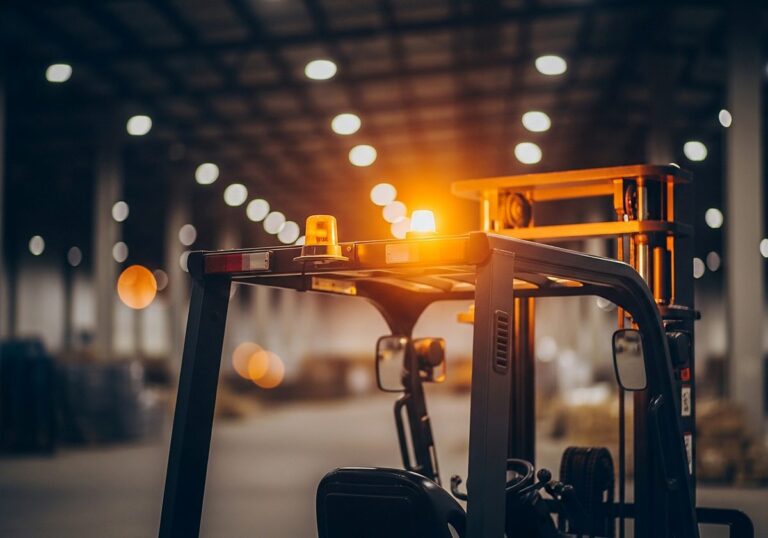
Strobe beacons are flashing warning lights mounted on the forklift itself.
These lights are designed to attract attention and make the vehicle more visible in busy or crowded environments.
Benefits of strobe beacons include:
- Increased vehicle visibility
- Improved awareness in low-light conditions
- Enhanced recognition from a distance
- Additional warning for pedestrians
Many businesses use strobe lights as part of a broader safety package that includes warning alarms and floor projection systems.
Arrow Projection Systems
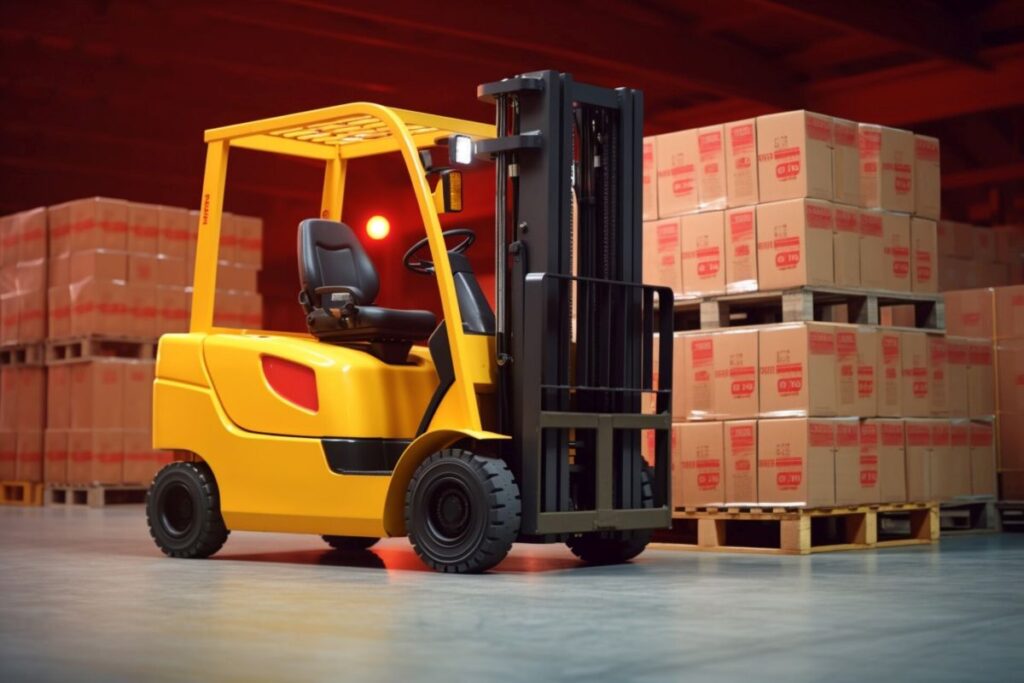
Some advanced forklift safety systems project directional arrows onto the floor.
These arrows indicate the direction of travel and provide additional warning to nearby workers.
Arrow projection systems can be particularly useful in:
- Distribution centres
- Manufacturing facilities
- Large warehouses
- Shared traffic routes
By showing where the forklift is heading, they help improve predictability and reduce confusion in busy operational areas.
Improving Safety in Low-Light Areas
Although many warehouses are well illuminated, some environments present additional lighting challenges.
Examples include:
- Loading bays
- External storage yards
- Cold storage facilities
- Evening operations
- Temporary work areas
In these locations, forklift safety lights can significantly improve visibility and reduce the likelihood of accidents.
Proper lighting becomes even more important when operators are moving heavy loads or working around pedestrians.
Supporting Existing Safety Procedures
It is important to understand that safety lights do not replace established safety practices.
Safe forklift operation still relies upon:
- Operator training
- Site risk assessments
- Traffic management systems
- Regular equipment inspections
- Safe pedestrian routes
- Workplace supervision
Safety lighting works best as part of a comprehensive safety strategy.
Its purpose is to provide additional visual warnings that support existing procedures and reduce the potential for human error.
Choosing the Right Safety Lighting System
Not every operation requires the same lighting configuration.
The most appropriate solution will depend on factors such as:
- Site layout
- Traffic density
- Pedestrian activity
- Lighting conditions
- Type of forklift operation
- Warehouse size
Some businesses may benefit from simple blue spot lights, while others may choose a combination of red zone lighting, strobe beacons, and directional projection systems.
When evaluating safety improvements, it is worth considering how different forklift safety devices that improve warehouse visibility can work together to create a safer operating environment.
Safety Lighting and Regulatory Compliance
While safety lights are not universally mandated for all forklift operations, employers remain responsible for maintaining safe workplaces under UK health and safety legislation.
This includes taking reasonable steps to:
- Identify hazards
- Reduce risks
- Protect employees
- Maintain safe traffic routes
Safety lighting can form part of these risk reduction measures, particularly in environments where visibility challenges have been identified through workplace assessments.
As expectations around workplace safety continue to evolve, many organisations are adopting additional visibility measures to strengthen their overall safety performance.
Considering Safety Features When Hiring Equipment
Businesses hiring forklifts for short-term projects should not overlook safety technology.
Modern rental fleets often include vehicles equipped with advanced visibility and safety features that can support safer operations from day one.
Organisations looking for reliable forklift rental for construction or storage may benefit from discussing available safety lighting options when selecting equipment for their project.
Choosing the right specification can help reduce risk and improve operational efficiency throughout the hire period.
Conclusion
Forklift safety lights have become an increasingly important tool for improving visibility and reducing workplace risks. From blue spotlights and red danger zone systems to strobe beacons and directional projections, these technologies provide valuable visual warnings that help operators and pedestrians share workspaces more safely.
While safety lighting should never replace training, supervision, or established safety procedures, it can significantly enhance awareness and support safer forklift operations. As warehouses continue to prioritise accident prevention and operational efficiency, safety lighting is becoming an increasingly common feature of modern forklift fleets.