On this page
Downtime in a warehouse or distribution operation has a cost per hour, and that cost tends to be higher than people expect once you account for idle labour, delayed despatch, knock-on effects to customer commitments, and the management time spent firefighting rather than running the operation. Equipment failure is one of the most common and most avoidable contributors to it, and the relationship between forklift hire and downtime reduction is more direct than it might first appear.
Understanding how hire actually protects operational continuity requires looking at a few distinct scenarios, because the mechanism is different depending on what’s causing the downtime in the first place.
When Your Own Equipment Fails
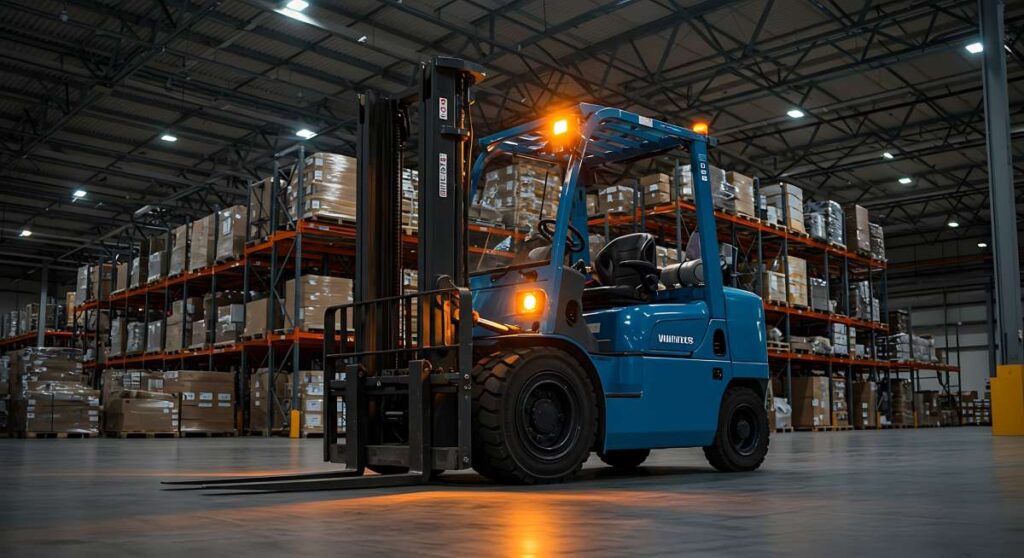
A forklift that develops a fault mid-shift doesn’t just take itself out of service; it takes a portion of your operational capacity with it, usually at the worst possible moment. If you own your fleet outright, the path to resolution runs through your service provider’s availability, parts lead times, and the complexity of the fault. For straightforward issues on well-maintained trucks this might mean a day out of service. For more involved repairs, or during periods when service engineers are stretched, it can mean considerably longer.
Hire provides a direct bypass around this problem. A provider with sufficient local stock and genuinely rapid response capability can have a replacement truck on site within hours, keeping operations moving while the owned asset is being repaired. The speed of that response is everything; a same-day replacement is operationally useful in a way that a three-day wait, however competitively priced, is not. This is why the depth of a hire provider’s local inventory matters as much as the headline hire rate when you’re evaluating options.
The Maintenance Burden on Owned Fleets
Owned equipment carries the full weight of maintenance responsibility with it. Thorough examinations every six or twelve months under LOLER, planned preventive maintenance at manufacturer-specified intervals, tyre management, battery care for electric trucks, and the unplanned repair costs that accumulate across a fleet’s working life: all of this falls on the owner. Managing it well requires both disciplined scheduling and reliable access to engineering support. Managing it poorly is how downtime becomes a chronic operational feature rather than an occasional disruption.
Hire contracts typically include maintenance within the arrangement. The hire provider carries the servicing burden; the hirer receives a truck that’s kept in working condition without having to manage the schedule behind it. The comparison between in-house vs outsourced forklift servicing is worth making explicitly, because the true total cost of keeping owned equipment reliably serviceable is consistently underestimated at the point of purchase. Fleet maintenance isn’t just a line item; it’s an ongoing operational commitment that requires time, expertise, and resources to execute properly.
Capacity Gaps Are Downtime Too
There’s a version of downtime that doesn’t involve broken equipment at all: simply not having enough capacity to meet operational demand. An operation sized correctly for average throughput will periodically encounter periods where that capacity is insufficient. The pre-Christmas peak. A significant contract that arrives unexpectedly. Seasonal variation in manufacturing, food processing, or agricultural logistics. In each case, the result is the same: work that can’t be processed at the rate it needs to be, which creates backlogs, missed deadlines, and pressure on labour that compounds across the peak period.
The alternative to hiring to cover these peaks is owning enough equipment to handle maximum possible demand at all times, which means carrying idle capacity through every quieter period. For most operations, that’s neither economically rational nor practically sensible. Managing peak demand with hired forklifts allows capacity to track actual demand rather than worst-case demand, which is a more efficient use of capital and a more honest match between resource and requirement.
Specification Flexibility Over Time
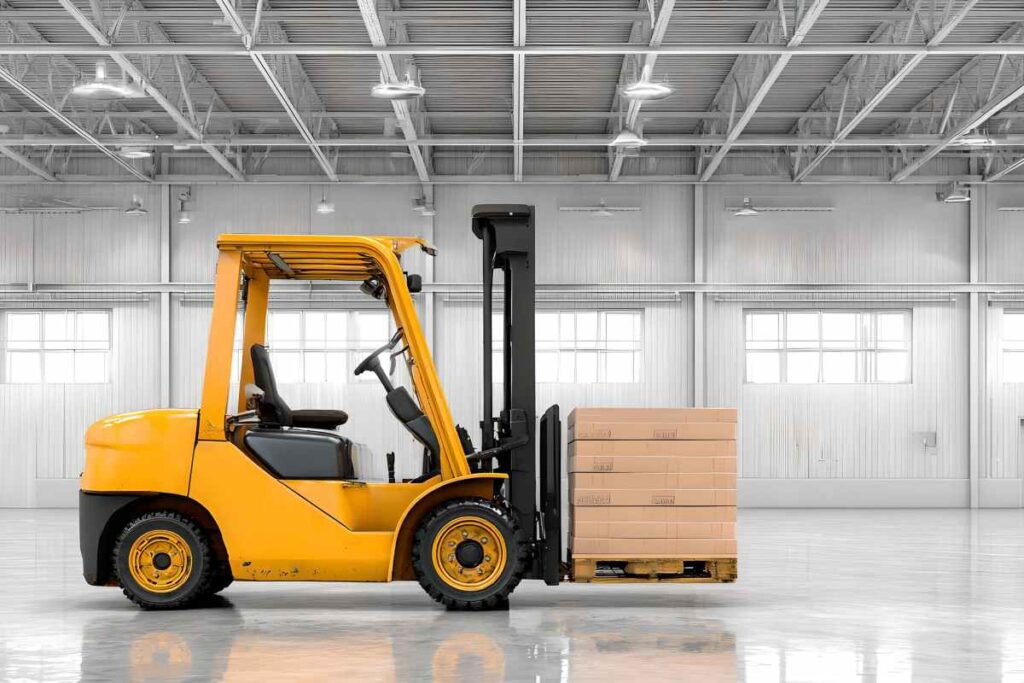
Hire also solves a problem that ownership can’t: the need for different specifications at different points in an operation’s life. A contract that requires rough-terrain capability for an outdoor project phase, followed by a return to standard counterbalance work indoors, doesn’t need to be served by two permanently owned trucks of different types. A hire arrangement can provide the right equipment for each phase and step back when it’s no longer required.
This matters most for businesses whose operational profile changes with the work they’re taking on: construction logistics, event infrastructure, project-based manufacturing, and any environment where the nature of the handling task isn’t fixed year-round. Owning to average capability means being underspecified at the peaks; owning to peak capability means paying for specification that sits idle most of the time. Neither is a good answer. Hire provides the third option.
Evaluating a Hire Provider Properly
Not all hire providers deliver on the downtime-reduction argument equally, and the differences become apparent precisely when you need them most. The relevant questions are practical: how quickly can a replacement truck actually be delivered in the event of a breakdown? What is the depth of available stock in the relevant weight classes and specifications? Is maintenance genuinely included in the hire contract, and does the provider have the engineering resource to back that inclusion up in practice?
These questions deserve specific answers rather than general reassurances. A provider with thin local inventory and stretched engineering capacity isn’t delivering the operational protection that makes hire worth considering.
Why Choose Acclaim Handling?
Acclaim Handling has been supplying forklift hire across the UK since 1982, operating from eight regional service centres with an engineering team on hand Monday to Friday, 8:00am to 5:00pm, and a 24/7 emergency callout line, so response is measured in hours rather than days. New, nearly new, and used trucks available across a wide range of specifications, no fixed contract requirements for short-term hire, and the technical depth that comes from over four decades as the UK’s longest-established independent STILL distributor. If protecting operational continuity is what you need from a hire arrangement, talk to Acclaim Handling about what that looks like in practice.