If a machine has broken down and brought your work to a halt, call 01708 861 414. This page covers how quickly an engineer can be with you, what to have ready, and what we can usually fix on the first visit.
Ring, do not email
A breakdown is a scheduling problem with a deadline. It is solved by someone finding the nearest engineer with the right parts on the van, which is a phone call, not a form.
An enquiry form sent at 4pm on a Friday is answered on Monday. A phone call is answered now.
The office runs Monday to Friday, 8:00am to 5:00pm. Outside those hours the breakdown callout line runs 24/7, which is the number to use if a machine has failed overnight or at the weekend.
How fast we can be there
It depends on three things and we will tell you on the call rather than promise first and check afterwards:
- Where you are. We work from eight depots with our own field engineers, so the distance from the nearest available engineer is usually the deciding factor.
- What has failed. A fault that is diagnosable over the phone means the engineer arrives with the part. A vague symptom means a diagnostic visit first.
- What time you ring. A call at eight has options that a call at half past four does not.
Where the engineer and the parts are both available, same day attendance is often possible, and next day is the normal expectation. We would rather give you a realistic time than an optimistic one, because you are making decisions about your shift based on the answer.
What to have ready
Five things turn a ten minute call into a two minute one:
- Make, model and serial number, from the data plate rather than from memory. The serial number identifies the exact build, which decides which parts fit.
- What the machine is doing, not what you think is broken. A symptom often points at a different component from the one that gets blamed.
- When it started, and whether anything changed: a new operator, a new load, an impact, a jump start.
- Any fault codes on the display.
- Your postcode and site access, including whether the machine can be reached where it has stopped.
A photograph or a short video of the fault, especially of a display or a leak, resolves more calls than any amount of description.
Make, model, serial number and what the machine is doing. That is enough to get an engineer moving.
The faults that stop trucks most often
| Symptom | Usually | Typical outcome |
|---|---|---|
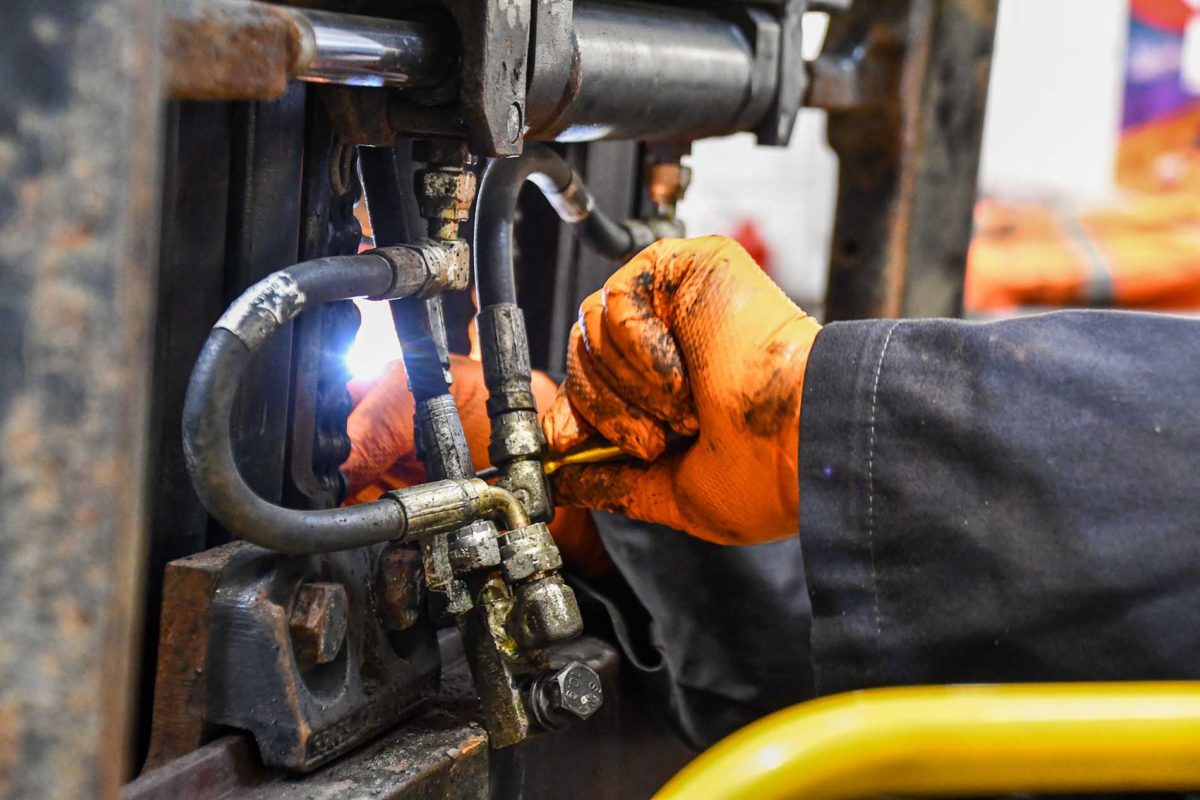
| Will not lift, or lifts slowly | Hydraulic oil level, a failed seal, a hose, or the pump | Often fixed on the visit |
| Mast drifts down under load | Cylinder seals or a control valve | Safety critical: the truck stops until fixed |
| Will not start | Battery, connections, starter, or an interlock | Usually same visit |
| Electric truck fading before the end of the shift | Battery capacity or the charger, not the truck | Test first: see forklift batteries |
| Brakes soft or pulling | Wear, contamination or a hydraulic fault | Safety critical: immediate stop |
| Steering heavy or vague | Steer axle, hydraulics or tyre condition | Same visit if parts are on the van |
| Overheating | Radiator blocked with dust, coolant, or a fan fault | Same visit, and a cleaning schedule after |
| Fault code and limp mode | A sensor or a controller | Diagnostic first, then parts |
Anything affecting brakes, steering, the mast or the forks is a stop-now fault. A machine with a defect that is a present danger comes off the job immediately, and that is not a judgement call.

Fixed on the first visit, wherever possible
First fix rate is the measure that matters on breakdown work, and it depends almost entirely on parts. We hold over £1 million of forklift parts across our depots, including for machines up to around 20 years old, so the common failures are on a shelf in the UK rather than on order from a factory abroad. See forklift parts.
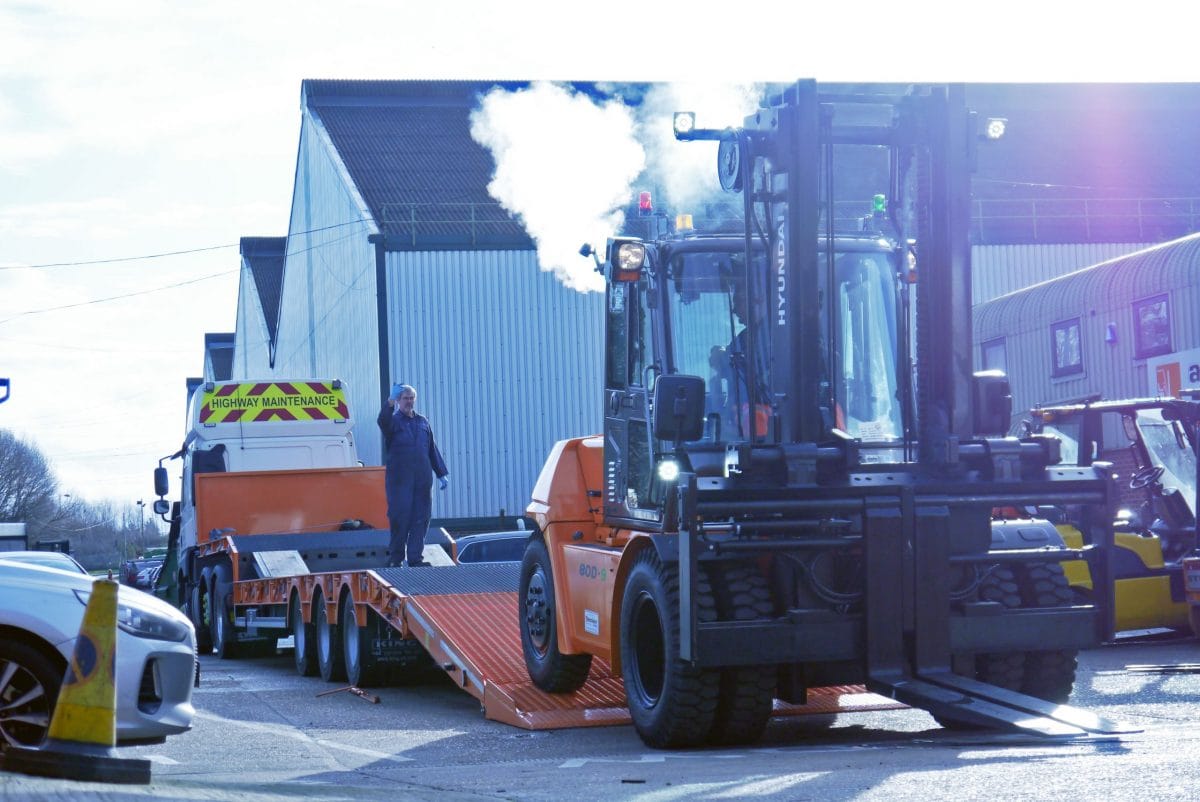
Where a repair is too big for a site visit, or needs the machine stripped, we can collect it on our own transport, carry the work out at a depot and return it.
If the machine will be off the road for more than a shift, emergency forklift hire can put a stand-in truck on site, often the same day.
Repair, or replace?
Sometimes the honest answer is that the machine has reached the end. We will say so rather than sell you a repair that does not make sense.
- Repair where the machine is otherwise sound, the hours are reasonable and the fault is a discrete failure.
- Think again where repair spend has been climbing year on year, where the same component has failed twice, or where the annual cost has passed what a replacement or a hire would cost.
Across a fleet, fleet reporting is what makes that visible: repair spend per machine and first fix rates show which truck is heading for trouble. When it is time to change, part exchange takes the old machine, working or not.
After the repair
Two things that get skipped in the rush:
- The paperwork. If the repair touched the lifting function, the machine may need a fresh thorough examination before it goes back to work. We will tell you if that applies and can do it on the same visit.
- The cause. A breakdown is a symptom. Machines that fail without warning almost always have the thinnest service history, and the fix for that is a schedule, not another callout. See why service my forklift, and our planned servicing page.
For non-urgent work, our main forklift repairs page covers the full range.
Make, model, serial number and what the machine is doing. That is enough to get an engineer moving.
Urgent repairs: common questions
Eight depots across the UK
Our own engineers, out of our own depots - wherever you are, service comes from us.

Talk to us about Urgent and Critical Forklift Repairs
Monday to Friday, 8:00am to 5:00pm.
Additional Services
Checkout our range of other machine services below