On this page
- Understand Where Damage Is Occurring
- Improve Forklift Operator Training
- Use Appropriate Pallets
- Focus on Proper Load Stacking
- Maintain Warehouse Equipment
- Install Protective Safety Measures
- Improve Inventory Organisation
- Manage Speed and Productivity Expectations
- Encourage a Damage Prevention Culture
- Consider Temporary Equipment During Peak Periods
- Conclusion
Product damage is one of the most common and costly challenges faced by warehouse operations. Whether it’s crushed packaging, broken stock, damaged pallets, or goods lost during handling, every damaged product represents wasted money, reduced customer satisfaction, and unnecessary operational inefficiencies.
While some level of damage may seem inevitable in busy warehouse environments, many incidents can be prevented through better processes, training, equipment, and facility management.
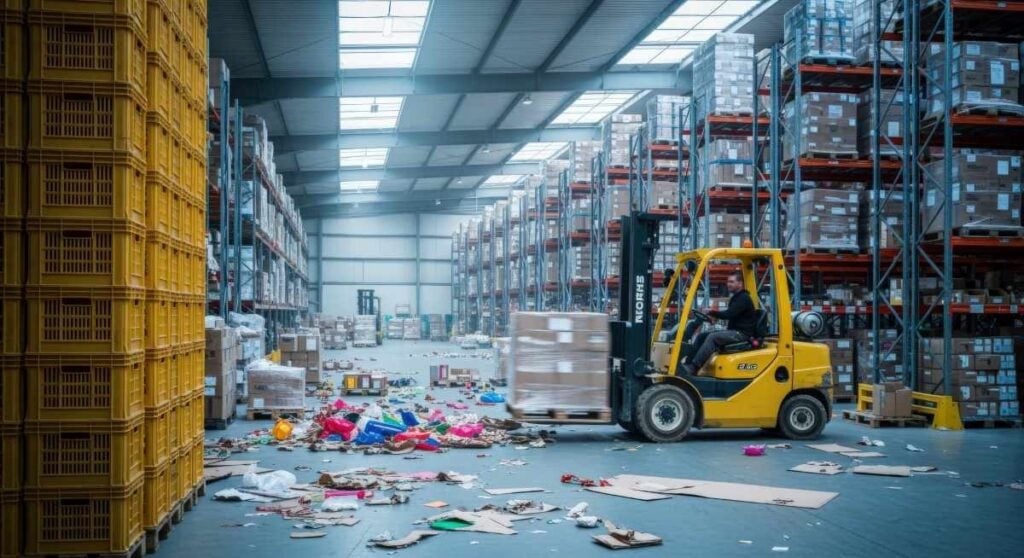
Reducing product damage isn’t simply about avoiding losses. It can improve productivity, strengthen customer relationships, lower operational costs, and contribute to a safer working environment.
Here’s how warehouse operators can significantly reduce product damage and improve overall handling performance.
Understand Where Damage Is Occurring
Before improvements can be made, it’s important to identify the root causes of damage.
Common sources include:
- Forklift impacts
- Improper pallet handling
- Poor stacking practices
- Inadequate storage systems
- Damaged pallets
- Human error
- Congested warehouse layouts
- Insufficient employee training
Tracking incidents and identifying patterns allows businesses to focus on the areas creating the greatest risk.
A warehouse that experiences frequent racking impacts will require different solutions than one dealing primarily with damaged pallets or packaging failures.
Improve Forklift Operator Training
Forklift operations are responsible for a significant proportion of warehouse product damage.
Even experienced operators can develop habits that increase the risk of accidents and handling errors.
Effective training should cover:
- Safe load handling
- Correct fork positioning
- Speed management
- Turning techniques
- Load stability
- Visibility awareness
- Racking safety
Refresher training can be particularly valuable for long-serving operators who may have become complacent over time.
Businesses looking to improve handling standards can benefit from reviewing best practices on how to reduce damage in forklift operations, particularly when forklift-related incidents contribute to stock losses.
Optimise Warehouse Layout
Poor warehouse design often creates unnecessary opportunities for damage.
Narrow aisles, blind corners, congested loading zones, and poorly positioned stock can all increase collision risks.
A well-planned layout should provide:
- Clear traffic routes
- Adequate aisle widths
- Designated pedestrian areas
- Sufficient turning space
- Safe loading and unloading zones
Reducing congestion allows equipment operators to work more safely and efficiently while lowering the likelihood of accidental impacts.
Regular reviews of warehouse traffic flow can identify areas where improvements may be required as operations evolve.
Use Appropriate Pallets
The condition and quality of pallets play a major role in product protection.
Damaged or poorly maintained pallets can lead to:
- Collapsed loads
- Product instability
- Handling difficulties
- Increased breakages
Warehouse teams should routinely inspect pallets and remove damaged units from circulation.
In some operations, plastic pallets may offer advantages over traditional timber alternatives. Their consistent dimensions, durability, and resistance to splintering can help reduce certain types of product damage while improving load stability.
The most appropriate pallet choice depends on the products being stored and the environment in which they are handled.
Focus on Proper Load Stacking
Incorrect stacking practices frequently result in damaged stock.
Common mistakes include:
- Overloading pallets
- Uneven weight distribution
- Stacking incompatible products together
- Excessive stacking heights
- Insufficient load securing
Every pallet should be loaded with stability in mind.
Heavier items should generally be placed at the bottom, while lighter products should sit higher up. Loads should remain evenly balanced to minimise the risk of shifting during transport or storage.
Stretch wrapping, strapping, and other load-securing methods can provide additional protection where necessary.
Maintain Warehouse Equipment
Poorly maintained equipment can contribute directly to product damage.
Forklifts, pallet trucks, reach trucks, and other handling equipment should be inspected regularly to ensure they are operating correctly.
Potential issues include:
- Misaligned forks
- Worn tyres
- Faulty hydraulics
- Steering problems
- Damaged attachments
Even minor defects can affect load handling accuracy and increase the likelihood of accidental impacts.
Routine maintenance programmes help ensure equipment remains safe, reliable, and capable of handling products without causing unnecessary damage.
Install Protective Safety Measures
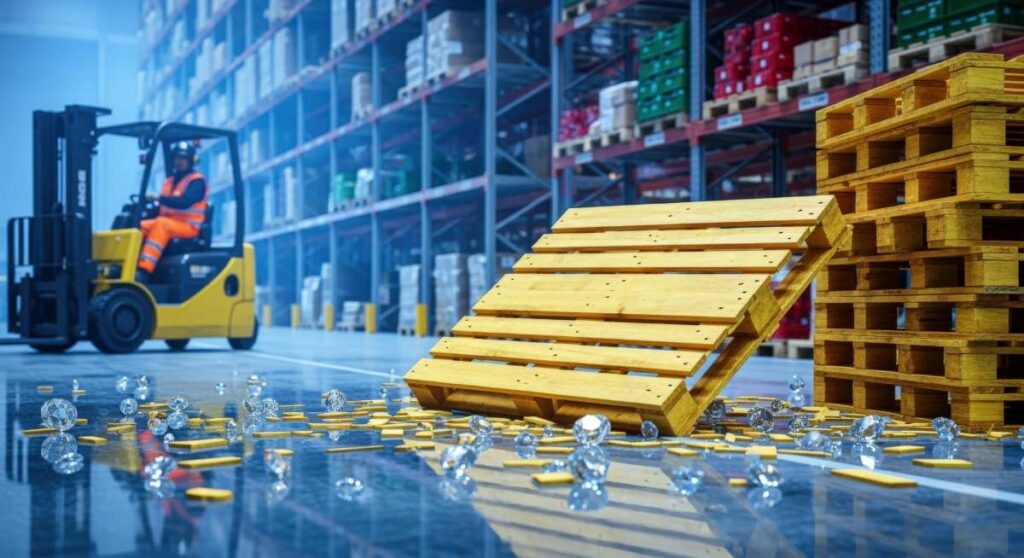
Physical protection systems can significantly reduce warehouse damage incidents.
Common solutions include:
- Rack protection barriers
- Column guards
- Bollards
- End-of-aisle protectors
- Safety railings
- Impact-resistant barriers
These measures help protect both infrastructure and stock from accidental collisions.
While they do not replace good operating practices, they provide an additional layer of protection when mistakes occur.
For busy warehouses, protective systems often deliver a strong return on investment by preventing costly repairs and stock losses.
Improve Inventory Organisation
Disorganised storage increases handling risks.
When products are difficult to locate, operators may spend longer manoeuvring equipment, increasing opportunities for collisions and errors.
Effective inventory management should include:
- Clear labelling
- Logical stock placement
- Consistent storage procedures
- Regular inventory reviews
- Accurate location tracking
Frequently accessed products should be positioned in locations that minimise travel distances and reduce handling complexity.
Improved organisation not only reduces damage but also contributes to greater operational efficiency.
Manage Speed and Productivity Expectations
Product damage often increases when employees feel pressured to prioritise speed above safety.
While productivity targets are important, unrealistic expectations can encourage:
- Excessive forklift speeds
- Careless handling
- Rushed loading procedures
- Inadequate inspections
Warehouse management should strike a balance between efficiency and accuracy.
Employees should understand that preventing damage is an essential part of productivity rather than an obstacle to it.
Clear safety standards and realistic performance expectations help create a more sustainable operating environment.
Encourage a Damage Prevention Culture
Reducing product damage is not solely the responsibility of forklift operators.
Everyone involved in warehouse operations contributes to stock protection.
A strong damage prevention culture includes:
- Regular training
- Open reporting of incidents
- Continuous improvement initiatives
- Management accountability
- Employee involvement
When staff feel comfortable reporting near misses and identifying risks, businesses gain valuable opportunities to address issues before serious incidents occur.
Creating a culture where quality and care are prioritised often delivers long-term improvements across the entire operation.
Consider Temporary Equipment During Peak Periods
Product damage often increases during seasonal peaks when warehouses experience higher workloads and greater pressure.
Insufficient equipment can contribute to congestion, rushed handling, and operational bottlenecks.
In these situations, forklift hire solutions for warehouse operations can provide additional capacity without requiring permanent fleet expansion. Access to forklift hire solutions for warehouse operations during busy periods helps maintain efficient workflows while reducing the pressure that often leads to handling errors and damaged stock.
Having the right equipment available when demand increases can make a significant difference to both productivity and product protection.
Conclusion
Product damage can have a substantial impact on warehouse profitability, customer satisfaction, and operational performance. While some incidents may be unavoidable, many can be prevented through better training, equipment maintenance, warehouse design, and handling procedures.
By identifying damage risks, improving forklift operations, maintaining equipment, and creating a culture focused on safe handling, businesses can significantly reduce losses and improve efficiency.
Investing in damage prevention not only protects products but also supports smoother operations, lower costs, and stronger long-term business performance.