Warehouses are under constant pressure to stay efficient while handling changing stock levels, shifting delivery schedules, and tighter customer expectations. In that kind of environment, flexibility matters just as much as capacity.
This is one reason forklift rental has become such a practical option for warehouse operators. Instead of committing to permanent fleet expansion every time demand changes, businesses can bring in the right truck at the right time and return it when it is no longer needed.
For many warehouses, rental is not only a backup plan. It is part of a smarter way to stay agile.
Why flexibility matters in warehouse operations
Warehouse demand rarely stays flat all year.
A site may be steady for months, then suddenly deal with:
- Seasonal stock increases
- A new customer contract
- Promotional spikes
- Delayed inbound deliveries arriving at once
- Temporary breakdowns in the current fleet
- Reconfiguration of storage space
When that happens, the warehouse still needs to keep goods moving. If there are not enough forklifts available, the result is often slower loading, more waiting time, and extra pressure on staff and existing trucks.
That is where rental helps. It gives warehouses a way to respond quickly without overcommitting.
Rental helps warehouses scale up without buying more trucks
One of the biggest advantages of forklift rental is that it allows a warehouse to increase capacity without making a large capital purchase.
Buying another forklift may be the right choice in some cases, but it is not always sensible when the need is temporary or uncertain. A warehouse might only need extra equipment for a few weeks or months. In that situation, rental is often the more efficient option.
It allows the business to:
- Preserve cash flow
- Avoid large upfront costs
- Keep working capital available for stock, labour, or site improvements
- Match equipment cost more closely to actual demand
This matters most when flexibility is more valuable than ownership.
Seasonal demand is one of the clearest reasons to rent
Many warehouses experience busy periods that come and go through the year.
Common examples include:
- Christmas and holiday stock peaks
- Black Friday and promotional events
- Retail replenishment surges
- Harvest-related stock movement
- Short-term project work
- Time-limited contracts
During quieter periods, the existing fleet may be enough. During peak periods, it may not be.
In those moments, bringing in temporary trucks is often far more practical than buying equipment that could sit idle later. This is why many businesses now treat forklift rental for seasonal demand as a normal part of warehouse planning rather than an emergency measure.
Rental can cover breakdowns without stopping the warehouse
Even well-maintained forklifts can go off the floor for service, repair, or unexpected faults.
When that happens in a busy warehouse, downtime can spread quickly.
One missing truck may affect:
- Goods-in activity
- Loading bays
- Stock replenishment
- Put-away speed
- Order picking support
Rental gives the warehouse a way to stay productive while its own truck is being repaired or serviced. Instead of slowing the whole operation down, a temporary replacement can keep handling capacity in place.
That can be especially useful for sites with smaller fleets, where even one missing machine creates a noticeable gap.
It helps warehouses respond to changing contracts
Warehouse work often changes faster than long-term fleet planning.
A business might win a new customer, add another shift, or take on overflow work with little notice. In those cases, managers may need extra forklifts immediately, but they may not yet know whether the higher demand will last.
Rental makes that kind of uncertainty easier to manage.
It allows a warehouse to:
- Add equipment quickly
- Review actual usage before making a longer-term decision
- Avoid buying too early
- Support growth without locking into permanent costs
This is one of the simplest ways rental supports operational flexibility.
Warehouses can choose the right truck for the exact job
Not every warehouse needs the same forklift.
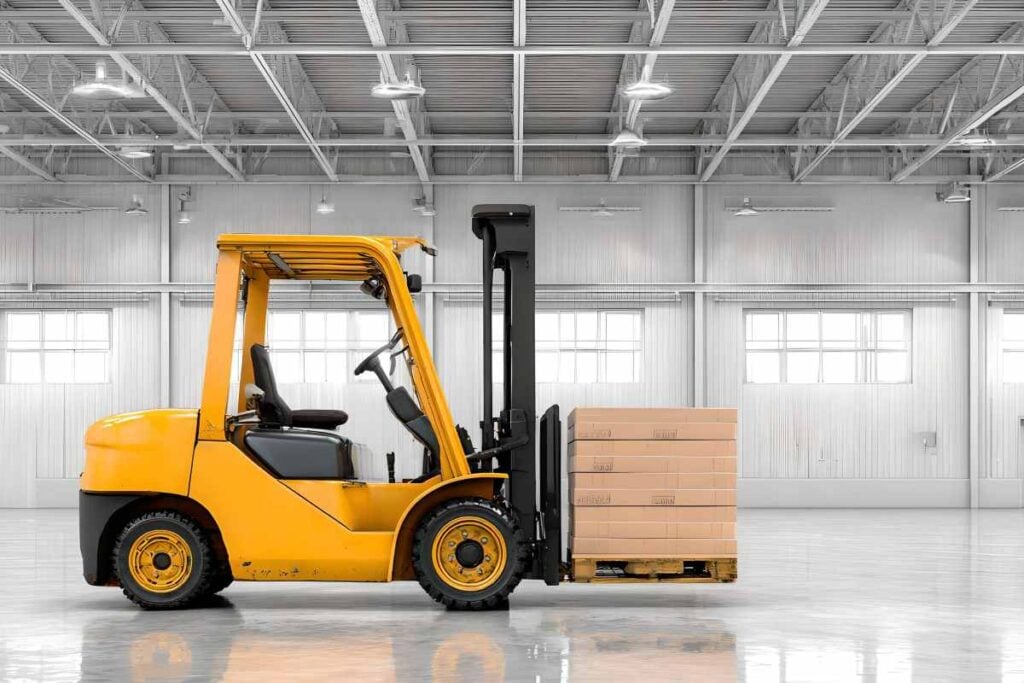
One site may need an electric counterbalance truck for general pallet movement. Another may need a reach truck for higher racking and tighter aisles. A third may need extra pallet trucks or specialist equipment for a particular contract.
Rental gives operators access to the right machine for the right task without needing to own every possible type.
That can improve:
- Productivity
- Space use
- Operator efficiency
- Load handling accuracy
- Site safety
Trying to make one truck cover every job is often less efficient than hiring the correct equipment when needed.
Rental supports better cash flow in uncertain periods
Warehouses do not only deal with operational uncertainty. They also deal with commercial uncertainty.
Order volumes may rise and fall. New contracts may start strongly, then settle. Market conditions may shift faster than expected.
In those situations, rental helps because it reduces long-term financial commitment. Instead of tying money up in equipment that may not be fully needed later, the warehouse can keep costs more flexible.
That often makes planning easier, especially for businesses that want to stay responsive without taking on more fixed asset costs than necessary.
It reduces the burden of ownership
Owning forklifts means taking responsibility for:
- Servicing
- Maintenance scheduling
- Repairs
- Long-term storage
- Depreciation
- Replacement planning
Rental can reduce some of that pressure, especially on short-term hires. The warehouse still needs to use the truck properly and follow the agreement, but it does not take on the same full ownership burden.
That gives site managers more room to focus on operations rather than fleet administration.
Rental can help during warehouse changes and reconfiguration
Flexibility is not only about stock volume. It can also matter during site changes.
For example, a warehouse may be:
- Reconfiguring racking
- Expanding into a new area
- Moving stock during a layout change
- Managing a relocation phase
- Testing a different operating model
In these cases, rental equipment can provide short-term support without affecting the long-term fleet plan.
This makes rental useful not only for busy periods, but also for warehouse change projects where extra handling capacity is only needed temporarily.
Speed matters when a warehouse needs extra capacity
One reason rental works so well is that it can often be arranged quickly.
If the right truck is available, it may be possible to get support on site much faster than arranging a full purchase. That speed matters when the pressure is immediate and the warehouse cannot afford to wait.
For operations that need fast access to equipment, working with a supplier that offers forklift hire for warehouses and logistics can make it easier to respond before delays start affecting customer service.
Rental helps businesses stay agile, not overloaded
The most flexible warehouses are not always the ones with the biggest fleets. They are often the ones that match equipment to demand more carefully.
Rental supports that by allowing businesses to:
- Increase capacity when the site is under pressure
- Reduce capacity when the peak has passed
- Test equipment needs before buying
- Cover downtime without long disruption
- Keep the operation moving without overinvesting
That is often a much more practical approach than buying every extra truck just in case.
Final thoughts
Forklift rental helps warehouses stay flexible because it gives them a faster and lower-risk way to respond to changing demand.
Whether the issue is seasonal pressure, a new contract, a breakdown, or a temporary rise in stock movement, rental allows the business to bring in the equipment it needs without taking on the full cost of permanent expansion.
For many warehouse operators, that flexibility is now one of the most valuable parts of good fleet planning. It keeps the site responsive, protects cash flow, and helps goods keep moving when demand does not stay still.

Related Posts
The True Cost of Delaying a Forklift Repair
Top Industries that Benefit from Forklift Hire
How Warehousing Demands Are Changing Forklift Requirements
How to Determine If You Need an Extra Forklift
10 Useful Forklift Attachments for Safer, More Efficient Material Handling