On this page
- Understanding Seasonal Demand Challenges
- Avoiding Large Capital Expenditure
- Flexibility When Demand Changes
- Access to Modern Equipment
- Reduced Maintenance Responsibilities
- Matching Equipment to the Job
- Supporting Temporary Contracts
- Minimising Downtime During Peak Periods
- A Cost-Effective Alternative to Fleet Expansion
- Choosing the Right Rental Partner
- Conclusion
Many businesses experience fluctuations in demand throughout the year. Retailers prepare for Christmas surges, manufacturers face production peaks, agricultural operations manage harvest seasons, and logistics providers handle periods of increased shipping volumes.
While these busy periods create valuable opportunities, they also place additional pressure on warehouse operations and materials handling equipment. Businesses often find themselves needing extra forklifts for a few weeks or months but struggle to justify the cost of purchasing additional machines outright.
This is where forklift rental becomes a practical and cost-effective solution.
By hiring equipment only when it is needed, companies can increase operational capacity during peak periods without making long-term capital investments. For many organisations, forklift rental provides the flexibility required to manage seasonal demand efficiently while controlling costs.
Understanding Seasonal Demand Challenges
Seasonal demand creates a unique challenge for warehouse and logistics operations.
During quieter periods, existing equipment may be sufficient to handle daily workloads. However, when order volumes increase, businesses can quickly encounter bottlenecks caused by limited materials handling capacity.
Common seasonal peaks include:
- Christmas and holiday retail periods
- Black Friday and promotional events
- Harvest and agricultural seasons
- Manufacturing production increases
- Construction project peaks
- Stock replenishment cycles
- Temporary contracts and projects
Without sufficient equipment, businesses may experience slower loading times, reduced productivity, delayed deliveries, and increased labour costs.
Hiring additional forklifts allows organisations to scale operations quickly without permanently expanding their fleet.
Avoiding Large Capital Expenditure
One of the biggest advantages of forklift rental is the ability to access equipment without a significant upfront investment.
Purchasing a forklift requires substantial capital expenditure, particularly when multiple machines are needed. For businesses only requiring additional equipment for a short period, buying new forklifts often makes little financial sense.
Rental allows companies to:
- Preserve cash flow
- Avoid large upfront costs
- Maintain working capital
- Invest funds elsewhere in the business
- Match equipment costs to operational needs
Rather than purchasing machinery that may sit idle for much of the year, businesses can pay only for the period during which the equipment is actively generating value.
Flexibility When Demand Changes
Seasonal demand is not always predictable.
Sales forecasts, customer orders, and market conditions can change rapidly, making it difficult to determine exactly how much equipment will be required.
Forklift rental provides flexibility that ownership cannot match.
Businesses can:
- Increase fleet size quickly
- Reduce equipment numbers when demand falls
- Extend rental periods if required
- Access additional capacity at short notice
- Respond to unexpected opportunities
This flexibility helps organisations remain agile while avoiding the risks associated with overinvesting in permanent assets.
Access to Modern Equipment
Rental fleets are typically made up of relatively modern equipment that meets current safety and performance standards.
This provides businesses with access to forklifts that feature:
- Improved fuel efficiency
- Enhanced operator comfort
- Better safety systems
- Modern emissions compliance
- Advanced productivity features
For companies that do not regularly update their own fleets, rental can offer access to newer technology without the expense of purchasing brand-new machines.
Modern equipment can also contribute to improved productivity during busy periods when efficiency is particularly important.
Reduced Maintenance Responsibilities
Owning a forklift means taking responsibility for servicing, maintenance, inspections, and repairs.
These costs continue regardless of whether the equipment is being used.
Rental arrangements often include maintenance support, helping businesses avoid unexpected repair expenses during critical operating periods.
Benefits may include:
- Reduced maintenance administration
- Predictable operating costs
- Faster repair response times
- Access to replacement equipment
- Less downtime risk
This allows management teams to focus on operational performance rather than equipment maintenance.
Matching Equipment to the Job
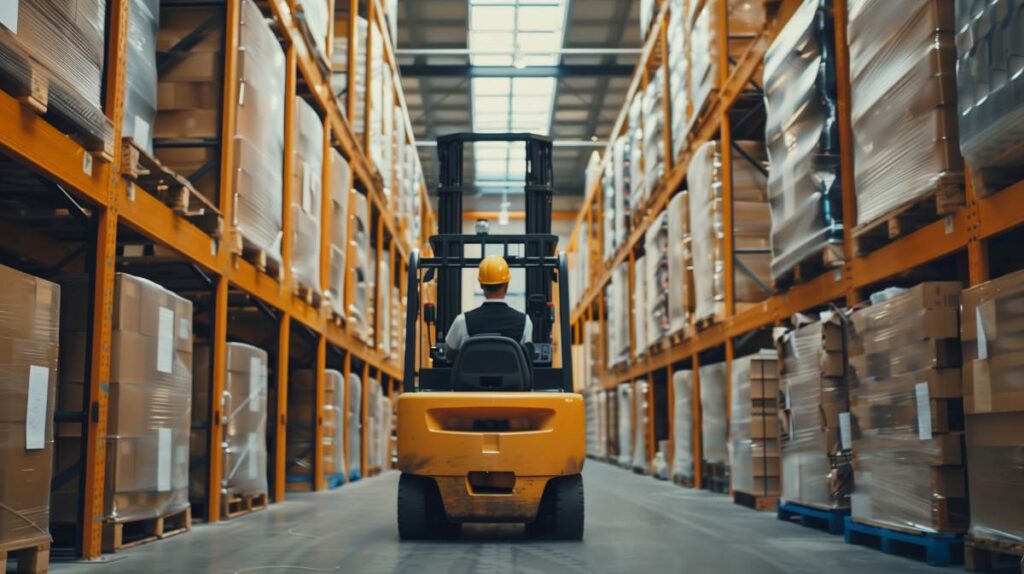
Different seasonal projects often require different types of forklifts.
For example:
- Warehouses may require electric counterbalance trucks
- Outdoor yards may need diesel forklifts
- Narrow aisle operations may require specialist warehouse equipment
- Construction sites may benefit from rough-terrain models
Rental provides access to a wider range of equipment than many businesses would justify purchasing outright.
This means companies can select the most appropriate forklift for each specific application rather than trying to make one machine perform every task.
The result is often improved productivity, enhanced safety, and lower operating costs.
Supporting Temporary Contracts
Many businesses secure temporary contracts that significantly increase workload for a defined period.
While these opportunities can be highly profitable, they often require additional materials handling capacity.
Purchasing equipment for a contract that may only last a few months can introduce unnecessary financial risk.
Forklift rental offers a practical alternative by allowing businesses to:
- Meet contractual requirements
- Expand capacity immediately
- Avoid long-term commitments
- Scale resources to project duration
Once the contract ends, the equipment can simply be returned.
This approach helps protect profitability while ensuring sufficient operational capacity throughout the project.
Minimising Downtime During Peak Periods
Equipment failures are disruptive at any time, but they can be particularly damaging during seasonal peaks when productivity is critical.
Rental providers often maintain dedicated support networks that help minimise downtime if issues occur.
In many cases, businesses benefit from:
- Rapid service response
- Planned maintenance support
- Replacement equipment availability
- Reduced repair administration
Having access to backup equipment can provide valuable reassurance during periods when operational delays could affect customer satisfaction and revenue.
A Cost-Effective Alternative to Fleet Expansion
Permanent fleet expansion may seem attractive during busy periods, but it can create inefficiencies once demand returns to normal.
Additional forklifts may spend much of the year underutilised while still generating ownership costs through maintenance, inspections, insurance, and depreciation.
Rental allows businesses to align equipment costs with actual demand.
This is one of the key benefits of renting forklifts, particularly for organisations with predictable seasonal fluctuations. By increasing capacity only when required, companies can avoid the financial burden of maintaining equipment that sits idle for extended periods.
Choosing the Right Rental Partner
The success of any rental strategy depends on selecting the right supplier.
When evaluating forklift hire providers, consider:
- Fleet availability
- Equipment quality
- Maintenance support
- Delivery times
- Contract flexibility
- Industry experience
- Emergency response capabilities
A reliable rental partner can help ensure equipment arrives when needed and remains operational throughout the busiest periods.
Businesses seeking flexible warehouse equipment rental solutions should look for providers capable of supplying equipment that matches their operational requirements while offering the support needed to maintain productivity during peak demand periods. Access to flexible warehouse equipment rental solutions can make it significantly easier to scale operations efficiently without committing to long-term ownership.
Conclusion
Seasonal demand creates challenges that many businesses face every year. Increased order volumes, temporary contracts, and peak trading periods often require additional materials handling capacity, but purchasing extra forklifts is not always the most economical solution.
Forklift rental offers a smart alternative by providing flexibility, cost control, access to modern equipment, and the ability to scale operations as demand changes.
For businesses looking to manage busy periods efficiently while protecting cash flow and avoiding unnecessary long-term commitments, forklift rental remains one of the most practical and cost-effective strategies available.