Racking systems
Drive-in and drive-through racking
Where you hold lots of pallets of the same product, drive-in racking stores them several deep in lanes the truck drives into, so almost the whole floor becomes storage.
- LIFO
- drive-in: one face
- FIFO
- drive-through: both ends open
- 50 mm
- rail height adjustment
How it works
How drive-in and drive-through racking works
- Columns of paired uprights are bolted to the floor and tied together at the top.
- Support rails run the full depth of each lane, one pair per storage level.
- The truck drives into the lane and sets each pallet down on the rails, back to front.
- Drive-in is emptied from the same face (LIFO); drive-through from the far end (FIFO).
- Access
- One lane per product
- Stock rotation
- LIFO (drive-in) or FIFO (drive-through)
- Space use
- Very high
- Load support
- Pallets rest on rails, not on each other
Is it right for you?
A good fit, and when to look elsewhere
A good fit for
- Large quantities of the same product
- Seasonal and slow-moving stock
- Goods that cannot be block stacked
- Keeping costs down on a high-density store
Consider something else if
- You need different products in the same lane Pallet shuttle racking →
- Stock moves fast and must rotate by date Pallet flow and push back racking →
- You need every pallet reachable at once Pallet racking →
Components and options
What goes into it
Rack columns
Pairs of special steel uprights bolted together and anchored to the floor.
Top and longitudinal beams
Tie the columns together along the lanes for stability.
Support rails
Carry the pallets. Shaped to centre each pallet, adjustable in 50 mm steps.
Floor guide rails
Keep the truck central in the lane and protect the columns.
Column guards
High-visibility guards that take impacts and are easy to replace.
Buying guide
Specifying drive-in racking
- Lane depth. Set by how many pallets of each product you hold. A lane holds one product, so deep lanes suit a few products in large quantities and shallow lanes suit more variety.
- Pallets. Pallets sit on rails by their edges, so pallet quality and a consistent pallet size matter more than in selective racking.
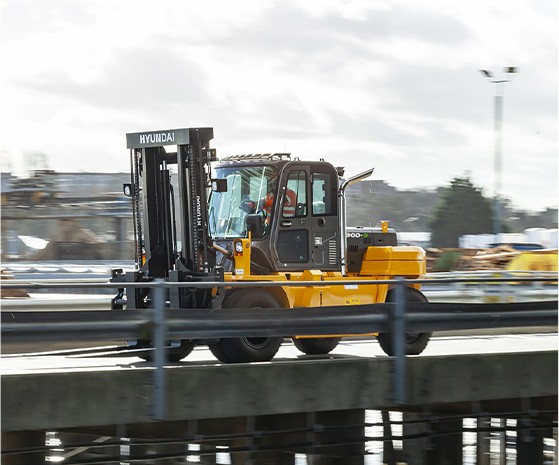
- Trucks. The truck drives inside the rack, so its width, mast and overhead guard set the lane width and the clearances. Reach trucks and counterbalance trucks are both used; the operator needs specific training for driving in the rack.
- Rotation. Drive-in is loaded and emptied from one face (last in, first out). Drive-through is open at both ends (first in, first out) and needs an aisle at each end.
Buying guide
What affects the price
- The number of lanes, their depth and the number of levels.
- Drive-in or drive-through: drive-through needs access at both ends of the block.
- Guide rails at floor level, which keep the truck central and protect the uprights, and are strongly recommended.
- Rail and support specification for the pallet weight.
- For cold stores, the building and floor conditions at low temperature.
Per pallet position it is one of the cheapest high-density systems, which is why it is common for bulk and seasonal stock.
Buying guide
Rules, inspection and safety
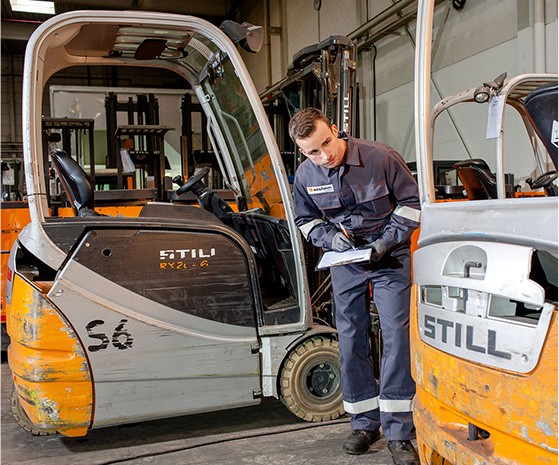
Racking is work equipment under PUWER 1998. The UK industry guidance comes from SEMA, the Storage Equipment Manufacturers' Association, and EN 15635, the standard for racking in use, which calls for a documented inspection by a technically competent person at least every 12 months. Between inspections, a named person on site checks the racking regularly and after any impact, using a red, amber and green damage scale: red means offload and isolate now, amber means repair within four weeks.
We carry out racking inspections to EN 15635, with a written report and a schedule of any damage, and we install racking to SEMA guidance: see racking installation.
Drive-in racking takes more truck contact than any other system because the truck works inside it, so guide rails, careful driving and regular checks of the rails and uprights matter most here.
Racking and trucks, sized together
The trucks that work it
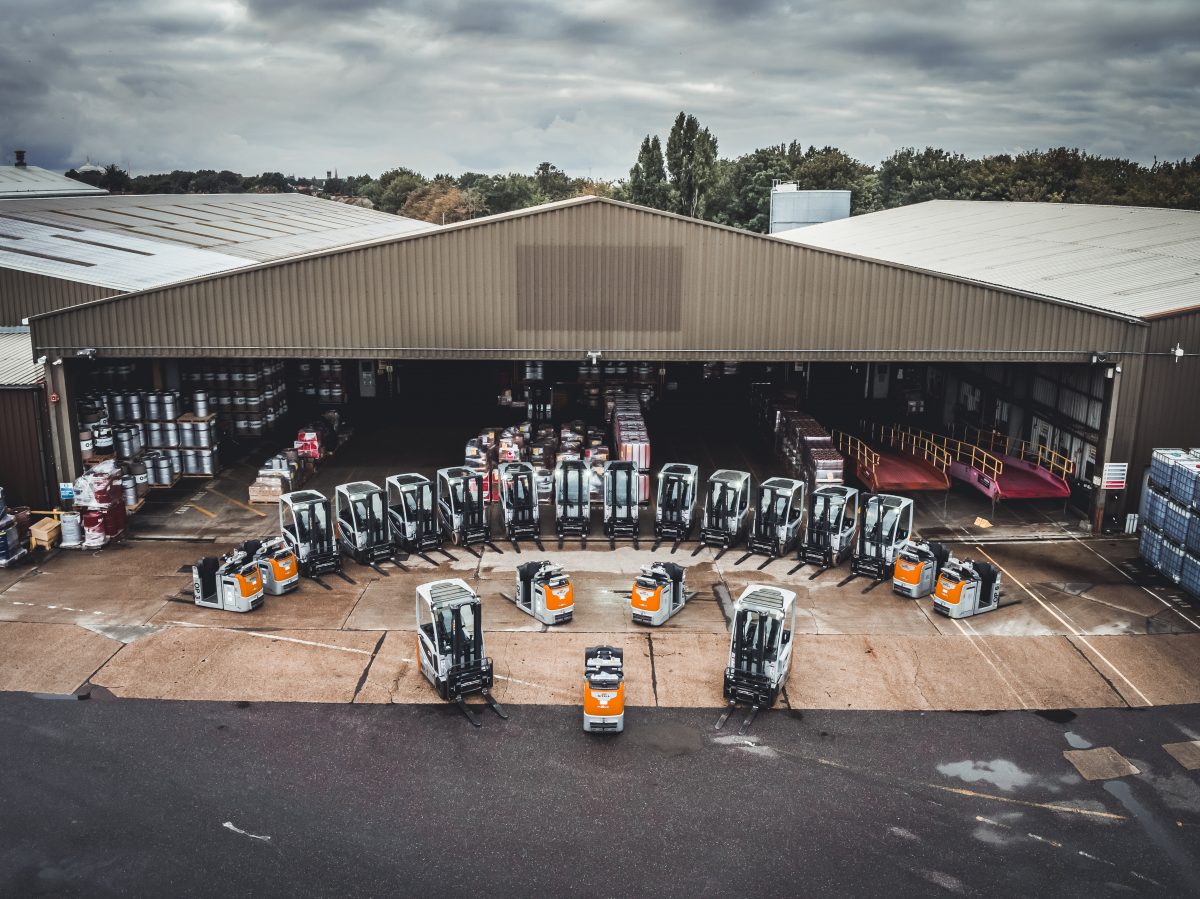
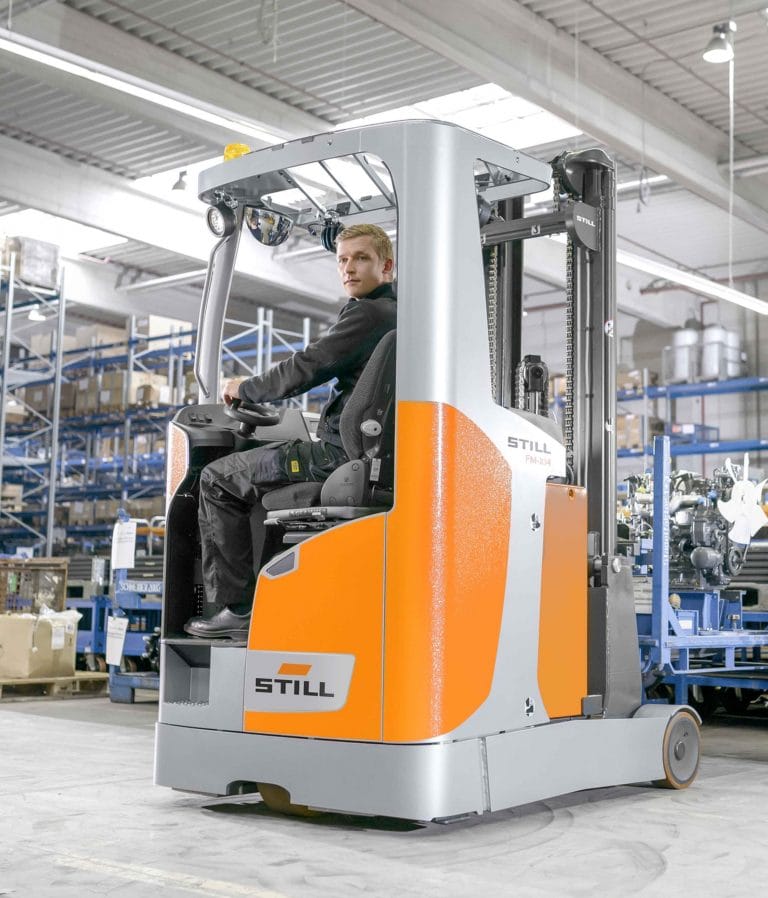
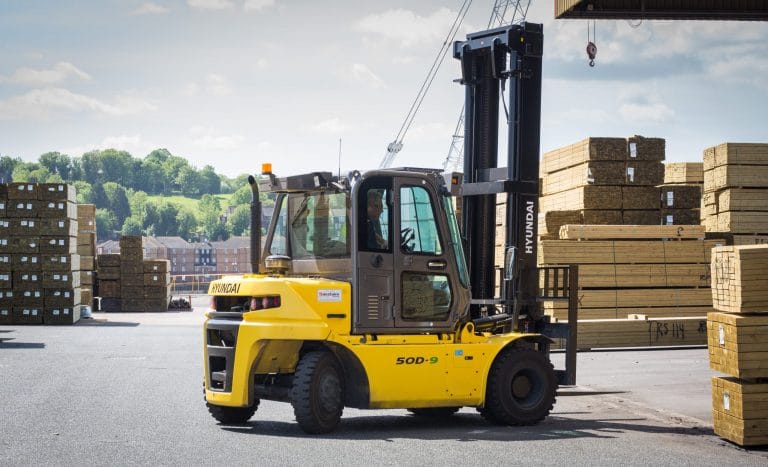
Racking and trucks decide each other: aisle width, top beam height and capacity at height all have to match. We supply both, so we check them together.
Tell us what you store, and we will tell you what fits
Every building is different, so we start with a free site survey: pallet or product sizes and weights, how many locations, how fast stock moves, the clear height and the trucks you run. We come back with a design and a price, install it, and inspect it once it is in use.
Drive-in racking: common questions
Eight depots across the UK
Our own engineers, out of our own depots - wherever you are, service comes from us.


Additional Services
Checkout our range of other machine services below