Cold stores are hard on trucks and on the people driving them. Hydraulic oil thickens, batteries lose capacity, condensation gets into the electrics every time a truck comes out into the warm, and operators have to work in the cold for a whole shift. A standard truck driven into a freezer every day will fail sooner and cost more to keep running.
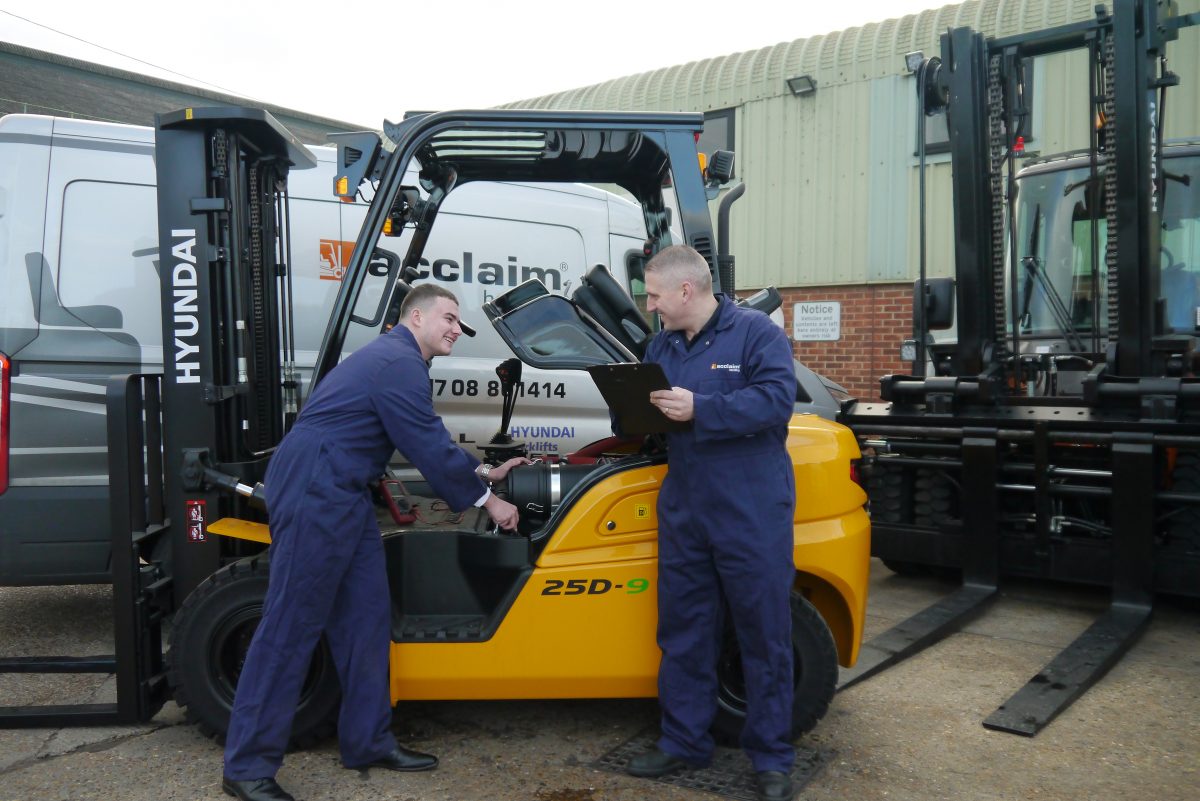
We supply forklifts, reach trucks, pallet trucks, stackers and other equipment specified for cold store and freezer work, and service them with our own engineers from eight depots.
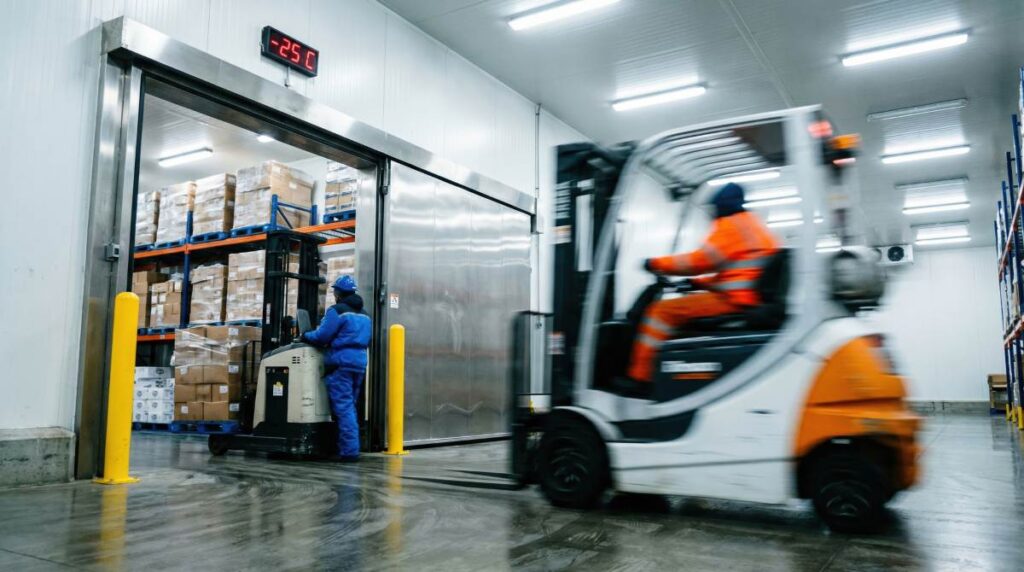
Chilled or freezer
The specification depends on how cold it is and how the truck is used.
- Chilled stores, from around 0 to +5 °C, are mostly handled by standard trucks with some protection, particularly against condensation.
- Freezer stores, down to around -30 °C, need a cold store specification throughout.
- In and out. A truck that moves between the freezer and the warm dock suffers most, because condensation forms on and inside it every time it comes out. How often it crosses matters as much as the temperature.
What changes on a cold store truck
- Hydraulic oil and lubricants rated for low temperatures, so the mast and steering work smoothly from the first lift.
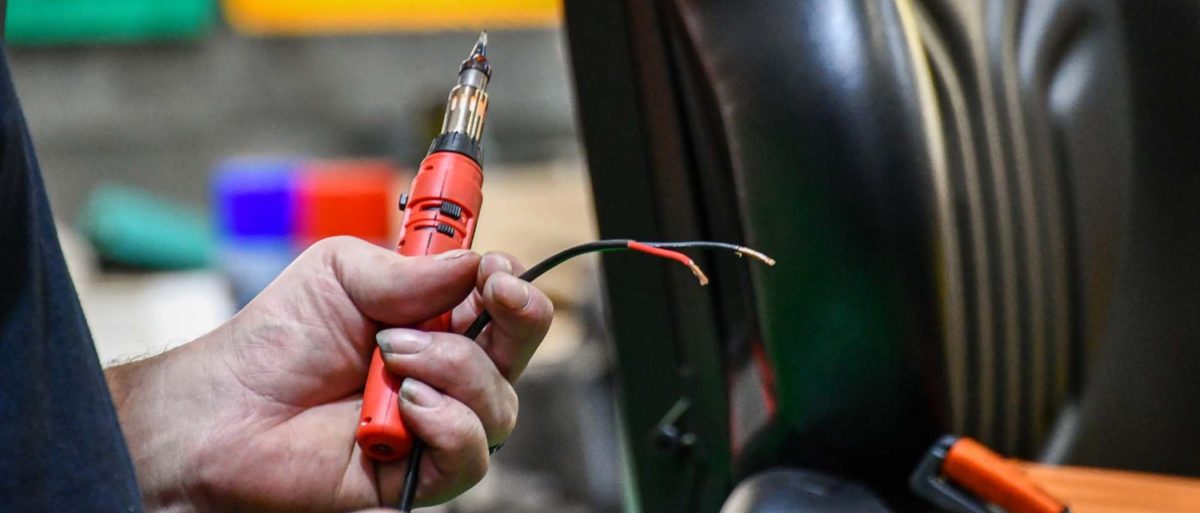
- Protected electrics: sealed or heated controllers, connectors and displays, so condensation and ice do not cause faults.
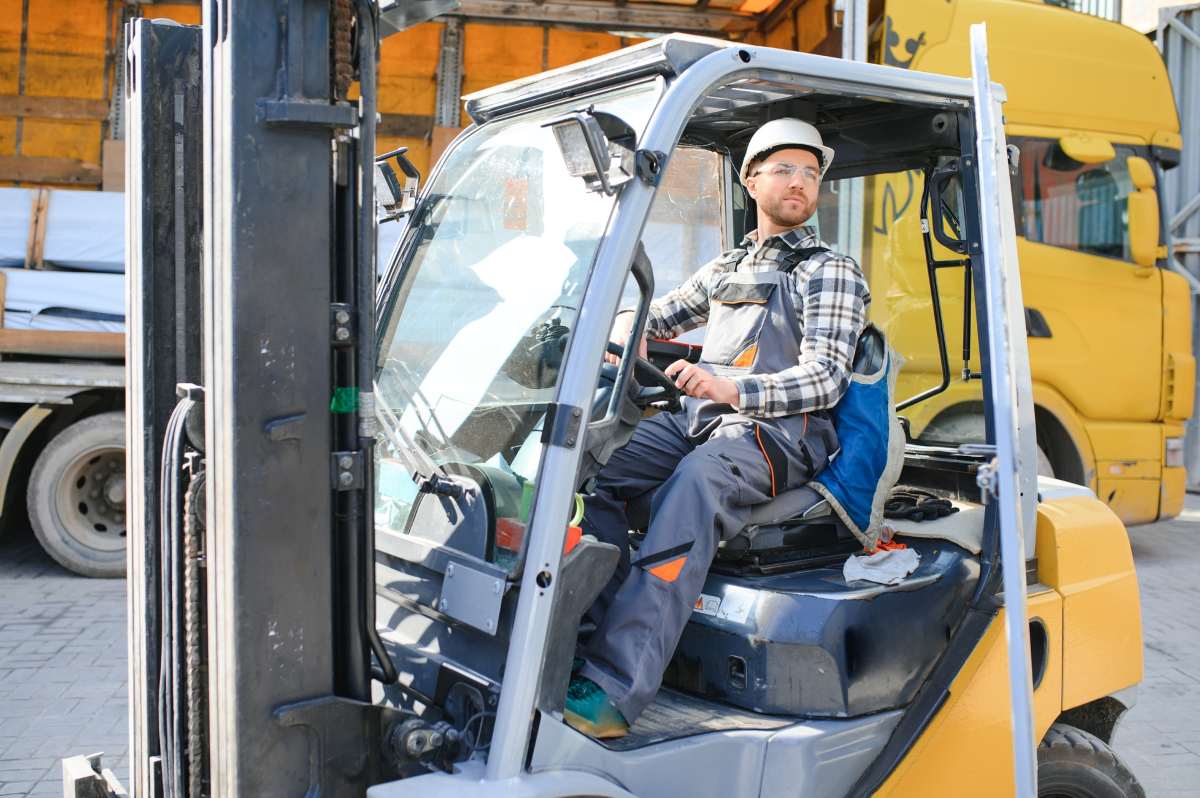
- Cabs and heating. Heated cabs on reach and counterbalance trucks for operators spending the shift in the freezer, with heated seats and controls where needed.
- Batteries and charging sized for the temperature, because batteries deliver less in the cold, with charging kept in the warm.
- Tyres suited to cold floors, which can be slippery with frost.
Tell us the store temperature, whether trucks go in and out, the lift heights and the aisles, and we will specify the trucks.
The trucks we supply for cold stores
- Reach trucks, the most common truck in cold stores, because they put away at height in the narrow aisles that keep cooled space to a minimum.
- Powered pallet trucks and pallet stackers for loading, marshalling and ground-level moves.
- Electric counterbalance forklifts for docks and the transition between chilled and ambient areas.
- Order pickers and VNA trucks for very narrow aisle freezer stores.
- Articulated forklifts, including the Combilift Aisle Master Cold Store, which unload in the yard and stack in narrow freezer aisles.
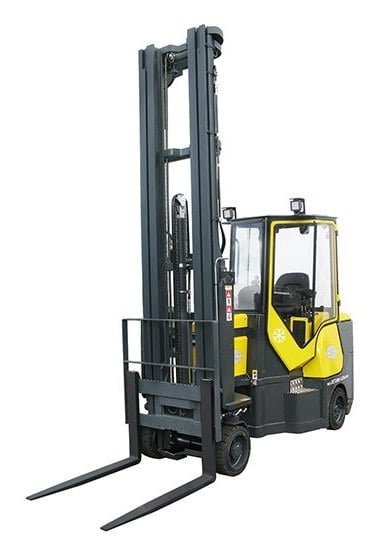
See our guide to the best forklifts for cold storage and freezer warehouses.
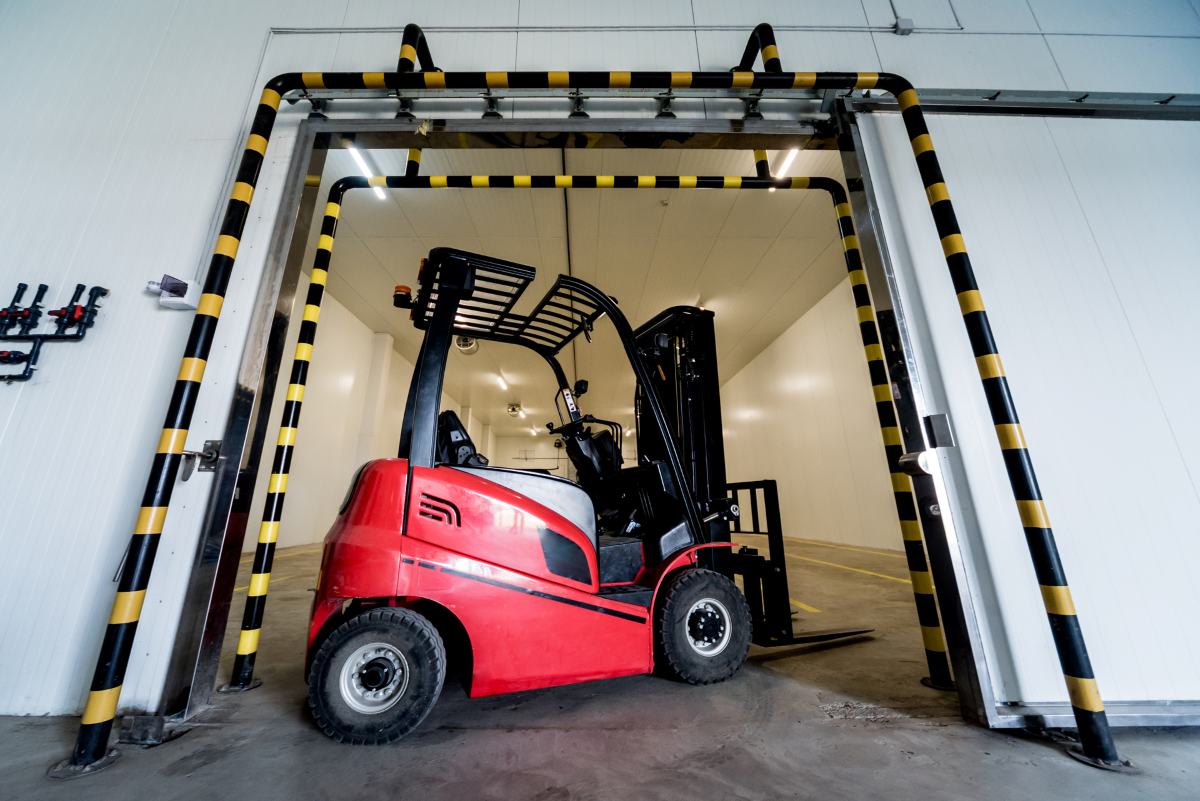
Converting your own trucks for the freezer
A cold store does not always need new trucks. We carry out cold store and sub-zero modifications on the trucks you already run, so they can work continuously in freezers and blast freezers without freezing up or losing hydraulic pressure.
- Heated cab enclosures fitted to the truck, so the operator stays warm and the controls stay usable through the shift.
- Anti-condensation glass in the cab, so the screens stay clear when the truck crosses between temperatures.
- Low-viscosity lubricants and hydraulic oil for blast freezer work, so the hydraulics hold their pressure and nothing freezes up between shifts.
- Sealing and heating for the electrics, starting with the parts that condensation and ice reach first.
We look at each truck first. Its age, condition and type decide whether a conversion is worth doing, and if a cold store truck from our range would serve you better, we will say so. Converted trucks are serviced by our own engineers like the rest of the fleet.
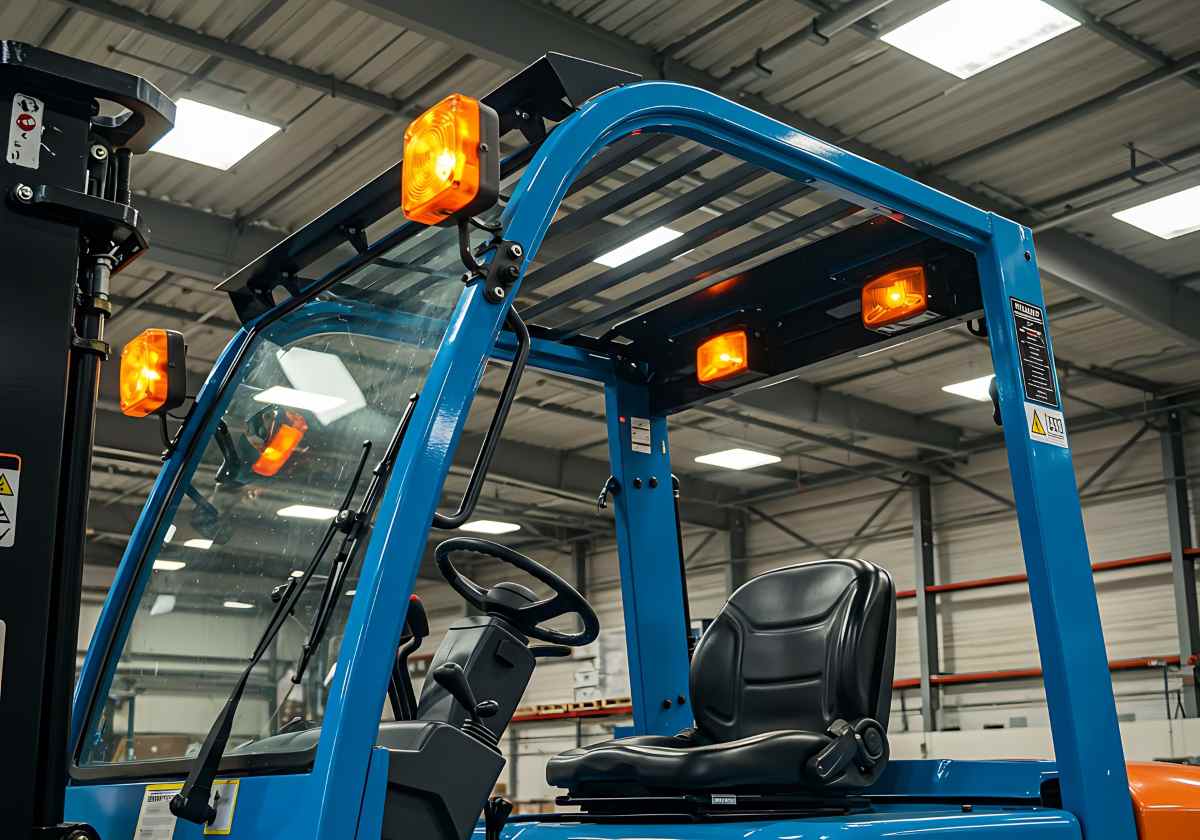
Condensation control for freezer-to-ambient work
The truck that runs between the freezer and the warm dock has the hardest life. Each time it comes out, moisture in the warm air condenses on the cold metal, the glass and the electrics, then freezes when the truck goes back in. Glass that mists or frosts over also leaves the operator unable to see properly.
- Insulated thermal cab glass, which stays clear as the truck moves between temperatures.
- Cab heaters that keep the cab, the glass and the controls warm enough that moisture does not settle on them.
We fit both to new trucks we supply and to trucks you already own, and plan them around how often each truck crosses between the freezer and the dock.
Anti-corrosion treatment for brine, seafood and chemical sites
Brine, seafood processing and corrosive chemicals eat into a standard truck, and the mast, the chassis and the wiring go first. We galvanise and treat trucks for these sites, both new trucks we supply and the trucks you already run.
- Masts galvanised or given an anti-corrosion treatment, so they stand up to brine, spray and regular wash-downs.
- Chassis treated against rust where spray and standing water reach it.
- Wiring and connectors sealed and protected, so corrosion does not turn into electrical faults.
Seafood and brine work is often cold work as well, so anti-corrosion treatment is regularly combined with a cold store specification. At each service, our engineers check the parts that corrosion reaches first.
Keeping them running
Cold store trucks need servicing that allows for the cold: checks on seals, connectors, heaters and batteries as well as the usual items, and hydraulic oil changed to the cold store grade. Our engineers service and repair cold store trucks and carry out LOLER thorough examinations. Letting trucks warm up and dry out before they go back into the freezer, and keeping in-and-out trips to a minimum, prevents a large share of cold store faults.
Cold store racking
Cooled space is expensive, so cold stores use the densest storage that suits the stock: mobile racking, pallet shuttle and drive-in racking, and very narrow aisles. We plan the racking and the trucks together: see cold store racking.
Talk to us
Call 01708 861 414 or contact the team. Tell us the store temperature, whether trucks go in and out, the lift heights and the aisles, and we will specify the trucks.
Tell us the store temperature, whether trucks go in and out, the lift heights and the aisles, and we will specify the trucks.
Cold Store Forklifts and Equipment: common questions
Eight depots across the UK
Our own engineers, out of our own depots - wherever you are, service comes from us.
Talk to us about Cold Store Forklifts and Equipment
Monday to Friday, 8:00am to 5:00pm.
Additional Services
Checkout our range of other machine services below