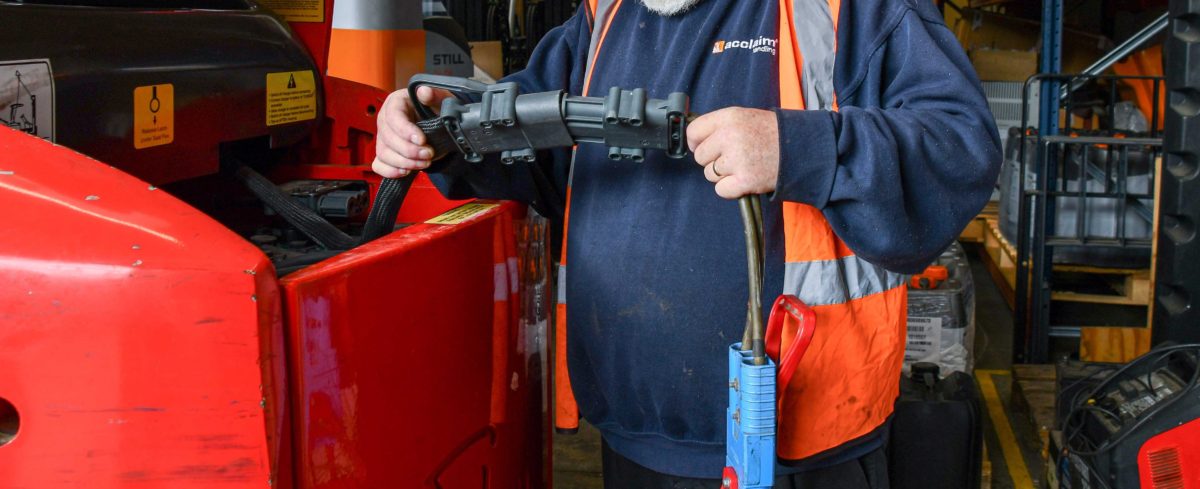
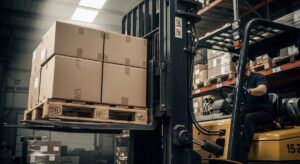
Most collisions between a forklift and a person happen where the operator cannot see: reversing out of an aisle, turning at a blind corner, travelling behind a load that fills the view, or passing the end of a racking run as someone steps out. Cameras and pedestrian detection close those gaps. They show the operator what the mirrors cannot, and the better systems warn both the operator and the person on foot before the two meet.
We fit them to every type of machine we supply, of any make, and support them from eight depots with our own engineers.
What we fit
Reversing and blind spot cameras
A camera on the back of the truck, or wherever the view is blocked, with a monitor in the cab. The simplest improvement to visibility, and on machines that spend much of the shift reversing it is often the one that matters most.
AI pedestrian detection cameras
Cameras that recognise the shape of a person, rather than reacting to anything that moves. Because racking, pallets and other trucks are ignored, the system alerts only when a person enters a danger zone, which is what stops operators learning to ignore it.
A light and buzzer in the cab warn the operator and an audible alarm warns the pedestrian. Wide angle cameras can be combined for a full 360 degree view, detection zones are set to suit the machine and the site, and event footage is recorded on board for review after a near miss.
Proximity warning tags
Pedestrians wear a small tag and the truck carries a unit that measures the distance between them by radio. The warning zone grows in the direction the truck is travelling and with its speed, so it allows for braking distance rather than using a fixed circle, and it works through racking and round corners where a camera has no line of sight. The same system can slow the truck down near people and at gates and doorways, and needs no infrastructure installing in the building.
Speed control
Automatic speed limiting indoors, at doorways and at busy junctions, so the truck slows where people are rather than relying on the operator to remember.
Cameras or tags?
They solve different parts of the problem, and plenty of sites use both.
| AI detection cameras | Proximity tags | |
|---|---|---|
| Pedestrians need to wear anything | No | Yes, a tag |
| Covers visitors and contractors | Yes | Only if they are given a tag |
| Works round corners and through racking | No, it needs line of sight | Yes |
| Records footage | Yes, of events | No, it logs the alert |
| Can slow the truck | Warns | Warns and can reduce speed |
Tell us the machines and where people and trucks cross. We will tell you what is worth fitting and what it costs.
Every machine we supply
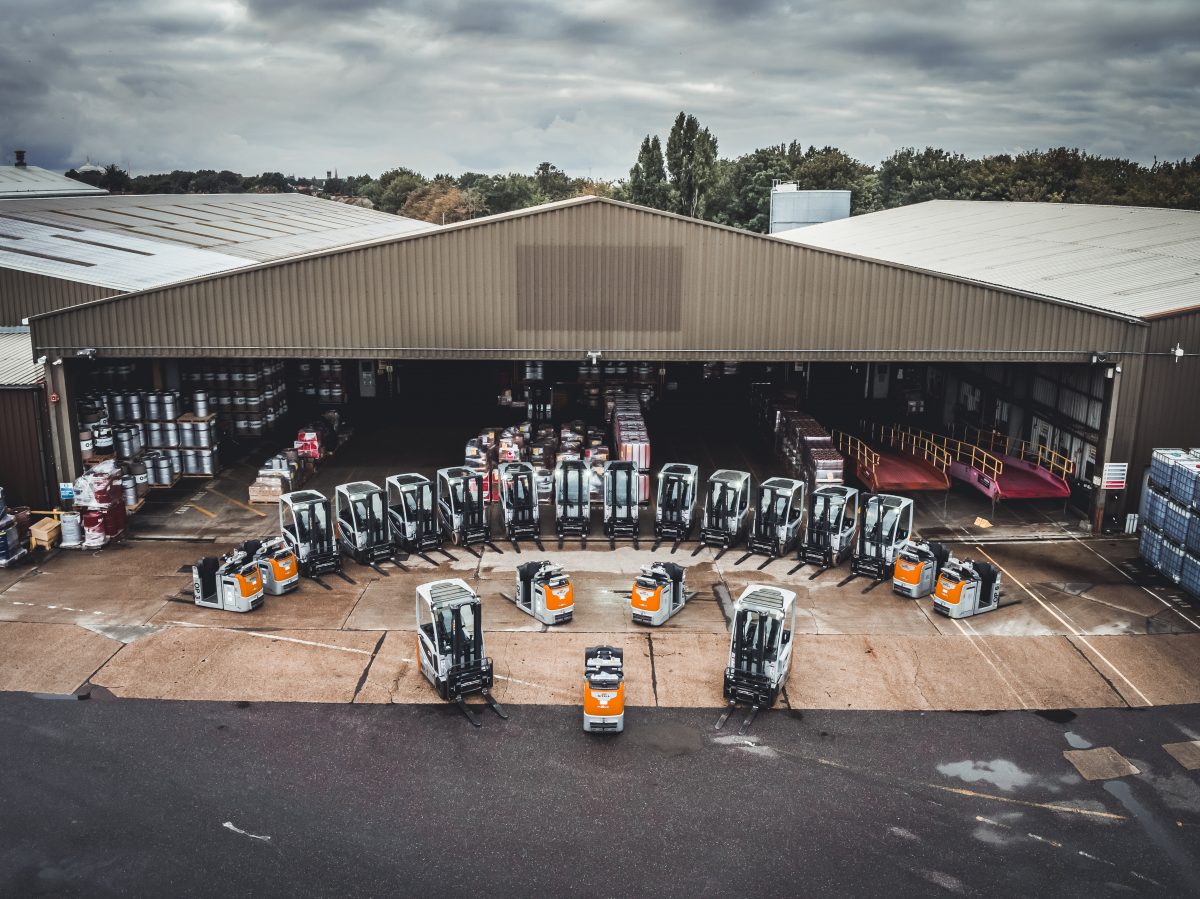
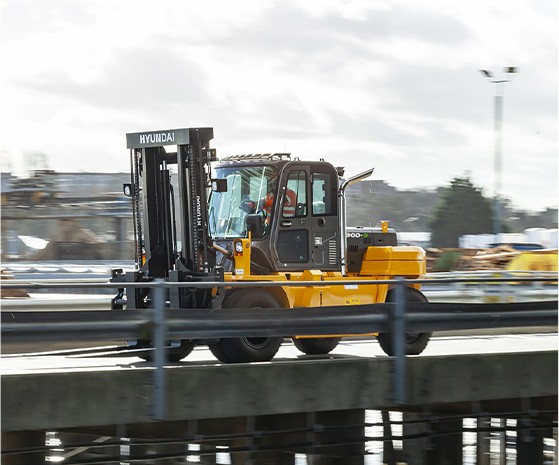
Cameras, detection and proximity warning fit every type of machine in our range, of any make and age: counterbalance forklifts, reach trucks, order pickers and VNA trucks, side loaders, articulated and rough terrain forklifts, powered pallet trucks and stackers, tow tractors and tugger trains, scissor, boom and mast lifts, and sweepers.
They work on their own or alongside forklift telematics, in which case alerts and impacts land in the same reports as the rest of the fleet data.
What it does not replace
A camera or an alarm is the last line of defence, not the first. Separating people from trucks with walkways, barriers and crossing points, set out in a traffic management plan, does more than any device on the truck, and trained operators remain the main control.
Detection systems cover the moments when those fail. Our guide to preventing pedestrian and forklift collisions covers the site side.
Talk to us
Call 01708 861 414 or contact the team. Tell us the machines, where people and trucks cross, and what has already happened or nearly happened, and we will tell you what is worth fitting.
All prices ex VAT.
Tell us the machines and where people and trucks cross. We will tell you what is worth fitting and what it costs.
Forklift cameras and pedestrian detection: common questions
Eight depots across the UK
Our own engineers, out of our own depots - wherever you are, service comes from us.
Talk to us about Forklift Cameras and Pedestrian Detection
Monday to Friday, 8:00am to 5:00pm.
Additional Services
Checkout our range of other machine services below