Racking systems
Warehouse Racking Systems
Warehouse racking designed, supplied, installed and inspected, and matched to the forklifts that work it: pallet racking, drive-in, shuttle and flow systems, cantilever and mobile racking, shelving and mezzanine floors.
- 8
- racking and storage systems
- Up to 80%
- less floor space with mobile racking
- Since 1982
- in materials handling
Eight ways to store more
Racking finder
Not sure which you need?
No single racking system suits every warehouse. What you store, how many products, how fast they move and how much space you have all change the answer. Answer a few questions and we will point you to the systems that fit.
Answer a few quick questions about what you store and how you work, and we will point you to the racking systems that fit. It takes under a minute.
Compare
Pallet storage systems side by side
A general guide. The right layout depends on your building, stock and trucks, and a mix of systems is common.
| System | Storage density | Access to every pallet | Stock rotation | Best for |
|---|---|---|---|---|
| Pallet racking | Any | Many different products | ||
| Drive-in and drive-through racking | LIFO / FIFO | Bulk stock of one product | ||
| Pallet shuttle racking | LIFO or FIFO | High volume, fast turnover | ||
| Pallet flow and push back racking | FIFO / LIFO | Fast-moving full-pallet picks | ||
| Mobile racking | Any | Cold stores, tight sites |
Storing something other than pallets? Cantilever racking for long goods, industrial shelving for small parts, and mezzanine floors for more space.
Cost
What affects the cost of racking
Every racking system is priced from a site survey, because the same number of pallet spaces can be built in very different ways. These are the things that move the cost:
- The type of racking. Adjustable pallet racking is the most common and usually the simplest. Drive-in, pallet shuttle, mobile and cantilever racking store more, or store different loads, in the same space, and are built from more components.
- The number of pallet positions. The bays, the beam levels in each bay and the depth of the system set the amount of steel.
- Load and height. Heavier pallets and taller frames need stronger uprights and beams, and very tall racking may need the floor slab checked before installation.
- Aisle width and the trucks you use. Narrow aisles get more pallets into the building but need trucks to match, such as reach trucks or very narrow aisle machines, and sometimes guidance rails.
- The floor. Racking is anchored to the slab, so its condition, levelness and strength matter.
- Safety accessories. End-of-aisle barriers, column guards, mesh decking, pallet stops and load signs are specified to suit how the racking is used.
- Installation. Access to the building, out-of-hours working and working around live operations all affect how the installation is planned.
- Existing racking. Reusing, extending or relocating racking you already own can change the cost, once it has been checked as fit to reuse.
- Inspection afterwards. Racking needs regular inspection once it is in use, which is worth planning from the start.
We survey the site, design the layout around your pallets and trucks, and install it. Book a free site visit and we will price the system that fits your building.
Racking and trucks, sized together
Racking planned around your trucks
The racking decides which trucks you need, and the trucks decide how the racking is laid out. Aisle width, top beam height, lift height and capacity at height all depend on each other. Because we supply both, we check them together, so you never end up with racking your trucks cannot reach.
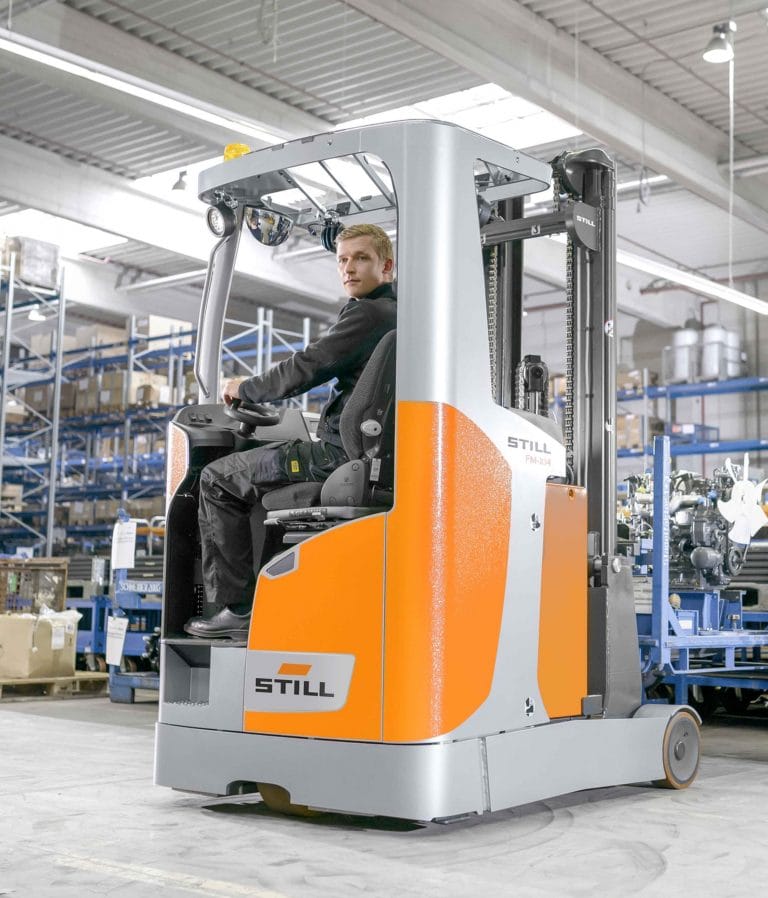 Reach trucks
High lift in narrow aisles. The workhorse of pallet racking.
View range →
Reach trucks
High lift in narrow aisles. The workhorse of pallet racking.
View range →
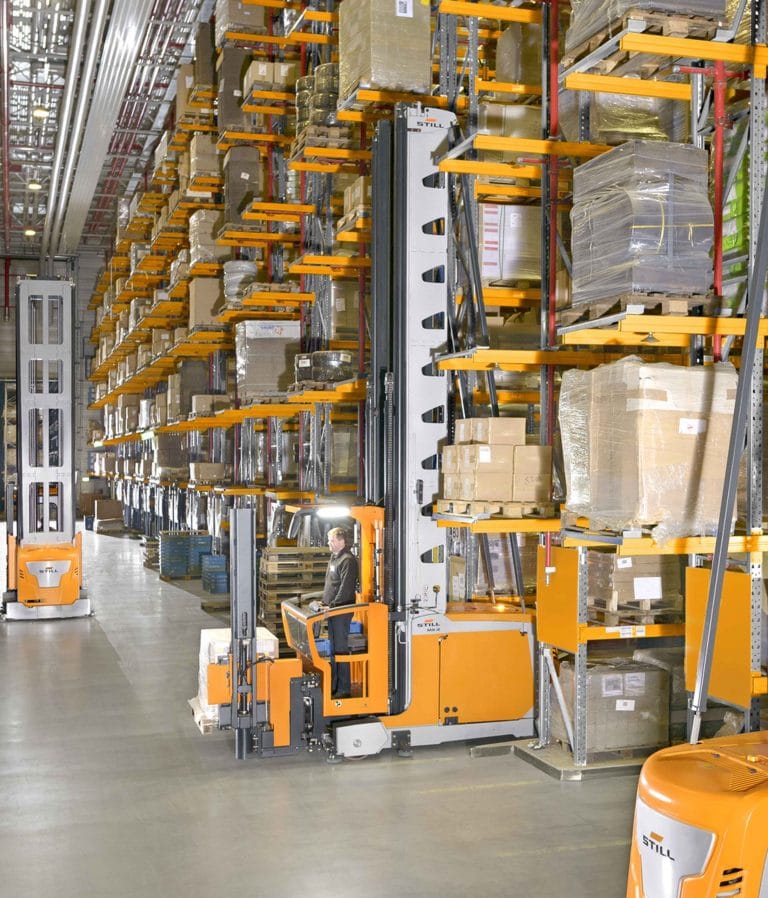 Order pickers and VNA
Very narrow aisles and picking at height.
View range →
Order pickers and VNA
Very narrow aisles and picking at height.
View range →
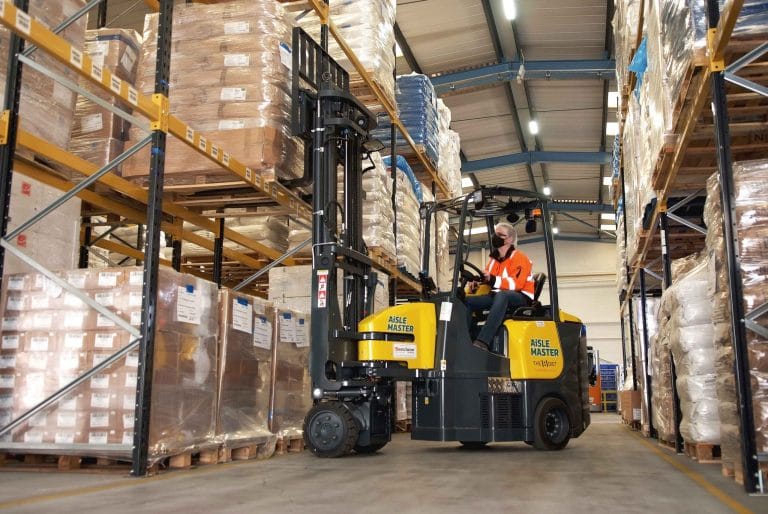 Articulated forklifts
Narrow aisle work, indoors and out.
View range →
Articulated forklifts
Narrow aisle work, indoors and out.
View range →
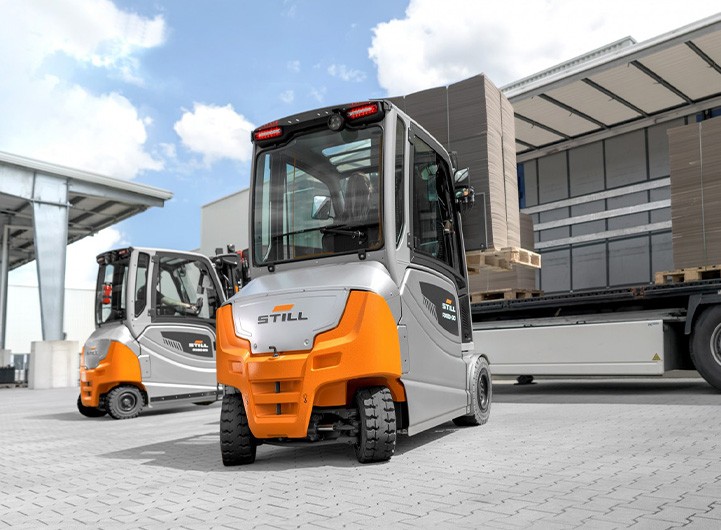 Counterbalance forklifts
Loading, yard work and wide aisle racking.
View range →
Counterbalance forklifts
Loading, yard work and wide aisle racking.
View range →
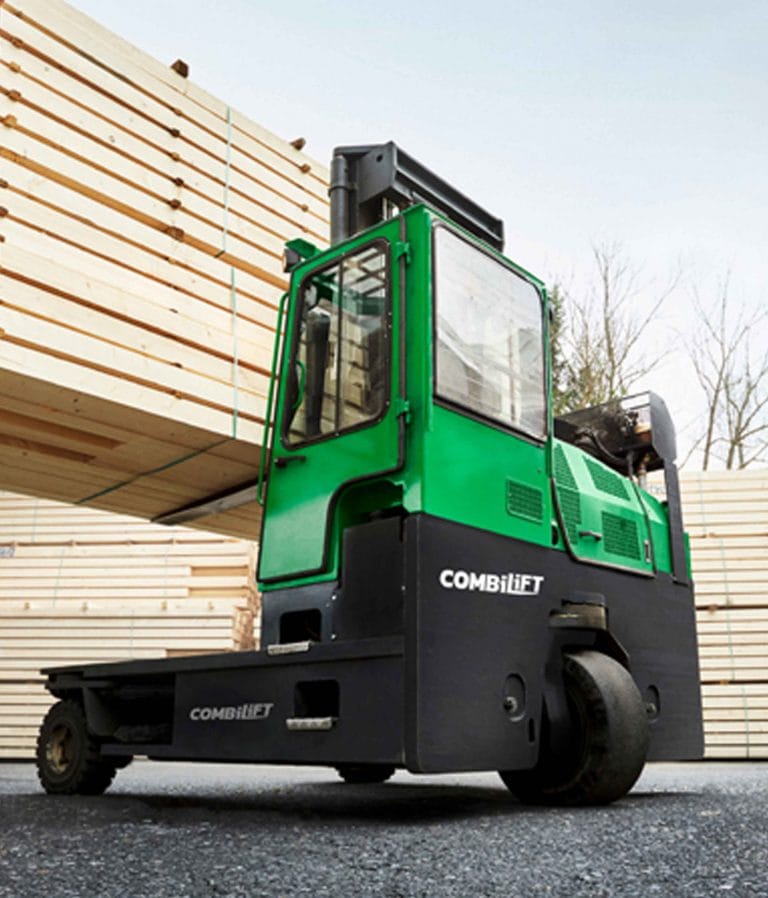 Side loaders and multi-directional
Long loads carried lengthways down narrow aisles.
View range →
Side loaders and multi-directional
Long loads carried lengthways down narrow aisles.
View range →
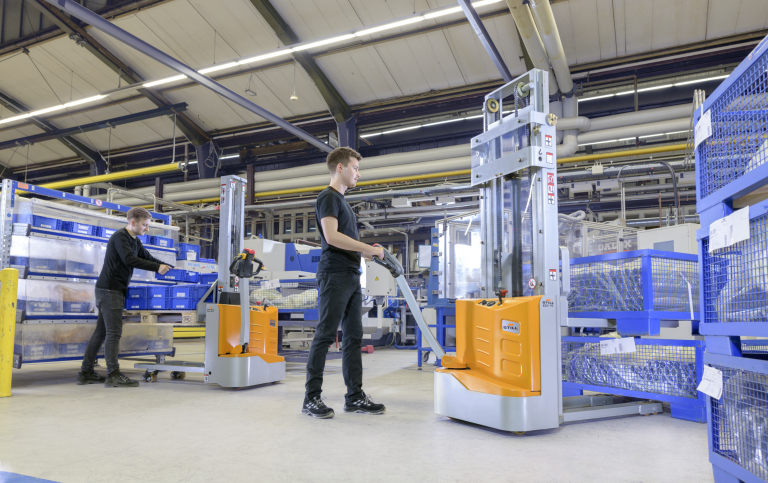 Pallet stackers
Compact lifting for mezzanines and small stores.
View range →
Pallet stackers
Compact lifting for mezzanines and small stores.
View range →
Keeping racking safe
Racking is work equipment
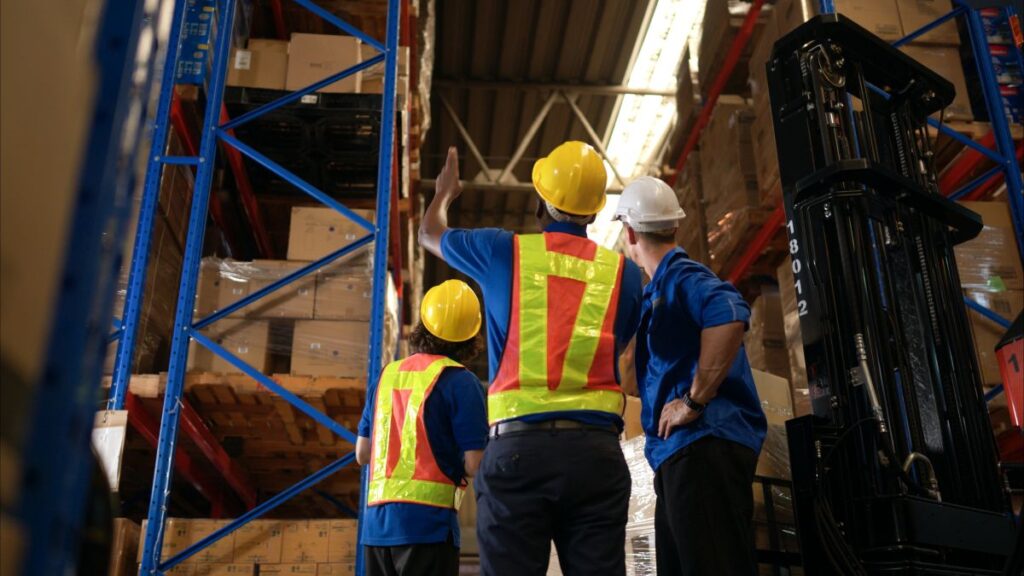
Damage from trucks is the most common cause of racking failure. EN 15635, the European standard for racking in use, recommends a documented inspection by a technically competent person at least every 12 months, with regular checks by your own staff in between and after any impact.
- Upright guards and end-of-aisle barriers
- Clear safe working load notices at every bay
- Trained operators on the right trucks
We inspect racking to EN 15635 and install it to SEMA guidance, including racking we did not supply.
Racking inspections → Racking installation → Warehouse racking for forklifts → Health, safety and compliance →
Tell us what you store, and we will tell you what fits
Every building is different, so we start with a free site survey: pallet or product sizes and weights, how many locations, how fast stock moves, the clear height and the trucks you run. We come back with a design and a price, install it, and inspect it once it is in use.
Warehouse racking: common questions
Eight depots across the UK
Our own engineers, out of our own depots - wherever you are, service comes from us.
Additional Services
Checkout our range of other machine services below