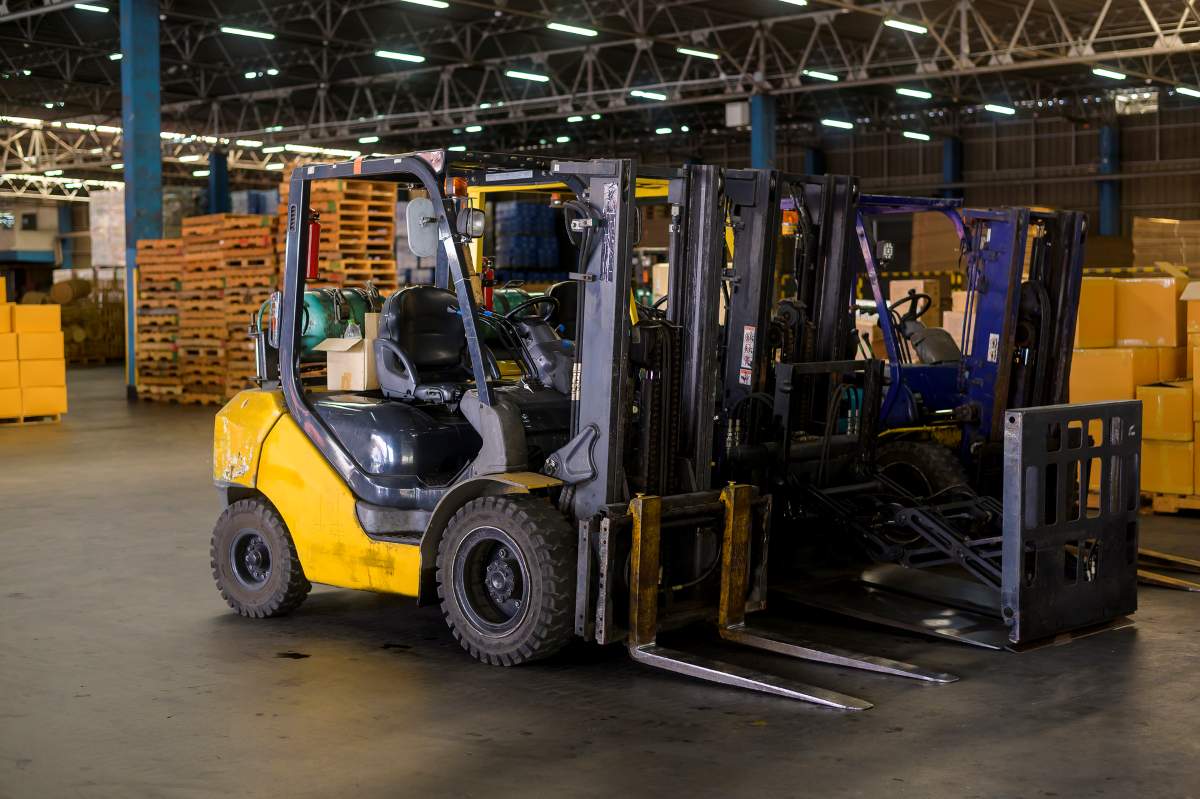
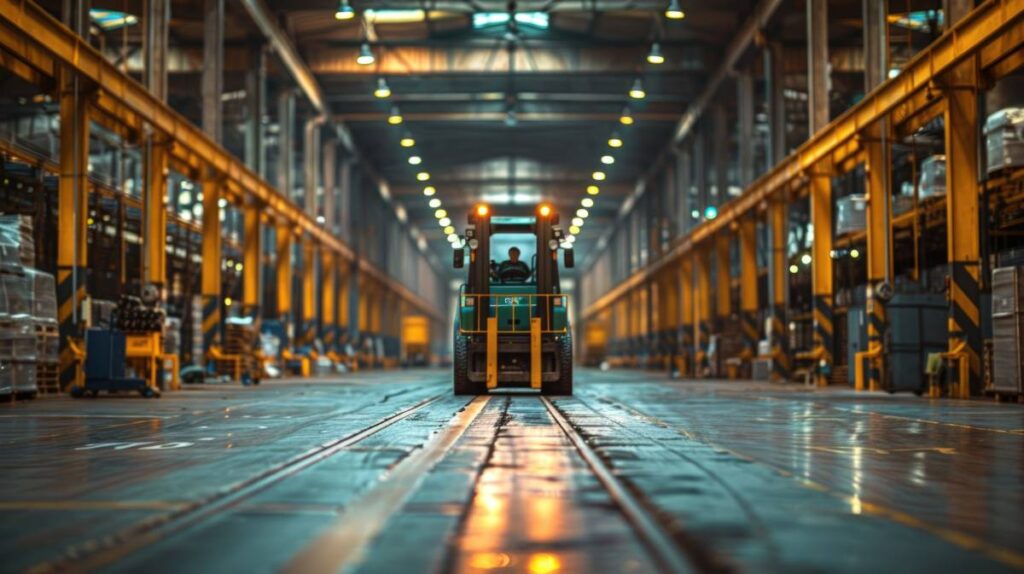
Forklift telematics puts a monitoring unit on the machine and turns how the fleet is actually used into something you can see: who operated which truck, when, for how long, how fast, and what it hit while they had it. People often call it a forklift black box or a tracker, and the comparison with the black box in a car is a fair one, except that a telematics unit does not only record. It can refuse to start for someone who is not trained, slow a truck down indoors and lock it to creep speed after a heavy impact.
Most fleets are managed on assumption. Telematics replaces the assumption with a record, and the record is usually a surprise: the truck everyone calls the busy one is idle half the shift, and the impacts nobody reported are all on the same corner of the same aisle.
We fit it to every type of machine we supply, of any make, and support it from eight depots with our own engineers. It sits alongside the servicing and fleet management we already provide.
What it records, and what it controls
Operator access control: badge, PIN or fingerprint
The truck starts only for an operator whose card, fob or PIN is registered, and only for the machine categories they are trained on. Licence expiry dates are held against each operator, so a lapsed ticket stops the truck rather than being found at an audit. It also replaces keys, which means no more shared keys left in the ignition.
The reader sits in the dashboard in place of the key: an RFID badge reader, a PIN pad or a fingerprint scanner, whichever suits the site and the people using it. Operators you have authorised are set up once, for the machine types you have authorised them on, and the list is managed in one place rather than truck by truck. Access control can be fitted on its own and built on later.
Impact detection and lockout
Shock sensors measure impacts in three axes and log the force, the time and the operator. Alerts go out when an impact passes a threshold you set, and a heavy impact can drop the truck to creep speed until a supervisor has looked at it. Damage that used to be discovered weeks later by an engineer is attributable the same shift, which changes behaviour faster than any amount of training does.
After a severe impact the truck can lock out completely, rather than only drop to creep speed, until a supervisor has reviewed the impact and reset it. You set the thresholds: which impacts are logged, which raise an alert and which take the truck out of use. The operator cannot simply restart and carry on, so damage to racking, doors and the truck itself is looked at on the shift it happens.
Pre-use checks linked to the ignition
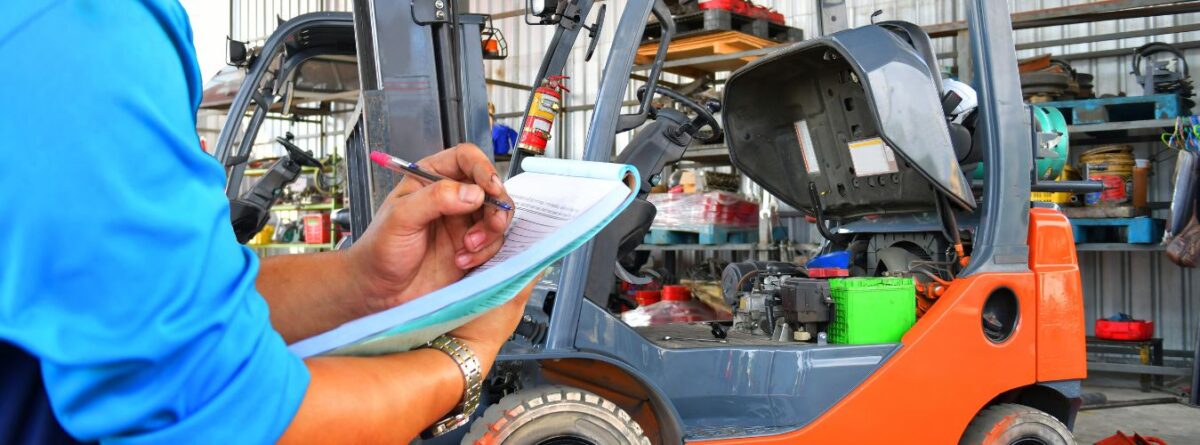
The daily check becomes a set of questions on the truck’s display that has to be completed before it will operate, with the answers logged. A failed safety-critical answer can take the machine off road until it has been looked at. A missed check is visible rather than assumed.
The checklist is wired to the ignition. The operator signs in with their badge, PIN or fingerprint, answers the questions for that machine type, and the truck stays locked until the check is passed.
Completed checks are stored by truck and operator, ready for an audit. Our forklift pre-use checklist guide covers what the questions should include.
Utilisation and hours
Key hours against travel hours against lift hours, per machine and per operator, with hour meter readings sent in automatically rather than written down. This is the figure that tells you whether a fleet of nine is really a fleet of six, and it is where telematics usually pays for itself.
GPS tracking and geofencing
For machines that work outdoors, in yards or across more than one site: live and historical location on a map, alerts if a machine leaves the area it should be in, impacts pinned to where they happened, and a much better chance of getting a stolen machine back.
Speed control and zoning
Speed can be limited automatically in the places that need it: indoors, at doorways and busy junctions, or anywhere pedestrians and trucks share a route, while the truck runs at its normal speed elsewhere.
Where a site needs one limit everywhere, the truck’s top speed can be set to your site speed limit instead: see limiting trucks to your site’s speed limit.
Servicing and battery data
Hours based service scheduling from real hours rather than estimates, messages to the operator’s display, and on electric trucks, charging and battery condition data.
Driving behaviour and operator coaching
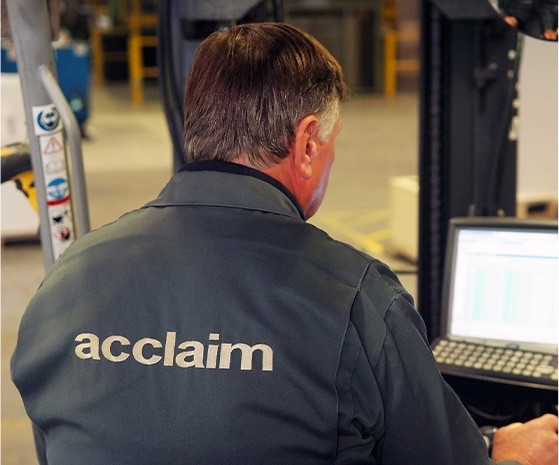
Impacts are the most visible sign of how a truck is driven, but not the only one. Telematics also records harsh braking, sharp cornering, travel speed and lift speed, by operator and by shift.
- Impacts by operator, with the time, place and force of each one.
- Harsh braking and cornering, the habits that come before an impact.
- Travel and lift speeds, set against the limits you have chosen.
- Trends over time, so you can see whether a change has worked.
The point is coaching, not catching people out. A short conversation with the record in front of both of you changes driving faster than a general reminder, and it shows who drives well as clearly as who does not. Where the data points to a skills gap, we offer refresher training at our centres and on your site.
Tell us how many machines, which makes, and what you are trying to find out. We will tell you what is worth fitting and what it costs.
Pedestrian detection and safety
Most collisions between a truck and a person happen where the operator cannot see: reversing out of an aisle, turning at a blind corner, travelling behind a load that blocks the view, or passing the end of a racking run as someone steps out. Pedestrian detection covers those moments.
It warns the operator, and the person on foot, before the two meet, and it can slow the truck down near people. It works on its own or through the same telematics unit, so alerts land in the same reports as impacts and operator access.
AI pedestrian detection
Camera-based detection that recognises the shape of a person, rather than reacting to anything that moves. Racking, pallets and other trucks are ignored, so the system alerts only when a person enters a danger zone, which is what stops operators learning to ignore it.
A light and buzzer in the cab warn the operator and an audible alarm warns the pedestrian. Wide angle cameras can be combined for a full 360 degree view, detection zones are set to suit the machine and the site, and event footage is recorded on board for review after a near miss.
Proximity warning tags
Pedestrians wear a small tag and the truck carries a unit that measures the distance between them by radio. The warning zone grows in the direction the truck is travelling and with its speed, so it allows for braking distance rather than using a fixed circle, and it works through racking and round corners where a camera has no line of sight. The same system can slow the truck near people and at gates and doorways, and needs nothing installing in the building.
Reversing and blind spot cameras
A camera wherever the operator’s view is blocked, usually at the back of the truck, with a monitor in the cab. It is the simplest improvement to visibility, and on machines that spend much of the shift reversing it is often the one that matters most.
Detection cameras or tags?
They solve different parts of the problem, and plenty of sites use both.
| AI detection cameras | Proximity tags | |
|---|---|---|
| Pedestrians need to wear anything | No | Yes, a tag |
| Covers visitors and contractors | Yes | Only if they are given a tag |
| Works round corners and through racking | No, it needs line of sight | Yes |
| Records footage | Yes, of events | No, it logs the alert |
| Can slow the truck | Warns | Warns and can reduce speed |
None of this replaces keeping people and trucks apart. Walkways, barriers and crossing points, set out in a traffic management plan, do more than any device on the truck, and trained operators remain the main control.
Detection covers the moments when those fail. Our guide to preventing pedestrian and forklift collisions covers the site side.
Where robots work alongside manned trucks, see fleet control for robots and manned trucks.
Every machine we supply
Telematics is not only for counterbalance forklifts. The same unit, access control, pedestrian detection and reporting fit every type of machine in our range, so the whole site is on one system rather than just the trucks that happened to come with it:
- Counterbalance forklifts: electric, diesel and LPG
- Reach trucks and order pickers and VNA trucks
- Side loaders and multi-directional trucks and articulated forklifts
- Rough terrain forklifts, where GPS tracking earns its keep
- Powered pallet trucks and pallet stackers
- Tow tractors, tugger trains and platform trucks
- Scissor lifts, boom lifts and mast lifts
- Sweepers and scrubber driers
Machines working in hazardous areas can have it too, provided the unit is suitable for the zone. That is specified as part of the explosion protection, not added afterwards.
An independent system, or the manufacturer’s own
There are two routes, and we use both.
An independent system is fitted to any make and any age of machine, which is what a mixed fleet needs. A yard running three makes of truck, a couple of MEWPs and a scrubber drier can be brought onto one set of reports, which matters because a mixed fleet is exactly the situation where nobody has a clear picture.
STILL’s own telematics, the STILL Smart Portal, is the natural choice on a fleet that is mainly STILL. It covers access control, shock detection, digital pre-shift checks, utilisation and cost reporting, maintenance reminders and battery and charging management, and can take in other makes as well.
Which suits depends on the fleet in front of us, not on which one we would rather sell. Tell us what you run and we will say.
What it is actually for
Three things, in the order most customers find value.
Right sizing the fleet. Utilisation data almost always shows some machines are barely used. Handing one back at the end of a hire contract is a direct saving that repeats every month.
Reducing damage. Attributed impacts reduce impacts. Racking damage, door damage and machine damage are all cheaper to prevent than to repair.
Evidence. Access control, completed pre-use checks and training records held together are what an insurer or an HSE inspector asks for after an incident.
How it fits with fleet management
Telematics is the data. Fleet management is what gets done with it: service scheduling, thorough examination dates, contract ends, repair history and cost per machine in one place.
→ Fleet management · Thorough examinations · Forklift servicing
Talk to us
Call 01708 861 414 or contact the team. Tell us how many machines, which makes and what you are trying to find out, and we will tell you what is worth fitting.
All prices ex VAT.
Tell us how many machines, which makes, and what you are trying to find out. We will tell you what is worth fitting and what it costs.
Forklift telematics: common questions
Eight depots across the UK
Our own engineers, out of our own depots - wherever you are, service comes from us.
Talk to us about Forklift Telematics
Monday to Friday, 8:00am to 5:00pm.
Additional Services
Checkout our range of other machine services below