Racking systems
Cantilever racking
For pipe, tube, bar, timber, board and sheet. Arms reach out from a single line of columns with no front posts in the way, so loads of any length go in, come out and stay in view.
- Any length
- no front posts in the way
- 100 mm
- arm adjustment pitch
- In or out
- clad and roofed for yards
How it works
How cantilever racking works
- Columns with a base foot are anchored in a line, single sided against a wall or double sided in the open.
- Arms bolt to the columns at the heights you need, on a 100 mm pitch.
- Bracing ties the columns together, usually every fifth or sixth bay for normal loads.
- Loads rest across the arms, and side loaders or forklifts reach them from the aisle.
- Access
- Every load, from the front
- Loads
- Light to very heavy
- Layout
- Single or double sided
- Where
- Indoors or outdoors
Is it right for you?
A good fit, and when to look elsewhere
A good fit for
- Pipe, tube, bar and extrusions
- Timber, board and sheet materials
- Outdoor stockyards (with cladding and a roof)
- Mixed lengths in one run
Consider something else if
- Space is too tight for fixed runs Mobile racking →
- Most of what you store is on pallets Pallet racking →
Components and options
What goes into it
Columns and base feet
Single or double sided, anchored to the floor, sized for the load.
Arms
Bolted to the columns. Larger sections for heavier loads.
Bracing
Adjustable turnbuckle bracing; at least one braced bay per run.
Roll-off stops
Keep pipe and bar on the arms, in several heights.
Bridging arms and decking
Turn a level into pallet or mixed storage with chipboard, grating or mesh.
Cladding and roof
Keep the weather off for outdoor use.
Buying guide
Specifying cantilever racking
- Arm length is set by the depth of the load. Loads should sit on at least two arms, and long loads on three or more so they do not sag.
- Upright spacing is set by the length of the stock, so a run for 6 m bar is laid out differently from one for 2.4 m sheet.
- Single or double sided. Double sided runs make best use of the floor; single sided runs go against a wall.
- Indoors or out. Galvanised finish, cladding and a roof for stockyards.
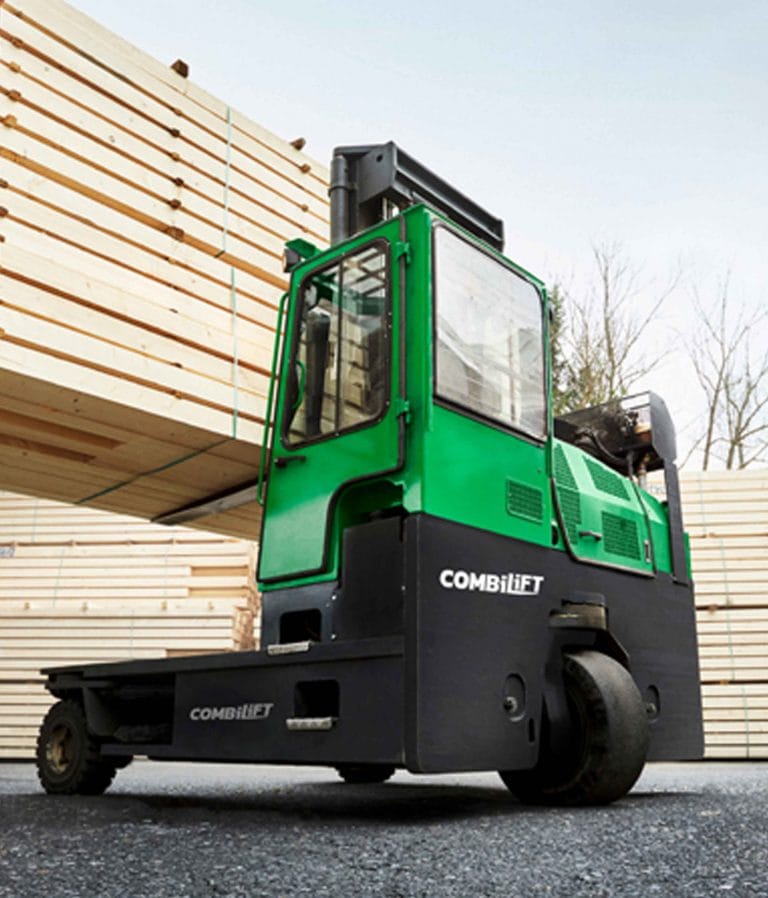
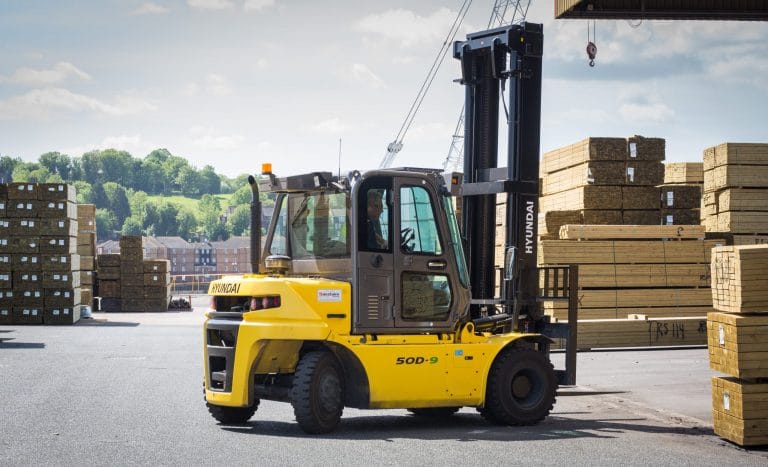
- Trucks. Side loaders and multi-directional trucks carry long loads lengthways down narrow aisles; counterbalance trucks need much wider aisles for the same job.
Buying guide
What affects the price
- The load per arm and per upright, which sets the steel sections.
- Arm length, the number of arms and the height of the run.
- Single or double sided.
- Outdoor specification: galvanising, cladding and roofing.
- Accessories such as decking for sheet materials and end stops for round stock.
Buying guide
Rules, inspection and safety
Racking is work equipment under PUWER 1998. The UK industry guidance comes from SEMA, the Storage Equipment Manufacturers' Association, and EN 15635, the standard for racking in use, which calls for a documented inspection by a technically competent person at least every 12 months. Between inspections, a named person on site checks the racking regularly and after any impact, using a red, amber and green damage scale: red means offload and isolate now, amber means repair within four weeks.
We carry out racking inspections to EN 15635, with a written report and a schedule of any damage, and we install racking to SEMA guidance: see racking installation.
Load notices matter even more on cantilever racking, because the safe load depends on where on the arm the load sits: a load at the tip of the arm is harder on it than the same load close to the upright.
Racking and trucks, sized together
The trucks that work it
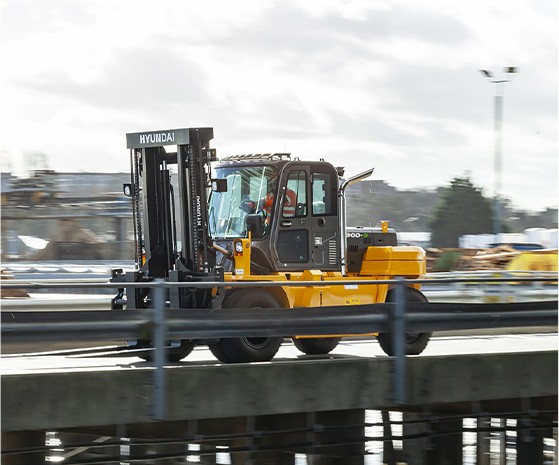
Racking and trucks decide each other: aisle width, top beam height and capacity at height all have to match. We supply both, so we check them together.
Tell us what you store, and we will tell you what fits
Every building is different, so we start with a free site survey: pallet or product sizes and weights, how many locations, how fast stock moves, the clear height and the trucks you run. We come back with a design and a price, install it, and inspect it once it is in use.
Cantilever racking: common questions
Eight depots across the UK
Our own engineers, out of our own depots - wherever you are, service comes from us.

Additional Services
Checkout our range of other machine services below