Racking systems
Industrial shelving
For everything picked by hand: boxes, cartons, spares and small parts. Quick to put up, easy to extend, and able to build upwards into multi-tier systems with walkways and stairs.
- 25 mm
- shelf height adjustment
- Up to 350 kg
- per steel shelf
- ~8 m
- multi-tier height
How it works
How industrial shelving works
- Frames are linked by shelf supports that set the depth of each bay.
- Shelves hang at any height, on frames punched every 25 mm.
- Panels, mesh, bins and dividers turn each bay into organised locations.
- Need more space? Build a second or third tier with walkways and stairs.
- Access
- Hand picking at every level
- Shelf ratings
- 150, 250 or 350 kg (steel)
- Unit capacity
- Up to 3,500 kg per unit
- Grows
- Sideways or upwards
Is it right for you?
A good fit, and when to look elsewhere
A good fit for
- Boxes, cartons, spares and small parts
- Stores, parts departments and e-commerce picking
- Tyres, wheels and awkward items (with special fittings)
- Hazardous liquids (with safe-storage builds)
Consider something else if
- Your stock is mostly palletised Pallet racking →
- You need open floor space upstairs, or heavier loads Mezzanine floors →
Components and options
What goes into it
Frames and supports
Punched every 25 mm for fine shelf adjustment.
Shelves
Steel at 150, 250 or 350 kg; timber boards at 250 or 350 kg; mesh too.
Back and side panels
Solid or mesh, to stop items falling and to divide areas.
Bins, baskets and dividers
Organise small parts into clear locations.
Special builds
Inclined or clear shelves, tyre and wheel racks, hazardous storage.
Multi-tier
Walkways, handrails and stairs up to around 8 m.
Buying guide
Specifying industrial shelving
- Shelf loads. Steel shelves are commonly rated at 150, 250 or 350 kg per shelf; longspan shelving takes heavier and bulkier items on wider spans.
- Bay sizes. Width and depth are set by the items stored and how they are picked: shallow bays for small parts, deeper bays for cartons.
- Height. Hand picking from the floor is comfortable to around 2 m; above that you need steps, or a multi-tier system with walkways.
- Multi-tier. Shelving can carry walkways and stairs to build two or more picking levels, to around 8 m high.
- Accessories. Dividers, bins, cladding, doors, tyre and wheel racks, and bunded storage for hazardous liquids.
Buying guide
What affects the price
- The number of bays and shelves, and the shelf rating.
- Longspan or standard shelving.
- Multi-tier walkways, stairs and handrails, which are a significant addition.
- Accessories and cladding.
Buying guide
Rules and safety
Shelving is covered by the same work equipment rules as racking. Show the safe load on every bay, keep the heaviest items low, and check shelving regularly for damage. Multi-tier systems are structures that people walk on, so they need handrails, gates and stairs to the relevant standards, and usually Building Regulations approval.
Racking and trucks, sized together
The trucks that work it
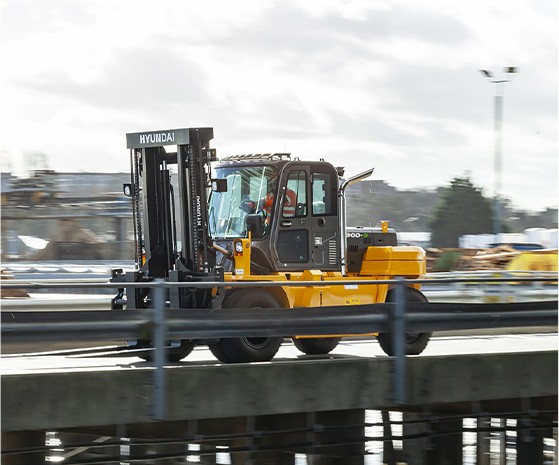
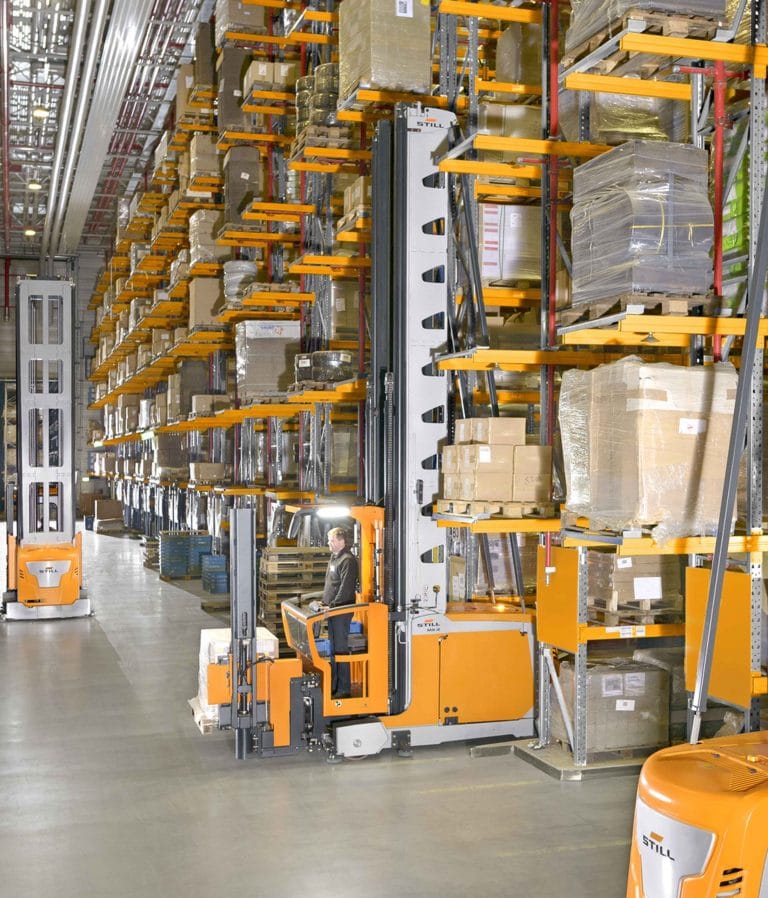
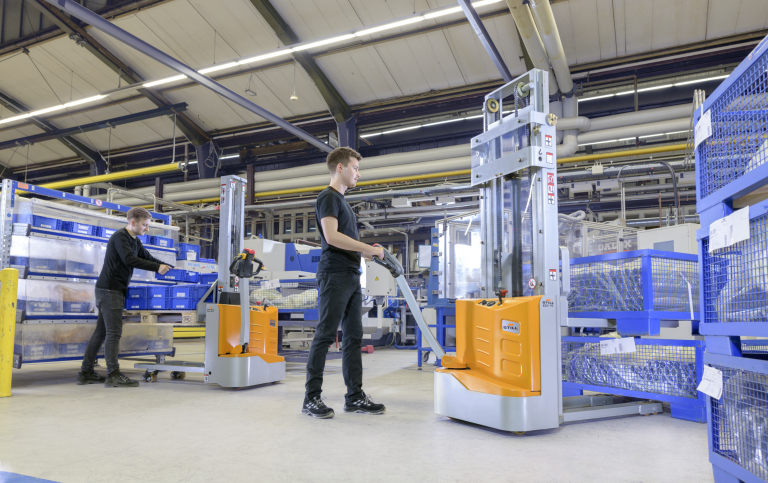
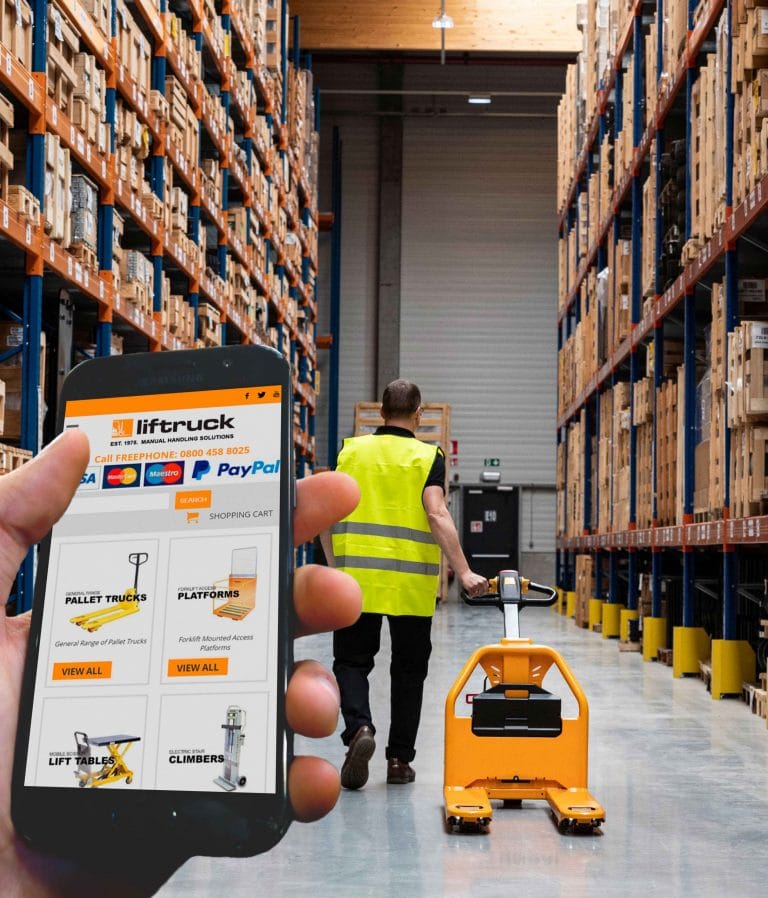
Racking and trucks decide each other: aisle width, top beam height and capacity at height all have to match. We supply both, so we check them together.
Tell us what you store, and we will tell you what fits
Every building is different, so we start with a free site survey: pallet or product sizes and weights, how many locations, how fast stock moves, the clear height and the trucks you run. We come back with a design and a price, install it, and inspect it once it is in use.
Industrial shelving: common questions
Eight depots across the UK
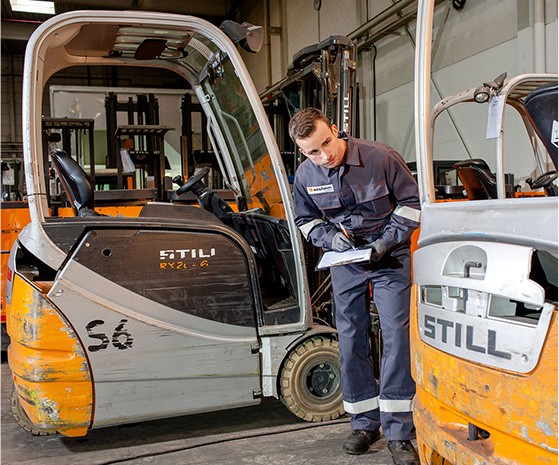
Our own engineers, out of our own depots - wherever you are, service comes from us.



Additional Services
Checkout our range of other machine services below