Autonomous mobile robots, or AMRs, are compact driverless vehicles that plan their own route through a building, drive round obstacles rather than stopping at them, and carry trolleys, carriers and smaller loads between points on demand. They are the part of warehouse robotics that fits into an existing building with very little change.
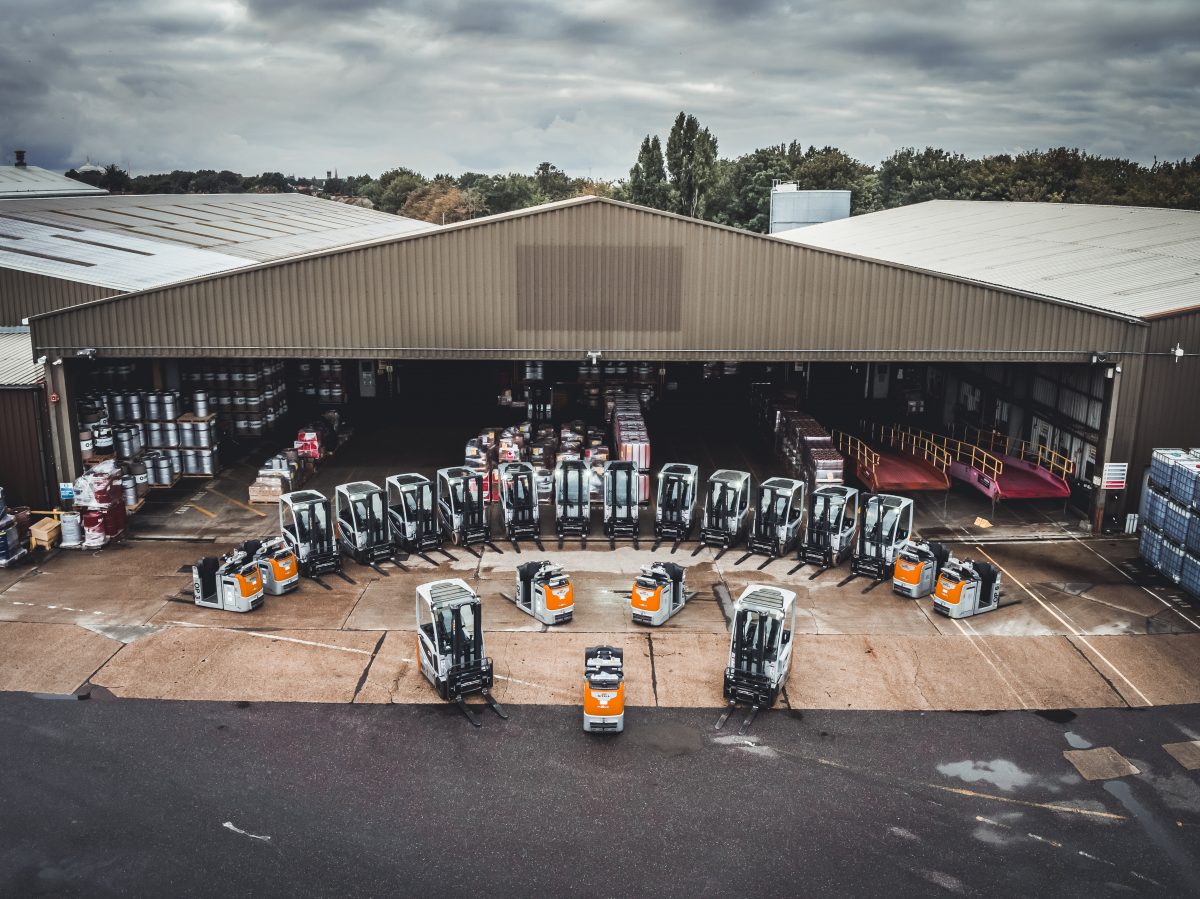
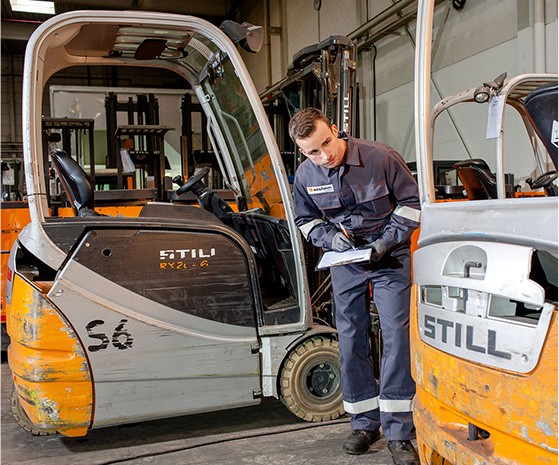
We supply and hire AMRs from STILL’s iGo range alongside the automated forklifts, pallet trucks and manual fleet they work with, and service them with our own engineers.
AGV or AMR?
The names are used loosely, and the difference matters when you are choosing.
| AGV (automated truck) | AMR (mobile robot) | |
|---|---|---|
| Route | Follows defined routes | Plans its own route from a map |
| Obstacles | Slows and stops until the path is clear | Drives round them where it can |
| Loads | Pallets, including stacking at height | Trolleys, carriers and pallets at low level |
| Layout changes | Routes are re-commissioned | The map is updated |
| Typical use | Pallet flows, storage in racking, lorry loading | Production supply, small loads, changing layouts |
For pallet work at height, see automated forklifts and AGVs.
The range
ACH iGo
A compact underride robot that rotates on the spot, for high throughput in small spaces. It navigates precisely by QR codes on the floor, handles platforms, tables and pallets at 1 t or 1.5 t over short to medium distances, and works in aisles from around 1.4 m.
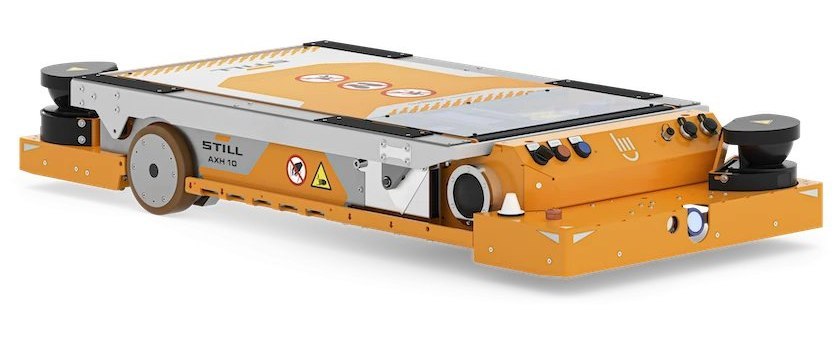
AXH iGo
A robust underride robot for longer distances and mixed traffic. It navigates by mapping the building, drives round obstacles, positions loads using a camera, carries up to 1 t and suits areas that change.
Tell us what moves, how far, how often and on what. We will tell you whether an AMR, an AGV or neither is the right answer.
Where AMRs fit
- Production supply. Trolleys and carriers between stores, cells and lines, called up when needed rather than on a fixed loop.
- Goods in to storage. Moving loads from receiving to the put-away point for a reach truck or AGV to take on.
- Returns and empties. The low value, high repetition moves that tie up people and trucks.
- Buildings that change. Where the layout moves too often for fixed routes to make sense.
Robots that bring shelves or totes to a picker, sometimes called goods-to-person systems, are a different category of warehouse robot, built into purpose-designed storage. If that is the direction you are heading, we deliver those projects together with STILL’s automation specialists.
What the site needs
- A reasonably flat floor and clear aisles for the robot’s route.
- Wi-Fi coverage and, for QR navigation, codes fixed to the floor.
- Load carriers the robot can drive under, such as trolleys, tables or racks on legs.
- Traffic rules for people, manual trucks and robots together.
Talk to us
Call 01708 861 414 or contact the team. Tell us what moves, how far, how often and on what, and we will tell you whether an AMR, an AGV or neither is the right answer. See warehouse automation for the bigger picture.
Tell us what moves, how far, how often and on what. We will tell you whether an AMR, an AGV or neither is the right answer.
Autonomous mobile robots: common questions
Eight depots across the UK
Our own engineers, out of our own depots - wherever you are, service comes from us.

Talk to us about Autonomous Mobile Robots (AMRs)
Monday to Friday, 8:00am to 5:00pm.
Additional Services
Checkout our range of other machine services below