This is the most expensive misunderstanding in materials handling: believing that because a machine has been serviced, it is legally covered. It is not.
A service and a thorough examination are different jobs, done for different reasons, and you need both. If what you actually want is the difference between LOLER and a thorough examination, that is a different question and it is answered on LOLER vs thorough examination.
To book a thorough examination, see our LOLER inspection service.
The one-line answer
A thorough examination establishes that the machine is safe. A service keeps it working.
An examination inspects and reports. A service adjusts, replaces and repairs. One is a legal duty, the other is how you stop the first one finding faults.
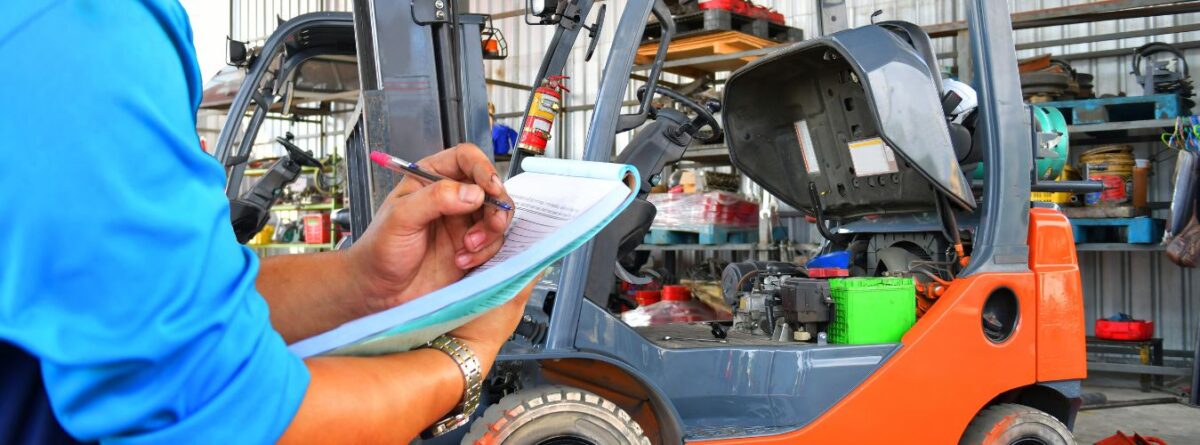
The examination is a statutory inspection required by LOLER, carried out by a competent person, producing a report you must keep. It deliberately does not fix anything. The engineer inspects, records what they find, and tells you what has to be put right and by when.
The service is planned maintenance. Oils, filters, adjustments, wear items. It has no statutory interval, produces no legal document, and is set by hours run and the manufacturer’s schedule.
Side by side
| Thorough examination | Service | |
|---|---|---|
| What it is | A statutory safety inspection | Preventive maintenance |
| Legally required | Yes, under LOLER regulation 9 | No, though PUWER requires equipment to be maintained |
| Purpose | Confirm the machine is safe to keep using | Keep the machine running and slow its wear |
| Who carries it out | A competent person, to a defined scheme | A service engineer |
| Frequency | At least 12 months, or 6 where it lifts people | By hours run, typically every 250 to 500 hours |
| Does it fix anything? | No. It inspects and reports | Yes. That is the point of it |
| You end up with | A report of thorough examination | A service record |
| If you skip it | You are in breach, and the machine may be prohibited | The machine deteriorates and fails its examination |
The misconception, and why it is expensive
The belief is: “we have a maintenance contract, so we are covered.” You are not, and the confusion is entirely understandable, because on many sites the same engineer arrives in the same van on the same day and does both.
A service record is not evidence of a thorough examination. It will not satisfy an inspector, and it will not help you after an incident.
It runs the other way too, and this one is less well known: an examination is not maintenance. A machine can pass its thorough examination and still be overdue a service, because the examiner is not there to change the oil. Passing is not a clean bill of mechanical health.
The quickest way to check where you stand is to look at what you were handed. A service record lists work done.
A report of thorough examination identifies the machine, records what was examined, states any defect and the time by which it must be put right, and says when the next examination is due. If you cannot produce the second document, you have a gap, whatever the first one says.
Our am I compliant self-check works through the rest.
Not sure what your machines are currently getting? A free site visit will tell you which are due what.
What a thorough examination includes
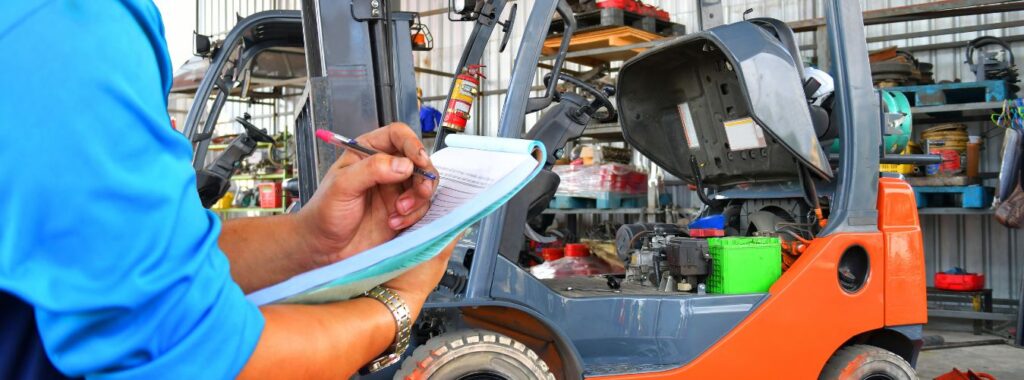
The lifting side, and on a full CFTS examination the vehicle side too:
- Forks for wear, cracks and heel thickness; the carriage and fork locking.
- Lift chains for stretch, seizure and corrosion.
- Mast channels, rollers and stops.
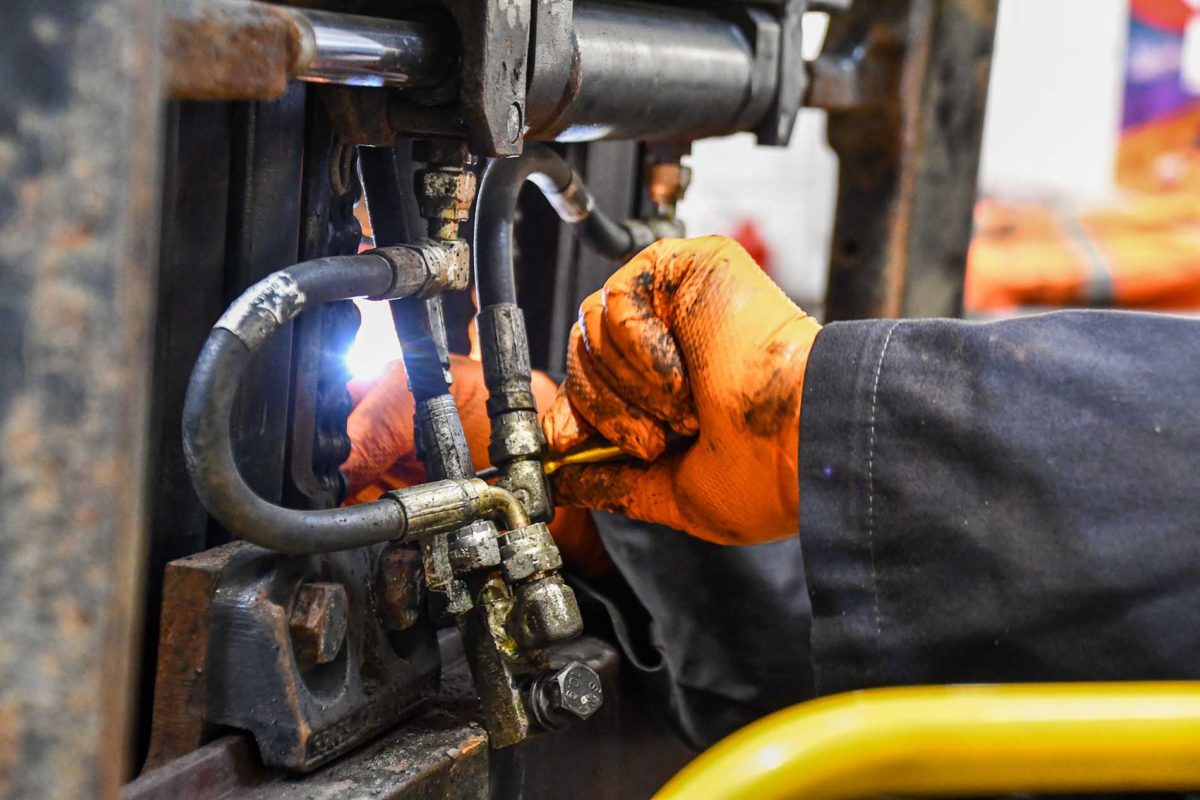
- Hydraulic rams, hoses and pipework for leaks and damage.
- Overhead guard, load backrest and the safe working load plate.
- On the full scope: brakes, steering, tyres, lights, seat and seat belt.
What it does not include: lubrication, fluid or filter changes, adjustments, or any repair. Full detail, and prices, on our LOLER inspection page.
What a service includes
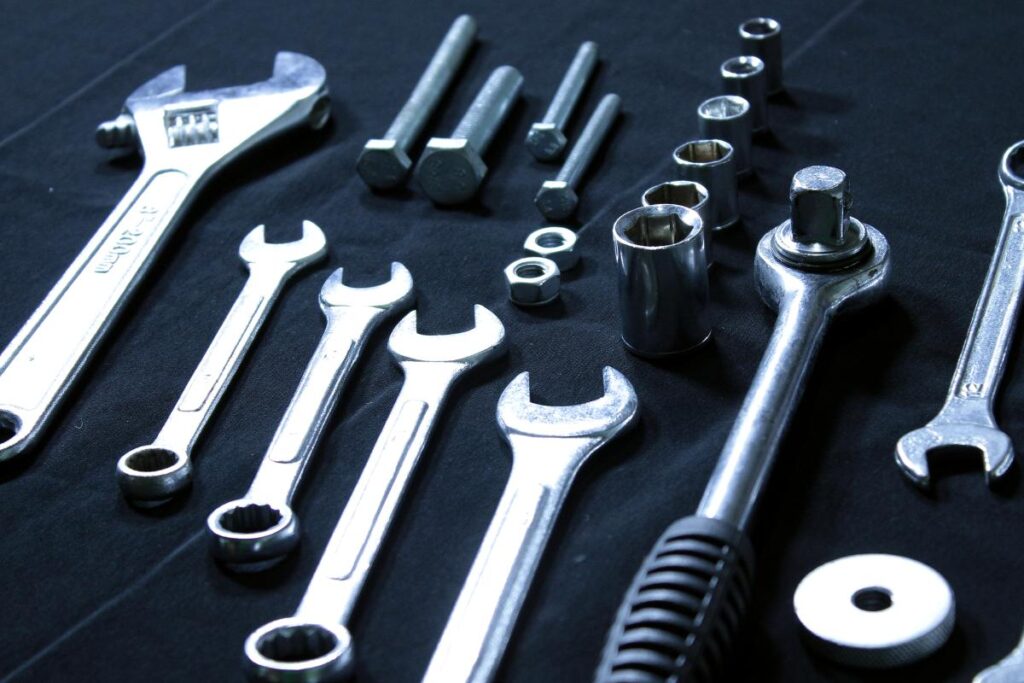
- Engine oil, oil filter, air and fuel filters on diesel and LPG machines; motor and controller checks on electric.
- Hydraulic oil level and condition.
- Mast and chain lubrication and adjustment.
- Brake and steering adjustment, tyre condition.
- Battery condition and charging on electric machines: see forklift batteries.
- Diagnostics and fault codes, and a written report of anything needing attention.
The money case for it is covered on why service my equipment. The service itself is on forklift servicing.
How the two intervals fit together
They run on different clocks, which is the practical reason they get muddled.
- The examination runs on the calendar. 12 months, or 6 if the machine lifts people or is a lifting accessory. It does not matter whether the truck did 200 hours or 2,000.
- The service runs on the hours. A truck running 2,000 hours a year needs several services in the time a lightly used one needs a single service.
Where the two fall close together, we combine them into one visit: one lot of downtime, one engineer, and any defect the examination finds can often be fixed on the spot from stock rather than booked for a return. Across a mixed fleet the dates are worth tracking centrally rather than chasing per machine, which is what fleet management reporting does.
How we provide both
- CFTS accredited thorough examinations, covering LOLER and PUWER in one visit and one report, on any machine, whoever supplied it. From £135 ex VAT for warehouse equipment.
- Planned servicing by our own engineers from eight depots, at intervals set by hours run rather than a generic calendar.
- Parts on the van. Over £1 million of forklift parts in UK stock, so a defect found on an examination can usually be fixed rather than parked.
- Repairs where something bigger turns up: forklift repairs, or urgent and critical repairs if the machine has already stopped.
- Operator training, because the daily pre-use check is what catches problems between the two.
If you are not sure what your machines are currently getting, that is a normal place to start. A free site visit will tell you which are due what and when.
Not sure what your machines are currently getting? A free site visit will tell you which are due what.
Examination or service: common questions
Eight depots across the UK
Our own engineers, out of our own depots - wherever you are, service comes from us.
Talk to us about Thorough Examination vs Service: What Is the Difference?
Monday to Friday, 8:00am to 5:00pm.
Additional Services
Checkout our range of other machine services below