Supplied new and fitted
Forklift Attachments, Supplied and Fitted
We supply new attachments for forklifts and warehouse trucks, fit any hydraulics they need, recalculate the truck's capacity and fit a new rating plate. Tell us the load and the truck, and we match one to the other.
- Since 1982
- trading, under the same name
- 8 depots
- our own engineers and transport
- Free
- site visit and quotation
Positioning the load
Side shifts, fork positioners and rotators
Place the load without shunting the truck back and forth.
Side shifts
A side shift moves the whole fork carriage left or right, so the operator can line the forks up with a pallet without repositioning the truck. It saves time at loading bays, in racking and in narrow aisles, and cuts knocks to pallets and racking.
Fork positioners
A fork positioner moves the forks closer together or further apart from the seat. It suits sites handling mixed pallet sizes, stillages and crates, because nobody has to get off the truck to slide heavy forks by hand. Many positioners side shift as well.
Rotators
A rotator turns the forks, or a clamp, so the truck can tip bins and containers or turn a load over. Rotators are common in food processing and manufacturing.
Loads without pallets
Clamps, push-pulls and multi-pallet handlers
Clamps
A clamp grips the load between two arms or pads, so it needs no pallet. Each type is built for one kind of load.
- Carton clamps: boxed and packaged goods
- Bale clamps: baled waste and recycling
- Paper roll clamps: rolls held in curved arms
- Drum clamps: drums and barrels
Push-pulls
A push-pull grips the lip of a slip sheet, pulls the load onto flat platens and pushes it off again at the other end. The load travels on a thin sheet instead of a pallet, which frees space in containers and trailers.
Multi-pallet handlers
A multi-pallet handler lifts two pallets side by side, then closes its forks up to take a single pallet. It suits busy loading and unloading, where every trip of the truck moves twice the load.
Long loads, lifting and site work
Fork extensions, jibs, tipping skips and security cages
Fork extensions
Fork extensions are steel sleeves that slide over the forks to support longer loads: timber, pipe, sheet material and oversized pallets. We match them to the length and section of your forks, and re-rate the truck, because they change its capacity.
Jibs
A fork-mounted jib turns the truck into a small crane, lifting slung loads from a hook under its arm. Fixed, extending and height-adjustable jibs handle loads that cannot go on a pallet.
Tipping skips
A tipping skip is lifted by its fork pockets and tips forward to empty when its catch is released. Placed in production or storage areas, skips keep floors clear and take scrap and waste away quickly.
Security cages
A fork-mounted security cage stores and moves goods that need locking away. It is welded, has fork pockets for the truck and takes a padlock. Security cages carry goods only, never people.
Need other lifting gear, such as machinery skates or hydraulic jacks? Ask us what you need to move.
Fitting and hydraulics
Fitted to the truck, with the hydraulics to run it
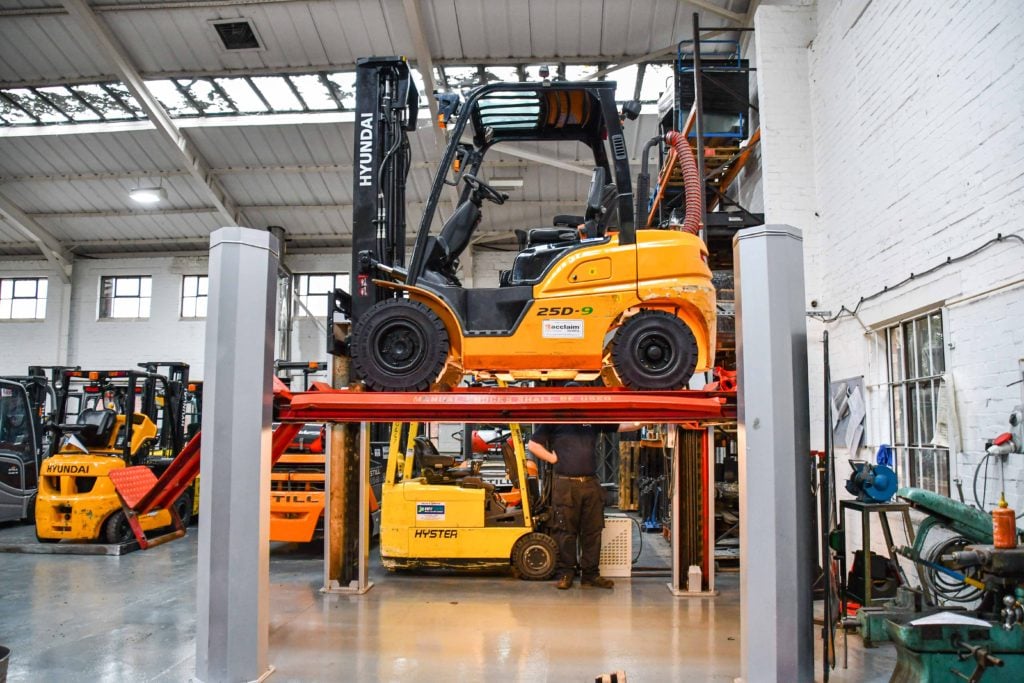
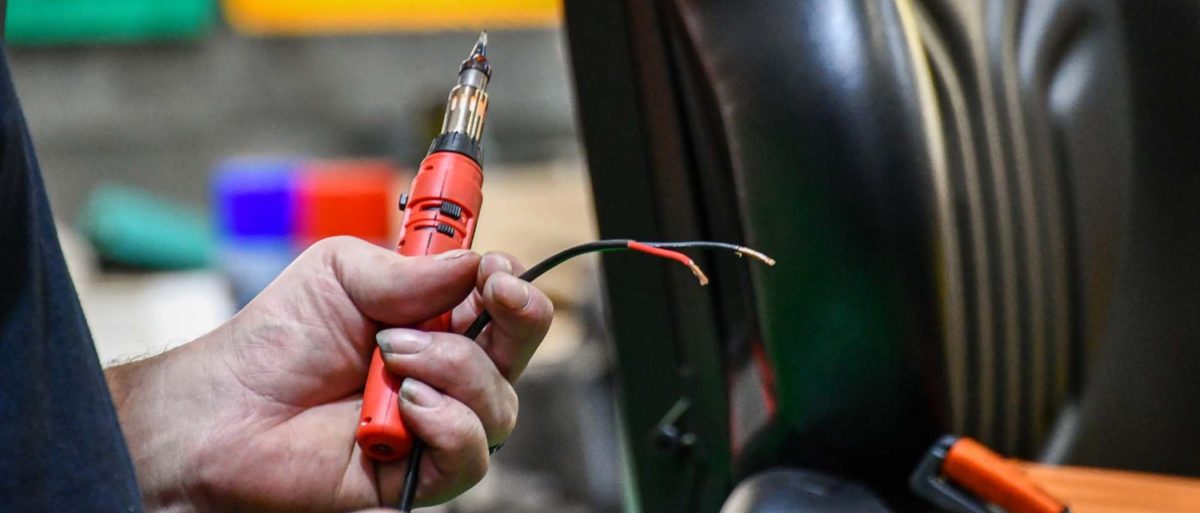
Most attachments run on the truck's hydraulics, and each movement, such as shifting, clamping or rotating, needs its own hydraulic function. Where the truck doesn't have enough, we fit the extra functions it needs: the valves, the lines up the mast and the controls for the operator.
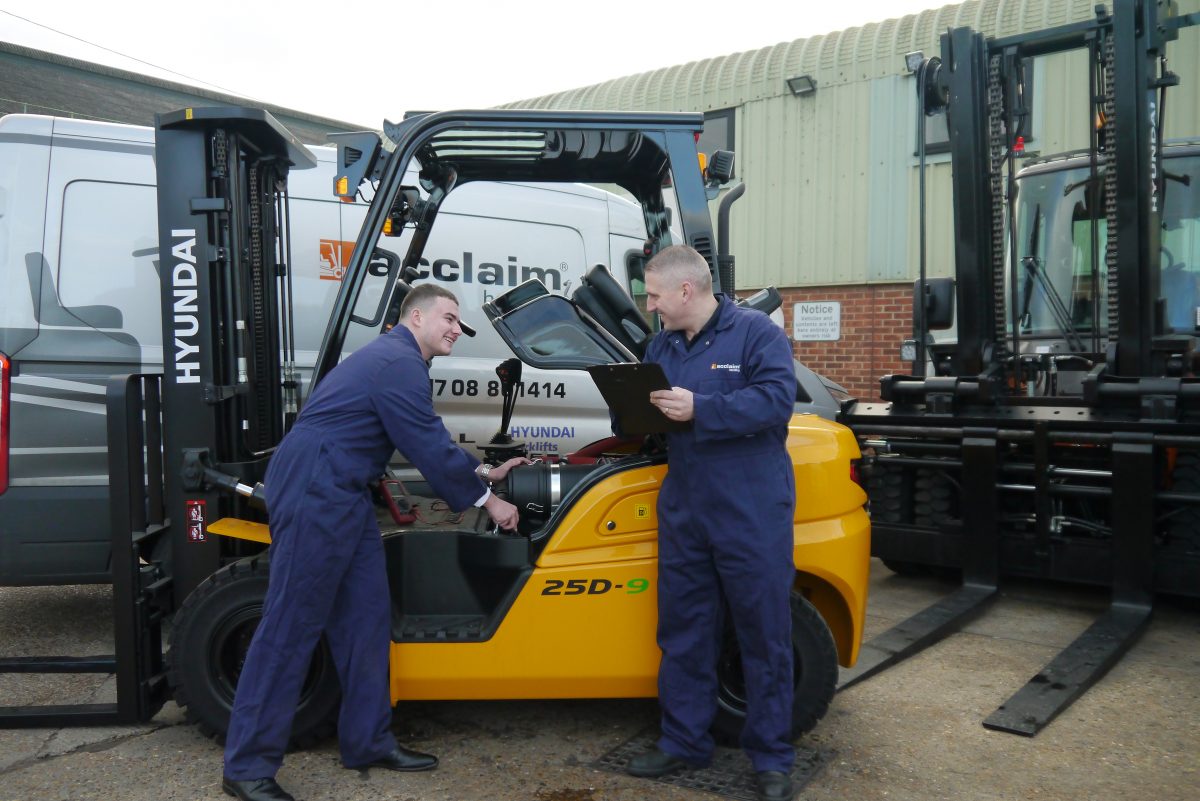
We match the attachment to the truck before anything is ordered: the carriage it mounts on, what the truck's hydraulics can supply, and the capacity left once it is fitted. Our own engineers then fit and test it.
- Extra hydraulic functions, valves and lines fitted
- Attachment matched to the truck's carriage and hydraulics
- Fitted and tested by our own engineers
- Serviced along with the truck
Capacity and rating plates
An attachment changes what the truck can lift
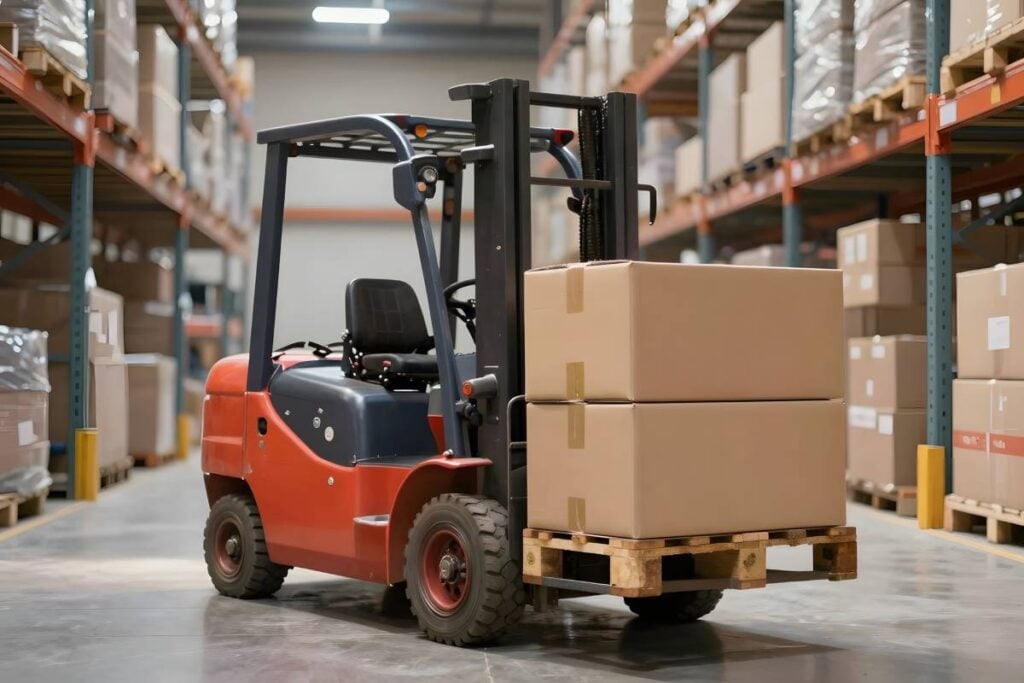
An attachment adds weight at the front of the truck and carries the load further from the front axle, which moves the load centre out. Both reduce the weight the truck can lift safely.
When we add an attachment, we recalculate the truck's capacity with it fitted and fit a new rating plate. The plate must match the truck as it is equipped: if an attachment is added, changed or removed, the plate changes with it.
More on reading the plate: how to read a forklift load capacity chart.
How it works
From the load to a fitted attachment
- Tell us the load. Its weight, size and how it arrives, plus the truck's make, model and serial number.
- We match the attachment. We check the carriage, the hydraulics and the capacity the truck will have left. A site visit is free.
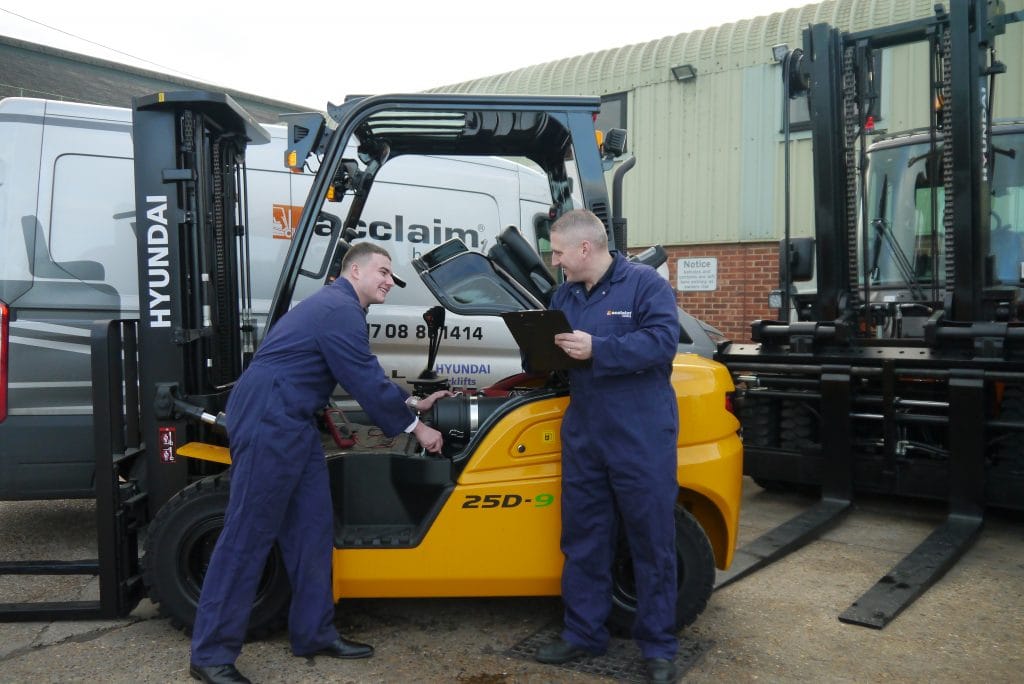
- We fit it. Our own engineers fit the attachment and any extra hydraulics, then test it.
- We re-rate the truck. We recalculate the capacity with the attachment fitted and fit a new rating plate.
- We look after it. Our engineers service the attachment along with the truck.
- New
- Supplied and fitted
- Used
- From our stock
- Hire
- Ask us
Talk to us
Tell us what you need to lift
Send us the load, the truck and how you work, and we will come back with the attachment that suits, fitted and re-rated. A site visit to see the job is free.
Forklift Attachments: common questions
Eight depots across the UK
Our own engineers, out of our own depots - wherever you are, service comes from us.
Additional Services
Checkout our range of other machine services below