Racking protection
Racking Protection: Upright Guards and Barriers
Upright and column guards, end-of-aisle protectors, barriers and pedestrian walkways, fitted where your trucks actually hit. We visit the site first, then specify protection for your racking, your trucks and your aisle widths.
- Since 1982
- in materials handling
- 8 depots
- our own engineers and transport
- Free
- site visit and quotation
Where racking gets hit
Protection goes where the trucks hit
Most racking damage comes from trucks, and it collects in the same few places on almost every site. Protection works when it is fitted there, sized for the trucks that pass.
Uprights at the aisle face
The front uprights take most of the knocks, at fork and chassis height. A damaged upright weakens the whole bay above it.
Aisle ends
Trucks turning into and out of an aisle clip the end frames. An end-of-aisle protector takes that hit instead of the frame.
Busy bays and junctions
Bays next to doors, docks, junctions and charging areas see more traffic than the rest of the run, and usually need more protection.
Walkways and crossings
Where people walk beside racking or cross a truck route, barriers keep the two apart and give pedestrians a protected route.
The back of the run
A load pushed too far can drop from the back of the racking into the next aisle or a walkway. Mesh and back stops prevent it.
What we supply and fit
Guards, barriers, walkways, mesh and back stops
Upright and column guards
Guards fitted round the foot of each exposed upright, or round building columns in truck routes, to take the impact before the steel does.
- At the aisle face of exposed uprights
- On building columns in truck routes
- Sized to the upright and the trucks that pass it
End-of-aisle and end-frame protectors
Barriers across the ends of runs, fixed to the floor in front of the end frame, so a turning truck strikes the barrier and not the racking.
- At every aisle end where trucks turn
- On single runs and back-to-back runs
- With upright guards on the corner uprights
Warehouse safety barriers and walkways
Barriers that separate people from trucks, with pedestrian walkways along truck routes and guarding at doors, docks and charging areas.
- Pedestrian walkways beside racking
- Barriers at crossings, doors and docks
- Bollards where a barrier will not fit
Mesh and back stops
Back stops and anti-collapse mesh stop loads being pushed off the back of the racking into the next aisle or a walkway.
- Back stops on beam levels
- Mesh panels on the back of runs beside walkways
- Mesh decking for loads that do not span the beams
Protection is specified with the racking on every racking installation, and can be added to racking you already have, whoever supplied it.
Choosing protection
Matched to your trucks and your aisles
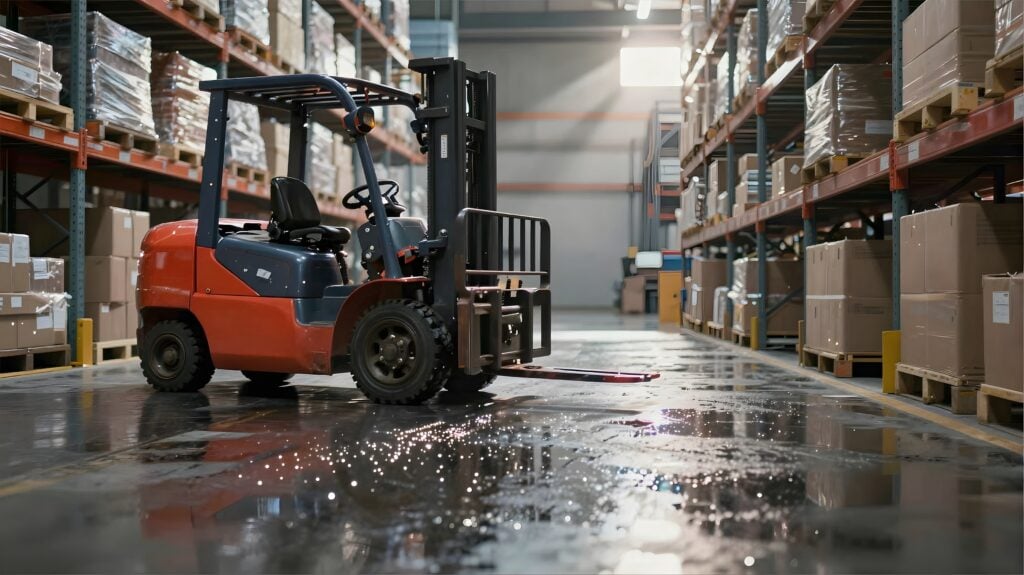
The right guard depends on what hits it. A counterbalance forklift in a wide aisle, a reach truck working close to the rack face and a very narrow aisle truck strike racking in different places and at different speeds.
Protection also takes up floor. A guard that sticks out into a narrow aisle can become the next thing to be hit, so we check it against the aisle width and the truck's turning space before anything is fitted. Because we supply the trucks as well as the racking, we look at the two together.
Planning narrow aisles? See narrow aisle and VNA racking.
Fitting and inspection
From site visit to inspection
- Site visit. We walk the site with you, look at the damage already on the racking and where trucks turn, cross and load, and ask which trucks you run.
- Specification. A list of guards, barriers and mesh for each location, with a quote.
- Fitting. Our team fixes the protection to the floor or the racking, phased around a live operation or done out of hours where needed.
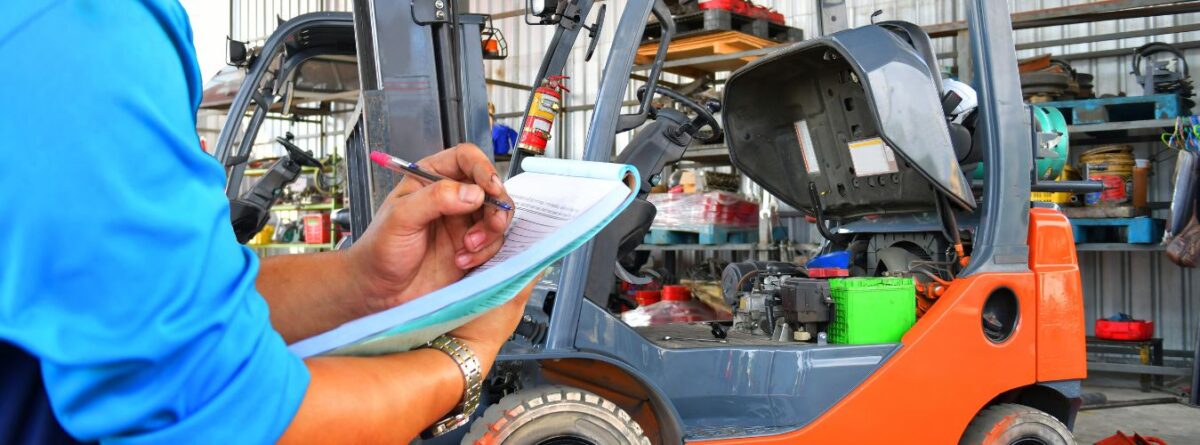
- Inspection. Protection is one of the items checked in every racking inspection. Guards that are missing, damaged or in the wrong place are noted in the report with the racking damage.
- Repairs. Where a guard has already failed and the upright behind it is damaged, the racking repair and the new guard are planned together.
Fewer hits
Cutting the hits at source
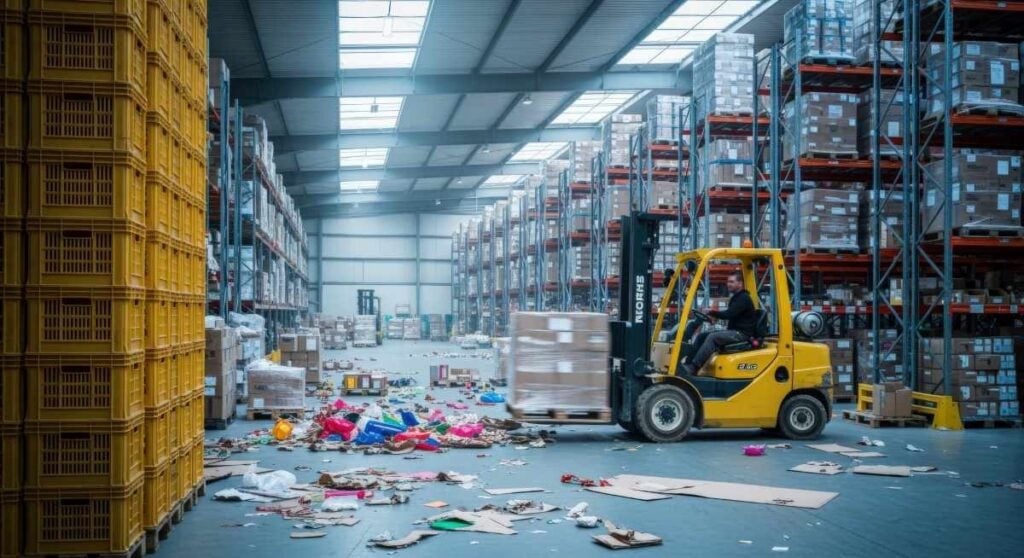
Guards take the impact; they do not stop it happening. Most damage comes from the wrong truck for the aisle, tight turns, poor visibility or rushed operators.
Telematics records every impact against the operator and the shift it happened on, can drop a truck to creep speed after a heavy hit, and limits speed at junctions and in shared areas. Pedestrian detection warns the operator and the person on foot before the two meet. We also run operator refresher training at our centres and on customers' sites.
Talk to us
Tell us where the hits happen
Tell us roughly how many runs you have, which trucks work them and where the damage keeps appearing, and we will book a free site visit. If an inspection has flagged missing or damaged protection, send us the report and we will quote from it.
Racking Protection: common questions
Eight depots across the UK
Our own engineers, out of our own depots - wherever you are, service comes from us.
Additional Services
Checkout our range of other machine services below