On this page
- What is meant by a telehandler’s lifting capacity?
- When examining telehandlers, there are three figures to consider:
- What weight is a four tonne telehandler able to lift?
- Lift Position Capacity
- Understanding the Load Chart
- Other factors to consider
- Selecting the appropriate telehandler
- Get in touch with Acclaim Handling
- Telehandler lifting capacity: summary
Imagine a four-tonne telehandler on your site assigned to lift a one-tonne pallet of blocks. At first glance, this is well within the machine’s capabilities. However, once you calculate the outreach required to reach over the scaffolding, you may find that the one-tonne pallet exceeds what the machine can safely handle. It is essential to know exactly where the load will be positioned so you can confirm it falls within the machine’s capacity.
A telehandler can lift up to the rated capacity shown on the load chart. This is determined by the required height, the outreach, and how the machine is set up. When choosing your telehandler, make sure to check what it can lift at its maximum distance from the machine. As long as your lift falls within the chart, it will be suitable for your job.
What is meant by a telehandler’s lifting capacity?
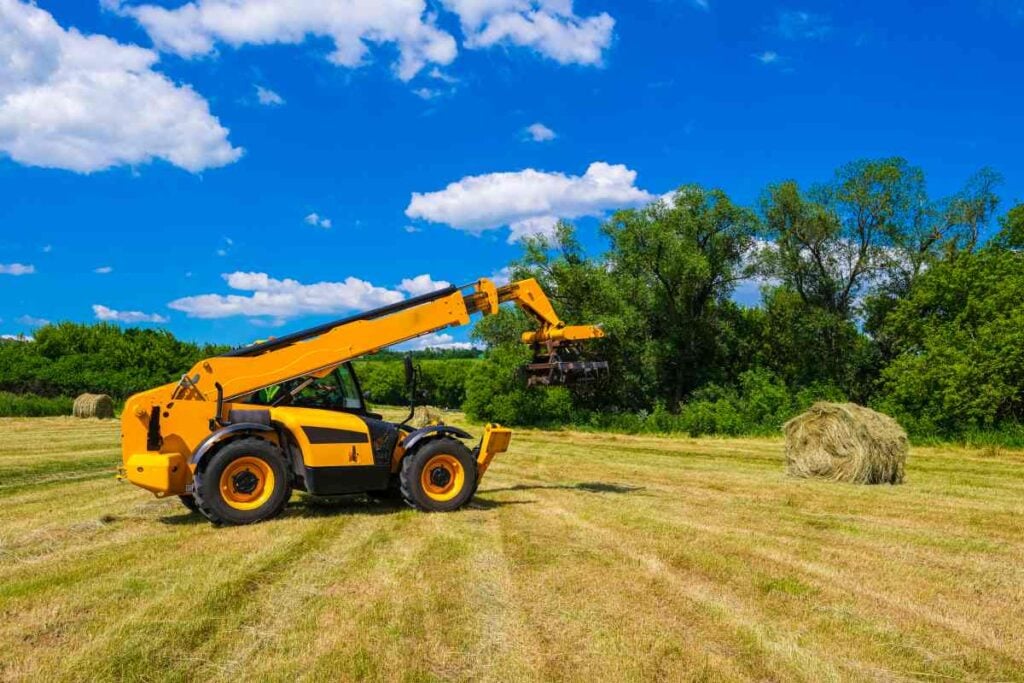
A telehandler is a valuable piece of equipment for lifting items to a greater outreach than a standard forklift can achieve. This is useful when unloading items from one side of a vehicle, delivering materials to a higher floor of a building, or stacking bales. The telescopic boom, however, also influences the weight that can be lifted.
Imagine holding a heavy box against your chest, then holding it with your arms stretched out. The box weighs the same, yet you will find it harder to hold. The same principle applies to a telehandler: the further forward the load is, the greater the risk that the telehandler will tip forwards. The boom angle and outreach affect the telehandler’s working position, and the manufacturer accounts for this on their chart.
When examining telehandlers, there are three figures to consider:
Maximum Capacity: The greatest weight the telehandler can lift under specified conditions.
Maximum Height: The amount the telehandler can lift at its maximum height.
Maximum Outreach: The amount of weight the telehandler is able to handle at its furthest reach.
The maximum height and outreach combined determine the highest levels at which the telehandler can work. If your job involves both of these factors, check the chart to make sure it remains within capacity.
What weight is a four tonne telehandler able to lift?
The JCB 540-170 clearly illustrates how much variation is possible. Under the stated conditions, with the stabilisers deployed, the machine can lift:
Lift Position Capacity
Maximum Rated Capacity 4000kg
Full height (16.7m) 2500kg
Maximum outreach (12.5m) 600kg
According to the published data, the one tonne pallet would be outside the capacity for the 12.5m outreach. However, the specification indicates that the machine can lift a one tonne load at a 10.5m outreach. This shows just how variable the machine can be. For an actual lift, please refer to the chart provided for the machine with the specific attachment you are using, with the stabilisers in the correct position.
Understanding the Load Chart
Start by knowing the actual weight and size of your load. For a pallet, this would include the goods, the pallet and the packaging. You will also need to know the centre of gravity of your load. If the load is longer or heavier at one end, this will be useful to you. The centre of gravity refers to the distance measured from a particular point to the centre of the load. The manufacturer will specify the telehandler’s centre of gravity distance. Depending on how deep the load is, the centre of gravity may be located further forward.
You will also need to know the height of your load and its horizontal outreach. Combined with the setback from a building, this can significantly increase the outreach from the reference points. The dimensions of your load will matter here. The load zones on a standard chart will indicate what weight can be lifted. Please consult the manufacturer guidelines to understand what the chart means. Be sure to check the entire lift path to see whether your load will need to be further forward at any point.
If the chart is unavailable, illegible or unclear for the setup you intend to try, please contact your supplier/manufacturer. The HSE provides guidance on construction and on selecting the right machine, ensuring stability, vision and segregation. HSE guidance on telescopic handlers.
Other factors to consider
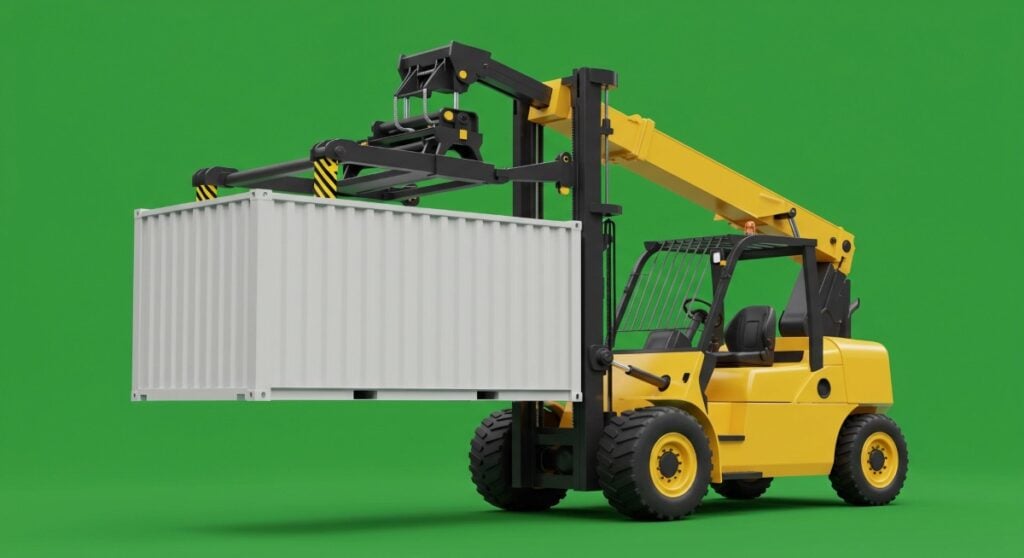
Attachments: A telehandler can be equipped with a range of attachments. Forks, buckets, bale clamps and jibs. These will affect how the telehandler lifts the load. A jib can move the load further forward and allow it to swing. Make sure you use an approved attachment. Refer to the chart and follow the manufacturer guidelines when using lifting accessories. The manufacturer will advise how to account for any lifting accessories and their weight.
Stabilisers and Ground Conditions: The lifting capacity of certain telehandlers changes depending on whether they are operating on tyres or with the stabilisers deployed. The greater capacity can only be achieved when the setup and conditions are correct. Ensure that the ground conditions are appropriate for operating the machine. Verify whether the ground is able to support the weight of the machine and any stabilisers. This is particularly important when working near excavations, recently filled areas or underground services.
Setup: If a wall, trench or scaffolding is in the way, you may be unable to position the telehandler close to the point where you need to drop off. If you need an extra metre of outreach, the load will fall outside the load zone. The lift planner may need to reconsider the setup. Some telehandlers cannot be operated in confined spaces.
Travel: Once the load has been placed, you need to consider how you will move it. Make sure you have a plan for keeping pedestrians separated and maintaining good visibility. If the load blocks the operator’s vision, the lift plan should account for this as well.
Changing Conditions: If you plan your lift for dry, hard ground, you may need to review it after heavy rain or if other work has altered the site layout. Confirm the conditions under which the manufacturer has advised that the machine can be operated. Review your plan.
Selecting the appropriate telehandler
Before you request a quote from a hire company, put together a short brief. Determine the heaviest item that needs to be lifted. Next, determine what needs to be lifted the highest and/or the furthest. This may not be the same item. Record the weight, the size, the pickup location, and the destination. Note the site access measurements, any known ground conditions, obstructions, and the attachment you intend to use. A photo or annotated drawing of the site will help demonstrate why the telehandler cannot get close to the wall, or whether there is space for stabilisers.
For sites with limited yard space where most of the work involves unloading and moving items, a compact telehandler may be suitable. If you need to deliver items to a higher floor from a setback position, a telehandler with greater outreach may be appropriate. Be sure to choose a telehandler capable of handling the most demanding combination of weight, height, and outreach.
Lifting operations should be planned by a competent person and properly supervised to ensure they are carried out safely. Please ensure you have an operator who is trained, competent, and authorised. Ensure the correct thorough examination documents are in place.
Get in touch with Acclaim Handling
Whether you need a lift for a single day or equipment for a longer period. Get in touch with Acclaim Handling with your load weights, lift heights and outreach requirements We can guide you through your application, the attachments you will need, and the equipment we have available.
Call us on 01708 861 414 or request a telehandler hire quote.
Telehandler lifting capacity: summary
| Factor | Key takeaway | What to check |
| Rated capacity | Maximum capacity is not available at every height or outreach. | Check the load chart for the required lift position and machine setup. |
| Height and outreach | Capacity varies with the combination of load weight, height and forward reach. | Check the entire lift path, including any setback from buildings or obstructions. |
| Four-tonne example | The blog’s JCB 540-170 example lists 4,000 kg maximum rated capacity, 2,500 kg at 16.7 m height and 600 kg at 12.5 m outreach, with stabilisers deployed under the stated conditions. | Use the chart for the actual machine, attachment and stabiliser position—not the headline capacity alone. |
| Load details | Weight, size and centre of gravity affect the lift. | Include the goods, pallet and packaging when establishing load weight. |
| Attachments | Forks, buckets, clamps and jibs affect lifting capability. | Use approved attachments and follow the applicable chart and manufacturer guidance. |
| Stabilisers and ground | Capacity depends on the specified setup and suitable ground conditions. | Check ground support, stabiliser space and nearby excavations or underground services. |
| Travel and changing conditions | Visibility, pedestrian separation, rain and site changes need consideration. | Plan movement and review the lift plan when conditions change. |
| Selection and safe operation | Choose for the most demanding combination of weight, height and outreach. | Prepare a site brief; ensure competent planning, supervision, an authorised operator and the correct examination documents. |