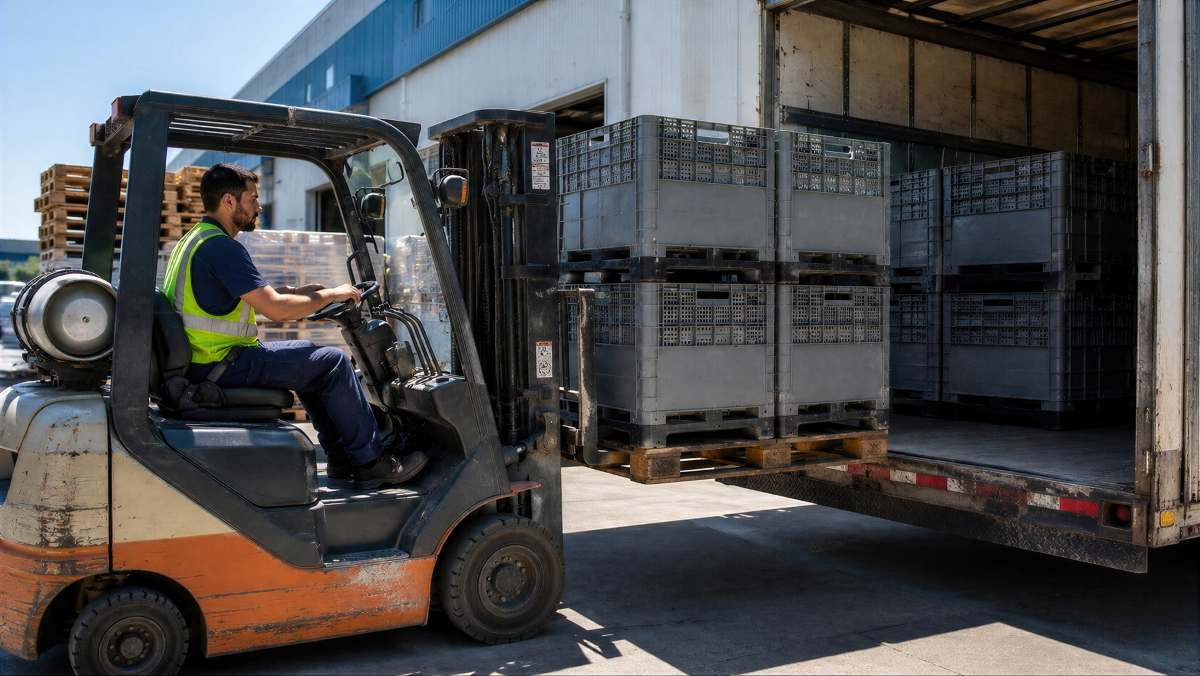
When people think of forklifts, they often picture the small, three-wheeled machines flying around warehouses, lifting pallets and loads. However, not all forklifts are small or designed to be used indoors. Big forklift trucks, AKA your heavy-duty forklifts, are a class of their own. They are built to handle work that standard forklifts just couldn’t manage, no matter the price or capacity.
What Defines a Big Forklift Truck?
Big forklifts typically feature:
- High Lifting Capacity: Ranging from 10 to 50+ tons.
- Durability: Reinforced steel frames made for heavy loads.
- Powerful Engines: Usually diesel-powered.
- Large Forks and Attachments: Customisable forks or grapples for handling oversized or heavy goods.
- Outdoor Capability: Designed to operate on uneven or challenging surfaces.
These features make big forklift trucks a go-to for demanding applications.
Industries That Use Big Forklift Trucks
- Ports and Shipping Terminals
- Steel and Metal Industries
- Construction Sites
- Manufacturing Plants
- Mining and Quarrying
- Lumber and Forestry
Advantages of Big Forklift Trucks
- High Efficiency: Can handle large, heavy loads in fewer trips, saving time.
- Versatility: Your choice of attachments allow them to adapt to different industries and tasks.
- Safety: Engineered to handle extreme loads with stability and precision, reducing risks.
Big Forklift Trucks in the Future
As industries grow and expand, the demand for heavy-duty forklifts is expected to increase. Innovations in electric power and sustainability are already shaping the future of these machines, making them even more efficient and environmentally friendly. Big forklift trucks are a must-have for industries where heavy lifting is a daily requirement. From the big ports to steel plants, these machines ensure operations run smoothly and safely. By understanding their uses and benefits, businesses can make informed decisions when investing in heavy-duty forklifts.
- giving us a call on 01708 861 414
- or using our online contact form.

Tags
Related Posts
Predictive vs Preventive Maintenance: What’s the Difference?
The True Cost of Delaying a Forklift Repair
How Forklift Rentals Help Warehouses Stay Flexible
Top Industries that Benefit from Forklift Hire
How Warehousing Demands Are Changing Forklift Requirements