- Part exchange, or an outright sale
- What we will take
- What we take in part exchange, by type
- How the valuation works
- Getting a valuation from photos
- What it is worth against
- New and used stock to part exchange against
- How the process runs
- Before you part exchange, check the alternative
- Getting the best price for your machine
Part exchange, or an outright sale
These are two different things, and it is worth knowing which one you want before you ring.
| Aspect | Part exchange | Outright sale |
|---|---|---|
| What happens | The old machine offsets a new or used replacement | We buy it, nothing goes the other way |
| Best when | You are replacing or upgrading | Downsizing, closing a site, clearing unused equipment |
| Timing | The old truck can leave as the new one arrives | Collected when it suits you |
Part exchange puts the value of your old machine against a new or refurbished replacement, so one transaction covers both and the old truck leaves as the new one arrives. Outright purchase is us buying the machine from you with nothing going the other way, which is what you want if you are downsizing, closing a site or clearing equipment you no longer use.
We do both. If you are looking to sell a forklift rather than replace it, that is a normal enquiry, not a special case.
What we will take
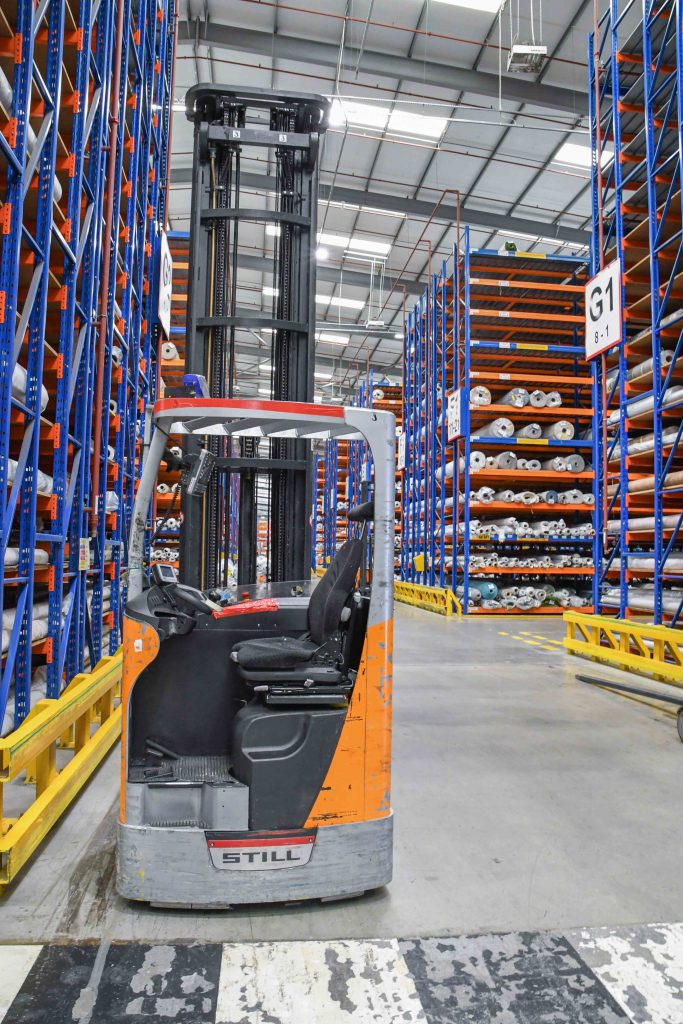
All makes, models and conditions are considered, and everything has a value.
That is meant literally and it is the thing people most often get wrong. The machines we are asked about most are the ones the owner has already written off:
- A truck that no longer suits the operation: too small, too large, wrong power source, wrong mast for a new racking layout.
- A truck that has become unreliable, where the repair spend has passed the point of sense.
- A truck that is broken down beyond economic repair. It still has value, in parts if not as a machine.
- Redundant or unused warehouse equipment sitting in a corner because nobody knows what to do with it.
- A mixed group of machines from a site that is closing or a contract that has ended.
It is not limited to counterbalance forklifts. Reach trucks, powered and manual pallet trucks, stackers, very narrow aisle equipment, access platforms and industrial cleaning machines are all in scope.
What we take in part exchange, by type
Every type of machine below can be sold to us outright or put against a replacement. The right-hand column is what moves the value most for each one.
| Equipment | What helps the valuation |
|---|---|
| Counterbalance forklifts: diesel, LPG and electric | Hours, mast type and lift height, attachments, and on electric trucks the battery and charger |
| Reach trucks and VNA trucks | Lift height, hours, and the age and condition of the battery |
| Powered pallet trucks, stackers and order pickers | Hours, the battery and charger, and wheel wear |
| Manual pallet trucks and manual handling equipment | Condition and quantity: a batch is easier to value than single items |
| Access platforms: scissor lifts, boom lifts and mast lifts | Platform height, hours, the battery or engine, and thorough examination records |
| Cleaning machines: scrubber dryers and sweepers | Hours, the battery and charger, and the condition of brushes and squeegees |
Leave attachments, batteries and chargers with the machine. A complete machine is worth more than the same machine in pieces.
How the valuation works
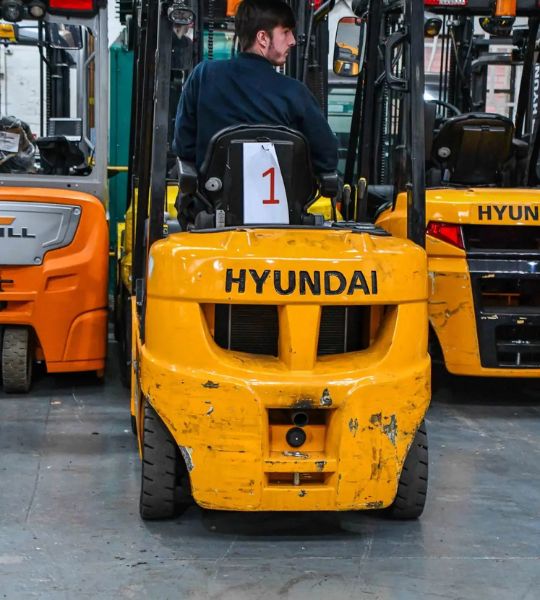
The three things that move the number most are age, condition and specification. Underneath those, the questions we will ask:
- Hours run, which tells you far more than the year of manufacture. A ten year old truck on 4,000 hours can be worth more than a five year old truck on 12,000.
- Service history, and whether thorough examination certificates exist. A documented machine is worth more, and the paperwork is easier to find before you need it than after.
- Power source. Electric, diesel or LPG, and for electric, the age and condition of the battery, which can be a large share of the machine’s value on its own.
- Mast type and lift height, and attachments. A side shift or a fork positioner adds value; an unusual special-build mast can narrow the market.
- Tyres, forks and mast wear, which are the visible condition items a buyer checks first.
- Where it is, because collection is part of the cost.
We will explain how we arrived at the figure rather than just quoting one. If the number is disappointing, it is usually the hours or the battery, and it is better to know why.
Make, model, year, hours and a few photographs is usually enough for a figure.
Getting a valuation from photos
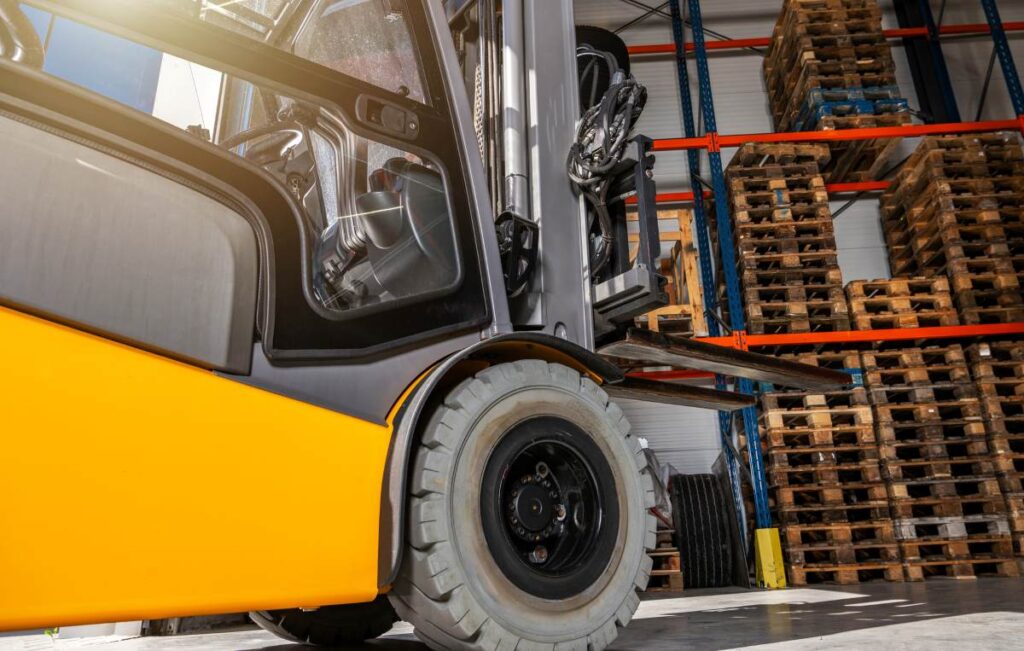
For most single machines a valuation starts with photographs and an hours reading, without anyone travelling. Send us:
- The data plate, showing make, model and serial number.
- The hour meter, as a photo rather than a typed number.
- All four sides of the machine, plus the mast, chains and forks.
- Tyres or wheels, close up.
- The battery and its plate, and the charger, on electric machines.
- Any damage or known fault, with a line on what it does.
Describe the condition the way you would to a buyer: what works, what does not, and what has been repaired. If the photos leave a question, we ask for one more picture or come and look.
We do not quote from a make and model alone, because hours and condition move the figure more than the badge does. Our guides on forklift hours and resale value explain why.
What it is worth against
Part exchange works against new machines and against used and refurbished ones. Where the value goes is worth thinking about:
- Against a new machine, if the operation is settled and the truck will be worked hard for years.
- Against a used or refurbished machine, which is often the better commercial answer where the duty is light or the requirement may change. Our current stock is on the equipment listings.
- Against nothing at all, taking the cash, and moving to hire instead. If the requirement is seasonal or uncertain, owning the machine may be the actual problem.
Finance is available on used as well as new, including lease purchase, contract hire and operating lease.
New and used stock to part exchange against
The value of your old machine can go against anything we sell, across forklifts, warehouse trucks, access platforms and cleaning machines.
- Used equipment: every used machine is inspected by our own engineers before sale.
- New in stock: new machines we hold, for when the replacement is needed soon.
- New equipment: the full new range, including machines supplied to order.
If you would rather spread the cost of the replacement, see leasing and contract hire. Our guide to new or used forklifts helps with the choice. If you would rather keep your truck, ask about forklift refurbishment.
How the process runs
- Tell us what you have. Make, model, year, hours, power source and a few photographs. Serial number if you have it.
- We value it. For a single machine that is often a phone call and some pictures. For a group, or where condition is unclear, we will come and look.
- We put the offer against the replacement, or make you a cash offer if you are selling outright, and you can see both figures separately rather than as one blended number.
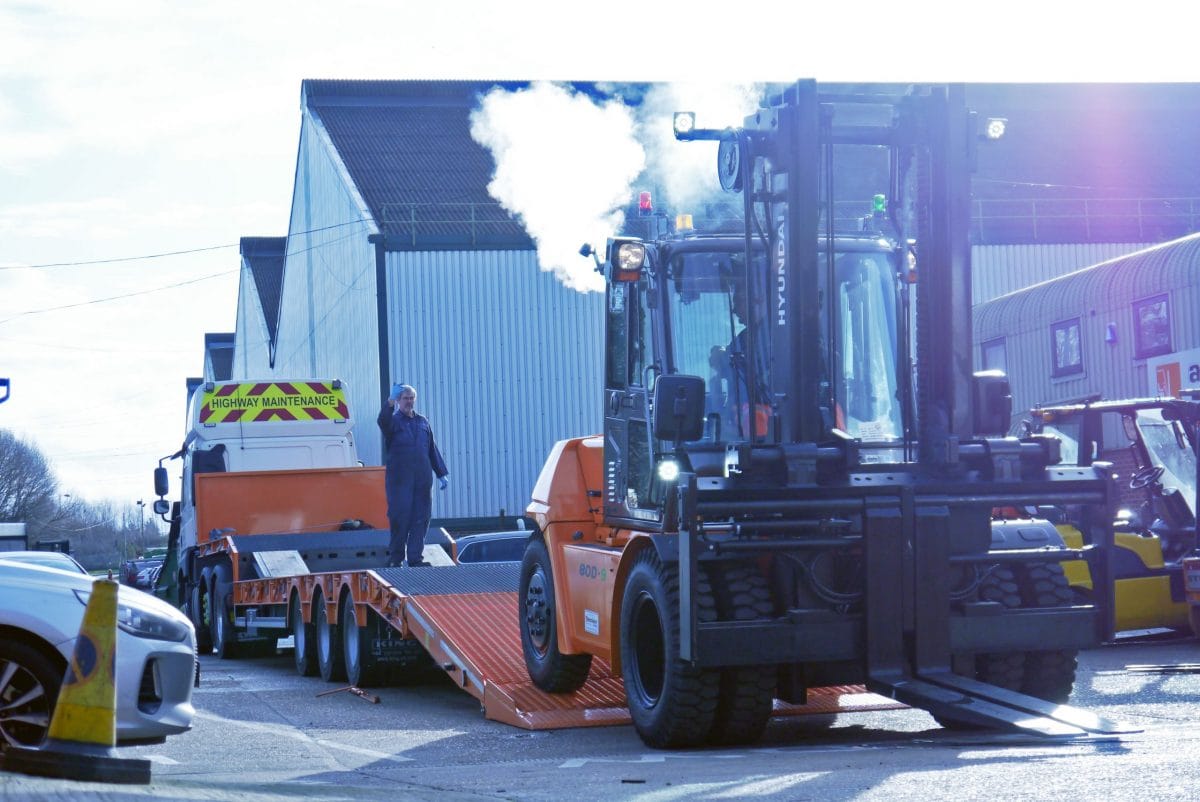
- We collect. In London or anywhere else on the UK mainland, transport is ours to arrange, including machines that will not drive, and it can be timed so the old truck goes as the new one arrives.
Before you part exchange, check the alternative
We would rather say this than leave it unsaid. A truck that is unreliable is not always a truck that is finished. Before replacing a machine it is worth knowing whether the problem is the machine or its maintenance history, because a well-built truck with a neglected service record often has years left in it once it has been put right.
We hold parts for machines up to around 20 years old, and a repair or a proper service is sometimes a tenth of the cost of replacement. Where the numbers say replace, they usually say it clearly, and fleet reporting is what makes that visible across a fleet rather than one truck at a time.
Getting the best price for your machine
Four things that genuinely change what a machine is worth, in the weeks before you sell it rather than on the day:
- Find the paperwork. Service records and current thorough examination certificates raise the value and speed up the sale.
- Do not strip it. Removing attachments, the battery or the charger to sell separately usually reduces the total.
- Clean it and note the faults honestly. A described fault is priced once; a discovered one is priced twice.
- Do not wait until it has stopped. The value falls fastest at the point the machine goes from working to not working.
Make, model, year, hours and a few photographs is usually enough for a figure.
Part exchange: common questions
Eight depots across the UK
Our own engineers, out of our own depots - wherever you are, service comes from us.
Talk to us about part exchange
Monday to Friday, 8:00am to 5:00pm.
Additional Services
Checkout our range of other machine services below