On this page
- Why Forklift Hours Matter
- What Is Considered High Hours for a Forklift?
- Comparing Forklift Hours to Vehicle Mileage
- Maintenance Is Often More Important Than Hours
- How Operating Environment Affects Wear
- Signs a High-Hour Forklift May Still Be a Good Purchase
- Warning Signs to Watch For
- Should You Avoid Forklifts With Over 10,000 Hours?
- Finding the Right Balance
- Conclusion
When buying a used forklift, one of the first questions buyers ask is: how many hours is too many?
It’s a sensible question. Just as mileage helps indicate wear on a used car, operating hours provide insight into how heavily a forklift has been used throughout its life. However, unlike cars, forklift hours don’t always tell the full story. A machine with high hours that has been properly maintained can often outperform a lower-hour forklift that has been neglected.
Understanding what constitutes high hours, and how those hours relate to maintenance, usage, and overall condition, can help businesses make smarter purchasing decisions and avoid expensive surprises.
Why Forklift Hours Matter
Forklift hour meters record the amount of time the machine has been operating. This provides a useful benchmark when assessing wear on major components such as:
- The engine or motor
- Hydraulic systems
- Transmission
- Mast assemblies
- Steering components
- Brakes
- Tyres
Generally speaking, the more hours a forklift has accumulated, the more wear these components will have experienced.
However, hours should be viewed as one factor among many. The way the forklift has been used and maintained is often just as important as the number displayed on the hour meter.
What Is Considered High Hours for a Forklift?
There is no universal figure that automatically makes a forklift a poor purchase. Much depends on the type of forklift and its maintenance history.
As a rough guide:
| Forklift Hours | General Assessment |
| Under 5,000 hours | Low usage |
| 5,000–10,000 hours | Moderate usage |
| 10,000–15,000 hours | High usage |
| 15,000+ hours | Very high usage |
For many internal combustion forklifts, 10,000 hours is often viewed as the point where major components may start requiring more significant repairs or refurbishment.
That said, plenty of well-maintained forklifts continue operating reliably beyond 15,000 or even 20,000 hours.
Electric forklifts can be slightly different. Their lifespan is often heavily influenced by battery condition, charging practices, and overall maintenance rather than hours alone.
Comparing Forklift Hours to Vehicle Mileage
Many buyers find it easier to understand forklift hours when compared to vehicle mileage.
A commonly used comparison suggests that one forklift operating hour is roughly equivalent to 20 to 25 miles of vehicle use. Using that estimate:
- 5,000 hours could equate to around 100,000–125,000 miles
- 10,000 hours could equate to around 200,000–250,000 miles
- 15,000 hours could equate to around 300,000–375,000 miles
While the comparison is not exact, it highlights why buyers should pay close attention to higher-hour machines.
Maintenance Is Often More Important Than Hours
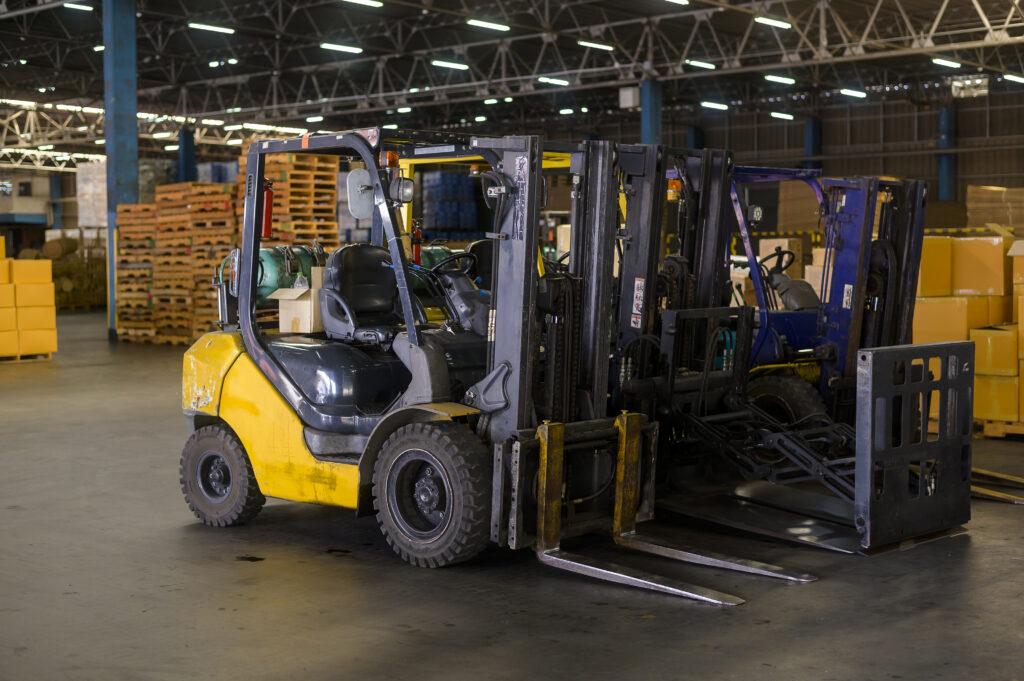
A forklift’s service history can be more valuable than its hour reading.
A machine with 12,000 hours and comprehensive maintenance records may represent a safer investment than a forklift with 6,000 hours and no documented servicing.
When evaluating a used forklift, ask for records covering:
- Routine servicing
- Hydraulic repairs
- Brake maintenance
- Chain inspections
- Battery maintenance for electric models
- Thorough examinations
- Parts replacements
Regular servicing helps extend equipment life and can significantly improve long-term reliability. Businesses looking to understand overall forklift lifespan should consider maintenance history alongside operating hours when assessing used equipment.
How Operating Environment Affects Wear
Not all forklift hours are equal.
A forklift used indoors on smooth warehouse floors typically experiences less stress than one operating outdoors on uneven surfaces.
Factors that can accelerate wear include:
- Rough ground conditions
- Frequent heavy lifting
- Multi-shift operation
- Exposure to weather
- Poor operator practices
- Constant stop-start driving
Two forklifts with identical hours may therefore be in very different condition depending on where and how they have been used.
For example, a 9,000-hour warehouse forklift may have considerably less wear than a 9,000-hour machine used daily in a builders’ merchant yard.
Signs a High-Hour Forklift May Still Be a Good Purchase
High hours do not automatically mean you should walk away.
Many forklifts remain highly productive after years of service if they have been properly maintained.
Positive signs include:
- Complete maintenance records
- Clean hydraulic systems
- Smooth mast operation
- Responsive steering
- Even tyre wear
- No visible leaks
- Good battery health on electric models
- Evidence of recent servicing
A professional inspection can also help identify potential issues before purchase.
Warning Signs to Watch For
Regardless of hours, certain issues may indicate that a forklift has been poorly maintained.
Be cautious if you notice:
- Hydraulic fluid leaks
- Excessive rust or corrosion
- Unusual engine noises
- Jerky mast movement
- Worn forks
- Damaged chains
- Excessive tyre wear
- Missing service records
These problems can lead to significant repair costs shortly after purchase.
Should You Avoid Forklifts With Over 10,000 Hours?
Not necessarily.
A forklift with more than 10,000 hours should be assessed more carefully, but it is not automatically a bad investment.
Instead of focusing solely on the hour meter, consider:
- Service history
- Previous operating environment
- Brand reputation
- Availability of replacement parts
- Current condition
- Inspection results
Many buyers successfully purchase forklifts with higher hours because the machines have been maintained correctly and remain mechanically sound.
The key is understanding the balance between purchase price, expected lifespan, and potential maintenance costs.
Finding the Right Balance
The best used forklift is rarely the one with the lowest hours. It is usually the one that offers the strongest combination of condition, maintenance history, reliability, and value.
When purchasing used equipment, operating hours should form part of the evaluation process rather than serving as the sole deciding factor. A well-maintained forklift with moderate or even high hours may provide years of dependable service, while a poorly maintained low-hour machine could quickly become an expensive liability.
Businesses seeking quality lifting machinery for industrial environments can benefit from carefully assessing both the machine’s operating history and its current condition before making a purchasing decision. A thorough inspection and review of maintenance records often reveal far more than the hour meter alone.
Conclusion
There is no specific number of hours that automatically makes a used forklift unsuitable for purchase. While machines with more than 10,000 hours deserve closer inspection, maintenance history and overall condition often matter far more than the figure on the hour meter.
By looking beyond hours alone and evaluating servicing records, operating conditions, and component wear, businesses can make informed purchasing decisions and secure reliable equipment that continues delivering value for years to come.